
Matcha mayonnaise gives a familiar savory condiment a tea note and a visible green color. A sandwich shop might apply a thin line; a restaurant may serve it beside fried food; a packaged-food brand may want a dip cup. Each use exposes different questions about thickness, flavor, emulsion stability and handling. This guide helps Matcha Village buyers plan product trials rather than rely on the appearance of matcha powder alone. The food operator and manufacturer remain responsible for the finished formula, ingredient controls, food safety program, labeling and shelf-life validation.
Table of contents
- What job should the condiment do on the menu?
- Which mayonnaise base should the first trial use?
- How should matcha be dispersed into the base?
- How can tea, acid and salt be balanced?
- What indicates a stable finished emulsion?
- How should a small trial become a repeatable batch?
- How should the sauce be tested with actual food?
- Which pack and service route fit the product?
- How do usable yield and dose affect cost?
- What belongs in the final matcha and product brief?
1. What job should the condiment do on the menu?
Define portion, appearance and eating point
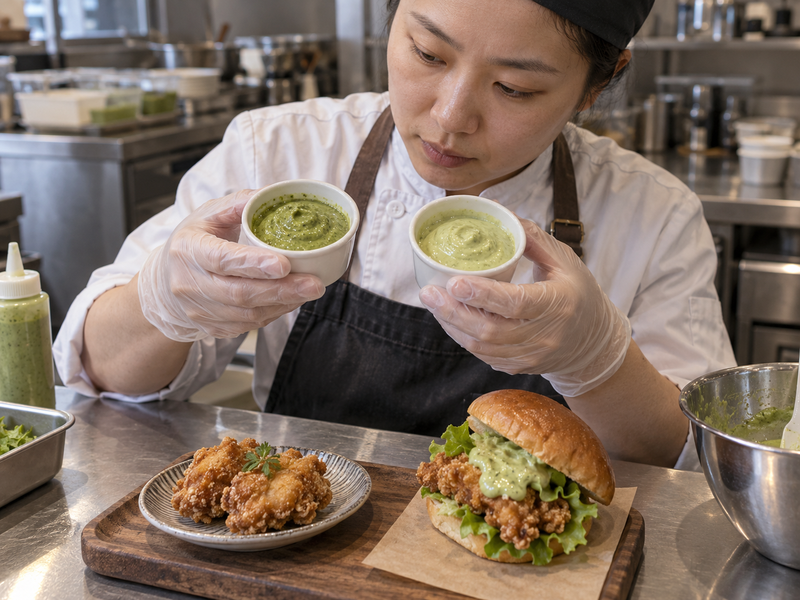
Start with the dish, not a powder grade. A matcha mayonnaise for a fried chicken dip can be thicker and more assertive than one spread thinly on bread. A retail sandwich filling may sit against moist vegetables; a dip cup may be opened and eaten several days after packing. Specify portion mass, application method, target color, visible specks, acidity, tea note and the texture at the point of eating. Photograph the sauce both in a neutral dish and on the intended food under normal service light.
Test whether the customer can actually recognize the matcha. A pale green sauce may be attractive but taste only of the base; a stronger tea dose can create a dry finish that fights the main dish. Use a plain mayonnaise control and at least one candidate tea dose, then taste in the intended portion. Record the result before toppings or spices cover it. This application definition becomes the reference for ingredient buying, mixing trials and later menu training.
2. Which mayonnaise base should the first trial use?
Separate base sourcing from custom emulsion development
One route blends matcha into an approved commercial mayonnaise; another develops a new emulsion from its ingredients. The first can simplify early flavor screening, but the finished flavored sauce still needs its own storage, label and safety assessment. The second gives more control over oil, egg, acid and texture, while adding formulation and process responsibility. Decide which route the business can actually manufacture and document. Keep the base identified by supplier, SKU and lot so a successful trial can be reproduced.
For egg-containing sauces, do not assume that a home recipe is a safe commercial process. The US FDA advises using pasteurized eggs or egg products for mayonnaise and similar foods that are not thoroughly cooked; local rules and the business’s own controls govern its operation. FDA guidance on egg-containing menu items should be considered alongside the target market’s requirements. A plant-based base is a separate formulation, not a simple one-for-one replacement. Its emulsifiers, oil profile and flavor need their own trials.
| Base route | Development advantage | Validation question |
|---|---|---|
| Approved commercial mayo | Familiar starting texture | What changes after matcha and any liquid are added? |
| Custom egg emulsion | Control of acid, oil and body | Is the ingredient and process program appropriate? |
| Plant-based emulsion | Different menu audience | Does it hold and taste right with this matcha? |
| Reduced-fat base | Different nutrition and texture target | Is tea bitterness more exposed? |
3. How should matcha be dispersed into the base?
Prevent powder pockets without thinning the sauce blindly
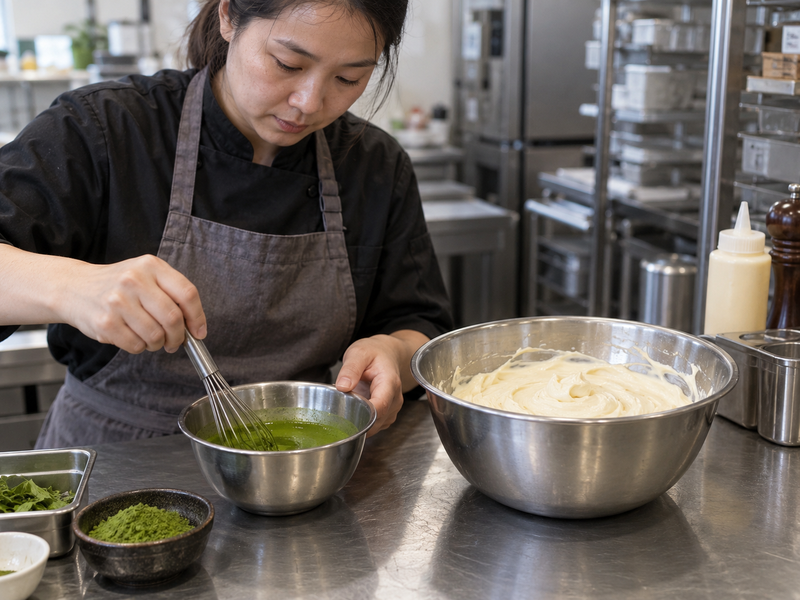
Dry powder tipped into a thick emulsion can leave dark flecks or clumps. Prepare small trials that compare a controlled matcha dispersion with direct mixing, using the same finished tea dose. If a pre-dispersion uses water or another liquid, weigh it and include it in the formula. Added liquid can alter flow, stability and any safety parameters the manufacturer monitors. Sifting or dispersing may improve evenness, but the preferred method must be proven in the actual base and equipment.
Record matcha lot, particle behavior during mixing, mixing time, order of addition and the sauce temperature allowed by the operator’s food safety plan. Inspect a thin smear on a white surface and a full portion in its serving cup. Taste both the fresh sample and a sample held through the proposed service route. A powder that disperses beautifully in water may behave differently in a high-fat, acidic mayonnaise. The practical selection criterion is an even, approved sauce that can be repeated by the line or café team.
4. How can tea, acid and salt be balanced?
Compare flavors against the same base and food
Mayonnaise carries acid, salt, fat and sometimes sweetness before tea enters. These can make matcha seem brighter, flatter or more bitter. Set a baseline with the chosen unflavored base. Change one variable at a time: tea dose, acid level, salt or sweet element. Taste portions of the same size, at the same service temperature, with and without the planned food. An isolated spoon taste is useful, but a dip for hot fried food must also be judged beside that food.
Avoid using color alone as a shortcut. The deepest green version may be too intense in a full serving, while a pale version can still have a clear tea finish. Record first taste, mid-palate and aftertaste, plus whether the condiment improves or obscures the dish. When changing acid or sweetener, send the revised formula back through the manufacturer’s finished-product safety assessment. A sensory adjustment can also be a meaningful process change.
| Variable | Hold constant for comparison | Decision signal |
|---|---|---|
| Matcha dose | Base, portion and service food | Tea clarity without chalky finish |
| Acid | Tea dose and salt | Brightness without sharpness |
| Salt | Tea and acid | Savory lift without harshness |
| Sweet component | Serving size and dish | Balance without dessert character |
5. What indicates a stable finished emulsion?
Check the sauce after handling, not only at mixing
An attractive bowl immediately after blending is not proof of a stable commercial sauce. Observe oiling-off, water separation, grainy texture, color change, squeeze performance and surface drying after the route the product will actually take. Inspect a sealed sample, a repeatedly opened foodservice container and a dispensed portion if those uses apply. Define a method and timing for each check so two teams do not call different appearances “stable.”
The manufacturer should determine and monitor safety-related properties appropriate to the formula, including acidity and any other validated controls, with suitable instruments and a documented sampling plan. Do not infer safety from a sour taste or the fact that a base mayonnaise was shelf stable before flavoring. Matcha, added liquids and other ingredients can change the finished food. Record which base lot, matcha lot and process made each sample. That traceability helps separate a mixing issue from an ingredient change if the sauce later separates or tastes different.
6. How should a small trial become a repeatable batch?
Write a sequence operators can execute
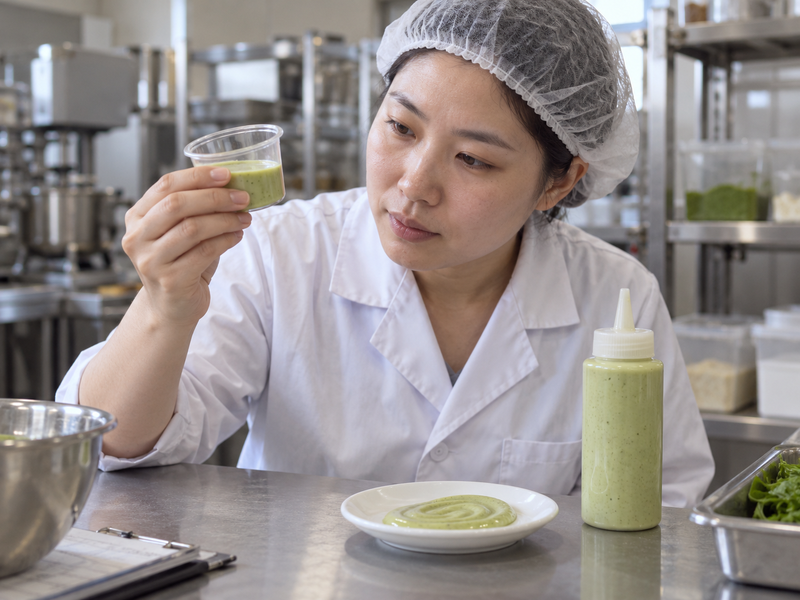
Move from a bowl test to a pilot batch by documenting every weighed input, vessel, mixer, addition order, speed range, mixing time, sampling point and fill method. A larger tank may disperse powder differently and expose some sauce to more shear than the bench batch. Check portions from the top, middle and end of a tank or filling run for color, viscosity and tea flavor. Keep a retained sample tied to its ingredient lots and line record.
The operator needs a response when the emulsion is too thin, visibly separated or unevenly green. Set those responses through the manufacturing team’s approved quality system; ad hoc addition of extra matcha or water can hide the cause and alter the finished formula. If the product is prepared in several cafés, a pre-weighed matcha component or exact portioning instruction may reduce variation. Compare the labor and error risk of central production with in-store mixing before choosing a route.
| Batch record | Why it matters | Example observation |
|---|---|---|
| Matcha and base lots | Traceability | Same tea lot across pilot repeats |
| Addition sequence | Even dispersion | Flecks after powder enters |
| Mixing and transfer | Texture control | Thinning or air inclusion |
| Fill start and end | Uniformity | Color or flow difference |
7. How should the sauce be tested with actual food?
Make the serving trial realistic
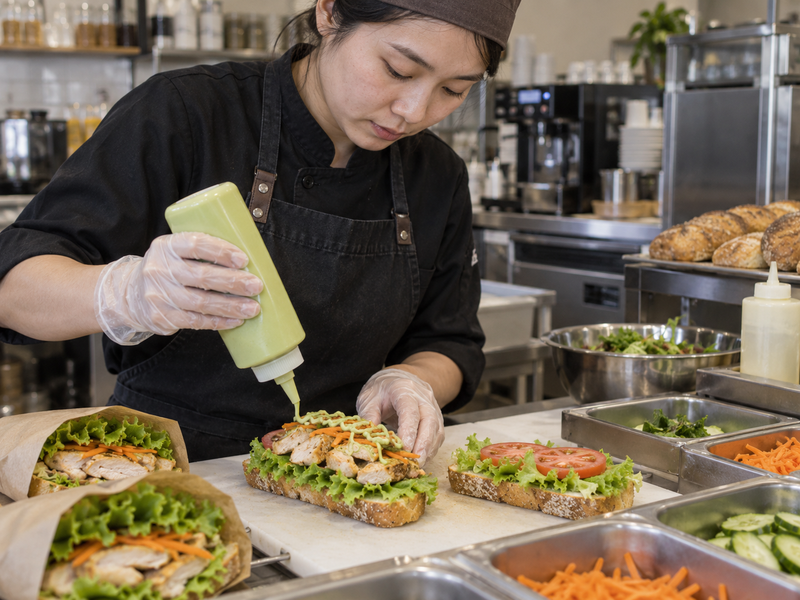
Test matcha mayonnaise on the specific sandwich, salad, fried item or snack proposed for sale. The oil and acid in the sauce may cut through a rich dish, yet its tea flavor may disappear beside heavily seasoned ingredients. Check visual coverage, portion consistency and the customer’s first bite. A thick dip may be excellent in a cup but fail through a squeeze bottle; a thinner sauce may run off a warm sandwich. Use the proposed service tool and plate or package in the trial.
Observe the food-sauce contact period. A prepared sandwich held before sale is a different test from a dip handed over separately. Check whether bread softens, a fried surface loses the desired texture or a salad component stains. These are product quality checks alongside the operator’s food safety controls. Record the portion the team can deliver during a busy shift and what is left in the bottle or cup at the end. The desired matcha dose should be judged in the amount the customer actually eats.
8. Which pack and service route fit the product?
Choose a container around real handling
A café squeeze bottle, a sealed retail cup and a foodservice pail need different fill and opening checks. Evaluate whether the sauce flows through the dispenser, leaves an excessive residue, leaks during transport or changes appearance after opening. An opaque pack can hide color drift; a clear pack can expose it under display lighting. Test both the initial full container and the final portions dispensed. Match packaging and any cold-chain requirement to the manufacturer’s validated finished-product plan.
Review allergen and ingredient labeling for the actual base and any additions. Egg and other allergens cannot be assumed away because the sauce is green or marketed alongside plant-based dishes. Set lot identification and handling instructions for receiving kitchens, and test how staff will store and dispense the product. An ingredient specification for matcha cannot establish the storage life of a flavored mayonnaise. The final pack must support the recipe, the service workflow and the business’s safety assessment together.
| Service route | Pack test | Quality observation |
|---|---|---|
| Café squeeze bottle | Flow and repeated handling | Separation and dose consistency |
| Dip cup | Seal and transport | Opened-cup appearance |
| Retail sandwich line | Deposit accuracy | Coverage and food contact |
| Bulk foodservice pack | Repeated access | End-of-pack texture |
9. How do usable yield and dose affect cost?
Count sauce served, not only sauce made
Cost the approved serving by its actual matcha dose, base cost, other ingredients, packaging, labor and usable yield. Measure how much sauce remains in the mixer, transfer line, bottle or cup. A high matcha dose may have a small impact on a tiny garnish but a substantial impact on a large dip portion. Compare matcha candidates at equal finished sensory quality rather than equal powder weight alone. A powder requiring less dose to reach the target can change the calculation.
Use the trial to estimate portions that meet both weight and appearance standards. Record rejects due to unstable texture, uneven color, incorrect fill or handling loss. Price a released, saleable portion, then revisit the decision after a pilot run. For a chain, small over-portioning at every service point may matter more than the price difference between two qualified powders. A practical brief therefore includes the tool and target serving mass, not just a recipe percentage.
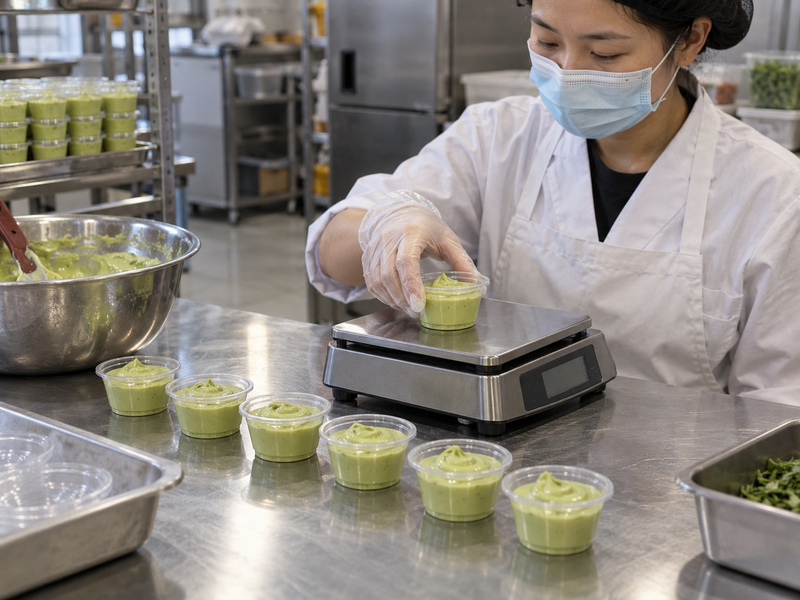
| Cost driver | Measure in pilot | Purchasing or operations decision |
|---|---|---|
| Matcha | Grams per approved portion | Compare qualified lots or grades |
| Base | Actual use and transfer loss | Source stable SKU |
| Dispensing | Portion spread across operators | Adjust tool or training |
| Packaging | Cost and usable residual | Select service format |
| Released portions | Units meeting specification | Set selling price |
10. What belongs in the final matcha and product brief?
Connect ingredient approval to the served sauce
Tell a prospective matcha supplier that the application is a savory mayonnaise, whether tea is pre-dispersed, the approximate use level, desired color and flavor, target market and expected purchasing range. Ask for lot-linked documents appropriate to the buyer’s quality review and a representative sample. Matcha Village can discuss candidates in relation to that application; the food operator must verify each in its own base and process. A color grade or price sheet alone will not decide the sauce.
The internal product brief should identify the approved mayonnaise base, formula version, addition sequence, pilot results, finished sensory standard, pack, service tool, safety controls and who authorizes a change. Attach evidence from actual dishes and the intended distribution route. State when a new matcha lot, base SKU or package triggers another comparison. This makes procurement, kitchen training and quality release refer to the same finished condiment. The goal is a repeatable sauce that adds a useful tea note to food without sacrificing texture or safe handling.
FAQ
Q1: Can I stir matcha into any commercial mayonnaise? You can screen a candidate that way, but the finished flavored sauce needs its own sensory, handling, labeling and safety review.
Q2: Does a green color prove there is enough matcha flavor? No. Taste the sauce in its actual portion with the intended food.
Q3: Should a kitchen use raw shell eggs for an uncooked mayonnaise? Follow applicable rules and validated procedures. US FDA guidance recommends pasteurized eggs or egg products for mayonnaise that is not thoroughly cooked.
Q4: Can the base mayonnaise shelf life be copied to the matcha version? No. Added ingredients and handling can change the finished product; validate the actual formula and pack.
Q5: What should a matcha sample request include? Give the base, expected dose, mixing route, target savory tea note, pack and market, and request lot-linked information.