
Matcha risotto is a hot rice dish built around gradual stock absorption and a creamy, flowing finish. It is a different production problem from simply cooking green rice. A restaurant must decide when the matcha enters, how the grains stay distinct, and what happens if a finished pan waits on the pass. A tea powder chosen for color may taste harsh beside stock or cheese, while a delicate one may disappear. These ten checks translate the dish into a menu brief, a repeatable cooking trial and a purchasing specification. They also keep cooked-rice food safety in the service plan instead of assuming that a pretty green bowl can be held indefinitely.
Table of contents
- What should matcha risotto do on the menu?
- Which rice, stock and matcha should be tested together?
- How should the kitchen control stock addition?
- When should matcha enter the cooking process?
- What texture should leave the pass?
- How should the kitchen balance flavor and toppings?
- How can a busy service repeat the dish?
- How should cooked rice be cooled or held safely?
- What does a saleable portion actually cost?
- What should the matcha supplier receive in the enquiry?
1. What should matcha risotto do on the menu?
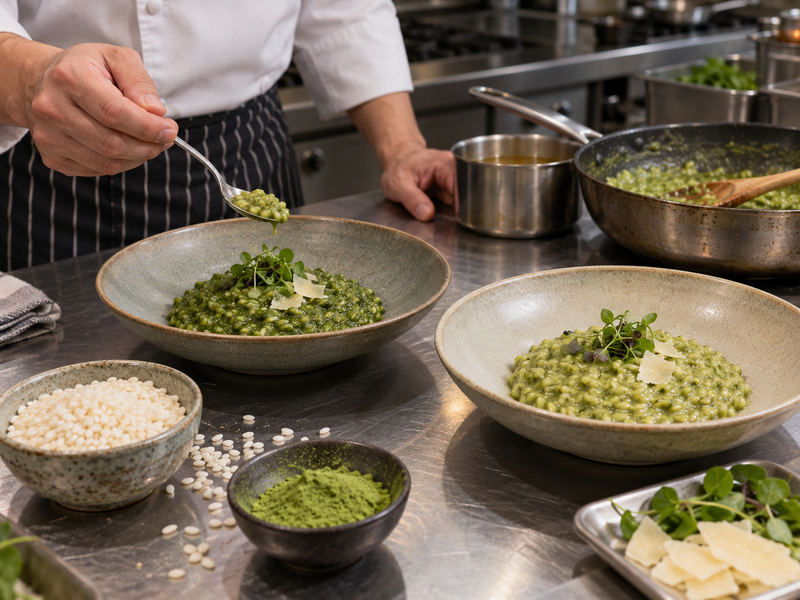
Define the bowl before choosing a green shade
Decide whether the dish is a small starter, a main course or a side. Set the finished portion weight, serving vessel, expected garnish and price position. A matcha risotto should still offer the grain structure and gentle flow that a guest expects from risotto. If the kitchen cooks rice fully in a pot and then stains it green, the result may be a valid rice dish but it belongs under a different menu description. This distinction also separates the article from a broad matcha rice recipe already in the site’s content inventory.
Write a target flavor description: tea-forward or subtle, dairy-rich or lighter, with a stock profile that supports the tea. Choose one primary service route for the first trial. A dish finished à la minute behaves differently from a fully cooked pan held for a buffet. Photograph a normal bowl under actual restaurant lighting and define an acceptable natural green range.
| Menu format | First operational choice | Trial endpoint |
|---|---|---|
| Starter | Smaller portion and lighter finish | Balanced first and last bite |
| Main | Rice, stock and garnish weight | Satisfying full bowl |
| Tasting menu | Fast handoff and exact plating | Texture at guest arrival |
| Banquet | Batch and holding method | Quality after planned wait |
2. Which rice, stock and matcha should be tested together?
Approve the ingredient system, not three samples in isolation
Choose a rice suited to risotto and record its product identity and lot. Grain variety and milling affect absorption and how readily the pan develops creaminess. Use a consistent stock in the first comparison; a deeply roasted, salty or heavily flavored broth may obscure the tea note. If a dairy finish is planned, include it from the start because fat and salt can change how matcha is perceived. Evaluate each matcha candidate in the complete dish, not just in a cup of water.
Matcha Village’s supplied material describes culinary, premium and other grades with application-selection support. Request named samples and current specifications, then use equal weighed doses in otherwise identical pans. Note powder dispersion, color after cooking and bitterness after several bites. A matcha that looks bright dry may turn dull in hot stock; another may remain aromatic but have a rough finish. Record the approved rice, stock and matcha together so procurement does not substitute one component and assume the same result.
| Input | Pilot record | Finished-dish question |
|---|---|---|
| Risotto rice | Variety, lot and dry weight | Distinct grains and creaminess? |
| Stock | Ingredient identity and salt level | Supports tea or masks it? |
| Matcha | Named product, lot and grams | Smooth flavor and color? |
| Finish ingredient | Fat, cheese or alternative | Alters tea note or allergens? |
3. How should the kitchen control stock addition?
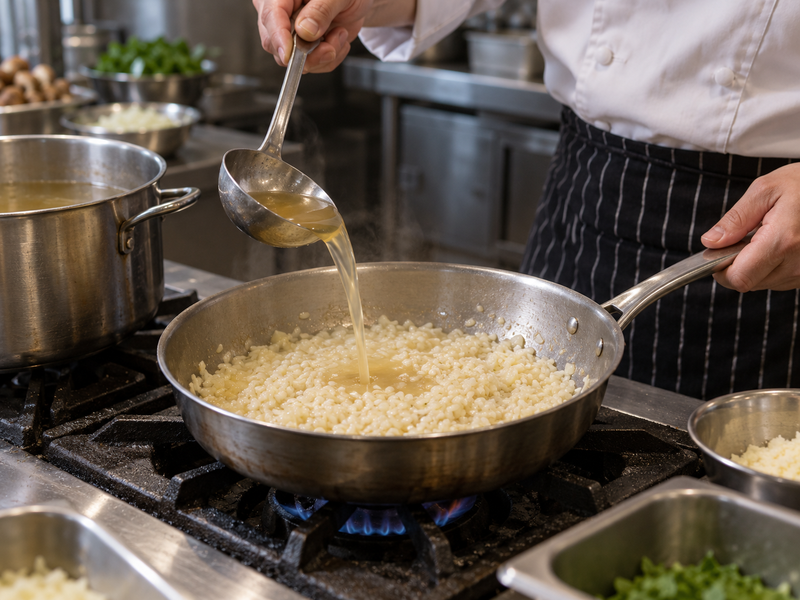
Record absorption rather than relying on a timer
The kitchen should set pan size, rice load, heat and stock temperature for a controlled pilot. Add measured stock portions as the rice absorbs liquid, then record total stock used and the condition of the grains at each stage. A recipe’s minute count can shift with burner output, pan surface, rice lot and batch size. Rushed addition may leave a watery outer layer while the center stays firm; too little stock can make the pan tighten before the grains are ready. Keep one baseline rice-and-stock process before introducing matcha, so the team knows whether a later change comes from tea or from cooking technique.
During a service simulation, watch how much attention the pan requires and whether a second cook can reproduce it. Those are different methods with different safety and texture checks. Do not carry a partially cooked rice plan into service without the venue’s approved cooling, storage and reheating controls. The cooking log should describe the actual point at which the grain has a tender exterior and a firm, edible center.
4. When should matcha enter the cooking process?
Compare timing without changing the whole formula
Adding matcha early exposes it to more heat; adding it near the finish gives less time for dispersion. Run side-by-side pans with the same rice, stock, matcha weight and final portion size, changing only the point of addition. A smooth premix made with a measured portion of warm stock may reduce green clumps. Count that stock within the batch formula. Whisking powder directly into a thick finished pan can leave dark pockets, while sprinkling it over each plate creates an uneven surface and inconsistent dose.
Inspect the pan at several points, including its edges, and taste the final bowl after the normal handoff interval. Record whether the tea note remains clean and whether color is reasonably even. If the late-addition version wins but takes too long to mix during rush, develop a service-ready premix method under the venue’s food-safety procedure. The solution should preserve risotto texture, not turn the dish into a thin green soup.
| Addition route | Possible benefit | Risk to test |
|---|---|---|
| Earlier in stock cycle | Time for distribution | Long heat exposure |
| Premix near finish | Controlled dispersion | Added liquid changes flow |
| Dry addition near finish | Few prep steps | Clumps and dark specks |
| On-plate dusting | Visible tea accent | Uneven flavor and dose |
5. What texture should leave the pass?
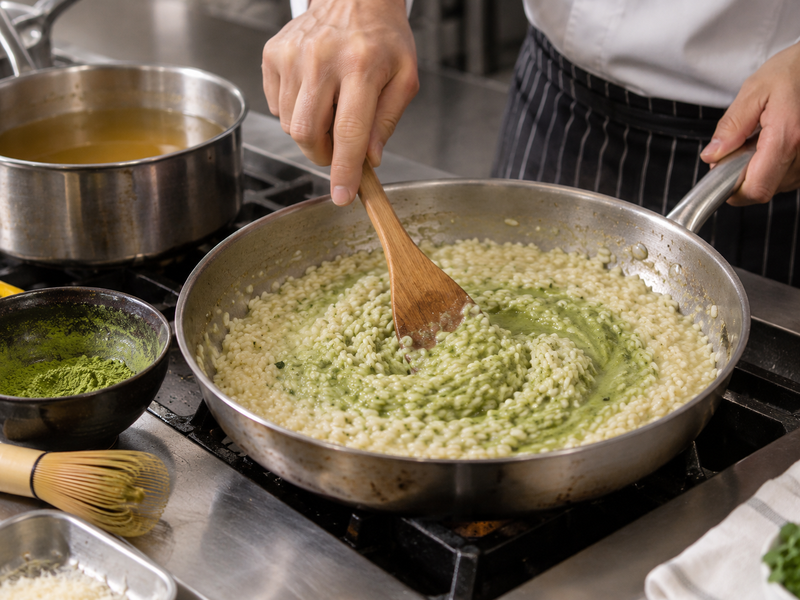
Test flow and grain bite at handoff
Set a texture standard in the actual plate: the risotto should settle gently when spooned, with distinct cooked grains rather than a stiff mound or a pool of loose stock. The exact target belongs to the restaurant’s menu style, but it should be described well enough for another cook to reproduce. Tilt a normal serving plate during the pilot and note how the rice moves. Taste grains from the center and edge of a pan. A glossy surface alone can hide a firm center or excess liquid.
Run a short pickup-delay test. Plate one portion immediately and another after the realistic time between the stove and the guest. Risotto often tightens as it sits; adding stock at the last second may restore flow but also dilute matcha and seasoning. Record whether the second plate needs a correction or a remake. Make an acceptance photograph with a normal garnish, not a heavily staged sample that staff cannot repeat.
6. How should the kitchen balance flavor and toppings?
Let tea remain identifiable through a full portion
Taste the rice plain before adding a garnish, then taste the final menu plate. Salt, butter, cheese, mushrooms and seafood can each change matcha’s role. A rich topping may cover a delicate tea; a strongly vegetal matcha may clash with a sharply flavored stock. Test one garnish route at a time. If a seafood topping is proposed, the restaurant must assess its own sourcing, allergen, storage and handling requirements rather than infer safety from the risotto base. A vegetarian version needs its own ingredient and cross-contact review if that is the menu promise.
Ask tasters to describe rice texture, tea aroma, stock, finish and whether the dish remains pleasant after several spoonfuls. Matcha has no reason to be added at a dose that makes the plate bitter merely to achieve a photograph’s color. Keep optional garnish decisions separate from the baseline matcha risotto specification. The kitchen should know whether it is selling a tea-led dish, a stock-led dish with a tea note, or a special garnish that happens to sit on green rice.
7. How can a busy service repeat the dish?
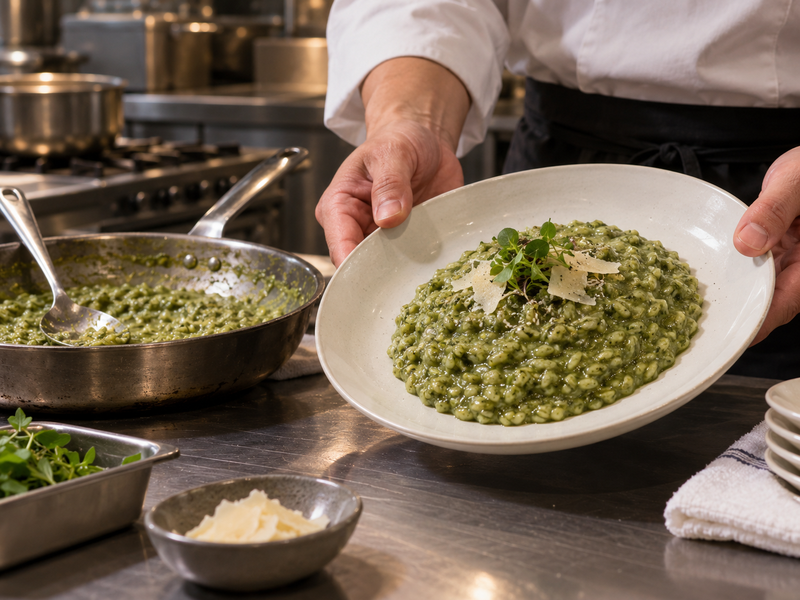
Build a method that works with normal staffing
Time the full process during a simulated rush. Record how many pans one cook can manage without losing the stock-addition rhythm, how long the matcha premix takes and how long a plated bowl can wait before its texture changes. If the restaurant uses a staged rice base, develop and validate the exact partial-cooking, cooling, holding and finishing method with its food-safety team. Do not assume a home recipe’s direct-cook time converts to a safe make-ahead system. Service cards should state rice weight, stock range, matcha dose, finish and reject signs in ordinary kitchen language.
Ask a second cook to make the dish using that card, then compare the finished portions. Differences in grain bite, sauce flow and green intensity show where the instructions need a measurable endpoint. A small premix may be practical, but staff must know its batch identity and holding rule. If several sites will serve the risotto, verify the method on their actual pans and burners.
| Rush-service check | Record | Decision |
|---|---|---|
| Pan capacity | Orders per cook | Menu throughput |
| Matcha premix | Preparation and hold | Shift workflow |
| Pickup delay | Flow and grain bite | Remake threshold |
| Second-cook trial | Variation from standard | Training or method change |
8. How should cooked rice be cooled or held safely?
Give rice its own time-and-temperature plan
Cooked rice is a food-safety issue as well as a texture issue. The UK’s Food Standards Agency Safe Catering guidance notes that uncooked rice can carry Bacillus cereus spores and instructs food businesses to keep cooked rice hot until serving or cool it promptly and refrigerate it. The kitchen should apply the time-and-temperature limits required in its jurisdiction and approved food-safety system. Matcha color, added stock and a later reheat do not replace those controls. Staff should record batch time, cooling method, holding condition and discard decision for any staged risotto base.
A wide, shallow container or equipment designed for rapid cooling may suit a planned prep route, but the operation must validate the actual batch size and equipment. Hot holding can change grain texture, so test quality alongside safety. A dish prepared for immediate service, a banquet and a packaged chilled meal each need their own process review. The restaurant’s quality lead should approve any reheating and service procedure; this article does not set a universal safe duration or temperature. A clear plan protects guests and keeps an otherwise promising menu idea from failing during a busy shift.
9. What does a saleable portion actually cost?
Count ingredients, labor and remakes
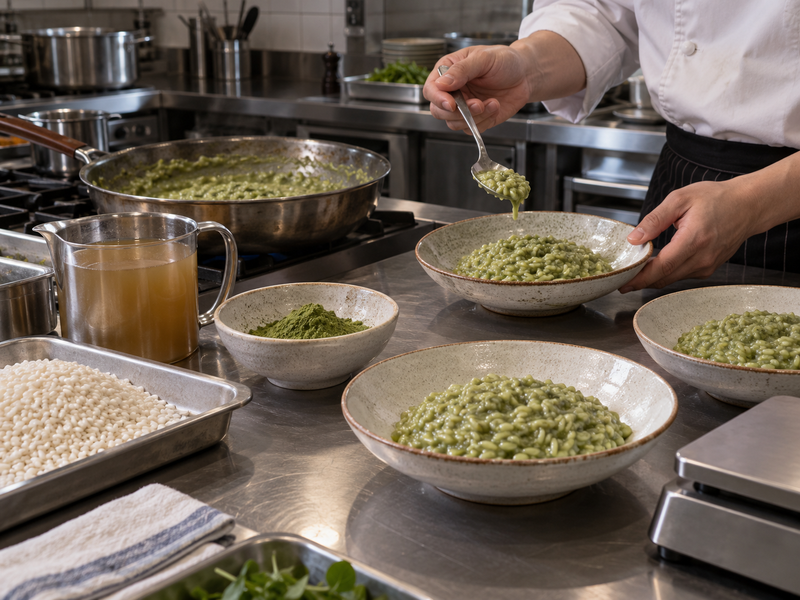
Calculate matcha cost from the approved weighed dose and delivered pack price, then add rice, stock, fat, garnish, packaging if applicable and realistic labor. Record stock actually absorbed rather than using a theoretical range in the cost sheet. Include pans that become too tight, overcooked rice and plates remade after a long pass wait. A low powder quote can be misleading if the dish requires a larger dose to stand up to the stock or if green clumps cause rejects. The useful denominator is a saleable plate delivered to a guest.
For multiple sites, compare the ingredient pack and process time at the forecast weekly volume. A premium menu price does not erase a method that ties up a cook for too long. Track variance across several services, not one calm pilot. Matcha Village’s supplied information describes bulk supply and application-selection support, but ask for current terms on the named matcha sample used in the approved dish. Tie purchasing forecasts to real portions, normal waste and stock replenishment needs.
| Cost line | Calculation input | Frequent omission |
|---|---|---|
| Matcha | Grams per accepted plate | Premix residue |
| Rice and stock | Actual dry weight and uptake | Variable stock use |
| Finish and garnish | Measured ingredient use | Optional topping loss |
| Labor and waste | Service timing and rejects | Remakes after delay |
10. What should the matcha supplier receive in the enquiry?
Describe the hot rice application precisely
Send the supplier the planned rice and stock system, matcha trial range, addition point, desired natural green, target tea note, serving size, anticipated weekly volume and destination market. Request named samples, current specifications, lot identity, pack options, lead times and the documents needed by the buyer. Matcha Village’s stated product range and application-selection support can help shortlist candidates, but any product-specific certification, analytical result, price or minimum order must be confirmed for the actual sample and quote.
Test each candidate in identical pans and compare at the same service delay. Keep the accepted matcha sample, cooking record and plate photograph together. If a replacement lot is proposed, recheck color, dispersion, bitterness and final texture before changing the purchase code. This enquiry is for a risotto cooked through gradual stock addition and finished to order, not a generic green rice product. A controlled multi-shift trial gives procurement a buying target and gives the kitchen a dish it can actually serve.
FAQ
Q1: Is matcha risotto the same as matcha rice?
No. Risotto relies on controlled stock absorption and a creamy, flowing finish with distinct grains. A general matcha rice dish can use a different rice and cooking method.
Q2: Can matcha be sprinkled over the finished plate?
It may create an uneven dose and powdery spots. Test a measured premix in the pan if the goal is tea flavor throughout.
Q3: Must risotto include cheese or seafood?
No. Those are optional formulation and garnish choices. Each needs separate flavor, allergen and handling review.
Q4: Can cooked risotto be left at room temperature for later service?
The kitchen must follow its approved cooked-rice time-and-temperature controls. Matcha does not make a staged rice base safe without them.
Q5: What information helps a supplier choose matcha samples?
Share the rice, stock, addition method, target color and flavor, expected portions and destination market.