
Matcha pavlova gives a pastry team three different materials to manage: a fragile meringue shell, a creamy tea filling and fruit that can release juice. The dessert may look finished when it leaves the bench, yet soften before it reaches the table. Planning the components separately makes that interval easier to control. Start with the size and service route, then develop tea flavor where it contributes most without making the shell difficult to produce.
Contents: Format · Ingredients · Tea placement · Foam · Shaping · Filling · Fruit · Assembly · Cost · Handover
1. Which matcha pavlova format suits your service?
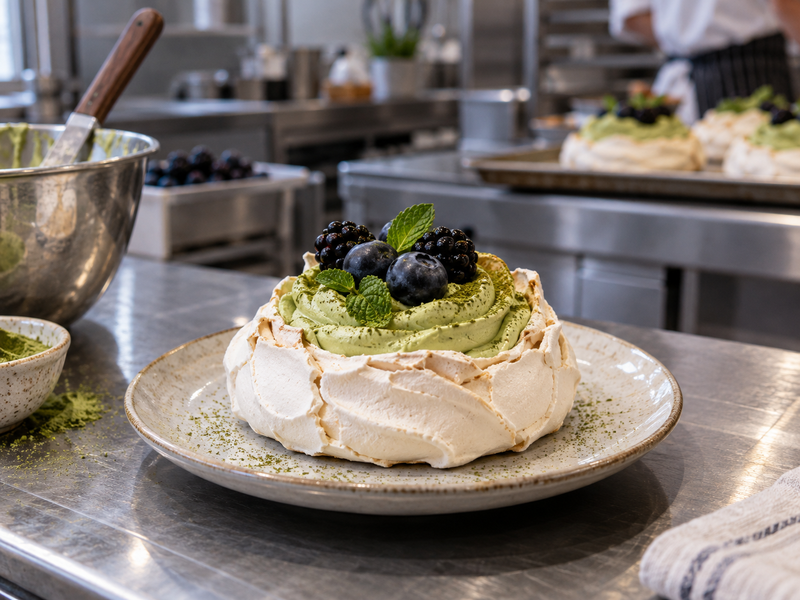
A single large pavlova suits tableside sharing, but slicing changes the appearance of later portions. Individual nests allow a cafe to assemble one order at a time. They also require consistent piping and more handling. Decide how the dessert will be ordered before selecting a shell size from a photograph.
Match the format to the route
| Format | Practical advantage | Trial question |
|---|---|---|
| Individual nest | Portion assembled on demand | Can staff fill it quickly? |
| Shared round | Strong table presentation | How cleanly does it portion? |
| Small tasting portion | Fits a dessert selection | Can the shell be lifted intact? |
The Aiya matcha pavlova recipe pairs meringue with matcha coconut cream and berries. It provides a clear example of tea carried in a topping. Your menu can use that general arrangement while setting its own shell, filling and fruit specifications.
Include the serving plate in the first trial. A shell sitting on a narrow rim may wobble when a server carries it. Leave enough room for a spoon to approach without pushing the dessert across the plate. These small layout decisions matter once several orders arrive together.
2. What ingredients should the development team prepare?
Prepare a plain pavlova base that your pastry team already knows: egg whites, sugar and the acid or starch specified by that formula. Keep the chosen meringue method intact for the initial trial. French and Italian methods have different sequences; combining steps from several recipes makes failures harder to interpret.
Write separate component formulas
List the shell, tea cream, fruit and sauce on separate sheets. Each component should have a weight and a destination. Sugar used in the meringue cannot simply be reduced to compensate for a sweet topping without a new shell trial. It contributes to the structure as well as the taste.
Use pure, unsweetened matcha for the first comparison so the cream’s sugar remains under your control. Record the exact cream product too. Dairy whipping cream, coconut cream and a prepared plant whipping product can differ substantially in texture and sweetness. A substitution may affect both holding behavior and ingredient declarations.
Keep fruit garnish modest while testing the tea. One berry choice and one sauce are enough to find out whether the filling is balanced. Several acidic fruits, a sweet puree and a strong garnish can make the underlying tea difficult to judge, even when the finished plate is visually attractive.
3. Where should the matcha flavor go?
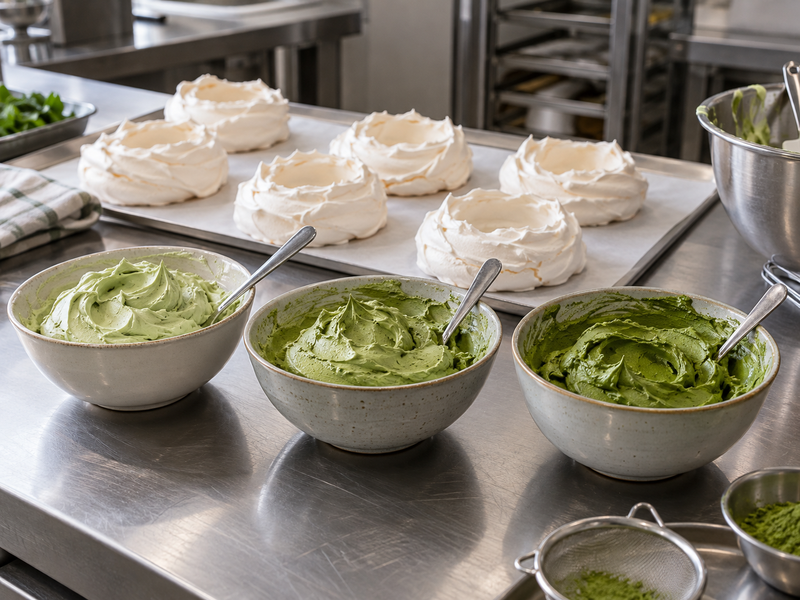
Putting most of the tea in the cream gives the team a direct way to adjust flavor without rebuilding the meringue. A tea-colored shell is another option, but powder additions should be tested separately because they change the material being folded into the foam. Start with one location for the tea and learn its effect.
Use a small filling comparison
The following additions are proposed development trials, not a validated pavlova recipe. Use the same unsweetened cream base and approved whipping method in all three samples. Weigh the matcha before dispersing it, and keep any liquid used for dispersion within the existing cream formula.
| Sample | Cream base before whipping | Proposed matcha | Evaluate with |
|---|---|---|---|
| Light | 200 g | 1.5 g | Plain shell and chosen fruit |
| Middle | 200 g | 2.5 g | The same shell portion |
| Strong | 200 g | 3.5 g | The same fruit weight |
Taste the assembled spoonful, including meringue. Cream alone can seem pleasantly restrained while the sugary shell makes its tea flavor disappear. Record any dry or powdery finish separately from bitterness. If more tea creates an unpleasant texture, test another powder or a different balance rather than repeatedly increasing the dose.
4. How do you make the meringue process repeatable?
Use clean equipment and a documented egg-white preparation. Accidental yolk or fat contamination can disrupt the whipping process, so inspect the bowl, whisk and separating tools before starting. Record the egg product used; fresh separated whites and commercial liquid whites should not be switched casually within one development comparison.
Choose one recognizable foam endpoint
Ask the pastry team to photograph the foam at the point used for shaping. A description such as stiff peaks is more useful when accompanied by an image of the actual batch and a note about how it holds on the whisk. Mixer size, batch depth and attachment all affect how the process looks to the operator.
If using an Italian method, follow the established syrup handling procedure and temperature checks for that formula. If using a French method, retain its sugar addition sequence. Aiya’s recipe and King Arthur Baking’s pavlova illustrate different approaches; their steps should not be combined into an improvised hybrid.
Time the interval between completed mixing and the final tray entering the oven. A larger batch can spend longer waiting for shaping. If the last shells differ from the first, investigate that delay before blaming the tea supplier or changing the ingredient ratio.
5. How should the shells be shaped and dried?
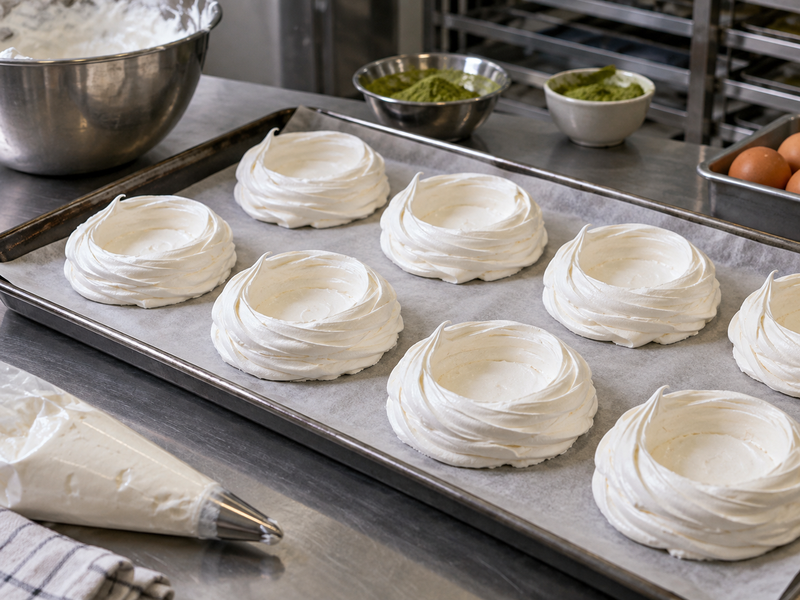
Set both the outside diameter and the depth of the center. Two nests can weigh the same but behave differently if one has a thick floor and low walls. Use a guide beneath the parchment during shaping, then remove or position it safely according to the baking setup. Keep all marks away from direct food contact.
Inspect the base as well as the rim
| Shell feature | What to compare | Effect on service |
|---|---|---|
| Floor thickness | Broken sample cross section | Support under filling |
| Rim height | Same viewing angle | Available filling space |
| Dry outer surface | Gentle handling after cooling | Release and transfer |
| Cracks | Position and severity | Risk during lifting |
A pavlova usually aims for a crisp exterior with a softer center, so drying every part to a brittle cookie texture may miss the intended product. Establish the endpoint for the chosen format and oven load. Published bake schedules are useful references, not automatic settings for another oven.
Cool shells through the procedure selected for your base formula before moving them. Keep a few unfilled controls from each trial. They help distinguish a shell problem present before assembly from softening caused later by cream, fruit or sauce.
6. How do you develop a smooth matcha filling?
Sift the tea before incorporating it into the filling. If your process uses a small paste or slurry, account for its liquid in the formula rather than adding an unmeasured splash. Check the dispersion before whipping the whole batch; chasing dark specks in finished cream can lead to excessive mixing.
Test piping and eating texture together
Use the selected tea dose in a small amount of the actual cream product. Apply the established whipping process and compare how the filling holds a spoon mark or piping ridge. Then taste it with the shell. A filling can look sharply defined yet feel too dense when combined with meringue.
Record the cream’s starting condition, the finished batch temperature and the time before assembly. Those observations can explain why a second batch handles differently even when ingredient weights match. Keep chilled components within your operation’s approved food safety controls throughout preparation and service.
Avoid using extra matcha as a general thickener. If the cream is too loose, check the whipping method and the suitability of the base product. Additional tea may increase bitterness while leaving the underlying handling problem unresolved. A change to stabilizers or a different whipping product needs a separate trial and an updated ingredient declaration.
7. How can fruit add flavor without flooding the shell?
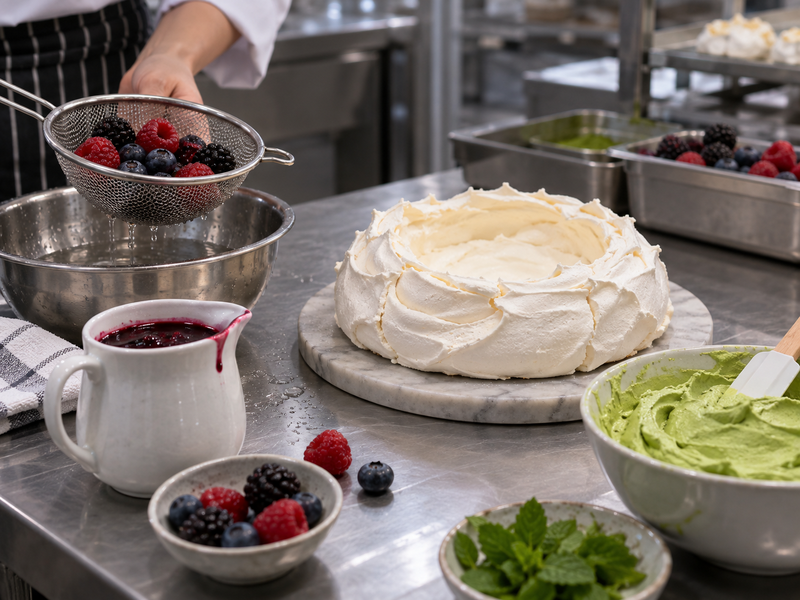
Fruit brings acidity, color and moisture. Those functions need separate decisions. Whole berries may be easy to place, while cut fruit can release more juice during the service period. A sauce makes plating flexible but can run into cracks or collect beneath the shell. Test the form you will actually buy and prepare.
Control where the moisture lands
| Fruit component | Preparation check | Assembly option to test |
|---|---|---|
| Whole berries | Surface moisture after washing | Place on cream |
| Cut fruit | Juice released after cutting | Drain and portion separately |
| Fruit sauce | Flow at serving condition | Add a measured amount last |
| Frozen fruit | Thawing loss and softness | Evaluate a separate preparation |
Bring cooked sauce to the required chilled condition before combining it with cream or meringue. Warm sauce can change the filling’s texture immediately. Keep the sauce weight constant during tea comparisons so acidity does not become an accidental second variable.
Try placing sauce beside the shell as well as on top. That gives the guest a different spoonful and may change how long the shell retains its intended texture. Choose the arrangement through an actual plate trial rather than assuming that the most dramatic photograph gives the best eating experience.
8. When should the dessert be assembled?
Plan assembly around the longest ordinary delay between filling and eating. In a cafe, that may include waiting for coffee, collecting several plates and carrying them to a distant table. In catering, the route may be longer. Time that sequence once with staff performing the real tasks.
Define a service window through observation
King Arthur notes that filled pavlova softens quickly. That supports testing the assembled dessert close to service, but it does not establish a commercial holding limit for your version. Keep the unfilled shells, cream and fruit under their respective approved controls, then assemble only the number appropriate for the service plan.
Compare a freshly assembled portion with portions held through the expected service delay. Observe the bottom of the shell, the cream’s shape, released fruit juice and the ease of taking a spoonful. Use quality observations alongside the operation’s food safety requirements; one does not replace the other.
If the dessert deteriorates before the usual table delivery, change the assembly sequence or component arrangement. A smaller amount of sauce, a different fruit preparation or filling to order may solve the problem more directly than making a thicker shell that guests find difficult to cut.
9. What does a useful service trial measure?
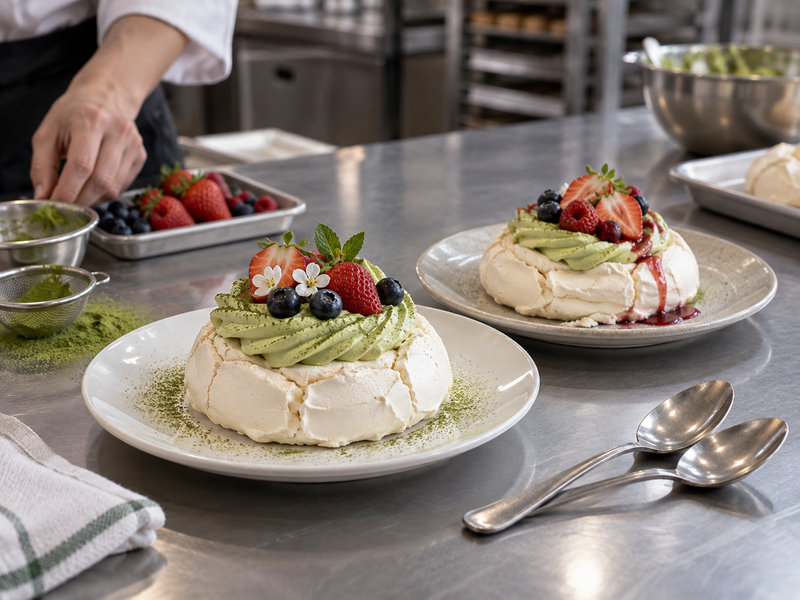
Count usable shells after cooling and transfer, then count complete portions after assembly. Fragile shells may be the main loss even when the ingredients appear inexpensive. Keep that loss visible in costing. A dessert that needs frequent replacement during plating also consumes staff attention during a busy service.
Record the work behind each plate
| Measurement | Suggested record | Decision supported |
|---|---|---|
| Intact shell yield | Usable shells per batch | Production quantity |
| Filling portion | Weight per plate | Flavor and cost |
| Fruit and sauce | Separate weights | Moisture and purchasing |
| Assembly time | Actual staff trial | Service capacity |
| Quality after delay | Photograph and spoon test | Assembly timing |
Invite the people who will plate the dessert to participate. A delicate swirl made by the development chef may be difficult to repeat with the available nozzle and counter space. Photograph the simplest acceptable presentation as well as the ideal one.
For a wholesale component offer, clarify whether the buyer receives shells, frozen components or a complete dessert. Each arrangement creates different handling responsibilities. Price the actual delivery format and support it with preparation instructions that the receiving kitchen can follow.
10. What belongs on the final production sheet?
The sheet should connect each component to a finished portion: shell size, filling weight, fruit preparation, sauce amount and assembly order. Add the approved photographs of shell shape and completed plate. These are practical references for new staff and for checking a batch that looks slightly different.
Give purchasing an application-specific tea brief
Specify the matcha used in the approved filling trial, including supplier code and dose. Explain whether the powder also appears in the baked shell. A supplier assessing the application needs to know which component carries the flavor and how much sweetness surrounds it. The Matcha Village ingredient buyer guide can support those discussions without substituting for the dessert test.
Document any component substitutions that require a new trial, especially cream products and fruit preparations. Keep food safety controls, ingredient declarations and shelf-life decisions linked to the actual formula. A visually successful plate is only one part of the approval.
Schedule a short service rehearsal using the final dishware and a normal staff team. Have them assemble several orders together, carry them through the usual route and inspect the last plate before adding the dessert to the menu.
Frequently asked questions
Q1: Must the meringue itself contain matcha?
No. A plain shell with matcha cream is a workable development approach. It lets the team adjust tea flavor without changing the foam formula at the same time.
Q2: Can coconut cream replace dairy cream directly?
Treat it as a separate filling trial. Products differ in fat content, sweetness and whipping behavior. Use the intended commercial product and update ingredient information accordingly.
Q3: Why does the shell soften after plating?
Check contact with cream, sauce and fruit juice, along with the service delay and room conditions. Compare with an unfilled shell from the same batch to identify where the change begins.
Q4: Are cracks always a reason to reject pavlova?
Small surface cracks can be acceptable. Reject decisions should focus on handling, filling support and presentation. Establish photographs of acceptable and unacceptable examples for the chosen format.
Q5: Can this dessert be approved for delivery?
Only after testing the actual packaging and journey under appropriate handling controls. A dine-in service trial does not establish how a fragile assembled pavlova will arrive at a customer’s door.