
Matcha pastry cream has to do more than taste good from a spoon. It must cook smoothly, cool under a safe process, pipe into pastries and keep its tea flavor after the finished item is packed. A lump or dark streak shows up quickly against the cream’s pale green. For a bakery, the reliable route is to test matcha in an established pastry cream formula and record each point where the powder, heat or filling method changes the result.
Contents: Use · Powder · Dose · Mix · Cook · Cool · Pipe · Flavor · Pack · Spec
1. What Will the Matcha Pastry Cream Fill?
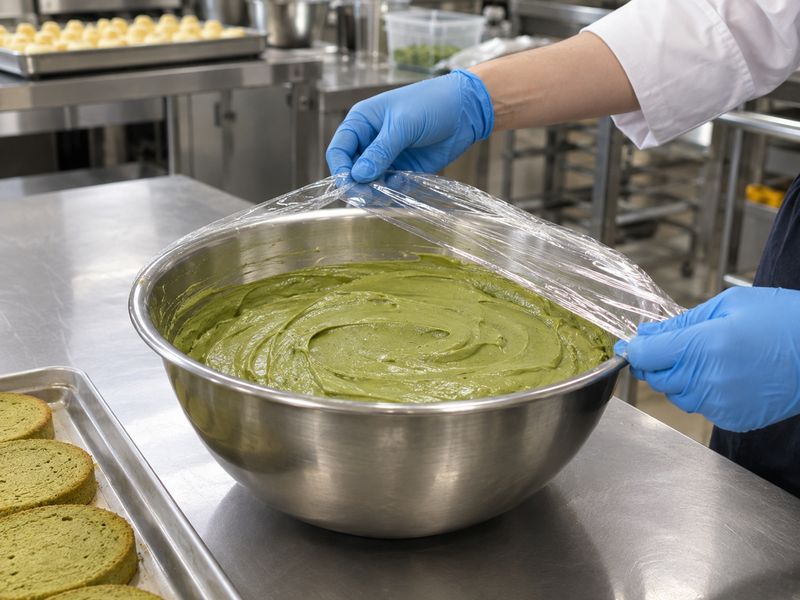
Match texture to the pastry
A cream puff needs filling that can be injected without tearing the shell. A tart may need a cream that holds a clean slice. A layer cake asks for enough body to resist squeezing. Name the product before adjusting a formula. Use a pastry cream the bakery already makes well as the control, then add matcha in measured trials. Record the finished pastry’s serving temperature and how long it waits before sale. A cream that is thick in a cold bowl may soften once a filled pastry stands in a display case.
Fill a real sample. Developers can spend too long judging cream in a bowl. Pipe the intended portion into the chosen pastry and taste the complete item. The shell, fruit or chocolate may change how much tea is perceived. Look for cream leaking from a puff, soaking a tart base or staining a cut edge. Those failures need different fixes. Set an acceptable filling weight and appearance so a production baker has a target beyond “pipe until full.”
2. Which Matcha Powder Works in a Cooked Cream?
Select after the heating and chilling cycle
Request documented matcha samples and add them to the same control recipe at the same dose. Taste after the cream has cooked and chilled. A powder that smells delicate in the bag may lose presence under heat and dairy. A stronger one may survive but leave a dry finish. Check color in a filled pastry, not only in a white cup. A premium powder should earn its cost by improving the final product or reducing the dose needed. Grade labels are a starting description, not a production result.
Ask for continuity. If the pastry remains on the menu, the bakery needs repeatable supply and quality records. Keep an approved powder sample, lot number and product specification. A new lot should go through a short cook trial before replacing the old one. A change in color or fineness can show up in a smooth cream even if it was less noticeable in a baked cake. Make purchasing part of the trial so the approved option is actually available at the target volume.
| Powder trial | Keep fixed | Compare after chilling |
|---|---|---|
| Sample A | Cream formula and process | Tea flavor, color, specks |
| Sample B | Cream formula and process | Tea flavor, color, specks |
| Sample C | Cream formula and process | Tea flavor, color, specks |
3. How Much Matcha Keeps Flavor Clear?
Run a small dose series
Make several creams with nearby powder levels while holding sugar, dairy or plant base and thickener constant. Taste a full portion in the pastry. A higher matcha dose can overcome a sweet shell or filling partner, but it can also make the cream bitter or grainy. Record grams of powder per kilogram of cream and per finished pastry. These figures let the bakery calculate ingredient cost and check whether staff are filling at the approved weight.
Judge after a night in the pack. Tea flavor can seem stronger immediately after mixing than when a pastry is sold. Taste at the normal sales point. If a low dose disappears only when fruit is added, adjust the pairing or portion before increasing matcha across the entire formula. A high dose that looks impressive in a cut photograph may be tiring in a full cream puff. The decision should be based on a whole item and the people who buy it.
4. How Should You Disperse the Powder?
Prevent dark pockets before the cream thickens
Sift compacted matcha and make a smooth preblend with a measured portion of compatible liquid. Adding dry powder directly to a hot, thickening cream makes it harder to remove lumps. Choose an addition point that fits the bakery’s process and test it under the same heating conditions. Record the whisk, mixer or shear method. A smooth green surface can hide powder pockets that appear when the cream is spread thinly or piped through a narrow tip.
Use a white plate test. Spread a small amount of cooled cream on a pale plate and inspect for dark flecks or pale streaks. Repeat with samples from the top and bottom of the batch. If they differ, the vessel mixing or transfer step needs work. Do not solve a dispersion problem by adding more color. A bakery may strain pastry cream as part of its standard method; if so, note whether matcha particles are being removed and whether flavor changes. The actual process, not a theoretical recipe, belongs in the production sheet.
| Mixing step | Purpose | Check |
|---|---|---|
| Sift powder | Break packed clumps | No hard pellets |
| Make preblend | Wet particles | Even green paste |
| Add at defined point | Repeat process | No streaks after cooking |
| Inspect cooled cream | Catch hidden faults | Smooth spread and pipe |
5. What Should You Watch During Cooking?
Cook the base properly while protecting flavor
The pastry cream’s thickening and food-safety process comes first. Do not shorten cooking simply to retain bright green color. Use the bakery’s validated control process, then compare matcha added at different stages if needed. Record product temperature, cooking time and mixing behavior with the equipment used. Matcha may make it harder to see lumps or scorching, so scrape and inspect the vessel as the normal method requires. A burnt note can be mistaken for strong tea if the team only looks at color.
Repeat at scale. A small saucepan heats differently from a steam kettle or large batch cooker. Run an intermediate batch before planning volume production. Pull samples from more than one point in the vessel and compare smoothness. If the cream thickens during a long transfer, the filling process may need shorter holds or a different schedule. Avoid adding water late on the line without revising the formula and safety review.
6. How Will You Cool and Hold the Cream?
Treat the cooked cream as a perishable filling
Pastry cream commonly contains ingredients that need controlled cooling and holding. Qualified quality staff should define the procedure for the exact formula, batch size, container and destination market. A broad internet estimate for refrigeration time cannot replace it. Development can still observe quality during the approved cooling route: surface skin, water release, color and thickness. Covering, tray depth and batch size can change cooling speed and finished texture. Record the method used for the sample that wins tasting.
Label every trial. A busy bakery can easily confuse several green bowls. Mark batch code, preparation time, formula version and intended use in internal records. Keep a retained sample under the same conditions as sale product. If the cream is made at a central kitchen and transported to stores, include transfer and piping in the validation plan. A safe cream that arrives too stiff to pipe is a commercial failure; a pleasant cream held outside its approved conditions is an unacceptable shortcut.
| Hold check | Quality question | Responsible team |
|---|---|---|
| Cooling | Does texture remain smooth? | Production and quality |
| Chilled storage | Does water separate? | Product team |
| Transfer | Does the cream pipe later? | Operations |
| Safety | Are conditions validated? | Quality |
7. Does the Cream Pipe and Stay in Place?
Test on the filling equipment
Load the cream into the actual piping bag or depositor and fill several pastries at the target weight. Watch for blocked tips, air pockets and inconsistent portions. If matcha is unevenly dispersed, a narrow nozzle may expose the issue quickly. Cut filled items to check distribution. A thick cream that looks stable on a spoon may crack a delicate shell during filling; a thinner cream may migrate after a few hours. The right viscosity depends on the pastry and the sales window.
Count saleable pieces. Record cream left in bags or depositor lines and pastries rejected for leakage or poor fill. Those losses affect cost per piece. If a bakery plans an open tart display, check whether a piped surface dries or changes color under case lighting. If the cream will sit beneath fruit, test the assembled tart for moisture transfer. A formula is not complete until the full pastry stays appealing through the customer’s purchase and eating time.
8. What Pairings Help the Tea?
Add one partner at a time
Matcha pastry cream can sit beside berries, sesame, vanilla, citrus or chocolate. Each partner can be pleasant, but a crowded pastry loses a clear center. Taste plain filled samples first, then one paired version at a time. Compare whether tea remains recognizable after two bites. White chocolate may increase sweetness; citrus may sharpen perceived bitterness; a nutty base may deepen the tea impression. These are test questions, not universal rules. Let the finished pastry decide.
Keep the label in mind. New toppings may introduce allergens and change nutrition data. The packaging and menu description should match the approved recipe. A product photo with a large fruit garnish should not be used if ordinary production cannot supply it reliably. If an ingredient is seasonal, have a tested fallback rather than improvising a substitute during a rush. A good pairing makes the cream taste more like matcha, not merely more complicated.
| Pairing trial | Evaluate |
|---|---|
| Plain pastry | Baseline tea presence |
| Berry topping | Acid and moisture transfer |
| Sesame base | Nutty balance and allergen review |
| Chocolate accent | Sweetness and tea visibility |
9. How Does the Filled Pastry Travel?
Test the whole item in its sale pack
A cream puff in a paper box can rub against its neighbor. A tart in a sealed tray may collect condensation. A cake layer may slide during transport. Pack trial pastries in the intended container and send them through the normal route. Open them after realistic holding and check leakage, shell texture, cream shape, color and aroma. Do not assign a shelf-life period from the cream alone; the combined pastry and pack need their own assessment under the applicable process.
Watch the first and last fill. A large batch may change viscosity during production. Compare early, middle and late pastries and note any difference in portion weight or appearance. If staff warm the cream to pipe it more easily, that step requires review and documentation. A good commercial pastry cream needs to survive ordinary handling without forcing service staff to invent temperature or mixing shortcuts.
10. What Belongs in the Production Sheet?
Make the approval visible to another shift
Record the matcha lot standard, formula by weight, preblend and addition method, cooking, cooling, holding, piping temperature or condition, fill weight and finished pack. Add photographs of acceptable cream spread and cut pastry. A second baker should be able to make a small batch from the sheet without the developer standing nearby. Purchasing should know what to test when a powder lot changes. Quality should know which process version supports the storage decision.
Finish with a complete bite. Compare the second baker’s filled pastry with the approved reference after the normal sales hold. A matcha pastry cream earns a place in the range when it tastes clearly of tea, pipes cleanly and remains pleasant inside the product customers receive. If any one of those fails, revise that step and repeat the trial before ordering new packaging.
| Launch file | Why it matters |
|---|---|
| Powder and supplier specification | Controls future lots |
| Formula and process | Repeats texture and flavor |
| Cooling and holding plan | Supports safe production |
| Fill trial and yield | Sets realistic cost |
| Finished-pack test | Shows customer experience |
FAQ
Q1: Can matcha be added after pastry cream cooks? It can be trialed, but the addition point needs a process and food-safety review for the exact formula.
Q2: Why is matcha pastry cream grainy? Dry powder pockets, particle behavior or thickening can contribute. Check preblending and the cooled spread test.
Q3: How much matcha should a bakery use? Test a small dose series in the finished pastry and calculate cost per saleable item.
Q4: Can the cream be made ahead? Use a validated cooling and holding procedure for the exact perishable formula and pack.
Q5: What should a supplier provide? Ask for a lot-linked matcha sample, specification, relevant test records and repeatable supply terms.
For a related dessert format, compare matcha cake. The SERP reference pastry cream recipe is a household starting point; commercial filling requires line and storage checks.