
A bundled matcha kit simplifies ordering bowls, whisks, scoops and powder. Yet the sticker price rarely tells a café, importer or retailer what the finished offer will cost. A poorly paired bowl and whisk, cracked ceramics in transit or an unavailable replacement whisk can erase a small saving. This guide gives buyers a practical comparison method: test both configurations as complete working systems, then compare landed cost and service over several orders. The set-versus-separate discussion at Matcha Nest frames the consumer decision; the checks below extend it to procurement and private-label planning. The matcha kit vs buying separately choice depends on usable parts and replacements.
Contents Use the matcha tea set buying guide as a component baseline before comparing a bundle with separate items.
- 1. What job must the set perform?
- 2. Which components belong in the comparison?
- 3. How should buyers compare landed cost?
- 4. Will a bundled bowl and whisk actually work together?
- 5. What does a separate sourcing plan add to quality control?
- 6. How do replacement parts change the calculation?
- 7. Does included matcha improve the offer?
- 8. How much packaging and transit risk is hidden?
- 9. When do customization and minimum orders matter?
- 10. Which option wins after a real pilot?
1. What job must the set perform?
Define a cup and a user before pricing
A home gift, café training kit and premium retail line do not need the same contents. Start by writing a short brief that identifies the intended drink, user skill level, channel and expected frequency of use. A café making iced lattes might need a durable bowl, a repeatable recipe and spare whisks. A beginner gift needs clear instructions and a box that survives parcel delivery. A display-driven retail set may need stronger visual consistency among ceramic pieces. Without that brief, a low kit price can appear attractive only because it omits something the actual user needs.
Start with a trial cup. Give a sample kit to someone who did not choose its contents. Ask them to make the advertised drink using only what is in the box and its instructions. Record extra tools they reach for and any steps that feel awkward. Then assemble a separately sourced version around the same recipe and repeat the exercise. This makes the two offers comparable in use, rather than comparing a complete bundle against a scattered shopping list. Keep notes on preparation time, handling and cleaning alongside the cost sheet.
2. Which components belong in the comparison?
Build two complete bills of materials
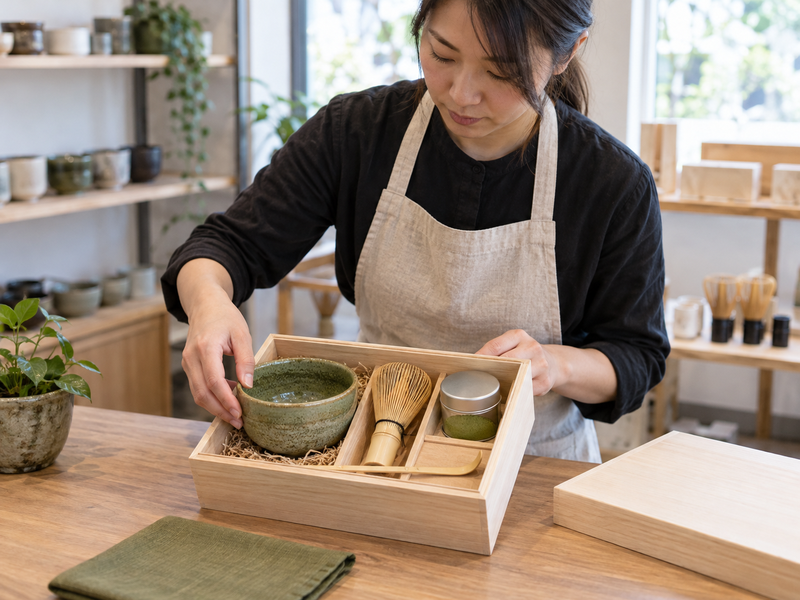
List every physical piece and service needed to deliver one usable set: bowl, whisk, scoop or measure, optional sifter or holder, tea, instruction card, inner protection, outer pack and labeling. Include assembly labor and any required market-specific review. A bundled quote may cover a gift box and card, while separate quotations may cover only loose objects. Mark unknowns instead of assigning a convenient zero. For a café, add storage and replacement stock; for a retail launch, add photography samples and returns handling.
Specifications matter more than component names. Record bowl interior size, base stability, whisk dimensions, tea pack weight and closure, and package drop protection. Two vendors can both quote a “matcha set” while supplying different functional products. Set one approved specification for each comparison point, then ask whether each route can meet it. If a separately sourced bowl improves whisk clearance, note that advantage explicitly; if the kit arrives assembled and inspected, include that labor saving. A fair comparison keeps the customer promise constant.
| Comparison item | Bundle route | Separate route | Evidence to collect |
|---|---|---|---|
| Bowl and whisk | Supplied as a pair | Chosen as a pair | One-cup fit test |
| Tea and label | Often optional | Selected separately | Sample and claim review |
| Packing | May be included | Must be designed | Packed-unit trial |
| Instructions | Vendor template possible | Buyer writes and prints | Novice test |
| Replacement stock | Ask vendor | Plan by component | Written reorder terms |
3. How should buyers compare landed cost?
Count money spent after the quote
Unit price is only one line. Calculate delivered cost per sellable set using quoted components, assembly, inserts, freight, duties or taxes where applicable, inspection, damage allowance and packaging disposal or return costs. Use current supplier quotes for the chosen destination; do not rely on a generic percentage for shipping or import costs. When a shipment has mixed products, allocate freight by a documented method and apply it consistently to both routes. Calculate at the same order quantity, because minimum orders can change the apparent winner.
Run a small sensitivity check. What happens if ceramic breakage rises, freight increases or tea needs a shorter replenishment cycle than accessories? A separate route can be attractive at scale yet expensive for a pilot because it creates several purchase orders and packing steps. A bundle can save setup work but cost more if one damaged bowl forces a whole set to be replaced. Record both the base case and one plausible stress case. That makes a price decision useful to operations, not just purchasing.
| Cost line | What to verify | Common blind spot |
|---|---|---|
| Components | Same functional specification | Cheaper item changes usability |
| Assembly | Time and quality check | Manual packing omitted |
| Freight | Actual route and carton size | Gift box increases volume |
| Damage | Pilot inspection by component | Replacing whole kits |
| Reorder | Small spare-part quantities | High minimum for one item |
4. Will a bundled bowl and whisk actually work together?
Make the intended drink, then clean up
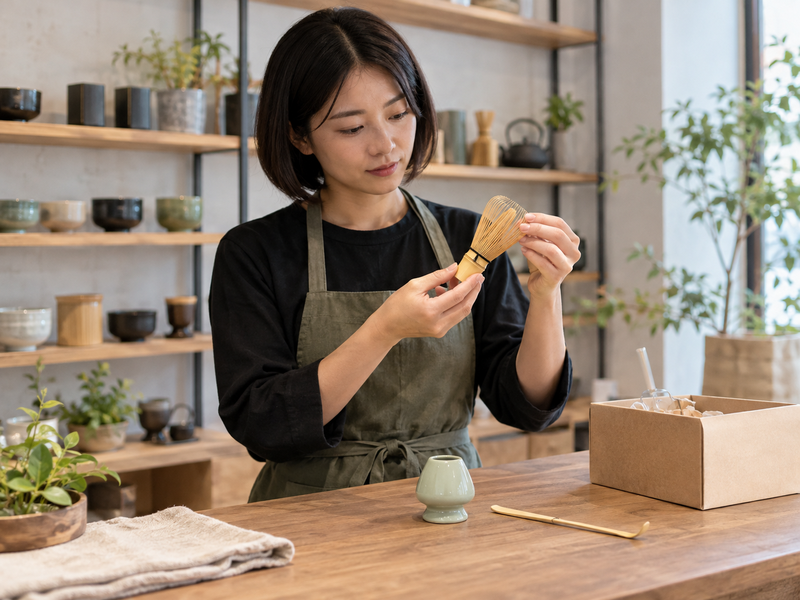
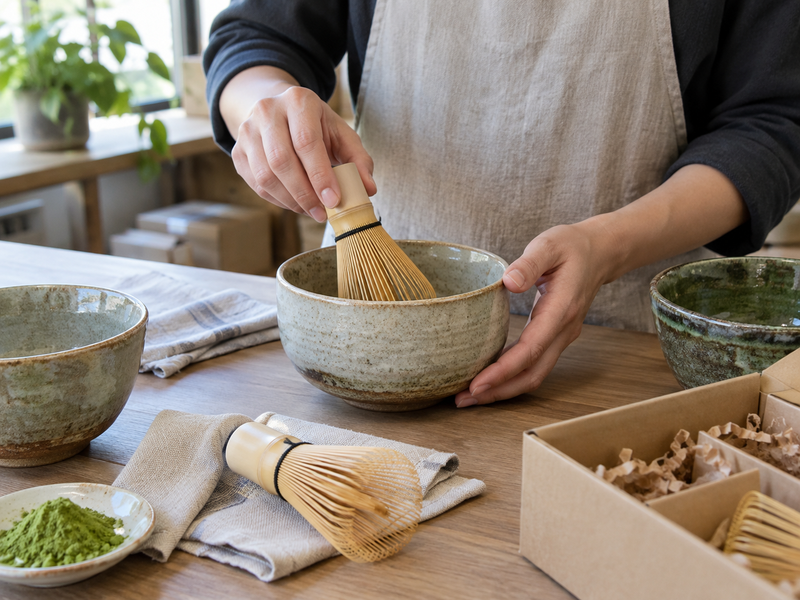
Matching colors do not guarantee matching function. A whisk may hit a steep bowl wall, bend against a shallow bottom or struggle in the narrow vessel supplied with a kit. Test the intended powder and water amount using the included pieces. Watch whether the whisk moves freely, the bowl stays stable and the liquid pours cleanly. Repeat the trial after washing and drying so the reviewer can notice difficult crevices or a holder that fails to fit the whisk. For a café, repeat enough times to see whether handling feels acceptable in normal service.
Separate sourcing gives the buyer a chance to pair a preferred bowl with a known whisk, but it also makes the buyer responsible for that validation. A bundled supplier should be able to provide a complete assembled sample and keep the pairing stable across reorders. Photograph the approved fit and record component identifiers. If a vendor substitutes a visually similar whisk later, rerun the first-cup check. A seemingly minor dimension change can alter a novice’s experience more than the difference in retail packaging.
5. What does a separate sourcing plan add to quality control?
Assign ownership for each check
Buying pieces separately can make inspection clearer. The tea supplier handles powder specifications and lot records, the ceramics supplier handles bowl finish, and the accessories supplier handles whisk construction. That clarity helps when one part needs improvement. It also creates coordination work. Someone must approve a master assembled sample, verify that every component fits the packaging and reconcile labels with the tea inside. A bundled vendor may take on assembly and inspection, but the buyer should still request evidence of how that work is controlled.
Make a simple acceptance sheet for either route. Inspect bowl chips and stability, whisk tine condition, count of pieces, tea seal, print accuracy and the packed unit. Record the number of defects by type during the pilot rather than calling a batch “good” because most boxes look attractive. For private-label programs, retain signed artwork proofs and photograph how the final card sits in the box. Ownership beats assumption: one named party must decide whether a changed bowl, tea sachet or printed instruction can enter the next production run.
| Control point | Bundle buyer asks | Separate buyer assigns |
|---|---|---|
| Approved master sample | Vendor keeps and compares | Assembler keeps and compares |
| Tea lot and seal | Vendor supplies record | Tea supplier supplies record |
| Component count | Final pack inspection | Final assembler inspection |
| Label accuracy | Proof approval | Proof approval plus coordination |
| Change notice | Written before substitution | Written from each supplier |
6. How do replacement parts change the calculation?
Price the second year as well as the first order
Whisks wear and ceramics can break. A café that needs one replacement whisk should not have to buy another full gift box unless that is genuinely the only economical option. Ask a kit vendor for separate item codes, minimum reorder quantities and expected availability. If replacement parts are not offered, include the cost of replacing whole sets in the lifecycle calculation. For consumer retail, decide how customer service will answer a request for a single damaged piece and who pays the second shipment.
Separate sourcing can simplify spare-part access, provided the chosen items remain compatible. Keep dimensions and material descriptions in a controlled specification, not only a photograph. A different whisk of the same nominal tine count may still feel different in the approved bowl. For businesses selling a set and replacement accessories, check whether a spare pack can share the original product’s instructions and claims. An inexpensive opening order is less valuable if stockouts later interrupt café service or create unresolved customer complaints.
7. Does included matcha improve the offer?
Decide whether tea serves the same audience
Tea can turn a box of tools into a first-use gift. It also introduces shelf-life, lot, labeling and storage questions that tool-only packs do not carry. Compare a kit with tea against a separately assembled kit with tea, or compare two tool-only options. Mixing the two makes the lower price almost meaningless. Confirm that the chosen powder performs with the supplied preparation card and matches the drink named on the pack. A strongly flavored latte blend, for example, should not be described as though it were intended for a plain whisked bowl without an actual sensory test.
Request the tea specification and market documents needed for the destination before approving claims. Matcha Village can discuss ingredient grades, bulk supply, OEM formats and retail packing options, but every statement on a particular kit should be checked against its chosen lot and packaging. If tea and tools replenish on different cycles, a separately sourced arrangement may prevent older powder from waiting in accessory inventory. A bundle may reduce assembly steps for a short campaign. Model both inventory flows, including any unsold seasonal boxes, before deciding.
| Tea decision | Bundle implication | Separate sourcing implication |
|---|---|---|
| Include powder | Easier first-cup gift | More control over grade and pack |
| Exclude powder | Longer tool-only stocking | Customer selects tea separately |
| Update recipe | May require full pack revision | Can revise tea card and lot plan |
| Replenish tea | Check vendor’s cycle | Manage tea inventory independently |
8. How much packaging and transit risk is hidden?
Test a shipped box, not an empty mock-up
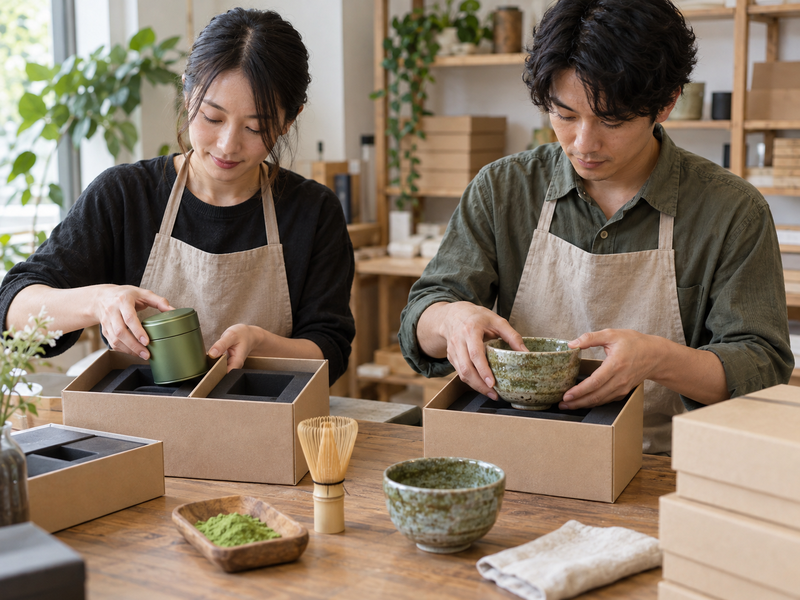
A complete matcha kit joins brittle ceramic, flexible bamboo and sometimes sealed powder. Its insert must hold those materials apart through the actual delivery route. Ask a bundle vendor for a packed commercial sample, not only a showroom box. If sourcing separately, design the insert around final component dimensions, then pack and send pilot units through the intended parcel or wholesale route. Inspect them on arrival for chips, bent tines, damaged seals and displaced pieces. Record the outer carton as part of the specification.
Damage affects customer trust and the real cost per sellable unit. A handsome rigid box can increase freight volume without preventing a bowl from striking a scoop. Conversely, a compact separate-source arrangement may save shipping but require more labor to assemble consistently. Include labor, materials and expected replacement handling in the comparison. If gift presentation matters, have a retail employee open the box without instructions and report whether the first view is orderly. Protection and presentation should be tested together rather than negotiated as separate afterthoughts.
9. When do customization and minimum orders matter?
Connect design choices to volume
Private-label color, printed sleeves, bilingual instructions and custom tins can distinguish a retail set. Each choice may trigger its own minimum order, proof cost and lead time. Request written terms for the complete bundle and each component separately. A bundle supplier may consolidate several suppliers and simplify one purchase order; a separate plan may give more freedom to change tea or ceramics without redesigning every element. Neither benefit is automatic. The answer depends on approved artwork, forecast volume and the practical ability to hold leftover packaging.
Consider a pilot with plain but correct packaging before committing to specialized inserts. If the first group of buyers asks for a different bowl or a simpler instruction card, a large stock of printed boxes becomes an expensive constraint. Specify which elements must remain stable for branding and which can change between reorders. Ask for production proofs of every printed surface, then check them against product contents. Design for revision: a useful set in its first season should still be easy to improve after real feedback.
| Decision | Low-volume pilot | Larger repeat program |
|---|---|---|
| Packaging | Standard insert with clear card | Custom insert after route test |
| Artwork | Small proofed run | Controlled print revision |
| Tea | Limited validated pack | Planned lot and reorder cycle |
| Spares | Small whisk reserve | Formal replacement SKU |
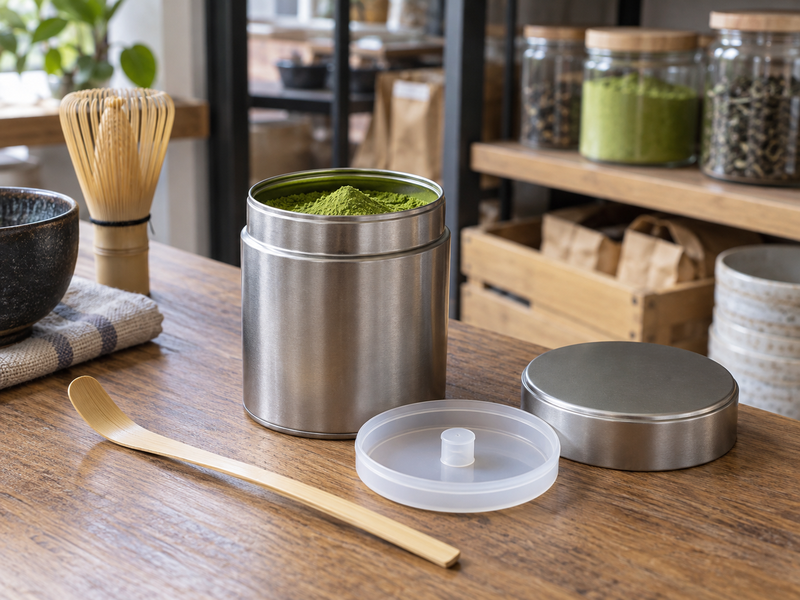
10. Which option wins after a real pilot?
Score use, cost and service together
Run both routes through one short scorecard. Give users a blind first-cup trial, inspect shipped samples and obtain quotes at the same quantity. Compare delivered cost per sellable set, assembly time, damage, replacement access, tea documentation and reorder flexibility. Weight the criteria to match the channel. A café may value serviceable tools more than gift packaging; a holiday retailer may place greater weight on arrival condition and first-use clarity. Record any disqualifying issue before adding scores. A beautiful kit with a bowl that cannot be used comfortably should fail regardless of its small price advantage.
Keep the pilot simple enough to repeat when a component changes. Retain one approved packed unit, written specifications and photographs of the preparation trial. Ask purchasing, operations and customer service to review the same evidence before placing a larger order. If the bundled route wins, request change notice and spare-part terms in writing. If separate sourcing wins, appoint an owner for final assembly and quality release. The decision should survive a real reorder, not merely a favorable product photo.
FAQ
Q1. Is a prepacked matcha kit always cheaper? No. Compare delivered cost per sellable unit, including packing, damage and replacements.
Q2. What should be tested first? Make the advertised drink with the exact sample pieces and instruction card.
Q3. Does separate sourcing always improve quality? It improves choice, but the buyer must manage component fit and final inspection.
Q4. Should every kit include tea? Include it when the first-use promise and inventory plan justify it; a tool-only kit can be practical for cafés.
Q5. What document matters most at reorder? An approved complete-set specification with component codes, tea details and packaging revision.
The better buying route is the one that makes a reliable cup at a sustainable delivered cost. Test an assembled sample, inspect a shipped unit and calculate replacement economics before scaling. Buyers planning a retail or café program can take that evidence to an ingredient and packing supplier, including Matcha Village, for a quote based on the exact tea format and set configuration they need.