
A matcha kit can feel thoughtful when its pieces help the recipient make a good first cup. It can also become an awkward box of unfamiliar tools. Retailers, corporate gift buyers and distributors need more than a photogenic assortment: the tea must suit the user, instructions must work, and a ceramic bowl must reach its destination intact. This matcha kit gift guide turns that decision into ten checks buyers can apply to a sample before placing a larger order.
The Food Network gift roundup shows how varied matcha gifts can be; the method here focuses on building a coherent set rather than collecting attractive extras. If the recipient will make tea at home, our matcha bowl and whisk set checks can help narrow the tool choice.
Contents
- 1. Who will open the gift?
- 2. What should a complete first-cup kit contain?
- 3. Should the gift include matcha powder?
- 4. How can the bowl and whisk feel comfortable?
- 5. Will the instruction card work for a beginner?
- 6. How should a gift kit handle different budgets?
- 7. Is the packaging protective as well as attractive?
- 8. What claims and dates need checking?
- 9. Can recipients replace worn pieces later?
- 10. How should a gift program be approved?
1. Who will open the gift?
Write for a real recipient
A first-time drinker and a café owner will read the same gift box differently. A beginner needs a small number of useful tools, understandable quantities and a drink they can make without another shopping trip. A practiced user may already own a favorite bowl and prefer interesting tea or a replacement whisk. A corporate recipient may have little interest in a long preparation ritual. Before selecting components, write one sentence describing the recipient, their likely drink and where they will make it. It will keep a seasonal assortment from becoming a pile of unrelated objects.
If the recipients are unknown, favor simple choices and flexible instructions. A bowl, whisk, scoop and properly packed tea can support a plain matcha bowl or a latte without requiring specialist equipment. Avoid implying that everyone wants a ceremonial experience. A gift can introduce a pleasant daily preparation while still respecting the traditional context of tea practice. For corporate orders, ask the buyer whether recipients have relevant dietary or labeling needs and whether shipping addresses span several markets. Those facts affect tea selection, language and documentation before artwork is approved.
2. What should a complete first-cup kit contain?
Test the promise printed on the lid
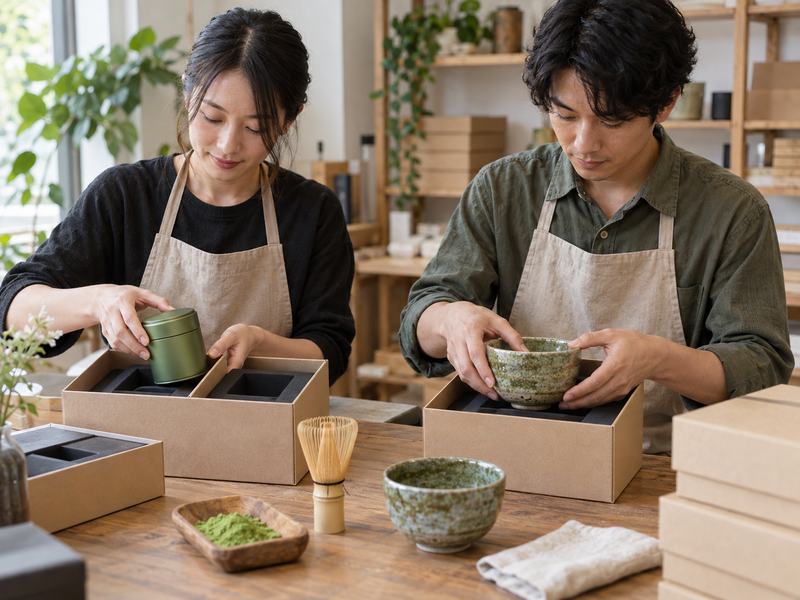
The contents should follow the cup promised on the package. For a whisked drink, begin with a bowl large enough for the supplied whisk, a means of portioning powder and matcha if the kit claims to be ready to use. A sifter can help with clumps if the selected tea and recipe need one. A whisk holder supports drying and storage but does not make the first cup possible. An instruction card should explain the sequence and any missing household item, such as a kettle. “Complete” means the recipient can do what the box says without a surprise tool purchase.
Buyers should lay out the items, then ask someone unfamiliar with the product to unpack and prepare a cup. Watch for a scoop that cannot enter the tea pouch, a whisk too wide for the bowl or a card that asks for a scale when the gift has no way to measure. A sample assembled from actual production components gives better evidence than a styled product image. Keep the chosen configuration and its component codes together so an attractive replacement item does not quietly change the working set at reorder.
| Piece | First-use role | Buyer check |
|---|---|---|
| Bowl | Holds mixing water and tea | Stable base and whisk clearance |
| Whisk | Blends the drink | Sound tines and comfortable reach |
| Scoop or measure | Transfers a portion | Fits the powder pack |
| Tea | Makes a ready-to-use gift | Seal, lot and recipe fit |
| Card | Teaches the first cup | Beginner can follow it alone |
3. Should the gift include matcha powder?
Decide with the sales channel in mind
Including powder makes the gift more immediately useful. It also means the buyer must manage shelf life, lot records, destination labeling and storage before the seasonal shipping date. If a kit sits in a warehouse for months, the tea may no longer have the remaining life the retailer expected when it reaches the customer. Request a pack sample, the planned fill and date information, then compare them with the retail calendar. A tool-only gift avoids those food inventory issues but should say clearly that matcha is sold separately.
The tea must suit the intended first drink. Test the proposed powder with the included recipe; an unsweetened bowl and a milk-based drink reveal different flavor characteristics. If a box includes a small sachet, check that it allows enough practical attempts for a new user to learn. A large pack may offer more value but needs an effective closure or storage guidance after opening. Matcha Village can supply ingredient grades and private-label formats for different applications; the specific gift promise should still be validated against the chosen product and destination market.
4. How can the bowl and whisk feel comfortable?
Pair tools in a practical preparation test
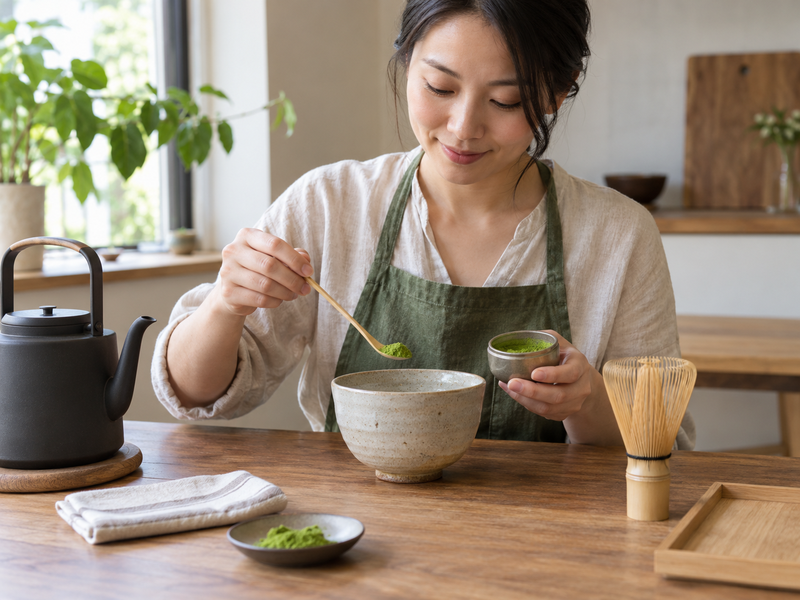
Gift kits are often sold on ceramic color or decorative detail. The useful test happens when the recipient adds water. The whisk should move without scraping a tight wall or crushing its tines against the bottom. The bowl should sit securely, leave room for the chosen drink and pour without an awkward drip. Ask several people to prepare the same recipe with the assembled sample. Observe grip, splash and whether they have to hold the bowl in an unnatural position. Then test cleaning and drying, because the first-cup experience includes putting every piece away.
Surface quality also matters. Inspect the bowl rim, interior glaze and foot; check the whisk for damaged tines or rough binding. Avoid assuming a material is dishwasher safe because it looks sturdy. Ask the vendor for care instructions suited to the actual products. A separate small care card may be more helpful than a long story about craftsmanship. When the gift includes a holder, confirm it fits the supplied whisk and allows it to dry as instructed. Appearance should support function, not replace it.
5. Will the instruction card work for a beginner?
Watch a first attempt without coaching
Write the card after the kit is physically assembled. Describe a short sequence using measured quantities that were tested with the supplied tea and vessel. Include the water amount, an accessible temperature description if relevant, how to move the whisk and what to do after use. Do not turn an approximate scoop into a promise of precise grams unless it has been calibrated with the chosen powder. If the intended drink is a latte, explain how the matcha mixture joins milk and ice. A beginner should not have to infer that step from a photo.
Ask a new user to make one cup while a reviewer stays silent. Mark where the reader pauses, misreads the card or uses a tool in the wrong order. Revise the card and repeat the trial. Keep typography legible in the final print size, and check that QR links still lead to the intended content. Make the first cup easy. A recipient who succeeds once is more likely to use the kit again than someone who receives an elaborate box with vague instructions.
| Card element | Useful wording target | Test |
|---|---|---|
| Portion | Measured amount or tested approximation | Compare prepared cups |
| Water | Amount and practical temperature cue | Follow without coaching |
| Whisking | Clear motion and duration cue | Observe technique |
| Care | Item-specific cleaning and drying | Inspect after use |
| Link | Optional further guidance | Open from printed QR |
6. How should a gift kit handle different budgets?
Change useful features, not the number of trinkets
A retailer may want an entry set, a tea-included gift and a more substantial premium version. Each tier needs a clear reason for its price. Better protection, a specified ceramic finish, a larger tea pack or a useful holder can justify a step up. A decorative extra with no role in preparation may only raise cost and create more damage risk. Prepare a bill of materials for each tier including assembly, packaging, freight, inspection and expected returns. Compare the resulting delivered cost per sellable box, not only each supplier’s item quote.
For corporate gifting, ask whether the buyer values a branded card, a choice of tea or simpler shipping. A customized sleeve may carry the brand without forcing a custom bowl minimum order. Pilot the pack before committing to a large print run. If buyers later request a different tea, a generic sleeve and separate tea label may be easier to revise than a fully printed box. Keep the budget conversation tied to recipient use and replenishment, since a low opening price can become expensive if replacement parts or damaged boxes are hard to handle.
7. Is the packaging protective as well as attractive?
Ship a finished sample through the real route
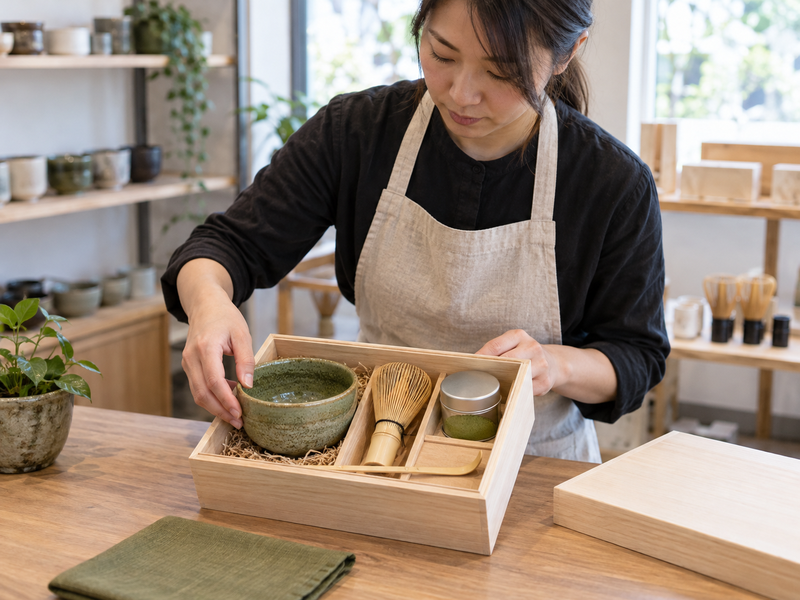
Ceramic, bamboo and powder need different protection. An insert should stop the bowl from striking tools, shield whisk tines and keep sharp edges away from the tea pack. Ask for a packed production sample and send it through the same parcel or wholesale route planned for the final order. Open it as a recipient would. Check movement, chips, bent tines, crushed corners and whether the first view still feels considered. The outer carton and packing quantity should be recorded, because a good inner box can fail inside a poorly filled shipping carton.
Take photographs before and after transit and log damage by component. If a test fails, revise the insert and repeat it. For multi-address corporate gifts, consider the extra handling of individual parcels rather than relying solely on pallet-level trials. Packaging waste and unboxing ease also matter to the buyer, but do not reduce protective material before the route test supports that decision. A gift is judged at arrival, not in a studio photograph.
| Arrival issue | Likely area to review | Evidence to keep |
|---|---|---|
| Bowl chip | Foot and rim clearance | Damage location photo |
| Bent whisk | Tine cavity and lid pressure | Whisk inspection |
| Tea seal damage | Adjacent edges and movement | Pack seal check |
| Scratched finish | Contact between components | Unboxing sequence |
8. What claims and dates need checking?
Review the exact product, not a generic template
If the kit contains tea, confirm net weight, ingredients, lot identification, date or shelf-life information and storage instructions for the destination. Claims such as organic status, origin or a particular tea grade should reflect evidence for the supplied lot and the applicable market. For tools, ask for material information and any food-contact documentation needed by the buyer. A supplier’s general company profile does not replace records for the finished gift. When artwork is translated, have the destination-market wording reviewed before print.
Check every sample against its approved proof. A late change from one tea pouch to another may alter weight, ingredient wording or available space in the box. Promotional copy should avoid unsupported health outcomes and vague assurances about universal preparation quality. If a business gifts internationally, one shared carton design may not satisfy all markets; a common physical kit with market-specific inserts or labels may be more practical. Keep a revision log so purchasing knows which card and label belong with each packed lot.
9. Can recipients replace worn pieces later?
Make the gift usable beyond one season
A bamboo whisk will not last forever, and a ceramic bowl can break. Ask whether the gift’s whisk size can be reordered or replaced with a clearly described compatible item. If the kit is sold through a retailer, give customer service a simple answer for a damaged or missing component. A whole-box replacement can be costly and wasteful when only one piece needs attention. A small reserve of parts may solve these cases during a seasonal campaign, provided the reserve follows the approved specification.
Also consider repeat tea purchases. A gift that includes a branded powder should point to an available refill format if the recipient likes it. Do not promise ongoing stock without an actual supply plan. For an importer or chain retailer, check lead time and minimum order for tea and accessories separately, since their replenishment cycles differ. Long-term use makes the original gift feel more valuable, but only if care information and replacement paths are clear.
| After-gift need | Buyer preparation | Customer-facing answer |
|---|---|---|
| Worn whisk | Compatible spare code | Where to obtain it |
| Broken bowl | Damage and replacement policy | How to report it |
| Finished tea | Refill plan | Pack size and storage |
| Lost instructions | Stable digital copy | Easy access link |
10. How should a gift program be approved?
Use three small tests before committing
Approve a gift only after a first-cup test, a packed-route trial and a final artwork review. Give a sample to an uninvolved user, then note whether they can prepare the promised drink and clean the kit without help. Ship finished units through the expected route and inspect the arrived components. Finally, match the printed box, tea label and instruction card to the actual packed items and supporting documents. These checks are inexpensive compared with a campaign of gifts that arrive damaged or confuse recipients.
Record one master sample, component list, photographs, the tested recipe and the correct artwork version. Ask the supplier to flag substitutions before production. If the gift is for several countries, approve each market’s label and instruction version against the same physical set. A buyer can then judge offers on evidence: useful contents, reliable delivery, sound claims and a price that includes real handling. That is a stronger basis for a repeat order than a polished catalog page.
| Approval test | Pass evidence |
|---|---|
| First cup | New user succeeds |
| Delivery | Components arrive sound |
| Artwork | Print matches contents |
| Reorder | Parts remain available |
FAQ
Q1. Does every matcha gift kit need powder? No. A tool-only kit can work if its packaging clearly says tea is separate.
Q2. Is a whisk holder essential? It supports storage but is not necessary for the first cup.
Q3. What is the most useful sample test? Ask a beginner to make the advertised drink with only the supplied pieces and card.
Q4. Can corporate gifts use one label worldwide? Destination requirements vary, so review each market before printing.
Q5. What should be checked after shipping? Inspect the bowl, whisk, tea seal and arrangement inside the opened box.
A good matcha gift makes the first cup inviting and the tenth cup possible. Choose the recipient and recipe first, then validate the working set, documentation and delivery route. Buyers can take a tested brief to Matcha Village or another qualified supplier to discuss tea format, private-label packaging and the component plan that suits their channel.