
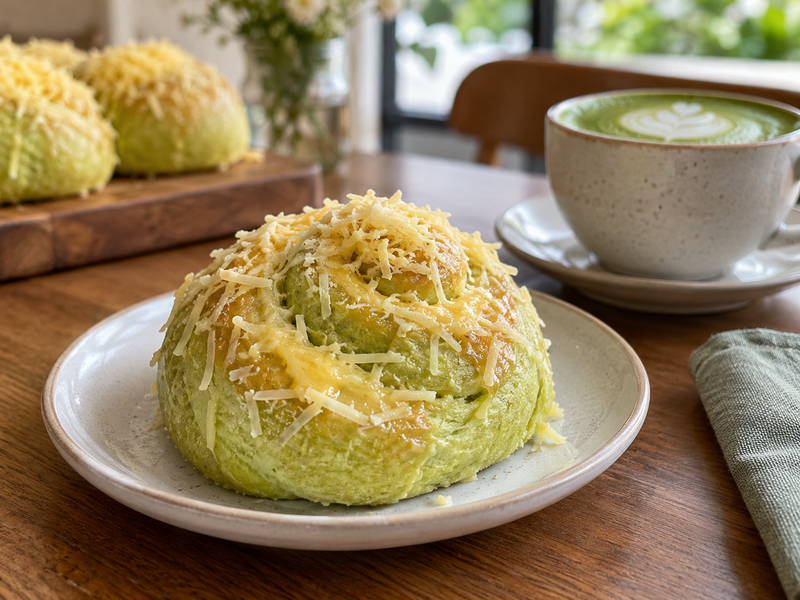
Matcha ensaymada asks a bakery to manage two competing impressions: a soft, rich bun and a tea note that survives a buttery, sweet finish. If dough proofs unevenly, spirals lose shape. If topping is too heavy, customers taste sugar and cheese before anything green. Start with one bun size, a controlled matcha dose and a measured topping route. The Aiya matcha ensaymada recipe shows a matcha dough shaped into spirals. Its home format is a useful reference; a commercial bakery still needs its own proof, bake, topping, display and pack trials.
Contents
- 1. What makes matcha ensaymada distinct?
- 2. Which dough base should a bakery test?
- 3. How much matcha belongs in the dough?
- 4. How should spirals be shaped and proofed?
- 5. What should the bake achieve?
- 6. How should butter, sugar and cheese be applied?
- 7. How can the bun be held and packed?
- 8. What allergen and ingredient checks apply?
- 9. How do you calculate batch yield and cost?
- 10. What belongs on the final bakery card?
1. What makes matcha ensaymada distinct?
Preserve the identity of the bun
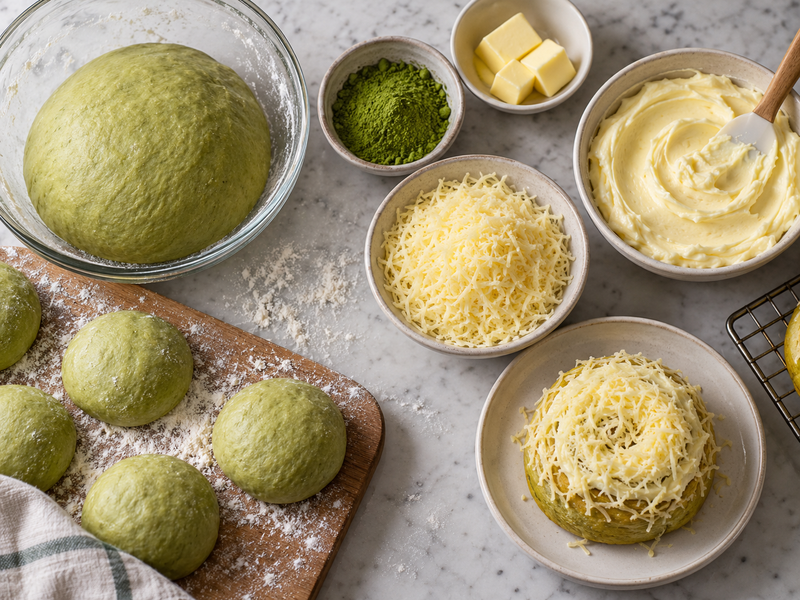
Ensaymada is a Filipino sweet, enriched bread roll often finished with butter, sugar and cheese. Matcha can color and flavor its crumb, but the finished product should still eat like a soft bun rather than a dry tea cookie. Decide what your version promises: a visible spiral, tender center, recognizable matcha flavor and a sweet-salty finish. Taste a full bun, including the topping, at the temperature customers will receive it. A green cut face alone does not prove that the tea comes through.
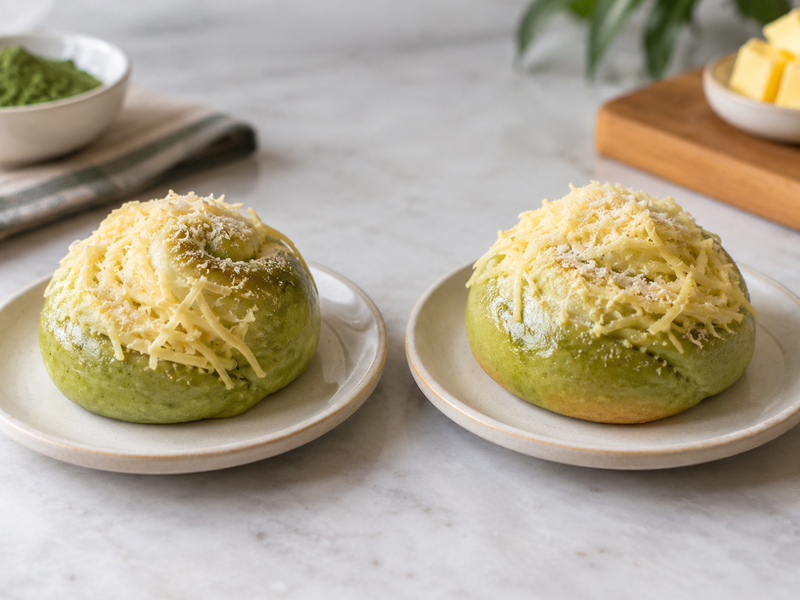
Set a target weight, diameter and topping amount before the pilot. Photograph one accepted bun from above and one cut across the center. If a matcha filling is added as well as matcha dough, treat it as a separate variant with separate costs and ingredient information. The Aiya reference puts tea in the dough and shapes it into spirals. A bakery can use that product logic without reproducing the formula. The commercial question is whether every bun stays soft, distinct and pleasant after the shop’s normal handling.
2. Which dough base should a bakery test?
Start with an enriched dough the team can control
Use the bakery’s approved sweet-bun base as a control. Record flour, liquid, fat, egg, sugar and yeast inputs from the actual formula, then split a test batch for matcha addition. This allows the team to see whether the tea powder changes mixing, dough feel or proofing. A dough that feels slightly firmer may tempt staff to add liquid by eye, but an unrecorded change makes the trial hard to repeat. Mix to the bakery’s observed dough endpoint and record temperature and handling notes.
Compare plain and matcha buns after baking and cooling. Check crumb softness, spiral definition, dryness at the edges and flavor without toppings. If both batches feel dry, investigate the base dough or bake. If only the green batch changes, examine powder dose and mixing. Do not assume that a high-priced tea will fix a weak bun. Ask the powder supplier for a lot sample and ingredient documentation, then test it in the selected dough. Our matcha powder for baking guide can support the powder discussion, but the final buying decision belongs to this finished bun.
| Dough input | Record | Finished-bun check |
|---|---|---|
| Flour | Supplier and batch | Crumb structure |
| Fat and egg | Formula weight | Tenderness and richness |
| Matcha | Lot and grams | Color and tea clarity |
| Dough condition | Temperature and feel | Shaping ease |
| Plain control | Same bake and size | Cause of any defect |
3. How much matcha belongs in the dough?
Use weighed dose and blind tasting
Measure matcha in grams per dough batch and per accepted bun. Make at least three trial doses around the bakery’s starting point while keeping the base formula, bun weight and bake unchanged. Sift tea into the dry mix or use another documented dispersion method to avoid concentrated green flecks. Taste after baking, with and without topping. A dose that seems clear in plain bread may disappear beneath butter and cheese. A higher dose may leave a dry or bitter finish.
Photograph crumb color under the bakery’s display light. Compare the sample at opening and after the normal selling delay. Use blind codes for a small staff tasting so cost and powder brand do not bias comments. Ask whether tasters can identify tea, whether its flavor is pleasant and whether the crumb still feels soft. Record powder cost per accepted bun at each dose. A lower-cost bag can require a larger deposit, and some color differences may be invisible once the bun is dressed. The accepted dose should balance eating quality and production cost, not chase the deepest green dough.
| Matcha trial | Hold constant | Score |
|---|---|---|
| Low dose | Dough weight and bake | Tea presence |
| Mid dose | Same topping | Flavor balance |
| High dose | Same proof route | Bitterness and crumb feel |
| Chosen lot | Same finished bun | Repeatability |
4. How should spirals be shaped and proofed?
Give workers dimensions, not only a photograph
Divide dough by weight, then roll each piece to an agreed length and thickness before coiling it. The Aiya home recipe uses a spiral shape, but a bakery needs a reproducible standard for its own portion size. Mark a training board with length and finished diameter. Tuck the end securely without squeezing the layers flat. Place test pieces at measured spacing, then observe how much each spreads during proof. A beautiful raw spiral may lose its definition after an overlong proof or crowded tray.
Record proof conditions and the visual endpoint that staff should recognize. Do not treat a clock time from a different kitchen as universal; dough temperature, yeast activity and room conditions vary. Have two bakers shape ten pieces each and compare baked width, height and visible swirl. If one employee’s buns open at the edge, check how the end is tucked. If all spread, inspect dough strength or proofing rather than retraining everyone. A written shape standard can reduce rejects before the batch enters the oven.
5. What should the bake achieve?
Judge the center and the green surface
Run the selected bun size through the actual oven with a realistic tray load. Record settings, tray position and the visual endpoint after cooling. Matcha may make surface color a poor single indicator of doneness; inspect the crumb and use the bakery’s validated food-safety checks where required. Overbaking can dry the enriched dough, and a soft underbaked center will not improve under topping. Cut samples from the tray’s center and corners and compare texture and shape.
Leave topping off some buns during the trial. This makes it easier to judge the base and prevents butter or sugar from hiding an uneven bake. If the plain control and matcha version both dry out, adjust bake or dough handling. If only the matcha bun fails, revisit powder addition or formula balance. Note any color shift from raw dough to cooled bun. A dramatic green raw swirl can turn muted after baking, and a dusting added later may not correct the eating quality. Approve the base bun before spending time on decorative finishes.
| Bake check | Record | Rejection sign |
|---|---|---|
| Tray load | Piece count and spacing | Merged buns |
| Surface | Same-light photo | Excess browning or dull patches |
| Center | Cut-face texture | Gummy or dry crumb |
| Spiral | Height and definition | Open ends or flattened shape |
| Cooling | Time before topping | Melting or condensation |
6. How should butter, sugar and cheese be applied?
Balance the classic finish with tea flavor
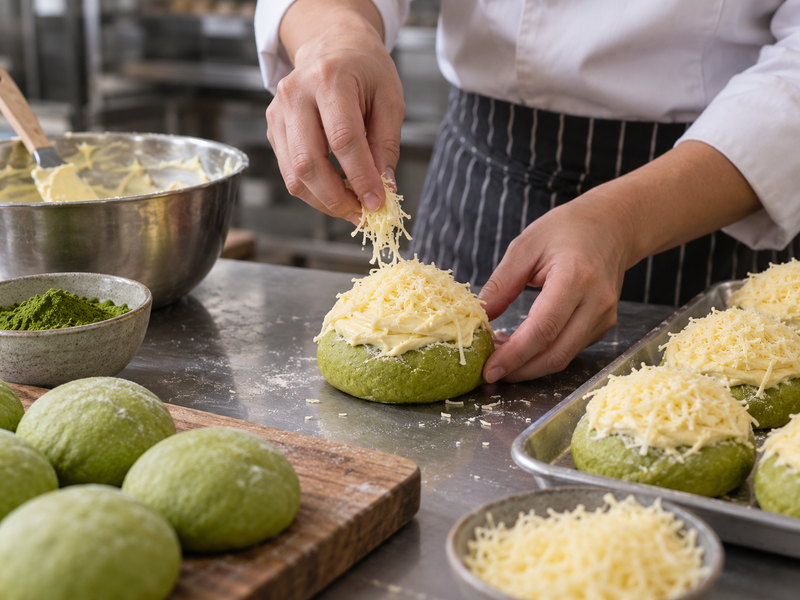
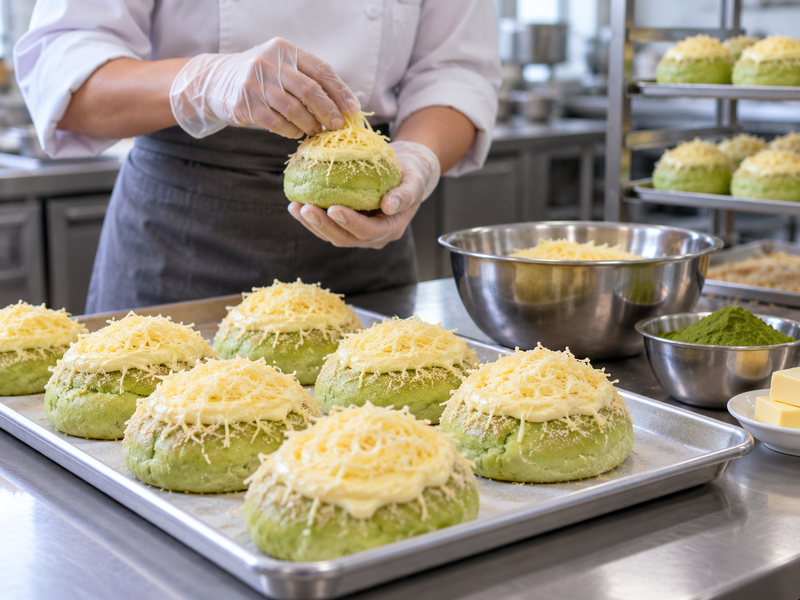
Butter, sugar and cheese can make ensaymada rich and appealing, but a heavy finish can conceal matcha. Decide whether to use a butter spread, a light sugar coating and grated cheese, then weigh each deposit per bun. Compare a low and high topping version on the same baked batch. Taste the full bun without looking at the labels. If a taster cannot detect tea in either, change the powder or dough dose before adding green dusting on top. A garnish should support the flavor rather than compensate for a weak formula.
Apply topping at a controlled bun temperature. On a warm bun, fat and cheese may soften or slide; on a cold one, a spread may look rough. Test the actual counter schedule and record adhesion after handling. For retail packs, check whether loose cheese collects at the bottom or touches the lid. Cheese changes allergen and handling requirements, so keep the exact ingredient and quantity on the production card. Avoid a topping style that only the most experienced baker can apply neatly during a rush.
7. How can the bun be held and packed?
Follow the finished product through sale
Place topped buns in the intended case and taste them at opening, midservice and the end of the proposed selling period. Record crumb softness, topping adhesion, surface dryness and tea flavor. If a bun is sold warmed, test the approved reheating route and taste immediately after. Packaging changes the result: a tight bag may protect moisture but smear butter and cheese; an open box may preserve the look while the crumb dries. Compare actual pack options with the same batch.
Do not convert a sensory observation into a food-safety shelf-life claim. Dairy, egg and other ingredients require handling under the bakery’s approved plan and applicable rules. The FDA Food Code is a US retail-food model; the bakery’s local requirements and product validation govern its sale period. If supplying several cafés, transport a sample along the normal route and inspect it at arrival. A bun that passes at the bakery door may lose toppings after a rough delivery or appear compressed in a stack.
| Route | Quality check | Operational choice |
|---|---|---|
| Open case | Crumb and topping over time | Display period |
| Bag | Smearing and softness | Pack material |
| Box | Movement and lid clearance | Insert or tray |
| Store delivery | Compression and loss | Stack limit |
8. What allergen and ingredient checks apply?
Review the bun and every topping
Enriched dough may contain wheat, milk and egg. Butter and cheese add dairy, while flavored spreads or garnishes can add other allergens. Confirm actual supplier declarations and any substituted ingredient before finalizing the menu or pack label. The FDA food allergy information gives US context; destination markets have their own rules. Do not infer that the matcha powder’s certification or ingredient list covers the whole bun. Keep a current finished-product specification available to counter staff.
Record flour, matcha, dairy and topping lots for each batch. Set preparation, cooling, packing and handling controls through the bakery’s food-safety program. If an untopped bun and a cheese-finished bun are sold side by side, train staff to distinguish them and avoid cross-contact during service. A topping change requires a fresh review of labels and service information, even when the dough stays identical. Clear records also make buyer complaints easier to investigate because the team can trace which ingredient lot and process produced the bun.
9. How do you calculate batch yield and cost?
Count accepted topped buns
Start with invoice costs for dough ingredients, matcha, butter, sugar, cheese and packaging. Add direct labor for mixing, shaping, topping and packing. Divide by buns that pass weight, shape, bake, topping and final pack checks. Pieces rejected for open spirals, uneven proof or smeared topping reduce sellable yield. Measure actual topping deposits during a pilot; a quick unmeasured extra scoop can change both cost and flavor. Compare plain and matcha ensaymada using the same bun size so the incremental tea cost and extra handling remain visible.
If the bakery plans a wholesale case, test the full case count and packing route. Damaged buns at the customer’s store are a cost even if they left your kitchen looking perfect. Record unsold units at the end of the approved period during a small launch, then adjust daily batch size. A lower matcha bag price is not a saving if the powder needs a high dose or gives uneven color between lots. The cost per accepted finished bun is the number buyers need for a useful supplier and menu decision.
| Cost item | Measure | Often missed |
|---|---|---|
| Dough | Weight per accepted bun | Proof or shaping rejects |
| Matcha | Grams per bun | Heavy dose to reach flavor |
| Finish | Butter, sugar and cheese grams | Overapplication |
| Labor | Minutes by stage | Slow hand shaping |
| Pack | Unit and case material | Delivery damage |
10. What belongs on the final bakery card?
Make the accepted bun repeatable
The card should state bun weight, dough formula, matcha lot and dose, mixing and shaping method, proof endpoint, tray arrangement, oven program, cooling step and measured topping deposits. Include photographs of an accepted top and cut face, plus one rejected example. Add the approved packaging and link to food-safety and allergen records. Put a date and version on the card so staff cannot unknowingly combine an older dough formula with a new topping level. A concise card is more useful during production than a long marketing description.
Before launch, ask a second baker to make a full trial batch from the card. Taste a bun after its planned sale delay and inspect the last packed piece. If color, softness or tea flavor varies, correct the process before increasing order size. Give the matcha supplier the application, measured powder dose, chosen pack size and documentation needs. A sample approved in the actual bun makes future lot comparisons possible and helps the bakery sell a consistent Filipino-inspired tea pastry rather than a different product each week.
FAQ
Q1. Does matcha belong in the dough or topping? Dough gives color and flavor throughout. Test the finished bun before adding surface tea for appearance.
Q2. Is cheese necessary? It is a familiar finish, but a bakery can define another variant. Update its product name, sensory target and ingredient information.
Q3. Why do spirals open during proof? Shaping, end tucking, dough condition and proof endpoint can contribute. Compare raw and baked pieces from several operators.
Q4. Can ensaymada be packed warm? Test the actual pack under the approved process. Warm topping and trapped moisture may damage appearance and texture.
Q5. What should a matcha buyer request? Ask for a lot sample, current ingredient documents, supply pack options and enough powder for a full dough-to-display trial.