
Matcha dacquoise combines nut meringue with tea filling, but the first production problem is usually shell consistency. A tray of uneven shells produces mismatched sandwiches, broken edges and unpredictable filling costs. A bakery can reduce those losses by deciding the finished size first, then testing the shell and filling as separate components.
This guide proposes a small development trial for cafes, central kitchens and ingredient buyers. It does not present a validated commercial recipe. The practical target is a sandwich with a thin dry surface, a tender interior and enough tea flavor to remain noticeable beside almond and sugar.
Format · Ingredients · Trial · Meringue · Baking · Filling · Assembly · Packaging · Costs · Approval
1. What should matcha dacquoise look like?
Choose a portion that fits the service
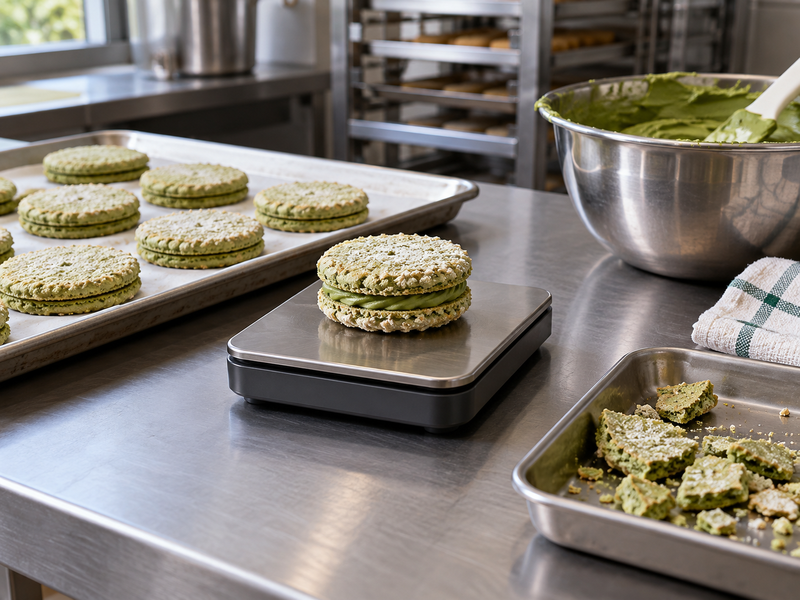
A small oval sandwich suits a bakery counter because staff can lift it without a knife. A larger layered dacquoise suits plated service, where a fork and sauce are available. Choose one format before comparing powders. Otherwise, a thinner shell may seem more delicate even though the ingredient stayed unchanged.
The Much Butter recipe uses almond meringue shells with a matcha buttercream containing white chocolate. That is one useful starting architecture. Your business still needs its own size, filling weight and texture target, especially if the product will travel to other stores.
| Decision | Counter sandwich | Plated portion |
|---|---|---|
| Shape | Matched individual shells | Cut sheet or larger disc |
| Handling | Lifted by hand or tongs | Moved with a palette knife |
| Filling | Must stay within the edge | Can be softer when served |
| Evaluation | Bite through both shells | Clean fork cut |
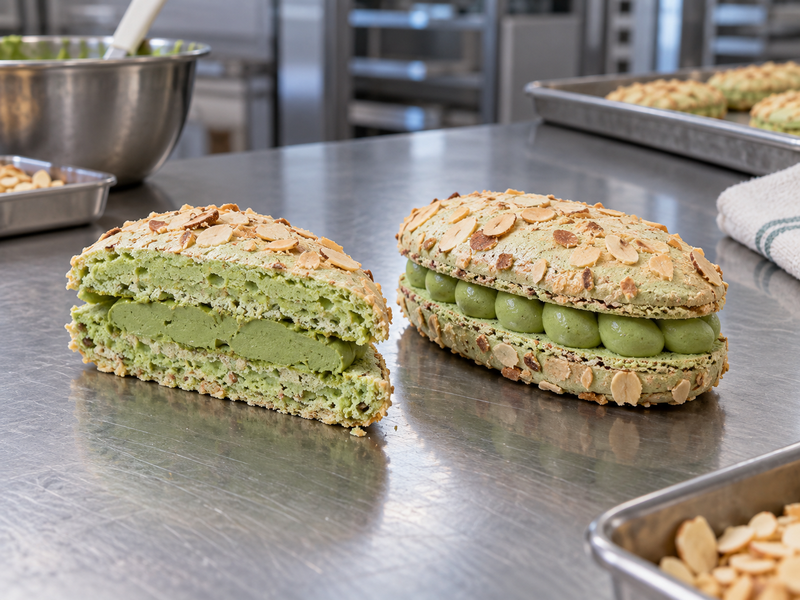
Photograph a cut sample next to an intact one. Record the shell height and filling depth beside the photograph. A picture alone cannot show whether a sandwich is twice as heavy as the approved sample.
2. Which ingredients need a written specification?
Almond flour deserves as much attention as tea
Ask for the almond flour particle description, whether it contains skins, and the supplier’s storage directions. A visibly coarse flour can leave a rough shell, while changing nut ingredients also changes the allergen review. Keep the same almond lot through the first matcha comparison so its flavor and texture do not confuse the result.
For tea, request an unsweetened matcha sample with a lot code, ingredient declaration and relevant quality documents. A sweetened latte powder changes the sugar balance and cannot replace pure tea gram for gram. Matcha Village’s ingredient buyer guide gives purchasing teams a framework for organizing these requests.
Check the icing sugar specification as well. Some products include starch; a different brand may behave differently in your dry blend. Write the exact item on the trial sheet rather than recording only “sugar.”
Separate egg whites by weight and follow your kitchen’s approved egg handling procedure. If pasteurized liquid whites are selected, confirm that the product is suitable for whipping and trial that exact brand. A convenient pack size is useful only if the meringue reaches the required volume reliably.
3. How can you set up a small shell trial?
Change the tea dose in a controlled base
Use an established house dacquoise base where one exists. The following quantities are an original suggested bench trial, not a proven formula or a production release. They give a pastry team a manageable starting batch and a clear place to adjust tea intensity.
| Shell ingredient | Proposed amount | Trial purpose |
|---|---|---|
| Egg whites | 100 g | Fixed foam base |
| Fine caster sugar | 45 g | Added during whipping |
| Fine almond flour | 75 g | Fixed nut component |
| Icing sugar | 65 g | Sifted dry blend |
| Unsweetened matcha | 3 g initially | Compare with a later 4 g batch |
Make separate batches for the two tea levels. Dividing a finished foam and stirring extra powder into one half gives that half more mixing and makes the comparison less useful. Keep the piping tip, tray lining and portion weight identical.
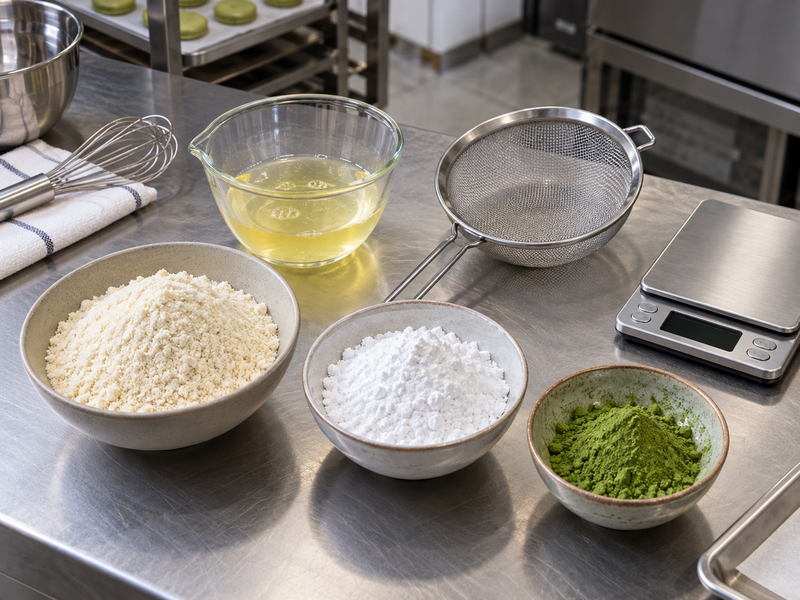
Do not assign a promised yield before the first bake. Weigh deposited batter, count acceptable shells and record broken pieces. The measured yield will determine whether the proposed portion makes commercial sense. Reserve enough shells for filled samples; tasting the dry shells alone can overstate bitterness and understate the final sweetness.
4. How should the team control the meringue?
Agree on visible endpoints
Start with clean, grease-free equipment and weigh the whites into the same mixer bowl used for the trial. Add the caster sugar gradually according to the house meringue procedure. Record the mixer, attachment, speed setting and observed endpoint. “Whip until ready” leaves the next shift guessing.
A useful training photograph shows the peak on the whisk and the surface of the foam together. Staff should also see what an unsuitable batch looks like. Coarse, dry foam and loose foam require different investigations, so record the defect before changing the recipe.
Sift the tea with the dry ingredients, then fold with deliberate strokes that reach the bottom of the bowl. Inspect a small smear for dry pockets before filling the piping bag. Avoid continuing to mix only because a fixed number of folds appears on a worksheet; batch size and bowl geometry change how quickly powders distribute.
King Arthur’s chocolate dacquoise method also builds its structure from nut flour and whipped egg whites. Use that source for a second practical reference, while keeping your own matcha dose and deposition records separate from its recipe.
5. Which baking observations should you record?
Follow the shell from tray to rack
Pipe a limited tray first, using a template underneath the liner if helpful. Remove any non-food-safe template before baking. Leave enough space to inspect spread. Mark tray position on the worksheet so a pale center row is distinguishable from an edge that colored too quickly.
Choose the initial oven setting from your validated house dacquoise process. A new matcha formula still needs a bake trial. The temperature on another bakery’s recipe does not account for your fan strength, tray material or deposit size.
| Observation | Record | Possible next comparison |
|---|---|---|
| Excess spread | Width before and after baking | Foam endpoint or deposit size |
| Strong edge color | Tray position and time | Airflow or loading pattern |
| Sticky underside | Release behavior after cooling | Drying and lining |
| Brittle shell | Breakage during handling | Bake endpoint and thickness |
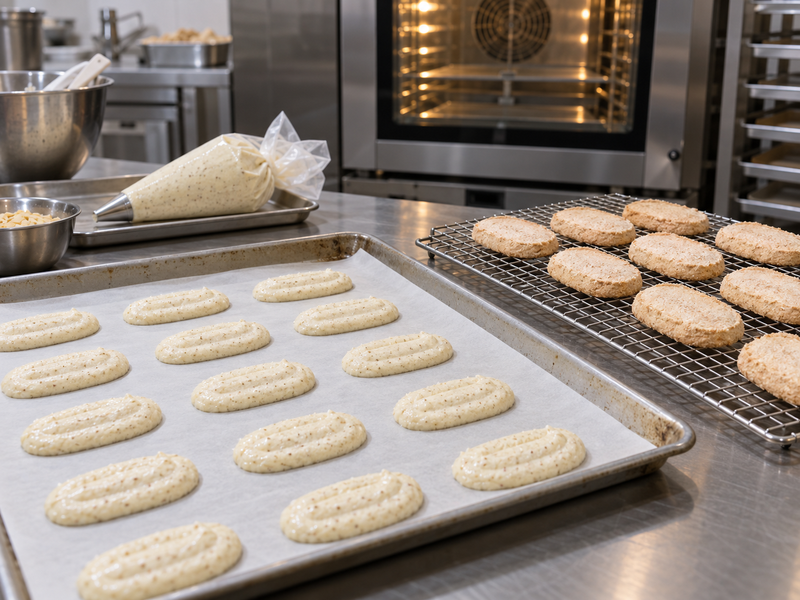
Judge release after a consistent cooling stage. Pulling hot shells from the liner may create damage that disappears with a little more cooling. Break a sacrificial shell and photograph its interior. Keep the observation factual: hollow, dense, tender, gummy or dry are more useful records than “good texture.”
6. How do you choose the filling?
Taste the full sandwich before approving sweetness
Buttercream gives the pastry team a familiar piping system, while a white chocolate based filling adds another source of sugar and fat. A dairy cream filling produces a different eating texture and requires its own handling plan. Compare only fillings that your kitchen can prepare and hold under an approved procedure.
For an initial tea comparison, divide an existing approved buttercream into equal weighed samples. A proposed test is 1 g and 2 g of sifted matcha per 100 g of buttercream. These are development levels, not recommendations for every powder. Blend each sample thoroughly and check for dry specks before assembly.
| Filling choice | Question to test | Purchasing implication |
|---|---|---|
| Matcha buttercream | Does it bite cleanly when cold? | Specify butter and tea |
| White chocolate filling | Does sweetness hide the almond? | Fix chocolate identity |
| Dairy cream filling | Does the shell soften too quickly? | Validate chilled handling |
Taste a complete sandwich at its intended serving condition. A filling that feels pleasantly firm on a spatula can squeeze out when trapped between fragile shells. Write down both tea intensity and bite behavior; they may require different adjustments.
7. When should you assemble the sandwiches?
Measure the change after filling
Moisture moves between filling and shell after assembly. The eating texture immediately after filling may therefore differ from the texture during service. Set a tasting schedule that reflects your actual workflow: assembly, dispatch, arrival at the shop and the intended sale period. Those observations measure quality and do not establish microbiological safety.
Pair shells by diameter before piping. Weigh several finished sandwiches during setup, then check samples during the run. If one operator pipes a tall central mound and another spreads filling to the rim, the products may weigh the same but behave differently when bitten.
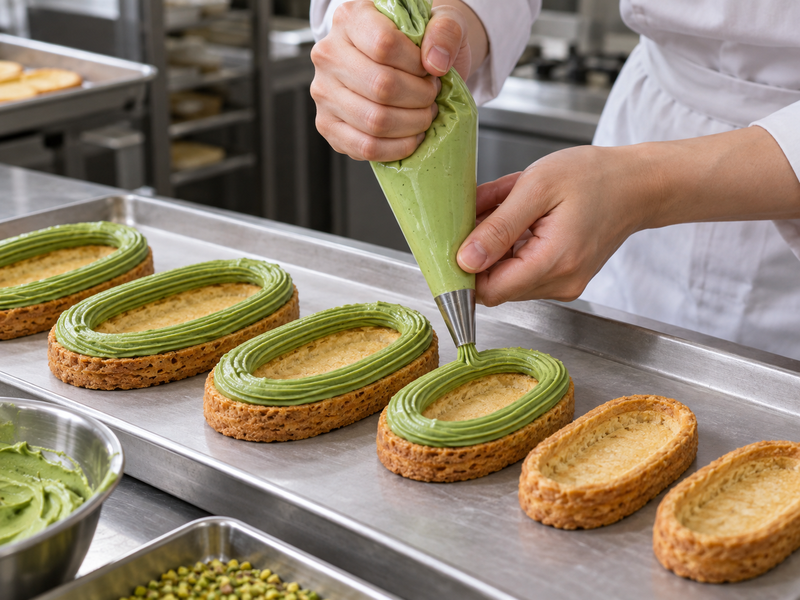
Use a shallow support tray during assembly so a damaged shell is visible before packing. Keep crumbs away from the sealing surface of individual wrappers. Record discarded shells and filling left in bags separately; both affect the true batch yield.
The FDA egg safety guidance describes precautions for egg products. Your food safety lead should determine the handling and storage controls for the complete filled dessert under the rules that apply to the selling location.
8. How can packaging protect the shells?
Test pressure and movement with the actual pack
A tight wrapper can crush the highest point of a shell. A loose tray can let sandwiches knock together during delivery. Test a few candidate packs using finished products, including the thickest acceptable sandwich from the trial, before ordering printed material.
Place the samples in the proposed delivery case and follow the normal route inside the business. Open them at the receiving counter and note crumbs, shifted filling, grease marks and contact with the lid. A pack that looks clean in a studio may behave differently when cases are stacked.
| Pack feature | Practical check |
|---|---|
| Cavity width | Shell fits without rubbing the sides |
| Lid clearance | Highest shell avoids contact |
| Base support | Sandwich can be lifted intact |
| Seal area | Crumbs and filling stay outside it |
| Outer case | Rows remain separated in transit |
Ask the packaging supplier for food-contact suitability and the intended temperature conditions. Confirm any barrier claim against the exact film structure. Do not translate “high barrier” into a longer selling period without product-specific evidence. Include unopened and handled packs in the quality trial because customers experience both.
9. What does a saleable piece really cost?
Count shells in pairs
Two usable shells make one sandwich. A batch with an odd number of acceptable shells or several unmatched sizes loses yield even when the total baked weight looks satisfactory. Record matched pairs as a separate count before calculating ingredient cost per piece.
Add the tea cost in both shell and filling. A cheaper powder that needs a higher dose may erase its apparent price advantage; a more expensive powder may still be unnecessary if the filling dominates the taste. Compare the complete cost at the selected dose.
Use the calculation: total batch ingredient cost divided by saleable sandwiches. Then add measured packaging and direct handling costs according to your accounting method. Keep development waste separate from normal production waste so the first experiment does not become an unrealistic permanent cost standard.
Time the pairing and filling work during a realistic small run. If hand matching consumes more time than piping, a deposit guide or improved shell size control may be the better investment. Buying a larger mixer will not resolve a mismatch created at the piping station.
10. What should a supplier trial approve?
Approve a repeatable purchase description
Send the matcha supplier the application, target dose, finished portion photograph and the defects you want to avoid. Describe tea character in the complete sandwich. “Bright green” alone leaves flavor, clumping and batch behavior undefined.
Ask for a second lot before committing the menu to a large order. Bake it using the selected shell process and compare it with a retained approved ingredient sample handled according to its storage instructions. Record any changes in almond flour or icing sugar at the same time.
The release sheet should identify the approved tea item, lot documentation, shell deposit, filling amount, pack and serving conditions. Give production staff a place to record deviations, including extra egg white, unexpected spreading or a different wrapper. Silent substitutions make later complaints difficult to investigate.
A distributor supplying multiple bakeries can attach a compact application sheet to the ingredient sample. Include the proposed trial conditions and state clearly that each bakery must validate its own process. Prepare the next trial with one tea change, one recorded batch size and enough finished sandwiches for production, purchasing and service staff to assess together.
FAQ
Q1: Is dacquoise the same as a macaron?
They are different pastry styles even though both may contain nut flour and meringue. Define the shell texture and portion you intend to sell rather than borrowing a macaron quality checklist. A dacquoise trial should reflect its own tender interior and filling balance.
Q2: Can we put all the matcha in the filling?
Yes, that is a useful development option. It keeps the shell process closer to a familiar plain base. Compare the complete sandwich with a version containing tea in both components, then choose the option that meets the flavor and cost target.
Q3: Must the powder carry a ceremonial grade name?
No grade name replaces an application test. Ask for an unsweetened ingredient with a clear specification, then evaluate it after baking and beside the filling. Record the item code so the approved sample can be purchased consistently.
Q4: Can a bakery claim this product is gluten free?
Assess every ingredient, supplier document and cross-contact risk before making that claim. A shell without added wheat flour does not establish the status of the finished sandwich, its filling or the production environment. Follow the destination market’s requirements.
Q5: How long can filled dacquoise be sold?
This guide does not assign a shelf life. The filling, process, package and storage conditions all need review. Set a selling period through the business’s food safety assessment and product testing, with separate checks for shell texture and flavor.