
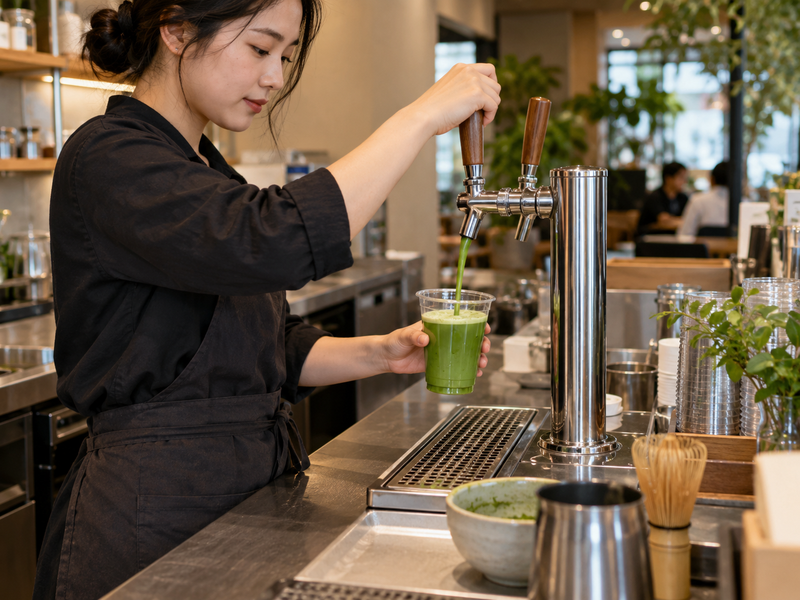
A café can sell plenty of matcha and still lose time at the bar. One person doses powder, another whisks, and an iced latte waits while milk orders fill the queue. A matcha on tap machine may remove that bottleneck, but only if its concentrate, cleaning routine and daily volume fit your menu. This guide gives operators a trial plan built around measured service time, cup quality and total cost. Flo-Smart’s discussion of draft matcha service describes the equipment category; a purchase decision needs your own counter data.
Contents
- 1. What kind of machine are you buying?
- 2. When does manual service become a bottleneck?
- 3. How will the machine keep each pour consistent?
- 4. What should you ask about the concentrate?
- 5. How much cleaning can your team manage?
- 6. What capacity and footprint will fit the bar?
- 7. How should you compare total cost per cup?
- 8. How can you run a fair side-by-side trial?
- 9. What should the vendor demonstrate?
- 10. What belongs in the buying decision?
1. What kind of machine are you buying?
Separate the machine types before comparing quotes
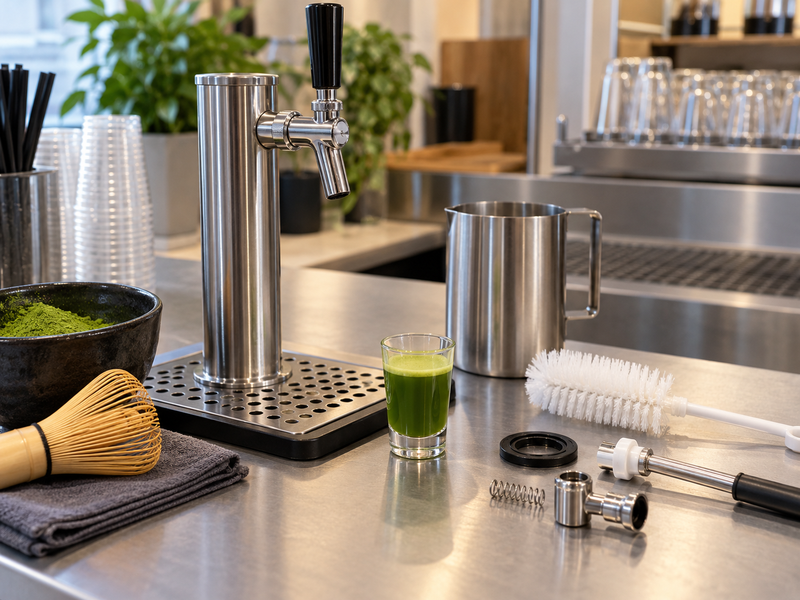
“On tap” describes the serving motion, not a single process. One unit may hold a chilled matcha concentrate and dispense a measured volume. Another may mix dry powder and water for each shot. A third may draw from a bag-in-box premix containing milk or sweetener. These systems have different ingredient costs, cleaning needs and menu limits. Ask the vendor to draw a simple flow diagram from unopened ingredient to customer cup. Include every tank, tube, valve and food-contact part. If the supplier will not show that path, you cannot write a useful cleaning or allergen procedure.
Start here: name the exact drink the machine must make. A plain matcha shot for iced lattes leaves milk and syrup assembly on the bar. A finished sweet latte dispenser fixes much of the drink formula in advance. A powder-to-shot unit may permit more recipe changes but still needs powder refilling and calibration. Choose the system against your sales mix, not the fastest demonstration pour. A seasonal strawberry latte, a plain whisked matcha and a hot oat-milk drink may require three different workflows even when one machine supplies the tea base.
| System | Ingredient entering unit | Main operator question |
|---|---|---|
| Chilled concentrate tap | Prepared matcha and water | How is settling controlled? |
| Powder-to-shot | Dry matcha and water | How is dose verified? |
| Ready-to-drink dispenser | Finished formulation | Can recipes or allergens be separated? |
2. When does manual service become a bottleneck?
Measure the queue before buying equipment
Count matcha orders in 15-minute blocks for at least a normal week, including your busiest shift. Record the active seconds spent weighing, wetting, whisking and cleaning for each cup. Then record waiting time caused by shared sinks, jugs and counter space. These are different numbers: a 40-second whisk step may hold up two other drinks if it occupies the only prep station. Compare peak matcha demand with the number of staff trained to make a sound cup. A machine earns attention when it removes an actual constraint rather than moving work to a hidden refill task.
A useful test: map each drink’s touch points. A barista might use a scoop, sifter, bowl, whisk, measuring jug and glass. The machine may reduce that sequence to a tap, but someone still mixes concentrate, sanitizes parts, checks the reservoir and completes the cup. Time those duties too. If peak demand is six matcha orders in an hour and the bar handles them comfortably, automation may have little operating value. If twenty orders arrive in fifteen minutes and staff repeatedly abandon milk steaming to whisk, a controlled dispenser could free a station. Those numbers are examples for planning, not universal purchase thresholds.
3. How will the machine keep each pour consistent?
Matcha needs a dose check at the nozzle
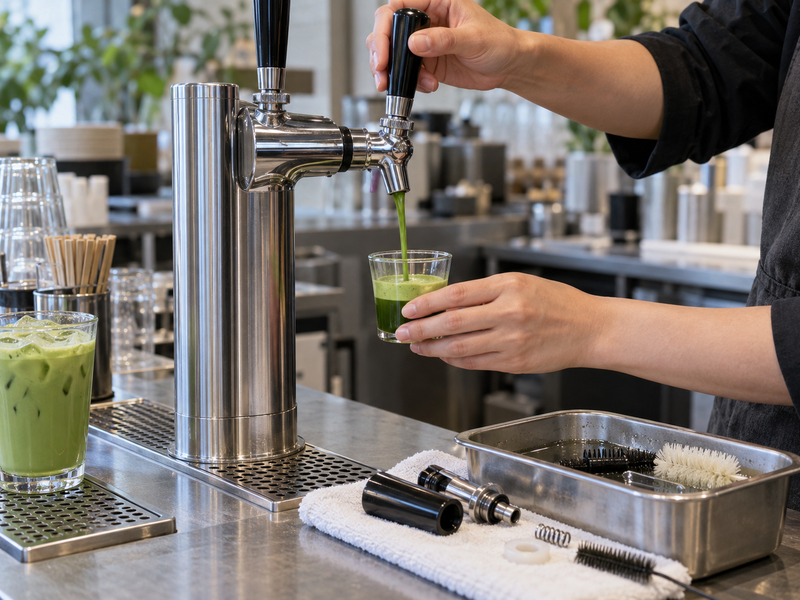
Matcha is a powder suspension. It can settle in a reservoir or line if the system does not keep it evenly dispersed. Flo-Smart says its design keeps concentrate moving in a chilled reservoir; treat that as a product claim to verify during your own trial. Measure the first, middle and last pours from a filled batch using the same cup volume. Weigh each output. Then compare color and flavor in identical finished drinks. A stable milliliter count does not prove a stable matcha dose if powder concentration changes between pours.
Watch the last cup: let the unit run through a realistic shift, including idle periods. Sample a pour immediately after startup, after a rush, after 30 minutes idle and near reservoir empty. Note visible sediment, foam, clumps or separation. Ask the vendor what agitation, recirculation or purge cycle the unit uses and whether staff can inspect its operation. For powder-to-shot equipment, weigh the dry powder delivered in repeated cycles. If the machine cannot produce the target dose within your documented tolerance, high speed merely produces inconsistent cups more quickly. Set that tolerance during recipe development, then test whether staff can detect drift before customers do.
| Trial point | What to record | Failure signal |
|---|---|---|
| Startup | Output mass and tea appearance | Initial weak or dense pour |
| Peak run | Ten consecutive servings | Volume or flavor drift |
| After idle | Output after stated pause | Sediment or blocked nozzle |
| Near empty | Last usable servings | Concentrate separation |
4. What should you ask about the concentrate?
Write a recipe for the unit, not only for the cup
For a concentrate system, ask who makes the base, how much powder enters each batch and what volume reaches each drink. Record water source, mixing method, fill temperature and any milk, sweetener or flavor component inside the unit. A vendor recipe may work with its preferred matcha but fail with your chosen lot. Prepare both powders against the same process and compare tea taste after milk, ice and syrup. Matcha Village can provide matcha formats for application trials, but your café must approve the actual formula in its own equipment.
Keep the distinction clear: a concentrated matcha-and-water base is different from a dairy-containing finished beverage. Ingredients change cleaning, allergen handling and temperature controls. The FDA Food Code offers a model for foodservice controls, while local rules and the machine maker’s validated instructions govern your installation. Do not borrow a holding time from a plain-water concentrate for a recipe containing milk. Ask what data support the vendor’s recommended fill, hold and discard procedure. If those data are absent, run a short pilot under your food-safety plan and obtain qualified guidance before routine service. Taste and appearance remain useful quality checks, but they cannot establish microbiological safety.
5. How much cleaning can your team manage?
Follow every food-contact surface
A machine can shorten drink assembly while adding a longer closing routine. Request the written cleaning instructions, a parts list and a live teardown. Time a trained staff member performing the complete process, not the vendor performing a polished demonstration. Count tools, chemical products, rinse steps, drying space and reassembly checks. Ask whether any tube, gasket or nozzle needs scheduled replacement. A disconnected line left wet overnight can compromise tomorrow’s service even if the visible counter looks clean.
Do a shift handoff: have the opening barista inspect a unit cleaned by the closing barista. Can that person verify the cleaning record and identify a missed part? The FDA Food Code’s equipment chapter addresses food-contact surface cleaning; requirements depend on what food enters the system and how it is held. A unit dispensing milk-containing product needs especially careful review of its applicable temperature and cleaning controls. Ask your local authority or food-safety lead to review the machine’s instructions. Document who cleans it, when, how completion is checked and where replacement seals are stored. These tasks belong in the cost model, because paid staff time is part of each dispensed cup.
| Cleaning item | Vendor answer needed | Café trial evidence |
|---|---|---|
| Daily disassembly | Exact removable parts | Timed full teardown |
| Internal lines | Flush and sanitizing procedure | Completed log and inspection |
| Nozzle | Access and replacement | No buildup after shift |
| Chemicals | Approved products and concentration | Staff can follow label |
6. What capacity and footprint will fit the bar?
Use peak demand, then check physical fit
Machine capacity means more than cups per hour on a brochure. Ask for usable reservoir volume, refilling time, output per minute and consecutive pours before quality changes. If your peak hour includes 35 iced lattes, a nominal 40-cup capacity leaves little room for test pours, refills or spills. Staff may still need a manual backup. A powder-fed unit raises different questions: hopper size, bridging risk and powder left in the mechanism after closing.
Walk the counter: mark the equipment footprint with tape, then rehearse an actual order. The unit needs space for cups, milk, ice, power, drainage or water connections if applicable, and a hygienic route for cleaning. Check door swing and service access. Ask the installer for electrical and plumbing requirements in writing. A cramped tap placed beside an open powder tin may create more spills than it prevents.
7. How should you compare total cost per cup?
Count ownership, labor and failed product
The quoted machine price is only one line. Calculate an equipment cost per expected cup across a realistic ownership period, then add concentrate preparation, cleaning labor, energy, service contract, spare parts, wasted base and any proprietary ingredient premium. Compare that with manual labor and remake costs using the same sales forecast. If your manual method takes one minute of paid staff time and the machine saves 25 seconds but requires an hour of daily cleaning, the expected volume will decide the result. Use your own wage and order data; a vendor’s average café cannot stand in for them.
Run a low-volume case: forecasts often assume every day resembles Saturday. Model a normal week and a slow season. Include a period when the machine is unavailable and staff must revert to manual service. If a maintenance plan promises a technician, ask about response time in your location alongside warranty terms. For concentrate, calculate powder lost in lines and at batch discard. That loss may matter more than a small difference in powder price. The table below is a worksheet, not a claim that any machine will save money.
| Cost line | Manual method | Machine method |
|---|---|---|
| Matcha per sold cup | Measured powder dose | Dose plus line and batch loss |
| Staff time | Prep and cleanup | Fill, pour, clean and checks |
| Equipment | Bowls and tools | Purchase, service and parts |
| Remakes | Log actual reason | Log actual reason |
8. How can you run a fair side-by-side trial?
Hold the drink constant
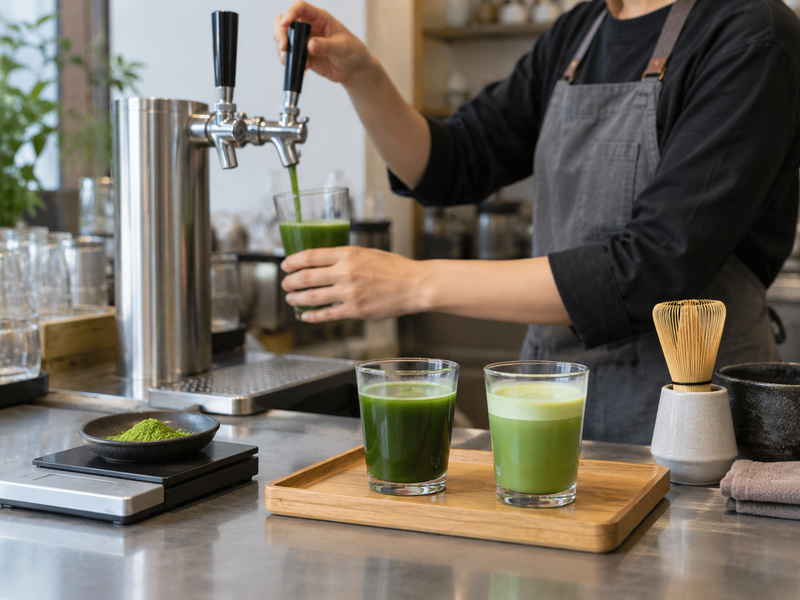
Build a manual control drink and a machine drink with the same matcha lot, target powder mass, milk, ice, sweetness and cup size. Test them blind with a small group that includes bar staff, a purchaser and customers willing to give structured feedback. Rate tea flavor, sweetness balance, texture, appearance and overall acceptance. Keep the samples at the same serving temperature. If one drink uses a much stronger dose, the test judges a recipe difference rather than the machine.
Time the whole order: start the clock when a ticket reaches the bar and stop when the finished drink is ready. Record active staff time separately from elapsed time. Repeat during a quiet block and a realistic rush. Count spills, remakes and missed customization requests. Also test an alternative milk and a hot drink if those are in your menu. A machine could win on a single iced latte and still slow a bar that sells mostly customized orders. Preserve the trial sheets with the recipe version and equipment settings so a later manager can reproduce the decision. Change one setting at a time if the first run fails; changing dose, water and agitation together hides the cause.
9. What should the vendor demonstrate?
Make the demonstration resemble your shift
Ask for a demonstration using your expected drink volume and a pause between rushes. Bring your matcha sample if the machine accepts it. Observe a batch start, a refill, an idle recovery, a near-empty pour and cleaning. Ask the vendor to explain every alarm and show how staff know when output is out of specification. Request written ingredient and equipment compatibility limits, food-contact material documentation, service requirements and training materials. Confirm whether warranty coverage depends on using proprietary ingredients or approved cleaners.
Insist on the unglamorous steps: see how an operator fixes a clogged nozzle or interrupted cycle. Ask what happens during a power cut and whether a partly used batch must be discarded. A model that works only while a technician stands beside it is a poor fit for a busy café. Before signing, speak with another operator using the same model at comparable volume, if the vendor can provide one. Treat their experience as a lead for questions, not proof of your own outcome. Your menu, water, workforce and daily demand differ.
| Demonstration event | Pass question | Record |
|---|---|---|
| Ten back-to-back pours | Are doses stable? | Measured output |
| Idle recovery | Is the next cup acceptable? | Time and appearance |
| Refill | Can staff complete it safely? | Time and steps |
| Full clean | Can staff repeat it? | Time and sign-off |
10. What belongs in the buying decision?
Record a decision the next manager can understand
Write a one-page decision sheet with the tested model, recipe, expected daily volume, peak demand, dose variation, sensory result, cleaning time and cost per sold cup. Include installation needs and a manual fallback recipe. Mark every number as observed, quoted or forecast. A purchase can be sensible even if its direct cost per cup is slightly higher, provided faster service removes a real queue problem or improves consistency; spell out that judgment rather than burying it in a vague score.
Before the deposit: obtain the service terms, parts lead times and a documented acceptance test for the installed unit. Have the food-safety lead approve ingredient handling and cleaning. Train at least two staff members to dose, refill, inspect and clean the machine, then repeat the quality trial after installation. If no model meets your minimum cup quality and cleaning standard, keep manual service while you improve station layout and barista training. The right machine should make your approved matcha drink easier to reproduce, not force you to accept a weaker recipe.
Check powder supply alongside our matcha latte supplier guide.
FAQ
Q1: What does a matcha on tap machine dispense?
It may dispense prepared matcha concentrate, a powder-and-water shot or a finished drink. Confirm the exact system before comparing prices.
Q2: Will a machine remove matcha settling?
Only a tested agitation or mixing design can control it. Check pours after idle time and near reservoir empty.
Q3: Can one unit serve hot and iced drinks?
Some units supply a base for both; others have limited temperature or recipe options. Test your own menu.
Q4: How many drinks justify the purchase?
There is no universal threshold. Compare your measured peak demand, staff time, cleaning and ownership cost.
Q5: What should a café request from the vendor?
Request a live production trial, full cleaning demonstration, written service terms and ingredient compatibility limits.