
A café can buy a matcha it likes and still serve one pale cup, one bitter cup, and one with dry powder at the bottom. Staff need a recipe they can execute under pressure and a way to tell when the result is wrong. The MATSU café training guide describes common preparation issues. This matcha barista training plan turns those observations into a teachable station procedure, a short skills check, and a review across shifts. The example doses and exercises below are trial methods; your approved powder, equipment, menu, and local food-safety rules should set final instructions.
Contents
- 1. What should every barista be able to do?
- 2. How should the recipe card be written?
- 3. How can staff learn accurate dosing?
- 4. How should matcha be sifted and mixed?
- 5. How should hot and iced drinks be assembled?
- 6. What should staff learn about ingredients and safety?
- 7. How can tasting be taught without vague words?
- 8. What should happen during a rush?
- 9. How should a manager test competence?
- 10. How can quality stay steady across shifts?
1. What should every barista be able to do?
Define observable skills
A trained barista can identify the correct matcha and lot, weigh the approved dose, prepare a smooth base, assemble each menu drink in order, present the cup, and clean the station. They can also explain the drink without inventing health benefits or a precise caffeine number that the business has not verified. Keep the skills list short enough for a supervisor to observe in normal service. A written test about tea history is less useful than watching someone make three consistent cups.
Break the work into knowledge, preparation, sensory checks, and food handling. New staff should know where sealed and open powder is stored, which utensil touches it, and how a new lot is introduced. Use a teach-back: after demonstration, the learner explains each step while making the drink without a trainer finishing the sentence. Record what needed prompting. This shows whether the method can survive a busy shift. Ask a second trainer to use the same checklist so passing depends on performance, not the teaching style of one employee.
2. How should the recipe card be written?
Put decisions on paper before the rush
A good recipe card lists powder in grams, water in grams or milliliters, milk and syrup quantities, cup and ice sizes, mixing tool, assembly order, and the appearance of an accepted drink. Include hot and iced versions separately if the steps differ. State what to do with a clumped base, a wrong milk, or a cup outside the fill mark. “Add a scoop and whisk well” cannot be audited; “weigh the approved dose and mix until no dry pockets remain” can.
Keep a controlled date and version on each card. When the powder grade, milk, or fruit base changes, make a new trial and issue a new version. Old cards should leave the bar. Test the wording: a barista unfamiliar with the drink should be able to follow it without a running commentary from the trainer. Photograph the target cup under ordinary bar lighting, but use taste and texture checks too. A layered drink may look correct while the fruit remains as a lump under ice. The card belongs where the cup is made, not only in a training binder.
| Card field | Example of a usable instruction | Avoid |
|---|---|---|
| Matcha dose | Approved grams on scale | “One heaped scoop” |
| Mixing | Named tool and visible endpoint | “Whisk well” |
| Cup build | Ingredient order and fill mark | Memory only |
| Reject condition | Dry clumps or wrong milk | Serving a known fault |
3. How can staff learn accurate dosing?
Practice the motion with a measured result
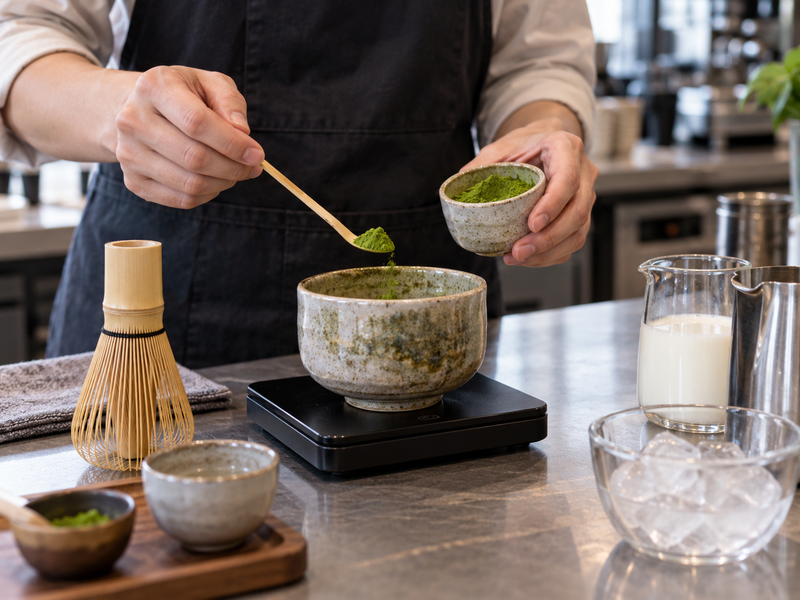
Show why dose matters by preparing two cups at the approved amount and one deliberately off target, then taste them blind. The exercise connects scale reading with what a guest receives. Staff should tare the vessel, measure powder without spilling into a wet area, and record any change to the approved recipe. If a scoop is used for speed, calibrate several scoops from different operators. The business should accept the actual variation only after seeing it; a scoop name is not a measurement.
Repeat the exercise during a simulated queue. Weigh three consecutive doses and have the learner prepare the drinks without the trainer touching equipment. Watch the real error: some baristas read the scale correctly but fail to tare after changing vessels. Others use extra powder to make a weak ingredient taste stronger, which hides the underlying problem and changes cost. Keep the matcha lot and milk constant during training so taste differences can be linked to technique. Once the learner passes, spot-check doses during normal shifts without turning every cup into an exam.
4. How should matcha be sifted and mixed?
Show the fault, then the fix
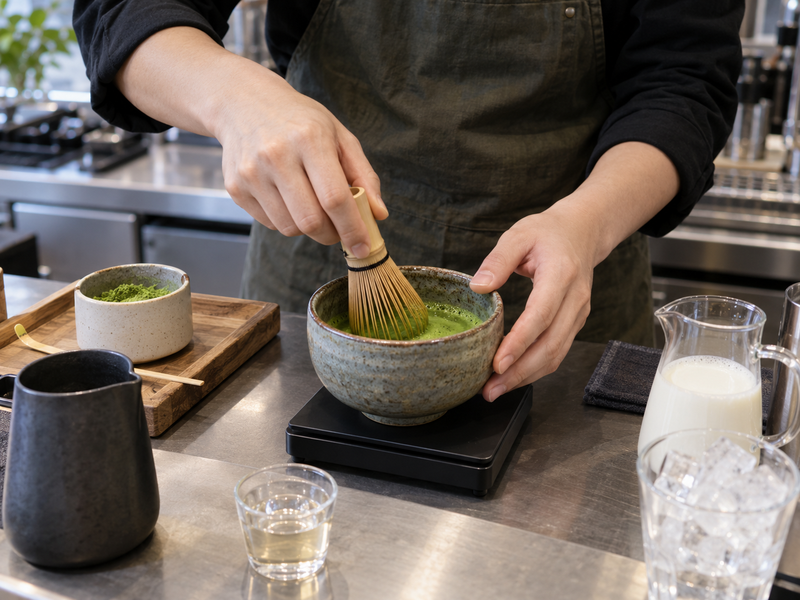
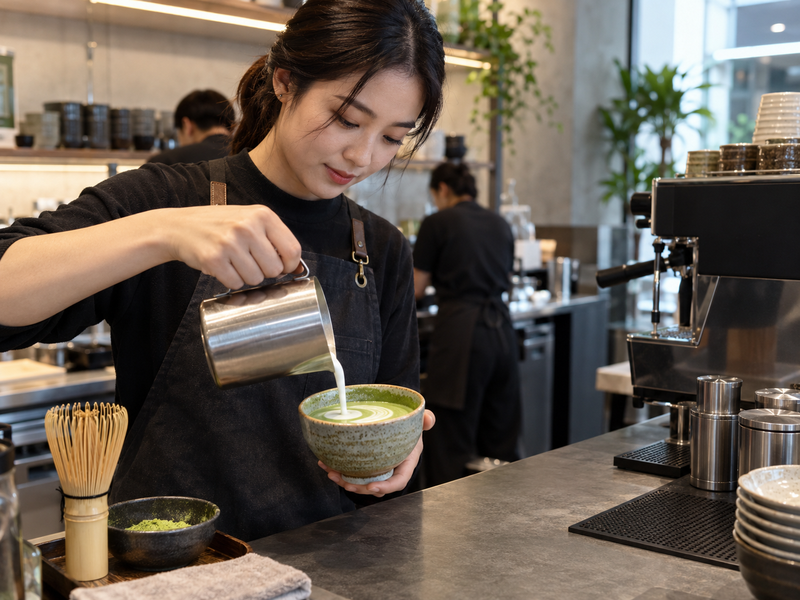
Give staff a cup made from unsifted clumpy powder and one made with the approved sifting and wetting method. Let them see and taste the difference. Sifting breaks dry lumps; wetting with a measured liquid helps disperse powder before milk or ice arrives. A bamboo whisk, handheld mixer, or other approved tool can work if the method produces the drink target and can be cleaned between uses. Train with the actual vessel and batch size at the station, not a ceremonial bowl that will not be present during service.
Define an endpoint: no dry islands on the surface, no visible paste on the vessel wall, and no gritty burst in the first sip. Matcha remains a suspension rather than dissolving like sugar, so a little later settling differs from an undispersed clump. Demonstrate recovery: if the base fails, rework it only under an approved procedure or remake it. Pouring milk over a clump and hoping it disappears is not a corrective action. Inspect the tool after use and make cleaning part of the same lesson.
| Fault in cup | Likely process cause | Training response |
|---|---|---|
| Dry powder islands | Incomplete wetting | Repeat measured wetting step |
| Large clumps | No sifting or poor mixing | Inspect powder and tool |
| Weak tea note | Wrong dose or changed recipe | Check scale and ingredients |
| Grit at bottom | Agglomerates or unsuitable powder | Compare approved control |
5. How should hot and iced drinks be assembled?
Teach separate order sequences
Hot and iced drinks can use the same powder yet need different assembly. Hot milk changes temperature and perceived sweetness; ice dilutes an iced drink during handoff. Train each recipe in the actual cup. Staff should know where syrup or fruit enters, when the matcha base is poured, and whether the finished drink is served layered or stirred. Use a cup diagram with fill marks if the menu has several sizes. A customer receiving half a cup of melting ice does not care that the tea shot was technically correct.
Time the finished drink at handoff, then taste an iced cup after a few minutes. This shows whether the recipe holds through an ordinary wait. Pair speed with quality: a fast pour that leaves fruit purée below the straw or milk curdled by fruit acid should be rejected. In training, have staff assemble consecutive hot and iced orders without clearing the station between each one. Observe whether tools cross from fruit, dairy, or syrup into dry powder. A service method should maintain both the recipe and the clean workflow when orders alternate.
6. What should staff learn about ingredients and safety?
Connect product knowledge with handling rules
Staff need to know which matcha powder is pure tea, which is a sweetened mix, and which drink ingredients contain milk, soy, nuts, or other allergens. They should use the current ingredient and allergen sheet when answering guests; guessing from a familiar brand name is not enough. Train where opened matcha and prepared bases are stored, how they are labeled, and who approves a new lot. A supplier’s sealed-pack directions may differ from the café’s handling instructions for a prepared milk drink.
The FDA Food Code is a model used in retail food safety rules, while the local authority sets applicable requirements. Build cleaning and cross-contact steps with the person responsible for food safety. Practice the awkward order: a guest asks for a dairy-free drink after a milk drink has just used the mixer. Staff should know which tool and cleaning procedure to use and when they cannot promise an allergen-free result. Product knowledge also includes not making unverified medical or energy claims about matcha.
| Staff question | Approved source | Escalate when |
|---|---|---|
| Does it contain sugar? | Current recipe and ingredient sheet | A powder blend changes |
| Which milk is used? | POS recipe and cup label | Substitution requested |
| Can it meet an allergy request? | Local cross-contact procedure | Staff cannot verify |
| How is opened base held? | Approved food-safety plan | Label or time is missing |
7. How can tasting be taught without vague words?
Give the team a shared reference cup
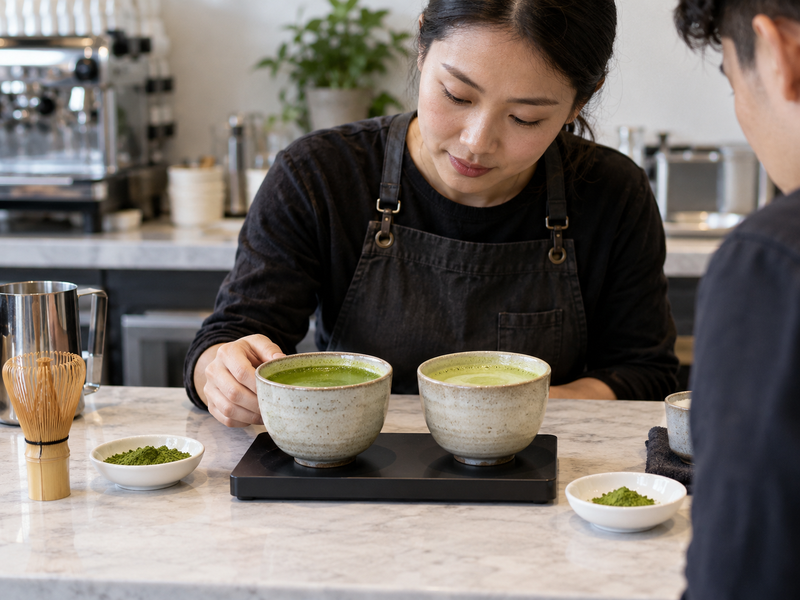
Prepare one approved control cup from the current matcha lot and recipe. Ask staff to describe tea presence, sweetness, bitterness, texture, color, and aftertaste using the same short score sheet. Then serve one cup with a known fault: lower dose, extra water, or an unmixed fruit base. Ask them to name the difference and the likely step that caused it. This teaches sensory diagnosis without pretending every palate uses identical adjectives.
The control should be made with the same water, milk, and cup as the store uses. Retaste when a new lot arrives. A team that has never tasted its own approved drink cannot tell whether a guest complaint points to the tea, recipe, or preparation. Use plain words: “pale and weak after milk” gives a trainer something to check; “low vibration” does not. Record disagreement and repeat the preparation before changing the specification. Blind coded cups help prevent a supplier’s grade name from deciding the outcome.
8. What should happen during a rush?
Rehearse the order flow, including mistakes
Run a short simulation with mixed hot, iced, fruit, and alternative-milk orders. One person reads tickets while another prepares drinks; then switch roles. Count accepted cups, elapsed time, remakes, and missed cleaning steps. Watch where powder is weighed and whether a wet spoon returns to the working tin. Staff should know which tasks can be prepared ahead under the approved food-safety plan and which must be done per order. Pre-portioning dry powder might reduce queue time, but it needs labeling and a handling method that protects the powder.
Give staff a simple stop rule for wrong ingredients or a failed matcha base. A remake is cheaper than sending a known faulty cup and dealing with a complaint later. Keep the queue visible: when the station is overloaded, the shift lead should be able to move one task, such as cup assembly, without changing the dose or recipe. The training goal is a steady process under pressure, not a record-breaking single cup made while everyone watches.
| Rush measure | What it reveals | Action if weak |
|---|---|---|
| Accepted cups per timed run | Real capacity | Change layout or staffing |
| Dose errors | Technique under pressure | Rehearse scale step |
| Remakes by reason | Repeated fault | Fix specific recipe step |
| Cleaning misses | Unsafe workflow pressure | Redesign station and supervision |
9. How should a manager test competence?
Sign off skills that can be observed
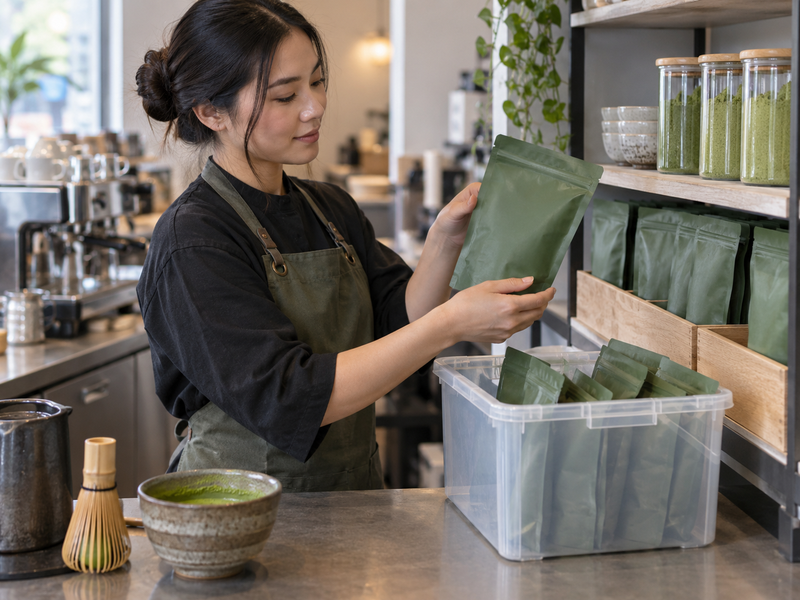
Use a practical check: identify correct ingredients, make one plain hot drink, one iced drink, and one menu variation, then clean and reset the station. Score the powder dose, mixing endpoint, cup fill, ingredient accuracy, taste against control, and safe handling. Record the trainer, learner, date, recipe version, and any retry. A short written question can cover an allergy or storage scenario, but the actual cup remains the core evidence.
Set pass rules before the assessment. A wrong allergen ingredient or unclean tool should stop the test; a small visual difference may call for coaching rather than failure if taste and portion are within standard. Let the learner work alone: prompts during every step can make a weak skill look ready for service. Retest after a recipe or equipment change. Keep the record simple enough that a manager can use it at every site without a training department.
10. How can quality stay steady across shifts?
Make the system visible after certification
Post the current recipe card at the station and remove old versions. Start each shift with a short check of ingredient labels, working powder lot, clean tools, scale, and any prepared base. Have a lead make or taste a control cup when a new lot opens or the recipe changes. Record exceptions, remakes, and guest complaints with enough detail to find the step involved. A complaint like “too bitter” is a signal to check dose, water, milk, and lot rather than immediately blaming the supplier.
Review one or two measures each week: dose variation in spot checks, remake reasons, and differences between sites or shifts. Correct the recurring fault: if several baristas skip sifting because the sieve is hard to clean, change the station or tool, not merely the training speech. When the powder specification changes, tell every store what changed and arrange a short retraining. Matcha barista training remains effective when normal supervision keeps the written recipe connected to the drink in a guest’s hand.
| Quality control | Frequency to set locally | Record |
|---|---|---|
| Station readiness | Each shift | Ingredient and tool check |
| Control cup | New lot or recipe change | Sensory notes |
| Dose spot-check | During routine service | Grams and operator |
| Remake review | Weekly | Cause and corrective action |
Add our matcha whisk cleaning procedure to the training station.
FAQ
Q1: What should matcha barista training cover? Ingredient knowledge, measured dosing, mixing, hot and iced assembly, sensory checks, cleaning, and guest questions.
Q2: Is a bamboo whisk required for café service? Use the approved tool that meets the recipe, volume, cleaning, and presentation needs of the menu.
Q3: How can managers tell whether training worked? Observe staff making several accepted drinks independently under normal station conditions.
Q4: Should a new matcha lot trigger retraining? At least compare it with the approved control and update staff if dose, flavor, or preparation changes.
Q5: How often should skills be checked? Set a local cadence based on turnover, quality data, and recipe changes, with practical spot-checks during service.
Give a new barista the current card, the real station, and three orders to make without prompting. Use the results to fix the card, equipment placement, or teaching step that failed. Repeat that small check when a new matcha lot reaches the bar.