
Matcha nougat can become too firm to bite, too sticky to wrap or too crowded with inclusions to taste like tea. For a bakery gift box or packaged snack, those failures affect both eating quality and packing labor. Decide which type of nougat you intend to sell before choosing a recipe. This guide develops a marshmallow-based snowflake style through small, clearly defined trials, with separate checks for the candy matrix, biscuit crunch and wrapper release.
Contents: Style | Ingredients | Trial | Mixing | Inclusions | Shaping | Defects | Packaging | Cost | Approval
1. Which style of matcha nougat are you developing?
Separate the product families
Traditional aerated nougat and marshmallow-based snowflake candy require different production methods. The former commonly involves a cooked syrup and aerated protein system. The latter uses a purchased marshmallow as the binding base, often with milk powder, biscuits and nuts. A supplier enquiry that says only “nougat” leaves room for a costly misunderstanding about texture and equipment.
The What To Cook Today snowflake recipe illustrates the marshmallow approach. Use it as a reference for the product family, then establish an independent specification for your own ingredients. This article focuses on that format; it does not provide a sugar-boiling process for traditional nougat.
| Product decision | Snowflake-style target | What to agree |
|---|---|---|
| Candy matrix | Soft enough to bite cleanly | Serving condition |
| Biscuit pieces | Noticeable crisp fragments | Size and loading |
| Tea flavor | Present through the sweet base | Sensory reference |
| Portion | Handheld piece or small bite | Finished mass |
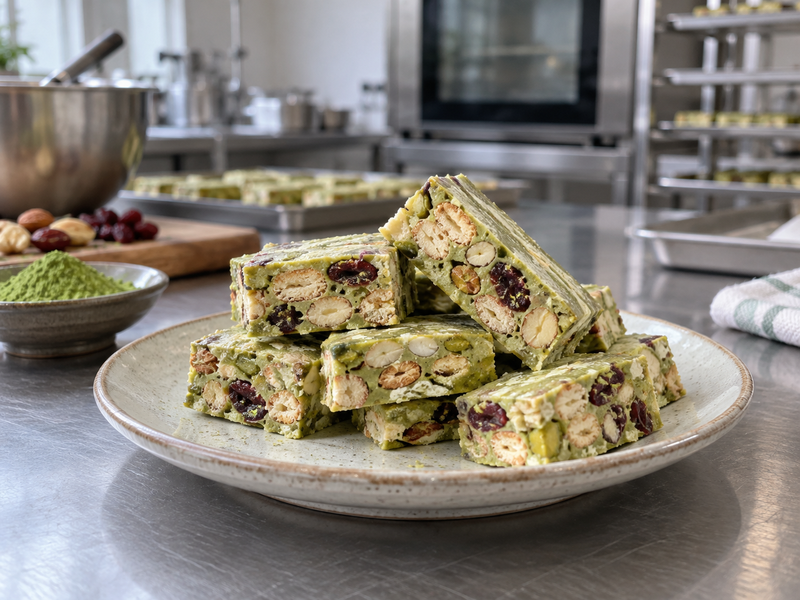
Show purchasing and production a cut sample before asking for quotations. A photograph of the exterior hides the inclusion loading that determines much of the mixing work.
2. What should you specify before ordering ingredients?
Start with the marshmallow declaration
Marshmallows differ in size, moisture, sweetness, flavor and gelling ingredients. Approve an exact product code instead of treating every white marshmallow as interchangeable. Request ingredient and allergen documents, along with the supplier’s storage instructions. If a customer requires a particular gelatin origin or a vegetarian product, resolve that before making a sensory sample.
Milk powder also needs an exact description. Full-fat and skimmed powders can produce different flavor and handling results. Matcha should be plain tea powder for the initial trial, so sugar and dairy additions remain under the developer’s control. A sweetened tea blend may be useful later, but it requires a new formula balance.
Use the Matcha Village bulk supplier guide to structure the tea enquiry. Include the candy’s mild heat exposure, fat-containing base and desired green appearance. Ask for an application sample rather than selecting solely from a grade name. Store trial ingredients in their original identified packs until weighing; this prevents two similar-looking powders from entering the same batch record under one description.
3. How can you set up a useful matcha trial?
Screen tea intensity with a fixed matrix
Use a snowflake base that your kitchen can already mix and cut. As a proposed small trial, weigh three 500-gram portions of identical marshmallow, butter and milk-powder base ingredients before processing. Add 3, 5 and 7 grams of matcha to the respective portions. Keep the biscuit and nut mixture identical by weight and particle size. These are suggested screening levels, not a validated commercial formula.
A separate batch for each dose avoids differences caused by keeping one melted base warm while the operator divides it. Weigh everything before heating, including release materials and the container used for shaping. Once the candy becomes workable, stopping to search for a bowl adds avoidable process variation.
| Proposed sample | Base ingredients | Added matcha | Compare after setting |
|---|---|---|---|
| A | 500 g | 3 g | Mild tea recognition |
| B | 500 g | 5 g | Sweetness and tea balance |
| C | 500 g | 7 g | Dry finish and bitterness |
Taste samples with equivalent inclusion proportions. One bite full of fruit cannot fairly represent a different dose from a bite containing mostly candy.
4. How do you disperse tea without overworking the candy?
Prepare the powders before heat reaches the pan
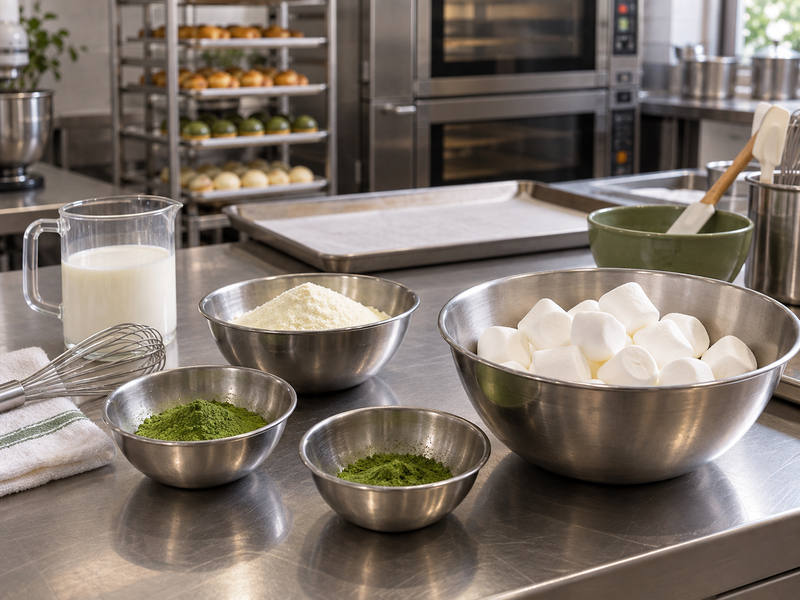
Sift matcha into the milk powder and mix the dry ingredients thoroughly. Inspect the blend for darker green pockets. This distributes a small tea addition through a larger quantity of powder before it meets a sticky matrix. Reserve the complete weighed blend for its assigned batch; sprinkling extra matcha into the pan later makes the dose difficult to reconstruct.
Follow the established base method to soften the marshmallow and incorporate fat. Keep the pan size, heating setting and working batch weight consistent during trials. The aim is to produce a matrix that accepts the powder and inclusions without prolonged heating. Do not infer a microbial kill step from this short melting operation.
Scrape across the bottom and fold through the center so unblended material does not remain at the edges. Record the time from powder addition to shaping. If one operator needs substantially longer, inspect utensil choice and batch size before changing the recipe. A broad scraper can move a sticky mass differently from a narrow spoon. Train the motion using a small batch and retain a photograph of the properly dispersed matrix.
5. How should biscuits, fruit and nuts be selected?
Design the bite around identifiable pieces
Choose inclusions for how they behave inside candy, not only how they taste separately. A delicate biscuit may collapse during folding. A very hard nut can dominate a small bite. Sticky dried fruit can form clusters that leave neighboring pieces almost empty. Prepare a representative mixture and assess the cut face before ordering several cartons of ingredients.
| Inclusion | Purchasing detail | Trial observation |
|---|---|---|
| Biscuit | Thickness and breakage level | Crunch after packing |
| Nut | Cut size and roast profile | Bite force and distribution |
| Dried fruit | Piece size and surface condition | Clustering and moisture movement |
| Coconut | Flake size and added sugar | Chew and tea visibility |
For an initial screen, keep inclusion mass fixed while changing one component. Weigh crumbs separately when breaking biscuits; uncontrolled crumbs can thicken the matrix and obscure larger pieces. Use cooled inclusions when the chosen process requires them, with appropriate handling controls for each ingredient.
A fruit substitution can change more than color. Review its ingredient declaration for sweeteners, coatings or preservatives and assess the finished candy again. The purchasing specification should name the actual product approved, including any treatment that affects its surface.
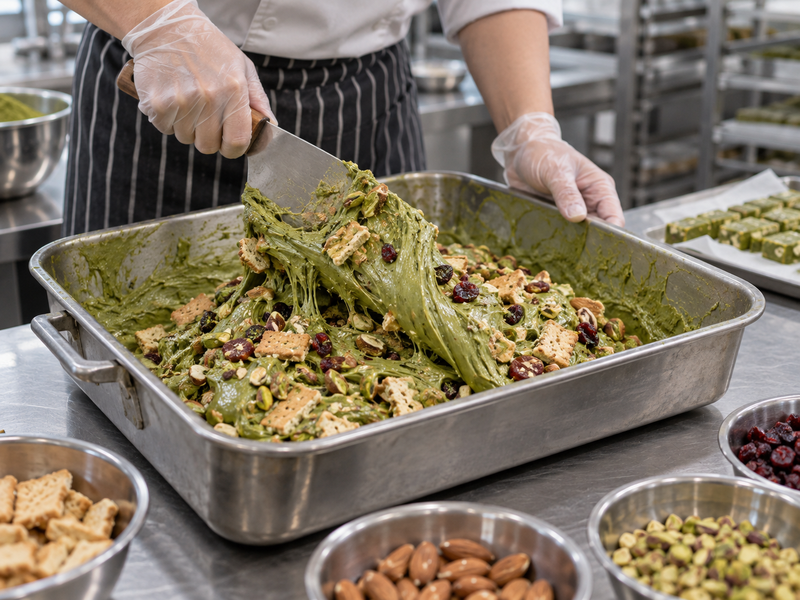
Check inclusion distribution with a simple section count. Cut several pieces from the slab’s center and perimeter, then note whether each contains biscuit, nut and fruit in roughly the intended balance. This is a development observation, not a substitute for a formal sampling plan. It helps reveal a mixture that looked even in the pan but segregated while being transferred. When larger nuts collect in one corner, inspect the folding and depositing motion before raising total inclusion weight. Extra ingredients can make the binder harder to distribute without correcting the original unevenness.
6. How do you control slab thickness and cut size?
Make the cutting plan before pressing
Choose a tray or frame that fits the intended portion geometry. Weigh the candy deposited into it and spread to a consistent depth. An uneven slab creates thin pieces that feel hard and thick pieces that feel excessively chewy, even when they came from the same pan. Use spacers or a frame edge as a physical thickness guide where practical.
Keep pressing pressure consistent. Crushing biscuits while compacting the slab changes both appearance and texture. Work the mixture into the corners without repeatedly flattening the same area. Inspect the underside after release because air pockets may hide there while the top looks smooth.
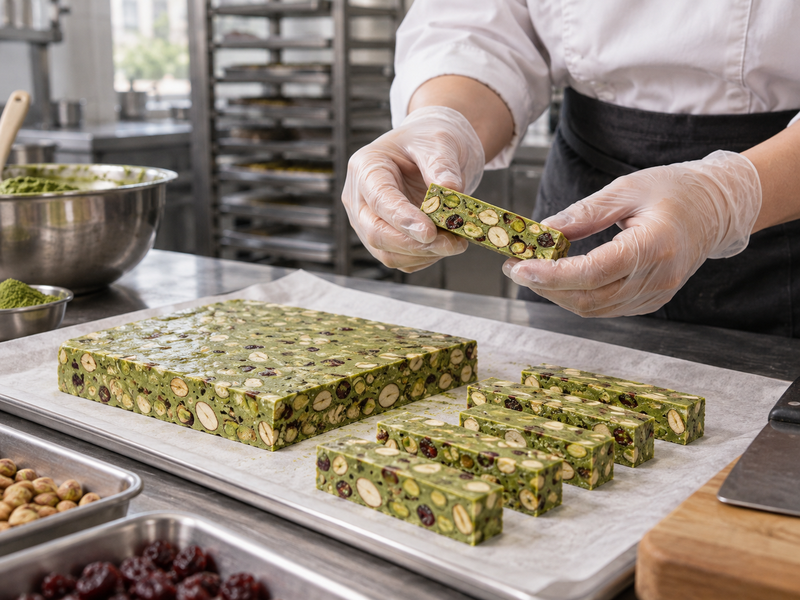
Determine the cutting condition through a small trial. A slab that is too warm may smear or stretch; one that is too firm may fracture inclusions and leave rough edges. Record the condition and elapsed time under the controlled production environment. Use a clean blade and a measured cutting guide, then weigh pieces from the middle and edges. Adjust the slab dimensions or portion layout before asking packers to compensate for large weight variation by eye.
7. How can you separate mixing defects from ingredient defects?
Trace the defect to a stage
Inspect the candy before adding inclusions, after shaping and after wrapping. Green powder pockets visible in the plain matrix point toward dispersion. A clean matrix that develops crumbly edges after folding may indicate excessive inclusion load or a process that allows the binder to become too firm. These observations suggest where to test; they do not prove a single cause.
| Defect | Check first | Next controlled test |
|---|---|---|
| Hard, difficult bite | Heating and marshmallow lot | Same ingredients, shorter handling |
| Loose inclusions | Binder distribution | Smaller mixing batch |
| Green streaks | Dry blending | Preblended powder portion |
| Greasy wrapper | Fat level and incorporation | Repeat exact base method |
Keep a record of ingredient lot changes beside process changes. Otherwise, a new biscuit shipment can appear to validate a mixing adjustment when both happened together. Ask tasters to report chew, crunch and tea aftertaste separately. “Too dry” may describe a powdery candy matrix or a biscuit-heavy bite, and those two complaints need different follow-up trials.
8. What must a wrapper trial establish?
Check release and texture in the actual pack
Use food-contact packaging intended for the product and distribution conditions. Test whether the candy releases cleanly, whether sharp biscuit edges damage the wrapper and whether the seal remains intact after normal handling. A hand-folded sample in attractive paper cannot demonstrate the performance of a heat-sealed retail pouch.
Prepare samples from one batch in each candidate pack, then assess them under the proposed storage and transport conditions. Keep sensory testing separate from shelf-life validation. Sugar content and a firm appearance do not establish that a finished confection is suitable for a particular ambient life. The recipe, moisture, packaging and handling route all need assessment.
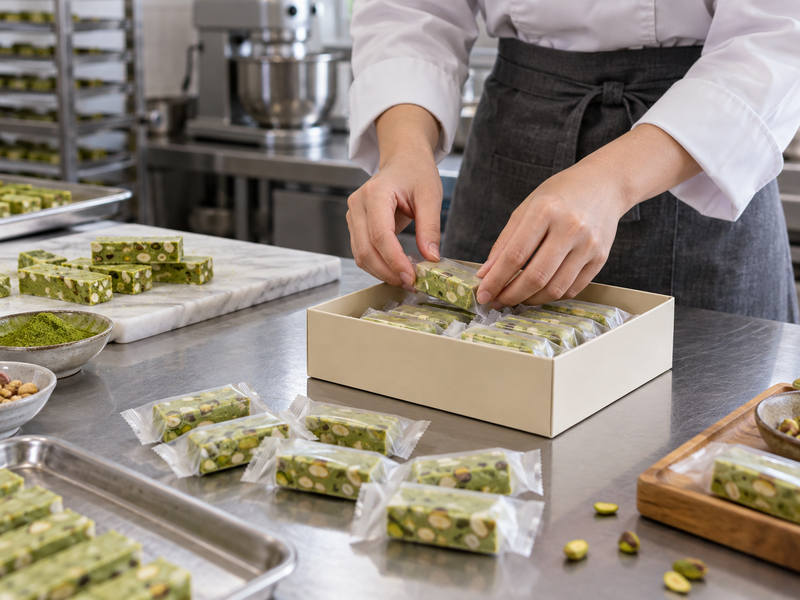
For a gift box, test the inner wrap inside the outer box. Pieces may rub during shipment or transfer oil to decorative inserts. Include the expected case count and packing orientation in the trial. If the product will travel through warm conditions, evaluate that route before approving the material. Give the packaging supplier a physical sample and a clear description of sticking, barrier and seal requirements so the proposed film addresses the actual candy.
Compare wrapper opening as well as wrapper release. A customer may tear through the paper and break a biscuit-heavy corner while the candy itself remains perfectly firm. Ask someone who did not pack the sample to open several pieces normally. Record tearing, crumbs and sticky contact points. Repeat the check with portions from different slab positions. If only thick edge pieces cause trouble, changing packaging material may be less useful than correcting slab depth. Give the packer an accepted opening sample along with the usual closed-pack photograph.
9. How do you cost a box of saleable nougat?
Include the labor after cooking
Measure mixing, slab forming, cutting, wrapping and box assembly separately. A quick pan process can still produce an expensive gift product if every piece needs manual trimming. Count both accepted and rejected portions. Track crumbs and offcuts so purchasing can see the difference between ingredient weight and saleable weight.
| Cost area | Record | Decision it supports |
|---|---|---|
| Tea and dairy powder | Batch usage | Formula comparison |
| Inclusions | Usable pieces and crumbs | Supplier selection |
| Cutting | Time and accepted yield | Portion geometry |
| Wrapping | Labor and film waste | Pack format |
Consider a hypothetical 1,000-gram slab that yields 900 grams of accepted candy after edge trimming. Calculate material cost against 900 grams when costing packed portions. Using the full slab weight understates the cost of what reaches the box. Keep such arithmetic separate from any claim about typical factory yield.
A smaller portion may improve the eating experience but increase wrapping work per kilogram. Make that tradeoff visible in the sample review. The commercial team should approve the proposed piece count and pack price together.
10. What should a commercial trial approve?
Connect recipe, pack and ingredient documents
Approve a specific candy texture at a defined evaluation condition, an inclusion distribution standard and a portion range. Retain photographs of acceptable cut faces and wrapper release. Attach the exact marshmallow, milk powder, matcha and inclusion product codes to the recipe. A broad description such as “mixed nuts” cannot support repeatable buying or accurate declarations.
The FDA allergen resource includes milk, wheat, tree nuts and sesame among US major allergens. Check every component document when preparing the final market label. Supplier certificates should match the relevant product and scope rather than being assumed from the ingredient category.
For a Matcha Village sample request, send the selected trial dose, candy style, desired taste and estimated batch demand. Ask for the sample code and corresponding commercial specification. Then run the winning formula in the intended pan size with the intended wrapper. Assign the production lead to record mixing time, accepted portion yield and clean-release results before approving the first purchase.
Frequently asked questions
Q1: Is marshmallow nougat the same as traditional nougat?
It uses a different binding method. Describe it as a snowflake or marshmallow-based product when discussing manufacturing requirements.
Q2: Can fruit replace nuts at equal weight?
Use equal weight only as a screening comparison. Texture, moisture behavior, allergens and the final declaration still change.
Q3: Why does matcha form dark spots?
Poor dispersion is one possible cause. Inspect the dry blend and plain candy matrix before evaluating inclusion effects.
Q4: Does more matcha make the candy less sweet?
It can change perceived balance, but it does not remove sugar. Record recipe sugar separately from sensory comments.
Q5: Can a sample tasting support an ambient shelf-life claim?
No. Validate the complete product, packaging and distribution conditions before printing a storage period.