
Matcha caneles need a dark, crisp shell and a tender green interior, two targets that can pull a bakery in different directions. Pull them early for color and the crust may disappoint. Bake them harder and the tea can disappear behind caramelized sugar. A useful development trial measures both parts separately. The approach below helps a pastry team choose a powder, control batter preparation and decide whether the finished product suits its actual service schedule.
Contents: Product target | Powder | Formula | Mixing | Molds | Baking | Defects | Service | Cost | Approval
1. What should matcha caneles look and taste like?
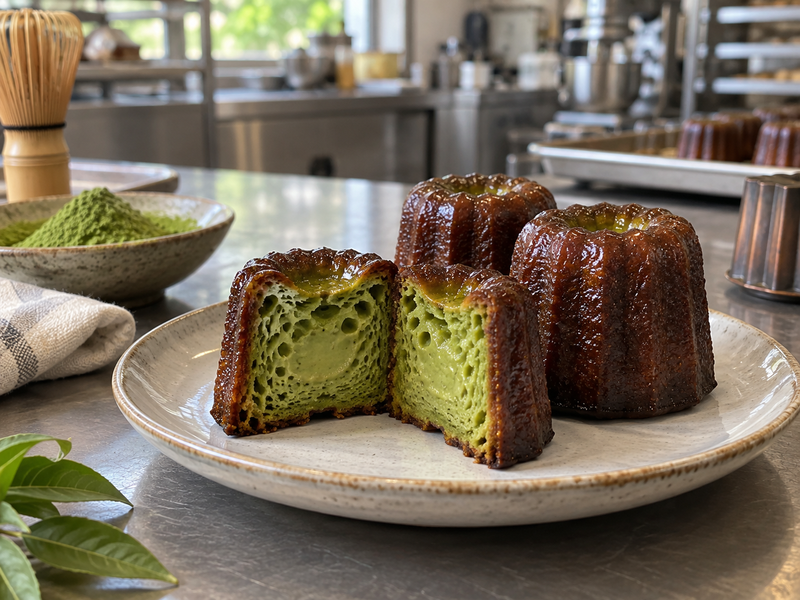
Define the two textures
A canele should offer resistance at the surface before giving way to a moist interior. For a matcha version, judge tea flavor in the center separately from the toasted flavor outside. A green exterior is a poor acceptance target for a pastry whose shell needs substantial browning. Slice the same position on each sample so tasters compare similar amounts of crust and crumb.
Cuzen’s matcha canele recipe provides a public example of this custardy, caramelized format. Its home recipe establishes the product idea; commercial production still needs a process matched to the bakery’s molds and oven. Keep one plain canele beside the matcha samples during development. It reveals whether a flaw comes from the base process or appears after tea enters the formula.
| Attribute | Useful acceptance description | Inspect separately |
|---|---|---|
| Shell | Even brown flutes with a crisp bite | Top and base |
| Center | Tender, visibly set, tea flavored | Middle cross section |
| Shape | Upright with a recognizable fluted outline | Full tray variation |
2. Which matcha sample should a bakery test?
Taste the powder inside the pastry
Buy samples against the application. A powder that tastes delicate in water may become difficult to identify beneath milk, butter and browned sugar. Another sample may give a clear tea note at a lower dose but leave a drying finish. Evaluate both in the same batter before choosing by grade name or bag color.
Use a plain, unsweetened matcha for the initial comparison. A latte blend changes sugar, dairy solids and possibly flavorings at the same time. Ask the supplier for the ingredient declaration, lot identification, recommended handling and available product specifications. Keep a sealed portion of the sample associated with the baked trial; an unlabeled bowl of green powder cannot support a later purchase decision.
The Matcha Village ingredient buying guide can help organize that discussion. For caneles, explain the high heat exposure and the desired center flavor. Request samples that fit those conditions. Compare them blind after baking, then review price. Otherwise, a prestigious grade description can influence the sensory decision before anyone tastes the product.
3. How can you build a small batter trial?
Change matcha before changing the base
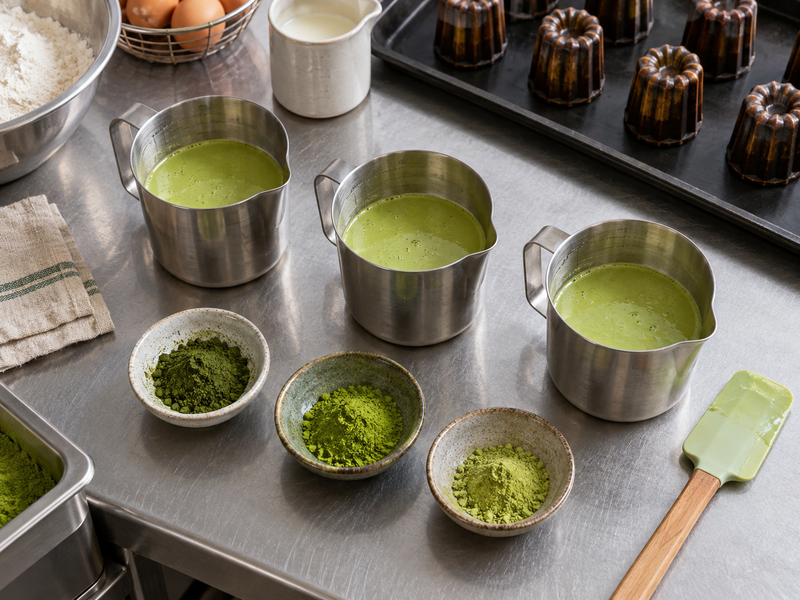
Start with a canele base your bakery already makes reliably. The following is a proposed screening trial, not a tested recipe: prepare three separate batches using 1,000 grams of the same base batter, then add 5, 8 and 11 grams of matcha respectively. These additions create slightly different final weights; calculate percentages from the finished batch if they enter a specification.
Keep the milk, egg, sugar, flour and fat quantities unchanged during this screen. That makes the effect of increasing tea easier to see. If the stronger version becomes too thick or chalky, test a smaller follow-up adjustment to the base rather than changing several ingredients during the first comparison. Make enough pieces from each batch to sample more than one oven position.
| Proposed trial | Base batter | Added matcha | Question to answer |
|---|---|---|---|
| A | 1,000 g | 5 g | Is tea recognizable? |
| B | 1,000 g | 8 g | Is flavor balanced? |
| C | 1,000 g | 11 g | Does bitterness or dryness increase? |
Record the weight of batter left in the jug. Small handling losses can distort apparent yield when trials contain only a few molds.
4. How should the batter be mixed and rested?
Make dispersion visible before filling
Sift the matcha and combine it with a portion of a dry ingredient from the formula. Add the liquids gradually, following the base recipe’s mixing sequence. Scrape the bowl and inspect the underside of the whisk for concentrated green paste. A smooth surface does not prove that the entire batch is dispersed. Avoid vigorous late whisking that leaves a deep layer of foam above otherwise fluid batter.
A refrigerated rest belongs in the production schedule only when the kitchen can control it. Identify the container, preparation time and planned bake. Do not copy an internet storage allowance into a commercial food safety plan. The batter contains perishable ingredients and needs the bakery’s established controls throughout preparation and holding.
Before filling, stir gently enough to distribute settled material without rebuilding foam. Compare the first and last molds filled from a jug. If their centers differ in color or density, investigate the handling sequence. A large production container may need a defined mixing interval that a small bowl never required. Write that interval only after the trial demonstrates a repeatable result.
5. Which mold details change the result?
Treat each mold system as a separate process
Copper, coated metal and silicone molds can produce different heating and release behavior. Comparing them requires more than placing one of each in the same oven. Match cavity capacity, deposited batter weight, coating method and tray position as closely as practical. Record the exact mold used so a replacement purchase does not silently change the process.
Measure capacity with water during setup, then dry the mold completely before preparing it for food. Capacity is a purchasing measurement; it is not automatically the correct batter fill. Establish the working fill from baked results. Overfilling can create a distorted top, while an unnecessarily small deposit reduces saleable portion weight.
| Mold detail | What to record | Why a buyer needs it |
|---|---|---|
| Material and finish | Supplier and product code | Replacement consistency |
| Cavity capacity | Measured volume | Deposit comparison |
| Release coating | Ingredient and application | Surface and release checks |
| Tray arrangement | Spacing and rack position | Heat exposure repeatability |
Check release on more than one cavity. A single scratched or poorly coated mold can create a reject pattern that looks like a batter problem. Separate damaged equipment from formula trials before drawing a conclusion.
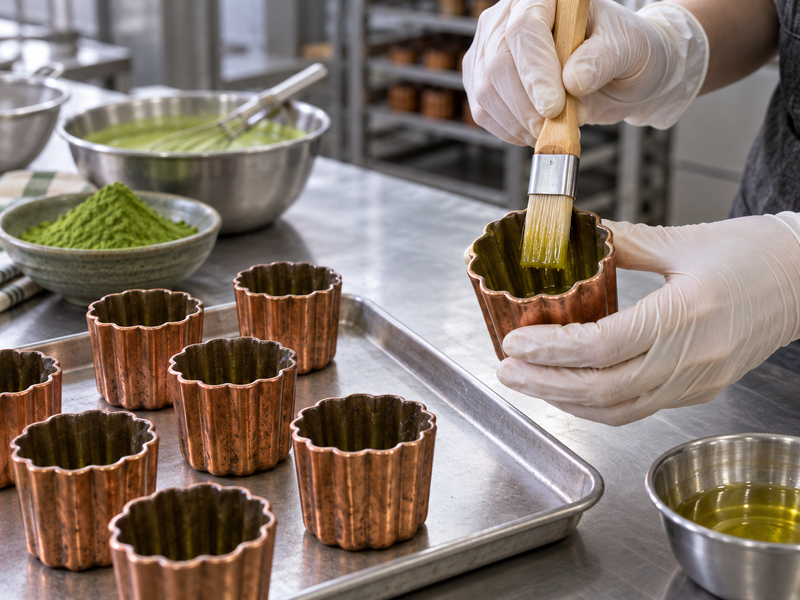
When testing a release coating, weigh a group of clean molds before and after application if the scale can resolve the difference. This provides a comparison between operators without pretending every cavity carries exactly the same film. Inspect the base for pooled coating and the upper flutes for missed areas. Keep coating ingredients and handling within their approved food-use instructions. If the bakery changes its release material, rerun the comparison before attributing a new shell texture to the matcha shipment.
6. How do you balance crust and custard?
Use the oven profile your equipment can repeat
Begin with the established profile for your plain caneles. Keep a written record of preheating, loading, set temperatures and any planned temperature change. The displayed setting is useful, but the batch also depends on how long the door stays open and how densely the oven is loaded. Reproduce the normal bakery load before approving a profile for production.
Judge doneness with a defined inspection routine. Look at the sides and base after release, then cut a representative piece once it can be assessed properly. Color alone cannot establish whether the center is adequately cooked. The bakery must validate the cooking process for its own product and equipment.
If the shell becomes too dark before the center reaches the intended condition, change one part of the profile in the next trial. A shorter initial hot stage or a different rack position may deserve testing, but neither is a universal correction. Record the reason for the change. Keep the failed piece or a clear cross-section photograph beside the revised sample so the team can see whether it solved the specific defect.
7. What do common canele defects tell you?
Diagnose a location before changing a formula
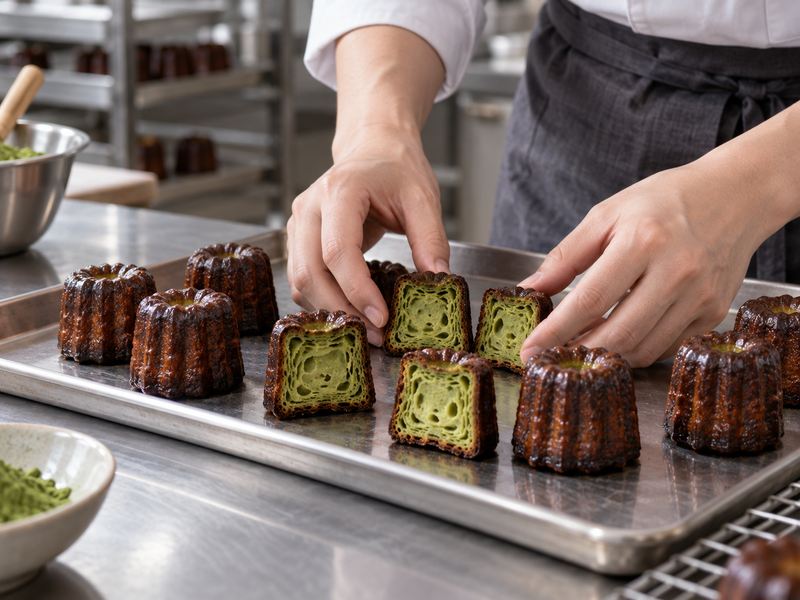
Cutting several pieces often reveals more than tasting one. A pale band near the top may follow the same position across many molds. A dense layer at the base may vary with the filling order. Compare defect location with the tray map and the sequence of depositing. That turns a general complaint such as “inconsistent texture” into a question the next batch can answer.
| Observation | Check before reformulating | Useful next comparison |
|---|---|---|
| Green specks | Powder dispersion | Sifted versus current method |
| Uneven dark sides | Mold and oven position | Rotate tray map |
| Dense bottom layer | Settling and fill sequence | First versus last deposit |
| Poor release | Coating and mold condition | Sound matched molds |
Do not treat every hollow interior as proof of excessive matcha. Aeration, filling and baking can all contribute to an undesirable cavity. The plain control helps narrow that investigation. Likewise, a bitter shell may come from excessive browning while the center remains balanced. Ask tasters to identify where the bitterness occurs before the purchasing team rejects the ingredient sample.
8. How should the bakery test its service window?
Follow the pastry from rack to customer
Test the actual service route, including cooling rack, display cabinet, takeaway box and any delivery journey. Crispness after release does not predict crispness after enclosure. Moisture moving from the interior and condensation inside packaging can change the eating experience. Record when pieces enter each stage and assess them at the times customers normally buy them.
For a suggested quality trial, compare uncovered display samples with samples in the intended takeaway pack. Use the same bake and equivalent pieces. Evaluate shell resistance, center texture, tea aroma and whether the base sticks to the packaging. This trial measures quality; it does not establish a safe shelf life.
If the best quality window is short, schedule smaller bakes around demand rather than promising a longer holding period. Calculate the labor cost of that schedule before adding caneles to several outlets. A central bakery can also test a finishing step at the shop, but the complete handling and heating process needs validation. Give staff a clear discard or withdrawal procedure tied to the approved operating plan, not an informal judgment based only on smell.
Plan the number of molds around the full production cycle. A mold occupied by batter, baking, cooling or cleaning is unavailable for the next deposit. Record that complete cycle during the trial. A bakery can have spare oven space and still miss a sales window because its molds are not ready. Compare purchasing another matched mold set with increasing individual batch size. The larger batch may alter oven loading and batter waiting time, while another set may preserve the process already approved. Use the timed trial to make that equipment decision.
9. How do you calculate a saleable piece cost?
Count the pieces that reach the counter
Divide the total batch cost by accepted pieces after release and inspection. Include batter left behind, broken shells, mold preparation, oven occupancy and packaging. Matcha cost alone rarely describes the economics of a labor-intensive pastry. A less expensive powder can lose its advantage if the required dose rises or more pieces fail the agreed flavor target.
| Cost item | Measurement basis | Common omission |
|---|---|---|
| Matcha | Actual grams used | Powder retained in utensils |
| Labor | Mixing through mold cleaning | Release and inspection time |
| Oven | Batch time and practical load | Long recovery between loads |
| Rejects | Count after quality check | Damaged flutes during release |
As a calculation example, a batch costing 180 currency units with 60 accepted pieces costs 3 units per piece before overhead and margin. If only 50 pieces qualify, that figure becomes 3.6. These are illustrative numbers, not an estimate for a particular bakery. Use the same calculation for every powder and mold option so the comparison reflects the product customers receive.
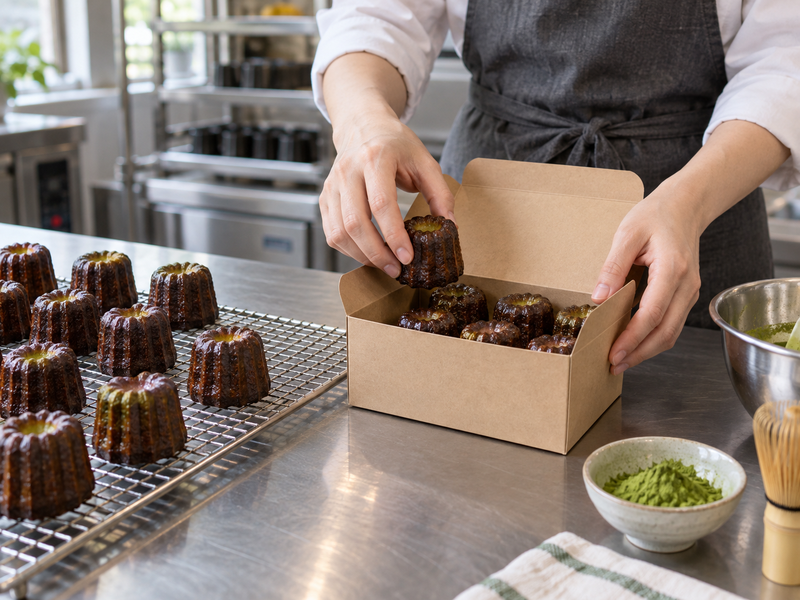
10. What should go into the production specification?
Approve the recipe and the buying decision together
The finished specification should connect the ingredient lot to the batter, molds, oven profile and acceptance photographs. Include the approved deposit weight, gentle remixing method and handling route. Give production staff examples of an acceptable center and the defects that require rejection. A color description such as “nice green” leaves too much room for different judgments across shifts.
Check declarations for the complete formula, including release coating and optional rum or flavoring. For US sales, FDA’s allergen information identifies milk, egg and wheat among the major allergens. Use current ingredient documents when preparing market-specific labels.
Ask Matcha Village for the exact sample code, proposed commercial pack and available lot documentation associated with the winning trial. Keep the next purchase conditional on a production-scale bake that meets the same acceptance checks. Assign one person to compare that bake with the approved sample and sign the record before the recipe enters the daily schedule.
Frequently asked questions
Q1: Must matcha caneles have a green crust?
No. A caramelized brown shell is compatible with a green tea interior. Set separate color expectations for the outside and center.
Q2: Can a bakery use sweetened matcha powder?
It can develop a formula around one, but the blend changes sugar and other solids. Start a separate trial rather than making a direct substitution.
Q3: Should rum be compulsory?
No. Treat it as a flavor decision. Specify the exact ingredient and confirm whether it fits the intended customer and labeling requirements.
Q4: Can the trial establish shelf life?
A texture comparison cannot. Commercial shelf life needs assessment of the actual recipe, process, packaging and storage conditions.
Q5: What should an ingredient enquiry include?
Send the application, target dose, batch size, desired tea intensity and sample photographs. Ask for a traceable sample and a commercial pack proposal.