
Matcha castella needs enough structure to slice neatly without losing the soft, close crumb customers expect. Tea powder adds another dry ingredient to a batter that depends heavily on its egg foam. A bakery can get a greener cake and still lose height or eating quality. Develop the tea addition around a reliable sponge process, then test the slices in their intended pack. The following trial plan separates foam, color, flavor and yield so one attractive loaf does not conceal an inconsistent process.
Contents: Target | Tea | Trial | Foam | Folding | Pans | Slicing | Packaging | Yield | Release
1. What should a matcha castella slice deliver?
Define crumb before choosing a color
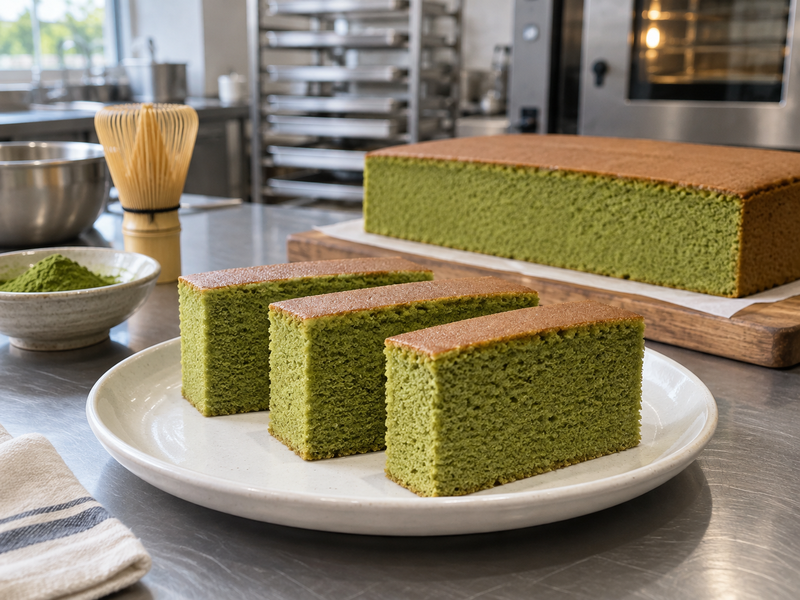
Specify the intended thickness, height and eating texture of a slice. A tall cake with large tunnels may photograph well from the outside but break during packing. A very compact slice can carry a strong tea flavor yet feel heavy. Compare the same cross section from each loaf and keep the top crust visible so tasters judge the full bite.
Chef JA Cooks’ matcha castella is a public example of an egg-based sponge with matcha. It gives recipe context, while a commercial bakery still needs its own acceptance standard for slicing and distribution. Decide whether the product will be sold as a wrapped loaf, individual slice or plated dessert. Those formats expose different weaknesses.
| Sale format | Main physical demand | Suggested trial observation |
|---|---|---|
| Whole loaf | Shape and top appearance | Corner damage after packing |
| Wrapped slice | Cohesion and clean edges | Crumbs inside wrapper |
| Plated portion | Tender bite and tea aroma | Texture at service condition |
Choose a reference slice and photograph it under ordinary production lighting. That is more useful for staff than a heavily edited promotional image.
2. How should a bakery select its matcha?
Match the sample to a lightly flavored sponge
Castella gives the tea fewer places to hide than a heavily flavored chocolate cake. Compare aroma, bitterness and the finish after swallowing. Ask tasters whether the tea stays distinct alongside egg and honey notes. A sample that tastes strong in water may become harsh when its dose rises enough to meet a color target.
Request plain matcha with a traceable sample code and current ingredient specification. Check how the supplier recommends handling opened packs. Choose a pack size that the bakery can manage without leaving a large working bag open beside the mixer. Record opening and lot information on the actual working container.
The Matcha Village guide to types of matcha provides a starting point for discussing applications. Grade names alone should not settle the purchase. Bake two or three candidate powders in the same base, then compare slices blind. Keep a sample of the winning powder and a record of its dose. If the next shipment produces a different result, that record lets the team compare ingredient and process changes separately.
3. How can you test tea dose without losing the control?
Use independent small batches
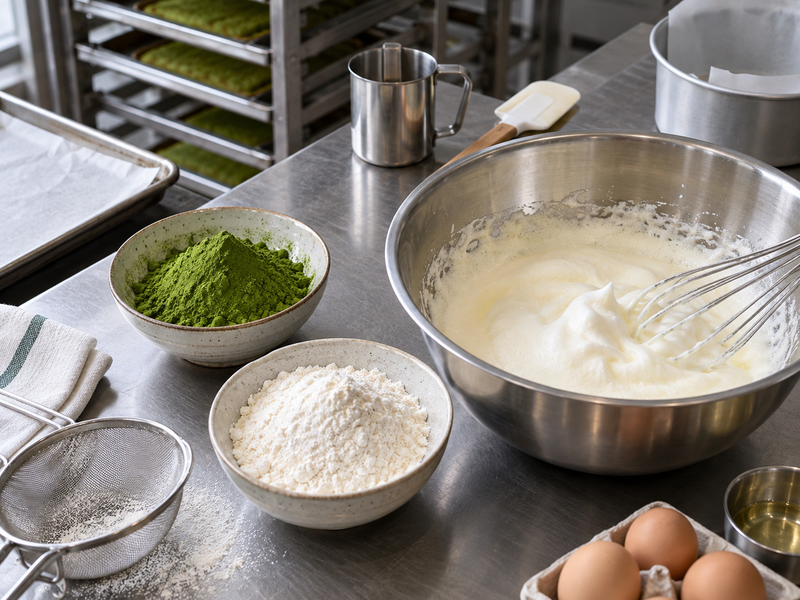
As a proposed development screen, prepare a plain control and three small batches based on the bakery’s existing castella recipe. For each 100 grams of base flour, trial additions of 2, 3 and 4 grams of matcha. These are untested starting levels. Keep flour unchanged during this first screen so the team can observe the effect of added tea solids before considering flour replacement.
Make each batch separately with matched ingredient temperatures, bowl size and mixing sequence. Dividing finished foam into several bowls can create differences through handling alone. Weigh deposited batter and compare equivalent pan depths. Record total batch weight because adding matcha changes the final formula percentage.
| Trial | Base flour | Added matcha | Primary question |
|---|---|---|---|
| Control | 100 g | 0 g | Does the base perform today? |
| A | 100 g | 2 g | Is tea recognizable? |
| B | 100 g | 3 g | Does flavor remain gentle? |
| C | 100 g | 4 g | Does crumb become heavy? |
Approve a direction from the baked samples, then run a separate adjustment if the selected dose needs a change to the base.
4. How do you keep the egg foam repeatable?
Record what the mixer produces
Use the same egg product and measure ingredients by weight. Shell-egg counts introduce unnecessary variation when egg size changes. Follow the bakery’s established safe handling procedure for eggs, bowls and utensils. If the base method warms an egg mixture, record that step precisely rather than relying on how the bowl feels in one operator’s hand.
Mixer speed and elapsed time help describe the process, but inspect the foam itself. Record volume, appearance and the way a ribbon of mixture falls back into the bowl. A larger mixer with the same speed number may create a different result. Transfer the method through an equipment trial instead of multiplying a mixing time from the small batch.
A simple development measurement is the mass of a consistently filled, known-volume cup of batter. Use the same filling and leveling method each time and return no sampled batter unless the kitchen procedure allows it. This gives a comparative density record. It does not define a universal target for castella. Relate the readings to loaf height and crumb photographs until the bakery can identify its own acceptable range.
5. How should the dry ingredients enter the batter?
Remove lumps before the foam must handle them
Sift and blend flour with matcha so the color appears uniform before folding. A concentrated tea lump demands extra mixing later, when the batter can least afford it. Inspect the sieve residue; forcing a damp, compacted lump through it does not solve an ingredient-handling problem. Keep powder preparation separate from the time-sensitive foam stage.
| Stage | Check | What an inconsistency can affect |
|---|---|---|
| Dry blending | Even pale green mixture | Specks and bitter pockets |
| Addition | Consistent portions | Folding workload |
| Bowl scraping | No dry layer underneath | Bottom streaks |
| Final transfer | Prompt, gentle deposit | Batter density variation |
Use a folding motion that reaches the bowl bottom. Stop to check a small smear on a spatula rather than repeatedly stirring to make the surface look smooth. Scrape the bowl consistently between batches and note any batter left behind.
If honey or another liquid enters late in the method, prepare it at the condition required by the base recipe. A thick lump can settle and force further mixing. Record the sequence and evaluate the lower crumb for dense streaks after baking.
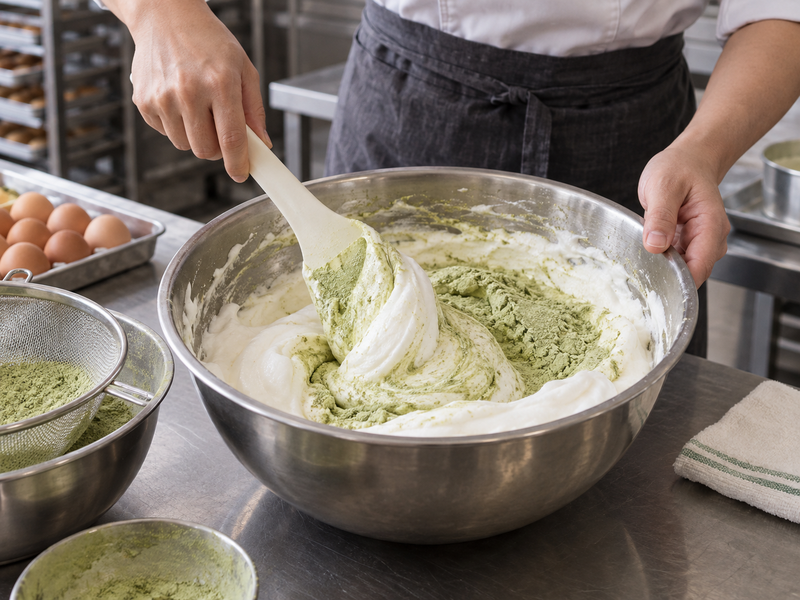
Use the transfer step to check whether the written mixing method is practical. Time how long the batter waits while the operator prepares the pan, moves a trolley or clears a bench. Complete those preparations before the next comparison batch. If the trial succeeds only when one developer works unusually fast, it has not yet demonstrated a routine production method. Match the bowl and scraper to the deposit size so the last portion can be transferred without repeated scraping that changes its condition relative to the first pan filled.
6. What pan and oven records help explain the bake?
Match the deposited depth
Record the pan’s internal dimensions, material, lining and deposited batter mass. Two pans sold under the same nominal size can differ enough to change the batter depth. A deeper deposit changes the relationship between surface browning and center setting. Compare pans with measurements, not packaging names.
Keep a tray map for the initial bake. Identify front, back and rack position, then label the cooled loaves accordingly. If one side repeatedly produces darker tops, the map provides evidence before the recipe is changed. Record preheating, actual loading pattern and door openings during baking. Avoid adding unrelated products to a controlled trial unless mixed loading is the production condition being tested.
Use the established base profile as the starting point and assess the finished cake through the bakery’s validated cooking procedure. A green center is not a doneness indicator. If the top browns too quickly, investigate the heat profile and pan depth in separate trials. Do not reduce the bake solely to preserve a brighter color. The selected matcha needs to perform inside the process required to produce a properly baked cake.
7. How do you evaluate the loaf before slicing?
Inspect shape, then the interior
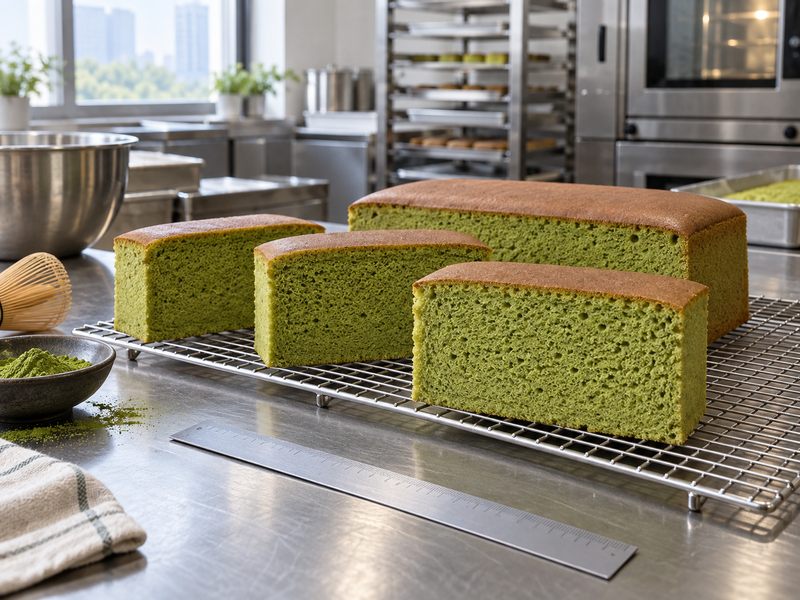
Check the loaf after the controlled cooling process. Record shrinkage, side collapse, top wrinkles and any separation from the crust. Measure height at several positions. A single center measurement misses a loaf that slopes toward one end and produces inconsistent slices.
Cut representative samples with a consistent blade and technique. Inspect the upper, middle and lower crumb for holes, compressed bands and dark tea specks. Evaluate the same slice thickness in every trial. A thin piece can feel tender while a thick piece of the same cake seems dense.
| Observation | Useful comparison | Possible area to investigate |
|---|---|---|
| Large tunnels | Pan positions | Foam and deposit handling |
| Dense bottom | Mixing sequence | Dry pockets or settled liquid |
| Crumb tears | Cutting condition | Structure and blade method |
| Sloping loaf | Pan fill and level | Deposit consistency |
Keep sensory comments specific. Ask whether a dry finish comes from the cake’s moisture and texture or from tea astringency. Taste the plain control beside the matcha version. That comparison helps prevent a powder change from becoming the default response to every crumb defect.
8. How should you test individual slice packs?
Reproduce the packing motion
Use the intended tray, film and insertion method during the quality trial. A delicate slice can survive a careful developer’s hands and still crumble when packed at normal speed. Observe where fingers or guides compress the cake. Check whether the top crust rubs against film or transfers color and crumbs.
Pack only at the approved condition established by the bakery’s process. Enclosing warm cake can create condensation and a different surface texture. The appropriate cooling and holding procedure depends on the complete product and food safety plan. Do not translate a home recipe’s storage suggestion into a commercial date code.
Assess packed slices after the intended handling route, including outer-case stacking and transport vibration where relevant. Record aroma loss, crust adhesion, crumb shedding and visible moisture. A package that holds shape well may still make the cake inconvenient to remove. Ask a staff member unfamiliar with the development trial to open it and place the slice on a plate. Use that observation to adjust tray fit before approving artwork or ordering a large film run.
9. How do you calculate trim and portion yield?
Cost the rectangle you can sell
Measure whole-loaf weight, trimmed weight and accepted slice count. Keep trim decisions consistent. Removing a slightly thicker edge from each loaf can change ingredient cost per portion across a production week. Record whether crust edges are part of the product standard or a development preference that should be challenged.
| Yield measurement | Calculation basis | Practical use |
|---|---|---|
| Bake loss | Batter versus cooled loaf | Process comparison |
| Trim loss | Whole versus trimmed loaf | Pan and layout selection |
| Slice variation | Individual portion weights | Cutting adjustment |
| Packing rejects | Accepted versus packed count | Handling improvement |
For example, a hypothetical loaf with 20 planned slices but two packing rejects must carry its batch cost across 18 saleable slices. Keep that calculation separate from theoretical cutting yield. The commercial team needs both figures to judge whether a thinner slice saves money or merely breaks more often.
Compare matcha samples at their successful dose, not at an identical purchase price per kilogram. Include labor for sifting, mixing and cutting. A powder that disperses cleanly and reaches the chosen flavor at a lower dose may have a different finished-product cost from its price ranking.
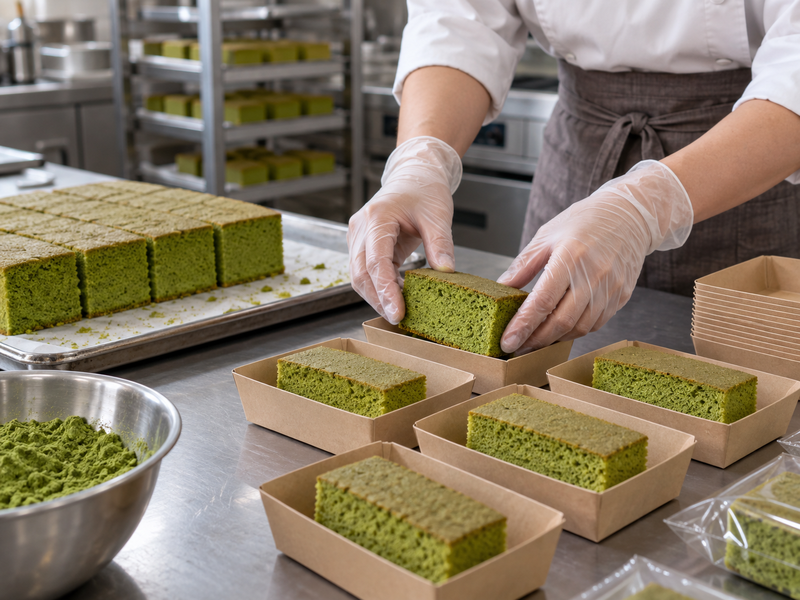
Check slice layout against the loaf’s actual dimensions after cooling. Mark the proposed cutting grid on a separate guide rather than scoring the cake repeatedly. Include the blade width and any planned trim in the calculation. A layout that fits an untrimmed warm loaf can produce a short final slice once the loaf has cooled and the edges are removed. Weigh that final slice during the trial. If it repeatedly misses the portion specification, change the layout or pan fill before operators begin compensating by cutting neighboring slices thinner.
10. What makes the recipe ready for a production shift?
Give operators observable limits
Write the approved ingredient codes, batch weights, foam observations, dry-addition sequence, deposit mass and bake profile together. Include photographs of the accepted crumb and a short list of reject defects. Record the cutting condition and the intended slice dimensions. Staff need a process they can inspect while working, rather than a final photograph alone.
Check the complete ingredient declaration, including any emulsifier, release agent or blend used in production. FDA allergen guidance identifies egg and wheat among US major allergens. Review the actual recipe and destination requirements before approving a label.
Send Matcha Village the chosen application dose, expected monthly use and the sample code linked to the trial. Ask for the corresponding commercial specification and available lot documentation. Schedule one full mixer batch using the intended pans and normal packing crew. Have the shift lead compare batter density, loaf dimensions and accepted slice yield with the development record before signing the recipe into production.
Frequently asked questions
Q1: Does castella require a particular matcha grade name?
No grade name guarantees a result. Approve a specific powder after evaluating flavor, crumb and color in the cake.
Q2: Can tea replace flour gram for gram?
That needs testing. Tea and flour perform different jobs, so a direct replacement may alter the structure.
Q3: Why compare batter density?
A consistent measurement helps track changes in aeration and handling. Establish the useful range from your own successful batches.
Q4: Should slices be packed immediately after baking?
Use an approved cooling and packing procedure. Warm packing can change the surface and create condensation.
Q5: What is the best starting purchase quantity?
Order enough traceable sample for repeated small bakes and a production confirmation. Set the commercial order after yield and pack performance are accepted.