
Matcha noodles made from fresh dough can lose their visual appeal in the pot or taste of almost nothing once dressed. A restaurant needs to test dough strength, tea dose, cutting, cooking, and the finished plate as one system. The first decision is whether matcha belongs in the dough at all. Bon Appétit’s cold matcha noodle dish puts matcha in a sauce over wheat noodles, which is a different and useful concept. This guide focuses on fresh noodles with matcha incorporated into the dough. Our matcha cake guide covers another food application where finished-product testing matters.
Contents
- 1. What noodle should the kitchen make?
- 2. Which flour and liquid form the base?
- 3. How much matcha belongs in the dough?
- 4. How do you control hydration and mixing?
- 5. How should the dough rest and sheet?
- 6. What cut gives consistent cooking?
- 7. How should the cooking trial be run?
- 8. Which sauce lets matcha remain visible?
- 9. What handling plan does service need?
- 10. How do you cost a saleable plate?
1. What noodle should the kitchen make?
Define the plate before the dough
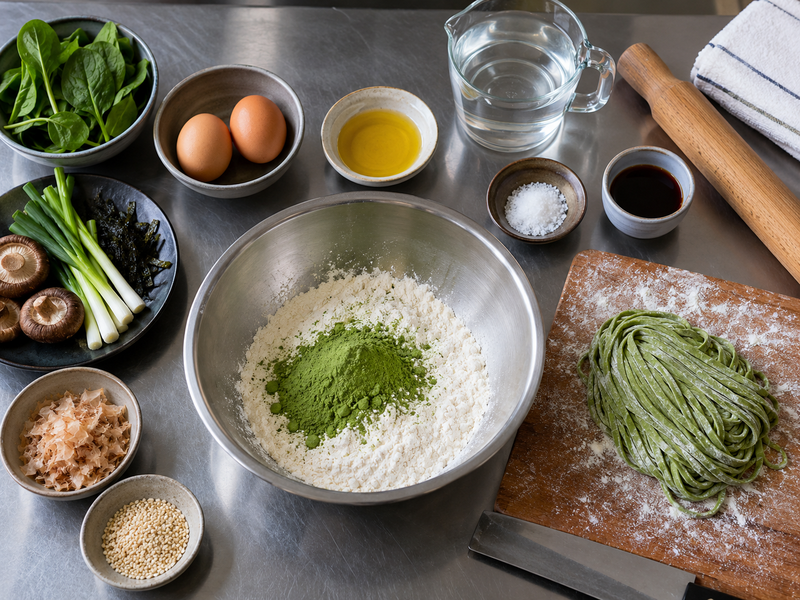
Decide whether the dish calls for a thin cold noodle, a wider fresh wheat ribbon, or a compact nest served warm. The shape controls how much sauce clings, how quickly strands cook, and whether matcha color is visible on the plate. Write a target for chew, width, portion mass, and tea flavor. A noodle that looks vivid raw but turns dull after cooking is not the saleable product. Photograph a passing cooked portion under the restaurant’s service lighting.
Taste the noodle plain first, then with a modest dressing. This separates a weak tea dough from a sauce that simply overwhelms it. Consider whether the restaurant has the equipment and labor to sheet and cut fresh dough consistently. If not, a purchased noodle with a matcha sauce may better meet the menu intent. The decision is about the dish guests will receive, not a belief that matcha in dough is inherently more authentic or valuable.
2. Which flour and liquid form the base?
Begin with an approved plain noodle
Use a fresh pasta or noodle formula the kitchen already knows how to mix and roll. Weigh flour, egg or water, and salt, then make a plain control batch. Record dough feel, resting time, sheeting behavior, and cooked texture. King Arthur Baking’s fresh pasta method offers a documented flour-and-egg reference for pasta, but a restaurant should adapt the base to its intended noodle and equipment. The control makes the effect of matcha easier to interpret.
Different flour blends and liquid sources produce different dough strength and color. If the menu is intended to be egg-free, develop that as a separate base rather than removing egg from an approved formula at the same time as adding matcha. Note whether any semolina or dusting flour remains on the strands. The exact flour and supplier should be recorded with the trial; an unannounced substitution can change hydration and rolling. The base needs to work reliably before the tea is asked to carry a product problem.
| Base input | Trial record | Passing check |
|---|---|---|
| Flour | Type and mass | Sheet strength |
| Liquid | Egg or water mass | Cohesive dough |
| Dusting flour | Amount used | Minimal sticking |
3. How much matcha belongs in the dough?
Compare cooked portions, not raw color
Add matcha at a measured percentage of flour mass in small trials. Keep the rest of the formula and process fixed as far as possible, then compare raw dough, cooked noodles, and the finished plate. A low dose may color the sheet without giving much flavor; a high dose may bring bitterness or alter dough handling. The right level depends on the powder and sauce, so do not transfer a cup-drink dose into pasta by intuition.
Request representative supplier samples and bake or cook-test the exact offered product. Plain matcha is easier to evaluate than a sweetened beverage mix in savory dough. Note tea cost per portion and whether the powder disperses evenly through flour. If matcha is sifted into dry ingredients, record that step. Keep a sample of the cooked control beside the matcha trials so the team can judge whether the tea contributes enough to justify extra cost and handling.
4. How do you control hydration and mixing?
Make one measured correction at a time
Matcha adds dry material to the flour system. If the dough feels crumbly, inspect the total ingredient weights and mixing time before adding water. If it becomes sticky, check whether the liquid or egg mass changed. Record the dough temperature and the amount of any correction. A handful of flour or splash of water can make the next batch impossible to reproduce. Test a small measured adjustment while the matcha dose stays fixed.
Mix until the dough reaches a defined cohesion and then evaluate it after the planned rest. Some doughs look rough when first combined but become easier to sheet after hydration and relaxation. King Arthur’s pasta guidance describes rest and rolling as parts of the method; the restaurant still needs to validate its own flour and equipment. Keep the dough covered during the approved rest so exposed surfaces do not dry unevenly. A clean sheeting result matters more than a perfectly smooth mixer bowl.
| Observation | First check | Controlled response |
|---|---|---|
| Crumbly mix | Weights and rest | Small liquid trial |
| Sticky sheet | Liquid and dusting | Small flour or process trial |
| Green streaks | Dry mixing order | Sift and mix matcha evenly |
5. How should the dough rest and sheet?
Record machine settings and yield
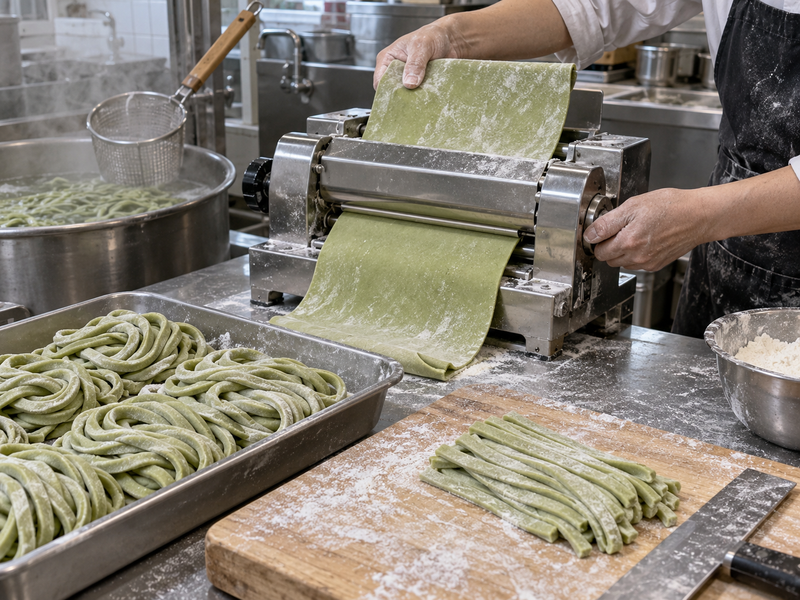
Set a covered rest under the kitchen’s food-safety procedure, then sheet a small portion through the actual machine. Record starting thickness, each pass, any folds, and final setting. Watch for tearing, edge cracking, or excessive snapback. A dough that rolls well by hand may behave differently in a commercial sheeter. If it resists, test a short additional rest before adding liquid to the full batch. Keep unused dough protected while the first piece is worked.
Compare sheet color after the rest and after repeated passes. If powder distribution is uneven, sheeting may reveal pale streaks. Measure trim loss and the mass of usable sheet. The restaurant will price and prep from saleable noodles, not total dough. A standard sheet width and final thickness also help staff cut uniform strands. If one machine setting produces fragile thin noodles, a slightly thicker cut may preserve both handling and color on the plate.
6. What cut gives consistent cooking?
Match width to sauce and service speed
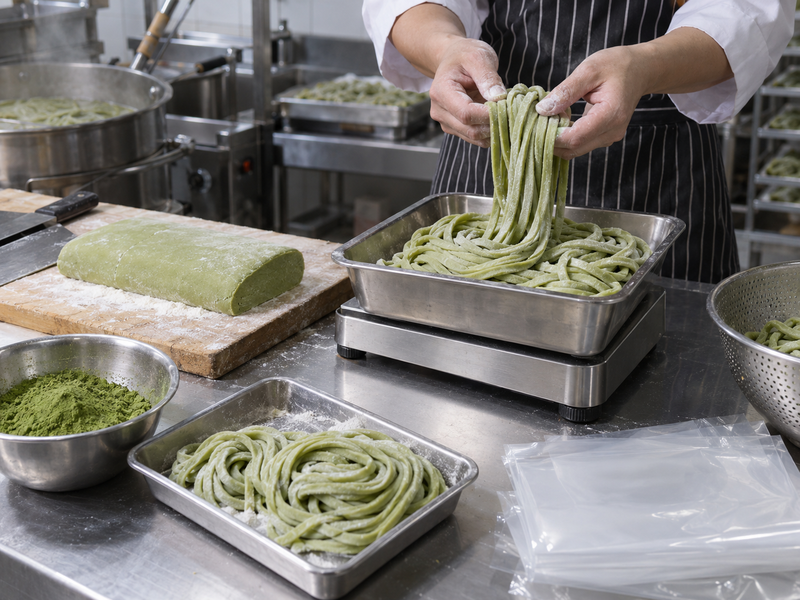
Cut equal lengths and widths for trial portions, then weigh each nest. Thin strands may cook quickly and work with a light cold dressing; wide ribbons may show color better and carry a richer sauce. The choice should come from the finished dish and available cutter, not only a photograph. Record the machine attachment or hand-cut guide, dusting procedure, and portion mass. Strands that stick together in a nest will cook unevenly and slow service.
Test pieces from the beginning and end of a sheeting batch. If thickness or width drifts, revise the process before choosing a cook time. Count how many saleable portions emerge after trim and breakage. A high matcha cost per kilogram may still be workable if trim is low and portioning is consistent; a low-cost powder cannot rescue a process that discards a third of the dough. The cut specification is a cost and cooking control as well as a visual choice.
| Cut | Plate effect | Kitchen check |
|---|---|---|
| Thin strand | Delicate, quick serving | Sticking and overcooking |
| Medium ribbon | Visible green surface | Even thickness |
| Wide ribbon | Strong visual identity | Sauce balance |
7. How should the cooking trial be run?
Use timed, coded samples
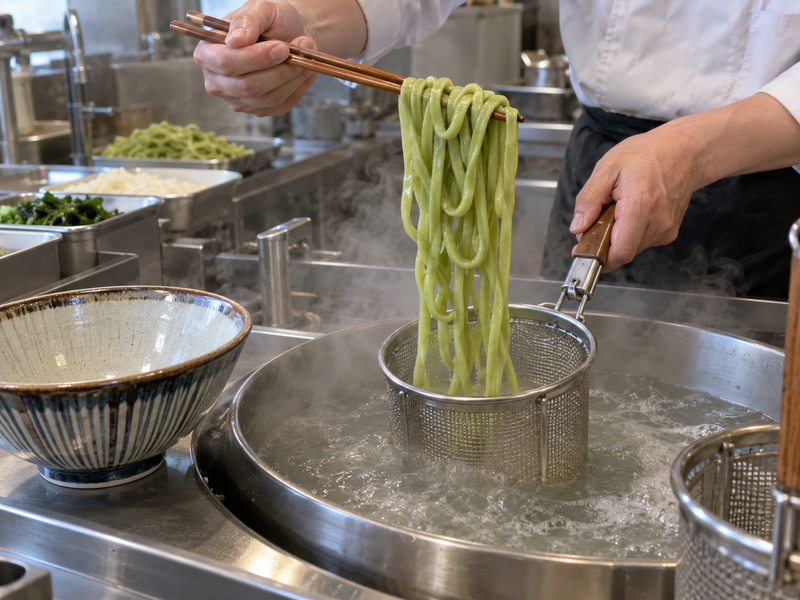
Cook equal-weight portions in a consistent amount of water using the pot and load planned for service. Pull samples at several timed points, then taste for chew and inspect color after draining. Do not set the standard from raw dough appearance. Record whether rinsing or chilling is part of the final dish; those steps can change both texture and look. Taste a warm service and a cold service separately if both are proposed.
Measure the cooked yield and observe breakage, clumping, and water cloudiness. A noodle that tastes good in one small pot may behave differently when the line cooks several orders together. Run a second trial at realistic load, using the same portion and procedure. If the green color weakens markedly, test matcha dose, cooking exposure, and sauce presentation one at a time. Avoid making unsupported claims that a particular powder is heat stable for this product without the kitchen’s own evidence.
8. Which sauce lets matcha remain visible?
Build the plate around the noodle
Start with a light sauce that allows the noodle’s tea flavor to appear, then test richer or acidic options in measured portions. Strong soy, sesame, citrus, and chili can be delicious but may make the matcha in dough indistinguishable. The Bon Appétit reference demonstrates the separate route of putting tea in a sauce over ordinary wheat noodles. If that route tastes stronger and costs less for your menu, consider it honestly; the restaurant need not force matcha into dough to use the keyword on a dish.
Plate the approved noodle mass with sauce and toppings in the actual service bowl. Check whether the green strands remain visible or become hidden under garnish. Taste after normal pass time, especially for cold service where noodles may keep absorbing dressing. Record sauce mass and holding sequence. A good noodle trial should answer whether the matcha contributes to the whole plate, not just whether customers notice a green color in the prep kitchen.
| Sauce trial | What changes | Check |
|---|---|---|
| Light dressing | Tea remains central | Balance and dryness |
| Sesame-rich sauce | Fuller mouthfeel | Matcha still detectable? |
| Acidic sauce | Brighter finish | Color and texture after wait |
9. What handling plan does service need?
Keep fresh dough and cooked noodles traceable
Fresh noodle dough, especially with egg, needs a handling plan set by the site’s food-safety lead under local requirements. Identify how dough is prepared, labeled, stored, portioned, cooked, cooled if applicable, and discarded. The FDA Food Code is a US model reference, not a universal safe-time instruction for this recipe. Do not use color, smell, or a successful taste test as proof of microbial safety or shelf life.
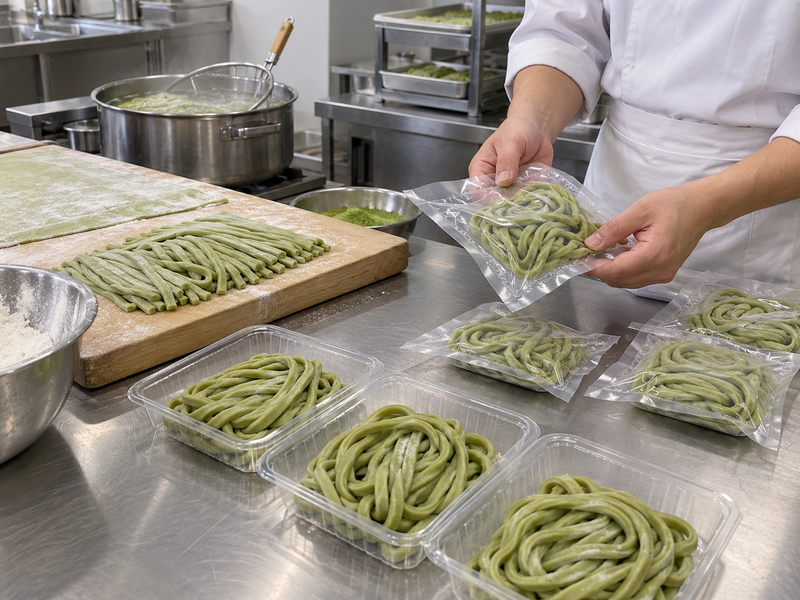
During a service rehearsal, watch whether nests stick while waiting, whether cooked noodles dry at the pass, and whether a cold dish needs a separate cooling step. Record batch and lot information for flour, matcha, and other ingredients. If the restaurant wants to sell packaged fresh noodles, that is a separate labeling, process, and distribution project. Keep the initial trial focused on the restaurant plate until the kitchen can produce it consistently during a normal shift.
10. How do you cost a saleable plate?
Include trim, cooking loss, and labor
Calculate flour, egg or other liquid, matcha, dusting flour, sauce, toppings, and packaging if the dish travels. Divide by saleable portions after sheeting trim and damaged noodles, not by total raw dough mass. Record cooked portion yield so an oversized nest does not quietly reduce the number of plates per batch. Matcha may be a small share of ingredient mass yet a meaningful cost; compare dose trials with flavor results.
Time mixing, resting, sheeting, cutting, cooking, and plating. Some work can occur before service, but a time-consuming fresh noodle may still be expensive at low demand. Compare it with a purchased noodle plus a matcha sauce if both meet the menu concept. Price using the restaurant’s own margin and labor model, then review sales and waste after a limited launch. The cost sheet should explain why the dish is worth making fresh, not only how much a portion of flour costs.
| Cost line | Use actual | Watch |
|---|---|---|
| Dough | Weighed formula | Matcha and trim |
| Sauce and garnish | Served portion | Over-plating |
| Labor | Full prep route | Small-batch inefficiency |
FAQ
Q1. Does the Bon Appétit recipe put matcha in the noodles? No. Its matcha is in the sauce. This guide develops fresh noodles with tea in the dough and treats the sauce version as a separate option.
Q2. Can matcha replace part of the flour directly? Test weighed changes in a small batch. Matcha alters the dry mix, and dough hydration and texture need checking.
Q3. Why do cooked noodles look duller? Cooking and the chosen powder can change appearance. Compare controlled doses and cook times in the finished plate.
Q4. Can fresh matcha noodles be sold packaged? That requires a separate process, labeling, handling, and shelf-life review for the intended market.
Q5. What is the most useful first trial? Make plain control noodles and matcha-dough noodles with matched thickness and cook them side by side before designing the sauce.
Let the cooked plate decide
Good matcha noodles must roll, cut, cook, and eat well at restaurant speed. Use a plain control, weigh the tea, measure cooking and yield, and keep the sauce from hiding the reason the noodle is green. The service plate, not the raw sheet, is the product to approve.