
Does matcha dehydrate you? For an ordinary prepared serving, the water in the drink counts toward fluid intake, while its caffeine can have a modest effect on urine output. Research on caffeinated drinks does not support the simple claim that every cup leaves a person with less fluid than before. It also does not justify a blanket “hydrating for everyone” promise. Dose, caffeine habit, activity, health status and the complete drink all matter. A café can state the recipe and supported caffeine range without claiming the drink treats dehydration.
Contents: Terms · Caffeine · Evidence · Matcha · Dose · Recipe · People · Menu · Claims · Testing
1. What Do Hydration and Dehydration Mean Here?

Define the claim before debating it
Hydration describes body fluid status, which cannot be inferred from a drink’s name. Dehydration occurs when fluid loss exceeds intake sufficiently to affect the body. A matcha drink includes liquid; the caffeine in its tea may influence urine output, but that does not automatically cancel all the water consumed. Asking whether a beverage is “hydrating” without specifying dose, person and circumstances invites an overbroad answer.
For a product team, distinguish two messages. “Prepared with water” is a straightforward recipe fact. “Prevents dehydration” is a health-related outcome claim and needs a very different level of evidence and review. Menus rarely need the latter. If a customer asks about fluid needs in heat, illness or exercise, staff should not improvise medical advice. The business can describe its ingredients and serving size and direct the individual question to a qualified professional.
| Phrase | What it describes | Evidence needed |
|---|---|---|
| “Made with water” | Recipe | Standardized recipe |
| “Contains caffeine” | Ingredient component | Product-specific basis |
| “Hydrating” | Possible body effect | Claim-specific review |
| “Prevents dehydration” | Medical or health outcome | Strong evidence and legal review |
2. Why Does Caffeine Raise the Question?
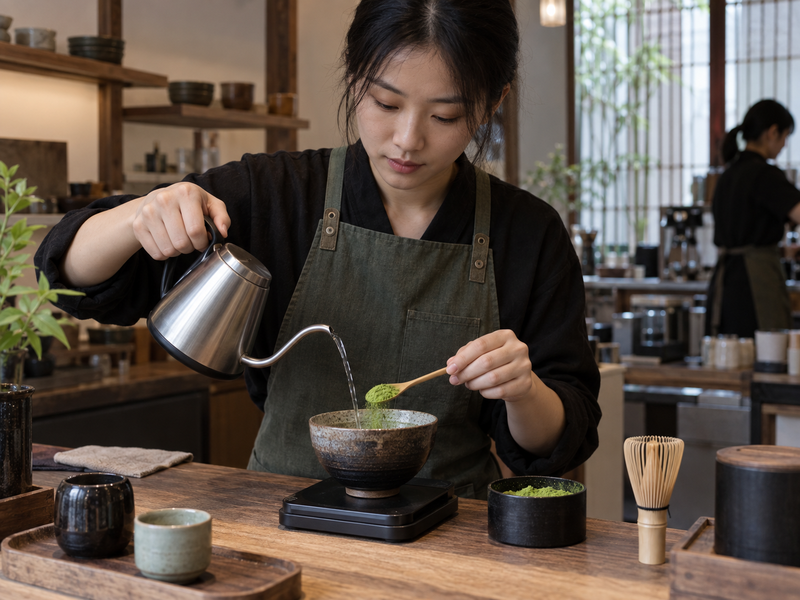
A diuretic effect is not the whole fluid balance
Caffeine can increase urine output under some conditions, particularly at larger acute doses or in people less accustomed to it. That observation gave rise to the familiar claim that caffeinated drinks “dry you out.” But a drink also supplies fluid. The relevant question is the net fluid effect at the dose and in the setting being discussed, not whether caffeine has any physiological effect at all.
Matcha is not a fixed caffeine dose. The amount varies with the powder and the grams used. A café drink with one measured spoon can differ from a home bowl made with several. A large milk drink may have the same tea dose as a small one if only the liquid volume changes. Brands should avoid a single “matcha caffeine” number copied from the web. Ask for the product’s data and make the serving reproducible before discussing a caffeine-related effect.
3. What Do Drink Studies Actually Show?

Read the population, dose and outcome
A review of research on caffeine and fluid balance concluded that normal tea and coffee servings did not lead to fluid loss greater than the amount consumed, while large acute caffeine doses can increase urine output transiently in caffeine-deprived people. A meta-analysis of caffeine and diuresis found a small overall effect and reported that exercise affected the result. These are summaries across study settings, not trials of every possible matcha recipe.
Another randomized crossover study of green tea after mild dehydration found no worsening of measured fluid balance relative to water over its short observation period. Green tea is related to matcha, but the study did not test every matcha powder, serving and drink format. The cautious takeaway is that the blanket dehydration story is too simple. It is not a reason to promise that a matcha drink treats dehydration or replaces an individual hydration plan.
| Evidence source | Studied context | Practical limit |
|---|---|---|
| Fluid-balance review | Tea, coffee and caffeine studies | Not every matcha format |
| Diuresis meta-analysis | Caffeine across trials | Effects vary by setting |
| Green-tea crossover study | Green tea after mild dehydration | Short term, not matcha-specific |
| Supplier caffeine data | Specific powder or lot | Does not predict every person |
4. Can Results for Coffee or Tea Be Applied to Matcha?
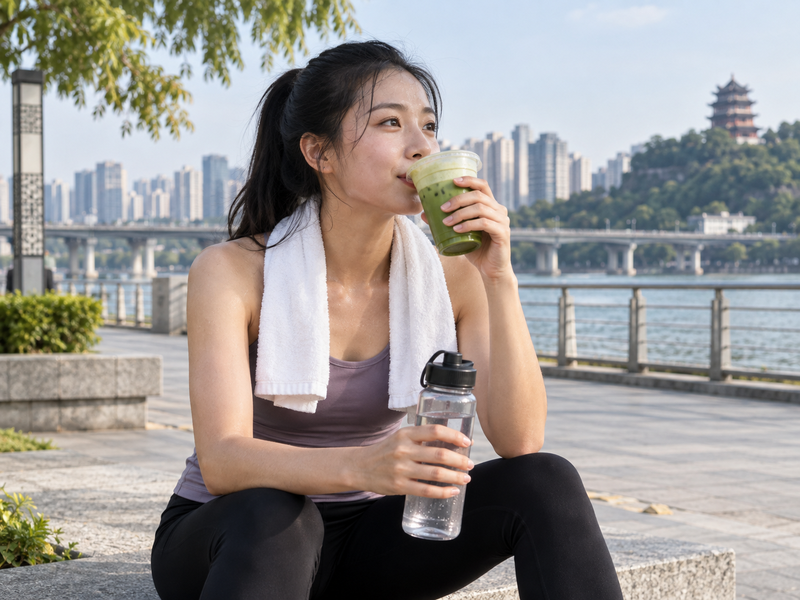
Use analogy carefully
The published evidence often examines caffeine, coffee or brewed tea rather than powdered matcha. Matcha differs in preparation because the fine tea powder is consumed in the drink. It also varies widely in dose. It is reasonable to use the broader caffeine and beverage literature to question an absolute “matcha dehydrates you” claim. It is not sound to assign an exact hydration outcome to a specific matcha SKU without product and clinical evidence.
The most defensible consumer explanation is plain: a matcha beverage provides liquid and contains caffeine; typical caffeinated beverages have not been shown to negate all the fluid they supply. People with special fluid restrictions or medical concerns should follow their clinician’s advice. Product pages can link to the basis of a general statement and identify the serving used. Avoid writing as though a laboratory cup represents every café recipe.
5. How Does Serving Size Change the Answer?

Record powder and liquid separately
A hydration discussion needs at least the powder dose and liquid volume. A “double matcha” may increase caffeine without increasing fluid. A larger iced drink may add more water while keeping the tea dose stable. A concentrated shot may carry a different ratio. None of these can be assessed from cup count alone. Weigh the matcha, measure the liquid and specify whether the drink includes other caffeinated ingredients.
The FDA says 400 milligrams of caffeine a day is not generally associated with dangerous effects for most healthy adults, while noting individual differences. That general reference is not a matcha serving recommendation or a hydration threshold. A person’s total caffeine from other drinks matters. For a café, a reliable recipe and supported product information are more useful than a suggested daily cup limit.
| Drink variation | Powder dose | Liquid amount | What changes |
|---|---|---|---|
| Standard bowl | Fixed | Fixed | Baseline |
| Double matcha | Higher | May be unchanged | Caffeine contribution |
| Large iced drink | May be fixed | Higher | Fluid volume |
| Tea plus espresso | Tea plus coffee | Variable | Combined caffeine |
6. What Do Milk, Sugar and Ice Change?

Treat the full recipe as the product
Milk and plant-based beverages contribute liquid and nutrients. Syrup changes sweetness and energy. Ice changes the drink’s served volume and, after melting, its water content. These ingredients do not make a caffeine statement about the tea disappear. A menu item with espresso or a separate caffeinated add-in needs both sources accounted for. A bottled matcha beverage may have a very different formulation from a fresh bowl.
Product teams should avoid saying that a matcha latte is “more hydrating” than water because it contains milk or ice. Such comparisons need clearly defined measures and suitable evidence. Instead, describe the recipe accurately: matcha dose, liquid base and optional sweeteners. If the brand needs nutrition information, calculate it from the full drink under the relevant labeling rules. The practical consumer question is often much simpler than a health claim: what is in this cup?
7. Who Needs Individual Fluid Advice?

Keep sensitive situations out of generic copy
People with medical conditions, medication effects or clinician-directed fluid limits should not rely on a general café article to decide intake. Pregnancy, caffeine sensitivity, vigorous exercise, heat exposure and illness can also change the context. The evidence cited above does not settle those personal cases. A brand should be particularly careful with messages aimed at athletes, children or people seeking relief from symptoms.
Customer-service staff can respond with facts: the standard liquid volume, matcha dose, ingredients and any supported caffeine range. If a person asks whether the drink is appropriate for their condition, staff should refer them to a qualified adviser. This is not evasion; it recognizes that a recipe sheet cannot know the person’s health. Keep the staff script short enough to use during service, and train them not to replace “contains liquid” with “treats dehydration.”
8. How Should a Cafe Answer Customers?

Give a direct answer with the useful qualifier
A concise response might be: “Our matcha drink is made with liquid and contains caffeine. Ordinary caffeinated beverages generally still contribute fluid, but individual needs vary.” If the café has a supported caffeine amount for its serving, it can share it. If it does not, it should avoid an exact estimate. The answer should not promise a specific body effect or tell customers to use matcha instead of water during illness or strenuous activity.
Write one standard recipe per size and confirm it in service. If a customer requests extra tea, the staff member should know that the caffeine contribution changes. Place water availability and ingredient information where customers can find them. For a brand with multiple products, do not reuse copy from a water-prepared bowl on a sweetened latte mix or a concentrated shot. Our matcha drinks guide explains the recipe differences across formats.
| Customer question | Useful response | Avoid |
|---|---|---|
| “Does it contain water?” | State recipe base | Health promise |
| “How much caffeine?” | Supported amount or range | Generic web number |
| “Can I drink it when ill?” | Refer to clinician | Personal advice |
| “Can I get extra matcha?” | Explain changed tea dose | Claim dose is unchanged |
9. Which Marketing Claims Should Be Avoided?

Resist both extremes
“Matcha always dehydrates you” is too broad for the evidence. “Matcha hydrates better than water” is another unsupported extreme. A product team should also avoid “detox,” “rehydrates after exercise” and similar promises unless it has evidence for the exact claim and product and a legal review for the destination market. A study on coffee cannot automatically substantiate a matcha bottle, and a short fluid-balance trial cannot prove a long-term health benefit.
Check photographs and infographics as well as words. A graphic showing fluid entering a body or curing fatigue may imply an outcome not stated in the headline. Keep a claim register with the exact wording, evidence, reviewer and approved channels. When the recipe or tea supplier changes, revisit the copy. This discipline reduces the temptation to turn a nuanced science finding into a marketing slogan.
10. What Should a Brand Check Before Publishing Copy?

Reconcile the recipe, evidence and audience
Begin with the exact SKU and serving. Record powder grams, liquid volume, caffeine basis and optional additions. Then identify whether the planned sentence is a recipe fact, a general educational statement or a claim about a person’s health. Verify that the cited research studies the relevant outcome and does not get quoted beyond its scope. Ask a qualified reviewer to assess destination-market requirements before the wording appears on a pack or a menu.
Matcha Village describes tea manufacturing and private-label options in its materials, but the fluid effect of a finished drink depends on how the buyer formulates and serves it. Supplier powder data cannot validate a claim about every consumer. Preserve the approved copy with the underlying evidence and recipe version. When someone later asks “does matcha dehydrate you?”, the company can give a calm, accurate answer rather than a dramatic claim.
| Review item | Needed evidence | Recheck when |
|---|---|---|
| Recipe | Current product specification | Formula changes |
| Caffeine | Product-linked basis | Tea source or dose changes |
| Research statement | Original study and limits | Copy is revised |
| Legal wording | Market-specific approval | New market or channel |
Frequently Asked Questions
Q1. Does a normal matcha drink remove more fluid than it provides?
Evidence from typical caffeinated drinks does not support that blanket claim. Individual circumstances and the actual matcha dose still matter.
Q2. Is matcha the same as water for hydration?
Both can provide liquid, but matcha contains caffeine and may have other ingredients. Do not assume identical effects for every person or serving.
Q3. Does more matcha powder change the answer?
It raises the caffeine contribution. A brand should measure the dose and avoid extrapolating from a smaller standard serving.
Q4. Did the green-tea study prove all matcha is hydrating?
No. It studied green tea under specific short-term conditions. It is relevant context, not proof for every matcha product.
Q5. What should a café say on its menu?
State the drink’s ingredients and standard serving accurately. Use a supported caffeine figure if one is offered, and avoid medical or comparative hydration promises without suitable evidence.