
Matcha nitrogen flushed packaging needs an approval plan that covers the finished pack, the filling process and the conditions between packing and use. A quotation that says nitrogen flushed tells a buyer very little about how that claim was checked.
For a brand buying packed matcha, the useful question is whether the proposed system produces repeatable results with the actual powder, film and fill weight. This procurement method separates supplier statements from measurements and sets out the records to request before approving a commercial run.
Contents: 1. What should matcha nitrogen flushed packaging achieve? | 2. Which parts of the package need their own specification? | 3. How should the supplier demonstrate the filling process? | 4. When and how should residual oxygen be measured? | 5. Why does seal integrity need a separate check? | 6. How can a holding trial support the intended claim? | 7. What should happen before the pack travels commercially? | 8. Which changes should trigger a fresh review? | 9. What evidence belongs in a routine lot-release pack? | 10. How should a buyer approve the initial order?
1. What should matcha nitrogen flushed packaging achieve?
Write a product-specific objective
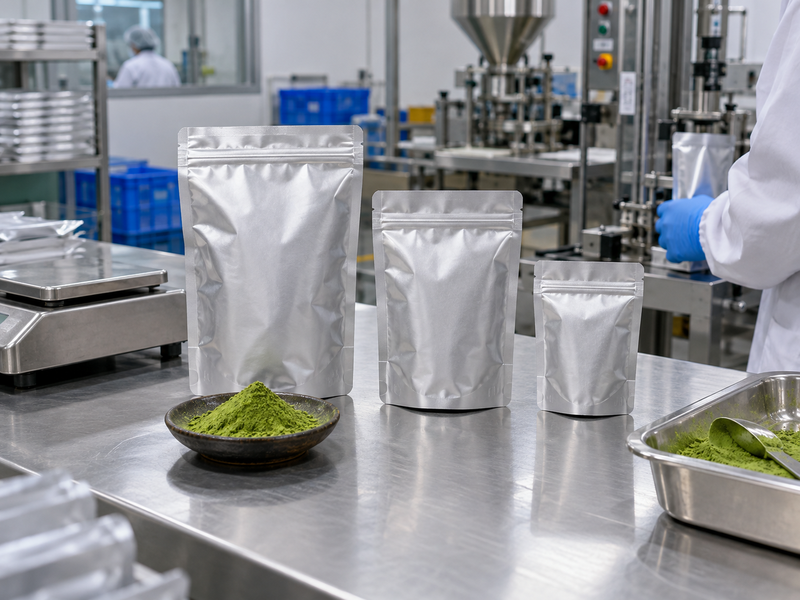
Describe the product and intended distribution route before discussing equipment. Record whether the powder is pure matcha or a blend, the pack weight, expected unopened holding period and intended sales channel. A small retail pouch and a large foodservice bag expose the packing line to different operating conditions.
Doypacked’s packaging article describes several pack formats and nitrogen flushing as a packing option. Its suggested settings should not become your purchase specification without evidence from the proposed product and line.
| Approval question | Evidence to request |
|---|---|
| What product is packed? | Ingredient and powder specification |
| Which package is supplied? | Approved material and dimensions |
| What is measured? | Written test method and timing |
| What claim is supported? | Product-specific validation record |
Keep the objective measurable without inventing a universal oxygen target. Ask the packer to propose acceptance criteria and explain the evidence behind them. Your quality team should approve those criteria before the trial. A buyer cannot establish a reliable pass decision after seeing which values happened to appear.
2. Which parts of the package need their own specification?
Identify the complete pack construction
Request the exact packaging structure, supplier code and drawing. Record the dimensions, seal areas, closure features and any inner bag. A metal tin with a separately sealed liner is a different system from a tin filled directly and closed by a seam. The outer container’s name does not identify the component that retains the modified atmosphere.
Ask for material data relevant to the proposed use and the conditions under which those data were measured. Keep supplier claims about oxygen or moisture transmission separate from measurements on the assembled pack. Seals, folds and filling damage are part of the finished system.
Include printing and material changes in version control. Replacing a film with something that looks similar can change the evidence needed for approval. The purchasing file should identify the exact package used for validation, so a reorder does not quietly substitute a different structure.
The broader matcha packaging guide helps frame format choices. This approval exercise begins after that choice, when the buyer needs proof about one defined construction.
3. How should the supplier demonstrate the filling process?
Observe a representative run
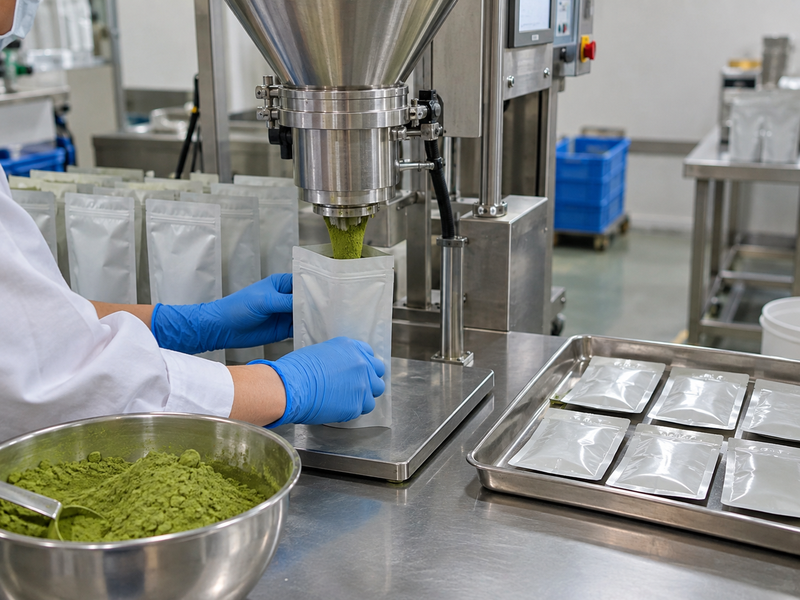
Ask for a trial using the proposed commercial powder and package. A demonstration with an empty pouch or another ingredient does not answer how matcha behaves around the filling nozzle and seal area. Identify the line, operating range and sampling positions before the run begins.
The packer should document conditions that could affect repeatability. Useful observations include powder around the seal, interruptions, adjustments and differences between startup and steady operation. Have the quality team decide which events require additional samples instead of selecting only the cleanest packs for the report.
| Trial record | Purchasing use |
|---|---|
| Powder lot and pack revision | Defines what was approved |
| Line and operating conditions | Links results to production |
| Startup and restart samples | Checks transition periods |
| Rejected packs and reasons | Shows observed failure modes |
Request enough detail to repeat the trial after a change. A video can explain the sequence, but the approval file needs actual results and sample identities. Keep gas handling under the packer’s trained operating procedures; a procurement trial is not a reason to improvise pressure settings or ventilation arrangements.
4. When and how should residual oxygen be measured?
Specify the measurement before the limit
Ask where the gas sample comes from, when the measurement occurs and how the instrument is checked. Results collected immediately after sealing may answer a different question from results collected after holding or transport. Record elapsed time for each test instead of treating all readings as interchangeable.
WITT’s OXYPAD documentation describes sample headspace testing for modified atmosphere packages. Instrument suitability still needs confirmation for the pack’s headspace volume and chosen sampling method.
The procedure should explain how the operator identifies a sample, handles a punctured pack and records an invalid reading. Request the instrument identity and its current check or calibration status. If a laboratory performs the work, confirm how it receives the samples and preserves their identity.
A single low reading should not approve an entire order. Agree how samples represent the run and how results will be reviewed. Preserve individual readings rather than only a rounded average, since an average can hide an outlying pack that needs investigation.
5. Why does seal integrity need a separate check?
Test the enclosure as well as the atmosphere
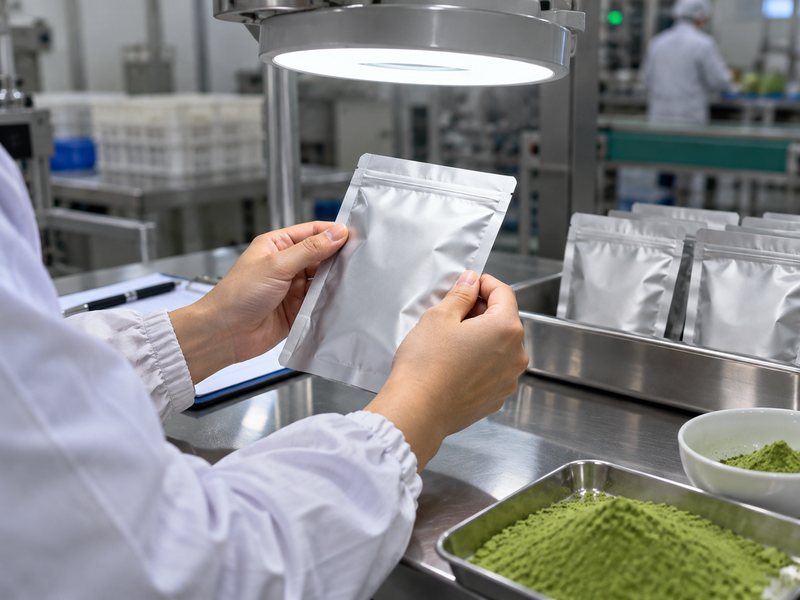
A satisfactory gas reading at one moment does not show that a pack will remain closed through distribution. The supplier should explain which seal or leakage checks suit the package and what each method can and cannot detect. Select those checks with the packaging specialist rather than choosing a test from a photograph.
WITT distinguishes package leak detection from headspace gas analysis. That distinction helps a buyer request separate evidence about atmosphere composition and package integrity.
| Observation | Follow-up question |
|---|---|
| Powder in seal area | Was the pack rejected or investigated? |
| Creased seal | Does the approved method assess it? |
| Weak opening resistance | Is this within the agreed specification? |
| Damaged outer package | Was the inner barrier affected? |
Document how destructive test samples are removed from saleable stock. Record whether the method checks seal strength, a leak path or a different characteristic. Avoid treating one test name as proof that every packaging defect has been excluded. Keep the method’s limitations in the approval file.
6. How can a holding trial support the intended claim?
Follow the pack over a relevant period
Ask the supplier to connect the trial design with intended unopened storage and distribution conditions. The study should name the product, package, conditions, observation times and acceptance criteria. A report from another ingredient or pack size may offer context, but its relevance needs a documented explanation.
Include the qualities the buyer actually promises or requires. For matcha, that may involve an agreed sensory comparison, appearance assessment and suitable analytical checks selected by qualified staff. Keep control samples identifiable and handle them consistently so differences have a meaningful reference.
Do not convert a short observation period into a fixed shelf-life claim by guesswork. If accelerated testing is proposed, ask how the method relates to the actual product and how its limitations will be handled. The supplier and buyer’s quality team should decide what additional real-time evidence is needed.
A successful holding trial has a defined scope. It supports the tested system under stated conditions. It does not automatically cover an opened pouch, a different blend, another closure or a route with substantially different exposure.
7. What should happen before the pack travels commercially?

Challenge the proposed shipping configuration
Build a trial shipment with the proposed outer carton, internal arrangement and pallet configuration where applicable. The primary package can experience stresses absent on a stationary bench. Ask the packer and logistics provider to agree how the configuration will be evaluated before a larger order.
Use an actual route trial or a suitable documented test plan, depending on the project. Identify who will inspect the shipment at arrival and which samples will return for gas, seal or product evaluation. The receiver needs the approved procedure before the carton arrives.
| Transport-trial item | Record to retain |
|---|---|
| Carton configuration | Packing drawing and photographs |
| Route or test method | Defined conditions and limitations |
| Arrival inspection | Damage and seal observations |
| Follow-up measurements | Sample identities and dates |
Keep the decision tied to the full configuration. A change in case count, protective inserts or packing orientation may require review even when the retail pouch remains unchanged. Record handling instructions in the shipping specification rather than assuming a carrier knows the product’s requirements.
8. Which changes should trigger a fresh review?
Agree notification duties before ordering
List the changes the supplier must report before supplying affected goods. Examples include a new film structure, a different pack dimension, a revised seal process, another filling line or a formulation change. The list should reflect how this package was validated rather than copying every possible factory change into the contract.
Assign the buyer a reviewer and a response process. Some changes may need a document check; others may require samples or another transport trial. Set that decision through the quality process, with a written reason that later purchasing staff can understand.
Keep the commercial consequence visible. If approval remains pending, the order planner should know whether production may proceed, whether packaging may be purchased and which stock remains acceptable. Silence from the buyer should not become an informal approval rule.
Maintain a current approved revision alongside the purchase order. A supplier may hold several pouch versions for different customers or markets. Clear revision control gives both sides a way to stop an outdated construction from entering a new run.
9. What evidence belongs in a routine lot-release pack?

Keep repeat orders reviewable
Routine release should refer back to the approved system. Request information connecting the delivered lot with its powder, packaging and process records. The exact documents depend on the agreement; a short file with consistent identities is easier to review than a large unrelated collection.
Keep exceptions visible. If the line stopped, packaging changed within the order or results required investigation, ask how the affected quantity was identified and resolved. Purchasing needs a clear statement of what has been released for shipment.
| Release field | What it connects |
|---|---|
| Finished lot identity | Cartons and saleable packs |
| Powder lot reference | Ingredient approval |
| Packaging revision | Validated construction |
| Test record reference | Agreed acceptance checks |
| Authorized release | Person and decision date |
Decide where these records will be stored and who can retrieve them during a complaint. A gas result sent in an isolated message may be difficult to connect with the actual delivery months later. Use the same shipment identity across purchasing, quality and warehouse records, including any split delivery.
10. How should a buyer approve the initial order?
Close evidence gaps before commercial release
Hold a review with the packer, the buyer’s quality lead and the person responsible for distribution. Compare results against criteria agreed before the trial. List unresolved questions individually, with an owner and the evidence needed to close each one.
Separate approval of the packaging system from approval of a shipment. The package may be acceptable while a specific lot still lacks a release record. Conversely, one good lot does not remove the need to approve the process that will produce later orders.
If the project proceeds with a restricted scope, record that scope plainly. Approval might cover one product, one weight, one package revision and one route. Purchasing staff should see those restrictions when creating the order, without searching through a laboratory report.
Send the supplier the approved specification, test-method references, artwork revision and release-document list together. Ask for written confirmation that the planned commercial run uses those versions. Book the order only after the responsible reviewers have signed the remaining decisions and recorded who may approve later changes.
Frequently asked questions
Q1: Does nitrogen flushing prove that matcha is safe?
No. It addresses a packaging condition. Ingredient safety, hygiene, specifications and applicable market requirements still need their own evidence and controls.
Q2: Should every buyer use the same residual oxygen limit?
No universal limit is proposed here. Ask qualified quality staff to justify criteria for the actual product, package and intended conditions.
Q3: Can a tin replace a barrier liner?
That depends on the validated construction. Identify the component providing the barrier and confirm how the complete package is closed and tested.
Q4: Can trial results cover a different fill weight?
Only after the responsible technical team assesses the change. A different fill can alter headspace and operating conditions.
Q5: What should accompany a repeat order?
Request the agreed lot identity, packaging revision, test references and release decision, plus notice of changes or unresolved deviations.