
Matcha kunafa makes a strong display dessert, but the bite can miss its promise. Shredded pastry turns soft under syrup, a thick filling squeezes out, or matcha vanishes behind butter and sugar. A bakery or restaurant needs to decide which element carries tea flavor and when the dessert will be served. Test a small tray with measured kataifi, filling and syrup; then cut it at the same temperature customers will receive it. Bree Matcha’s home recipe uses matcha cream and syrup inside buttered kataifi. Its components provide a useful starting point, while a commercial menu needs its own texture, handling and food-safety checks.
Contents
- 1. What should matcha kunafa deliver in one bite?
- 2. Which kataifi works for the planned format?
- 3. How should a bakery design the filling?
- 4. Where should matcha flavor sit?
- 5. How can the tray be assembled evenly?
- 6. What should the bake and syrup sequence achieve?
- 7. Can matcha kunafa work warm or chilled?
- 8. How do allergens and handling affect service?
- 9. What should a pilot batch measure?
- 10. What belongs in the menu launch brief?
1. What should matcha kunafa deliver in one bite?
Set a crispness target before choosing garnish
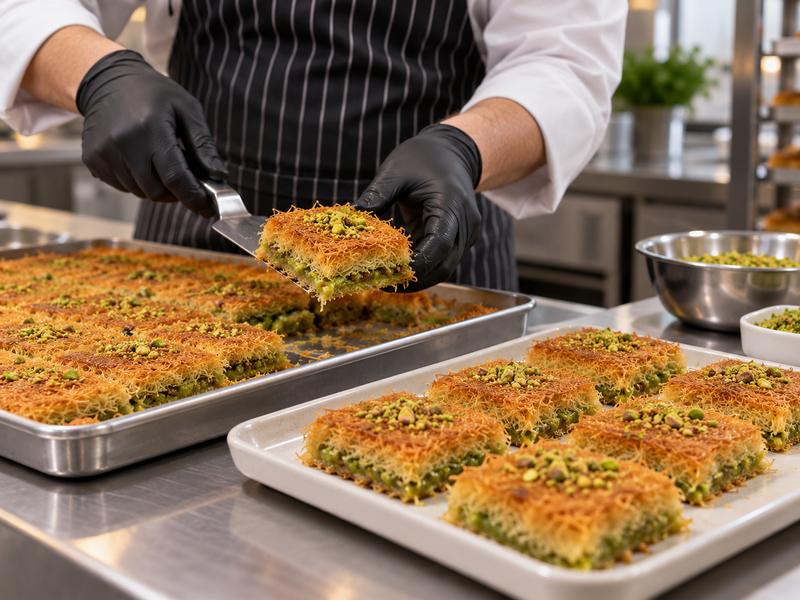
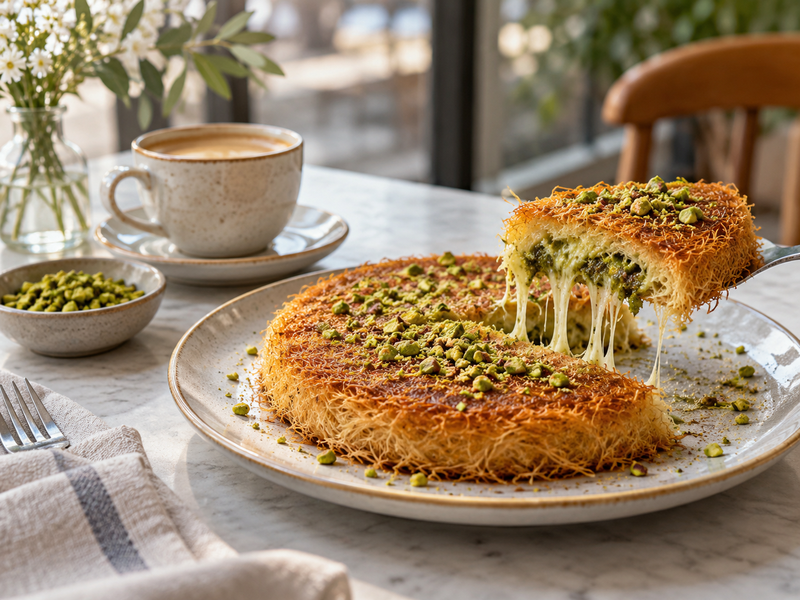
Kunafa is built around contrast: crisp strands outside, a tender center and sweetness that reaches the pastry without drowning it. Matcha brings color and a lightly bitter tea note. The flavor needs room beside butter, dairy, nuts and syrup. Make a one-fork acceptance sample: a visible green filling, strands that crack at the surface, a portion that holds together and tea that remains recognizable after swallowing. Test with the exact serving utensil. A dessert that looks intact on a platter may collapse when a server lifts it.
Choose a product name that describes what customers receive. A warm, syruped piece with cream differs from a chilled pistachio-filled bar, even if both are called matcha kunafa online. The reference recipe uses matcha in its cream and syrup, with pistachio garnish. A shop can use that flavor family without copying its formula. Photograph the cut face and record a tasting note from staff who know the intended menu. This creates a practical standard for deciding whether a powder, filling or syrup change improves the dessert.
2. Which kataifi works for the planned format?
Compare strands by bake and usable yield
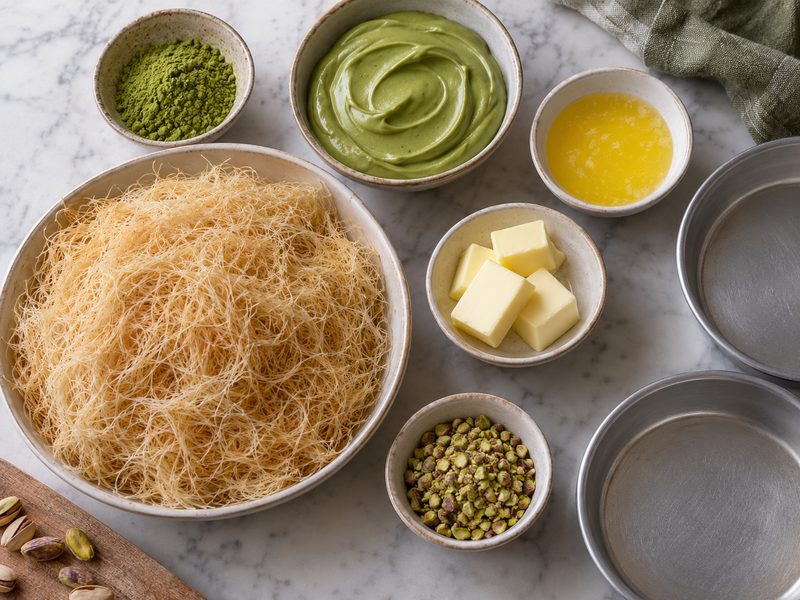
Kataifi is shredded pastry. Its strand length, moisture and packing affect how evenly butter coats it and how readily a slab cuts. Ask suppliers for an ingredient and allergen specification, pack size and storage instructions. Test at least two lots if this will become a regular menu item. Keep the same tray size and fat dose during comparison. Note whether strands tangle in dense clumps, burn at the edges or leave pale pockets at the base. A tray can look golden on top while the bottom remains damp.
Weigh raw pastry, trimmed pieces and accepted servings. If a finer strand makes an attractive crust but creates heavy breakage during portioning, its price per kilogram will not tell the full story. Decide whether the shop will assemble a large slab, small individual rounds or a takeaway square. Each shape exposes a different proportion of crisp pastry to moist filling. Run the proposed shape through the oven and service route before committing to special molds. Home recipes give useful inspiration, but commercial buying needs a repeatable raw material and a dependable portion count.
| Kataifi check | Trial record | Menu consequence |
|---|---|---|
| Strand length | Short, long or mixed | Ease of portioning |
| Moisture | Supplier lot and condition | Browning and crispness |
| Butter coverage | Grams per tray | Dry patches or greasy bite |
| Baked base | Color and texture | Holds filling without sogginess |
| Accepted pieces | Count after cutting | True unit cost |
3. How should a bakery design the filling?
Test a cream that cuts without leaking
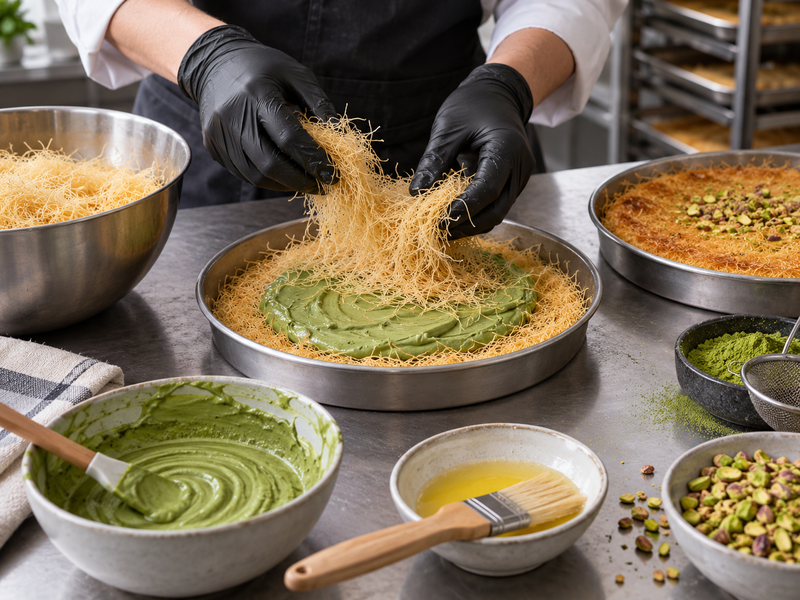
The filling needs enough body to stay between pastry layers and enough moisture to eat smoothly. A cooked starch cream, cheese filling or nut-based layer will behave differently under heat. Pick one base, make a small batch and divide it for matcha trials. Record final weight, cooling method and working texture. Pipe or spread a measured amount into a test tray. After baking, cut the piece at the planned serving temperature. Look for a defined layer, no watery gap and no green streaks where powder failed to disperse. Our matcha pastry cream article can help a team frame the cream trial, though kunafa adds separate pressure from its crisp pastry and syrup.
Do not use extra matcha to rescue a bland or overly sweet base. Taste the filling alone and inside a finished portion. A powder that tastes clear in cream may become harsh when syrup concentrates on the same bite. If dairy is present, keep the ingredient, chilling and service steps within the business’s food-safety plan. Photograph filling thickness at three positions in the tray. A center that holds while corners run suggests uneven spreading or oven conditions rather than a bad tea powder.
| Filling variable | Measure | Rejection sign |
|---|---|---|
| Base recipe | Ingredient weights | Thin or overly dense center |
| Matcha dose | Grams per batch | Flecks or hidden tea flavor |
| Deposit | Grams per tray | Overflow at edges |
| Spread | Depth across tray | Bare corners |
| Finished bite | Taste and cut face | Separation or cloying sweetness |
4. Where should matcha flavor sit?
Compare cream, syrup and finishing powder
Matcha can appear in filling, syrup, garnish or more than one component. A green surface alone may signal tea visually without providing enough flavor in the bite. Make a controlled comparison: one tray with matcha cream only, one with a lighter cream and matcha syrup, and one with a small measured finishing dust. Keep total sweetness and pastry weight as close as your formula allows. Blind taste each after the same service delay. Record which version tastes like tea and which leaves undissolved powder on the tongue.
If using matcha syrup, disperse the powder using a documented method and check for sediment during a service rehearsal. Do not pour a large amount over a finished tray merely for color; excess liquid can soften strands. If using a garnish, check whether it turns patchy on a moist top. The Bree Matcha version places tea in both cream and syrup, which makes an interesting test design but not a universal standard. A buyer should select powder by performance in the chosen location. Record grams per accepted serving for a fair cost comparison.
5. How can the tray be assembled evenly?
Treat layer thickness as a production control
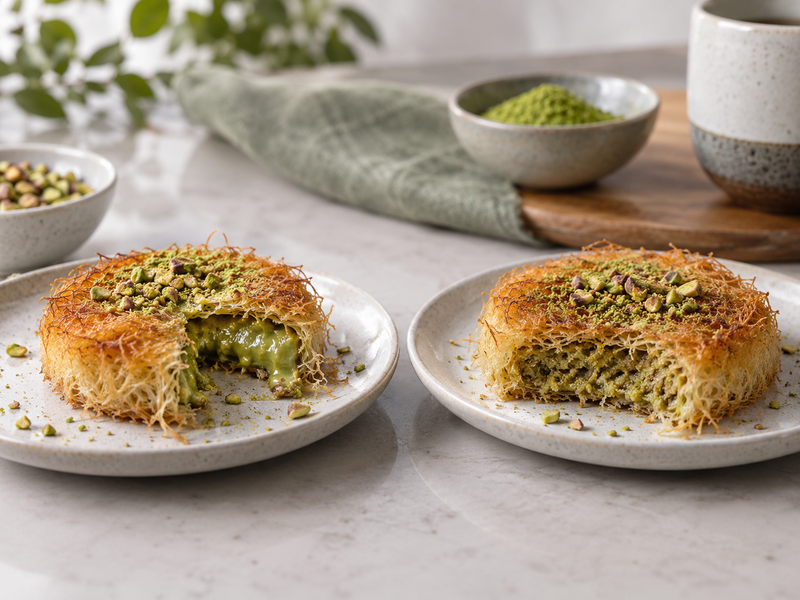
Mark the tray size and target ingredient weights on a batch sheet. Coat kataifi consistently with the selected fat, then spread the base layer without hard lumps. Add the measured filling, leaving a margin if the formula expands or moves during baking. Finish with a top layer of known weight. Staff should see a photograph of each stage, including an edge cross-section before the tray enters the oven. Small differences in packing pressure can change crispness; press only as much as your trial shows is needed for a clean cut.
Test assembly with two operators. Time the work and weigh their finished trays before baking. If one uses much more kataifi at the corners, the team needs a spreading guide rather than another recipe explanation. For individual portions, check whether molds can be filled without trapping raw pastry at the base. Make one tray without green decoration so testers focus on structure, then add the intended garnish in a later trial. This keeps the team from approving a good-looking surface that hides a soggy center or uneven filling.
| Assembly stage | Control | What to photograph |
|---|---|---|
| Base | Kataifi weight and coverage | Corners and depth |
| Filling | Deposit and margin | Uniform green layer |
| Top | Weight and level | Bare spots |
| Tray load | Position in oven | Browning pattern |
6. What should the bake and syrup sequence achieve?
Define done by the whole portion
Bake the trial until the pastry reaches the color and crispness accepted for the menu and the filling is handled under your validated process. Record oven type, set point, actual tray position and load. A household time from a recipe cannot establish a commercial process for another tray depth or oven. Cut a sample after the chosen rest and inspect top, center and base. If edges are dark while the center remains soft, change tray depth, distribution or oven load before extending time across every batch.
Syrup adds sweetness and moisture. Compare two measured deposits at the same serving temperature, and decide whether to apply it to the whole tray or to each piece at service. Whole-tray application may save movements but reduce crispness during holding. Portion-level application can preserve texture but slow the line. Taste after the actual delay, not only straight from the oven. The best sequence is the one staff can execute while delivering the approved bite and portion weight. Document any reheating procedure separately and validate it using the equipment on site.
7. Can matcha kunafa work warm or chilled?
Test two products instead of assuming one recipe covers both
Warm service emphasizes butter aroma and crisp strands. Chilled service may help a filling hold a neat cut, but the pastry can soften beside moisture. Prepare matching test pieces and evaluate each at its intended point of sale. Do not put “serve warm or cold” on a menu until both routes pass a sensory trial. For warm service, rehearse timing from oven or approved holding equipment to table. For chilled service, assess condensation, cream set and texture after case display. A format for immediate restaurant plating may be unsuitable for packaged takeaway.
Record temperatures and handling under the site’s food-safety program rather than treating a sensory result as a safety decision. The FDA Food Code is a model for US retail operations; local rules and the exact ingredients govern practice. If the dessert contains dairy, egg or another perishable component, qualified staff should approve preparation and service conditions. A realistic menu may offer one validated format and make the other a special-order item. This is clearer for customers and easier for staff to repeat.
| Route | Texture question | Operational question |
|---|---|---|
| Warm plated | Does crust stay crisp at table? | Can kitchen time each order? |
| Chilled case | Does base soften under filling? | What is approved hold procedure? |
| Takeaway | Does syrup migrate during travel? | Does packaging protect shape? |
| Event tray | Are corner portions consistent? | Can staff cut cleanly at volume? |
8. How do allergens and handling affect service?
Check the complete recipe, including garnish
Kataifi commonly brings wheat; fillings may contain milk, nuts or other allergens. Pistachio garnish makes the finished dessert different from an ungarnished piece. Ask suppliers for current ingredient declarations and verify any substitutions before printing a menu or packaged label. The FDA’s food allergy information gives US context; the business must follow the rules for its own market. Separate topping tools and cleaning records help staff avoid unplanned cross-contact. Do not describe a dessert as free of an allergen based only on the matcha powder.
Link each batch to pastry, filling and matcha lots. Document preparation, cooling, storage and service within the site’s approved procedures. A home recipe’s leftover guidance does not establish the safe commercial life of a different tray. If the shop uses central production, transport and reheating add steps that deserve their own validation. Keep tasting records alongside, but distinct from, safety records. One tells the team when crispness fades; the other demonstrates that the product was handled under the required controls.
9. What should a pilot batch measure?
Count the pieces customers would accept
Make a tray of the planned commercial size, not only a miniature recipe sample. Record raw weights, bake loss, syrup deposited, pieces cut and pieces rejected. Photograph corner and center pieces separately. Uneven browning or filling depth may lower yield even when the middle looks excellent. Calculate cost per accepted serving using invoice prices for kataifi, fat, filling, matcha, garnish and packaging. Include labor for shredding, layering, cutting and cleaning. If the dessert is sold warm, measure staff time at the pass during a rush simulation.
Compare at least two matcha powder samples in the same approved formula. A stronger tea note at a lower dose can offset a higher bag price, but only a finished-product trial can show that. Note color after the planned service delay and any residue from the powder in cream or syrup. If the tray performs inconsistently, fix the assembly or oven process before ordering a larger powder lot. The supplier brief should include the dessert format, grams per serving and desired flavor, not only a request for the lowest unit price.
| Pilot metric | Record | Decision use |
|---|---|---|
| Raw tray weight | Each ingredient and supplier lot | Repetition |
| Accepted pieces | Count and average weight | Yield |
| Rejected pieces | Cause and position | Process correction |
| Service time | Oven-to-table or case-to-box | Menu fit |
| Finished taste | Blind staff notes | Powder selection |
10. What belongs in the menu launch brief?
Give the kitchen one approved build
The brief should show tray size, kataifi source, filling formula, matcha powder and dose, layer weights, bake conditions, syrup deposit, garnish and finished portion. Add photographs of an accepted cut face and a rejected soggy base. Set a version number so later tests do not quietly alter sweetness or filling thickness. Link to ingredient, allergen and food-safety records in the kitchen’s normal system. If the product is boxed, include the actual box and insert rather than leaving packaging to a counter employee.
Launch with a small run and collect feedback from the people handling the dessert. Bakers see uneven layers, servers see a fragile portion and customers report whether tea comes through. If a recurring fault appears, change one variable and repeat the trial. For supplier discussions, send the approved application and sample rather than a broad “matcha for desserts” request. A clear brief lets the kitchen buy consistently and lets the powder supplier suggest a product that can be assessed in the same finished bite.
FAQ
Q1. Does matcha have to go in both filling and syrup? No. Test each location in a finished portion and choose the version with clear tea flavor and acceptable crispness.
Q2. Can matcha kunafa be made for takeaway? Run the intended box through a realistic carrying route. Check movement, syrup migration and eating texture before offering it.
Q3. What causes a soft bottom? Uneven baking, excess filling moisture or syrup reaching the base can contribute. Compare tray positions and deposits in a controlled trial.
Q4. Are pistachios required? They are one garnish option. Any added nut changes ingredient, allergen and cost records.
Q5. How should a buyer choose matcha powder? Blind-test lot samples in the selected filling or syrup, then compare flavor, dose, documentation and cost per accepted serving.