
A matcha milkshake has to do two jobs at once: taste clearly of tea and feel like a satisfying frozen dessert. Many test recipes achieve only one. More powder can make a pale shake greener but also sharper; more ice cream can improve body while burying the tea. For cafés and chain operators, the challenge continues after the first tasting. The recipe must survive different staff, frozen-base temperatures and equipment loads.
Contents: Goal · Powder · Base · Dose · Mixing · Texture · Alternatives · Service · Cost · Pilot
1. What Should a Matcha Milkshake Taste and Feel Like?
Define the product before choosing ingredients
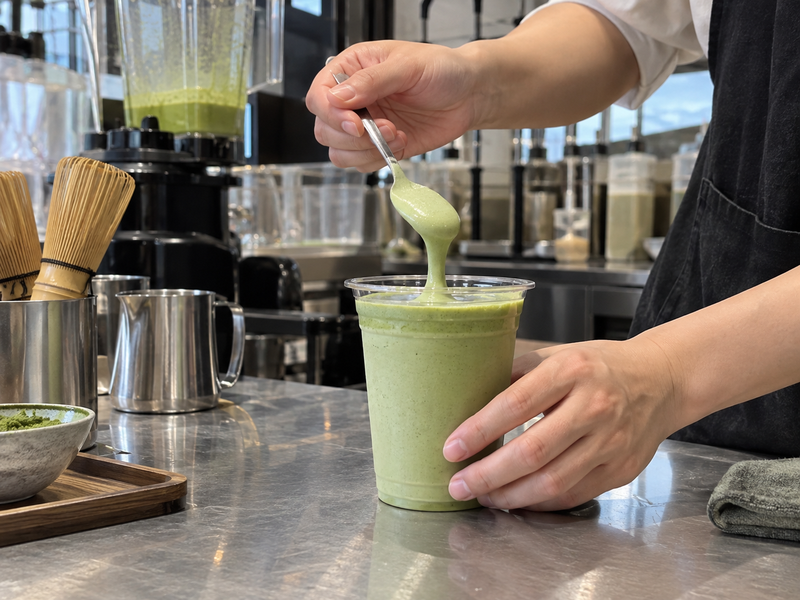
A milkshake can be a dense dessert eaten with a wide straw, or a lighter frozen drink that pours easily. Those are different targets. Decide which one fits the menu, cup and service speed. Then write a short sensory goal: visible natural green color, clear matcha aroma, sweetness level, thickness at handoff and acceptable texture after a few minutes. Without a target, developers can keep adding ice cream or powder without knowing whether the recipe is improving.
Taste the shake against the rest of the menu. If it is priced as a premium tea dessert, a generic sweet vanilla flavor with green color will disappoint. If the target customer wants an approachable treat, an intensely bitter tea note may be equally wrong. A small tasting panel should record what it notices before seeing the ingredient cost. Ask tasters whether they would recognize matcha if the color were hidden. That question often reveals whether the tea is present in flavor or only in appearance.
Set the final serving size early. A larger cup changes dilution, blender performance, ingredient cost and how quickly the product melts in a customer’s hand.
| Product decision | Choose before development | Why |
|---|---|---|
| Texture | Spoon-thick or drinkable | Sets frozen-base amount |
| Sweetness | Dessert or lightly sweet | Affects powder choice |
| Cup size | Standard and optional large | Controls cost and equipment load |
| Hold time | Immediate or takeaway | Determines melt test |
2. Which Matcha Powder Works in a Frozen Dessert?
Test tea character after the base is added
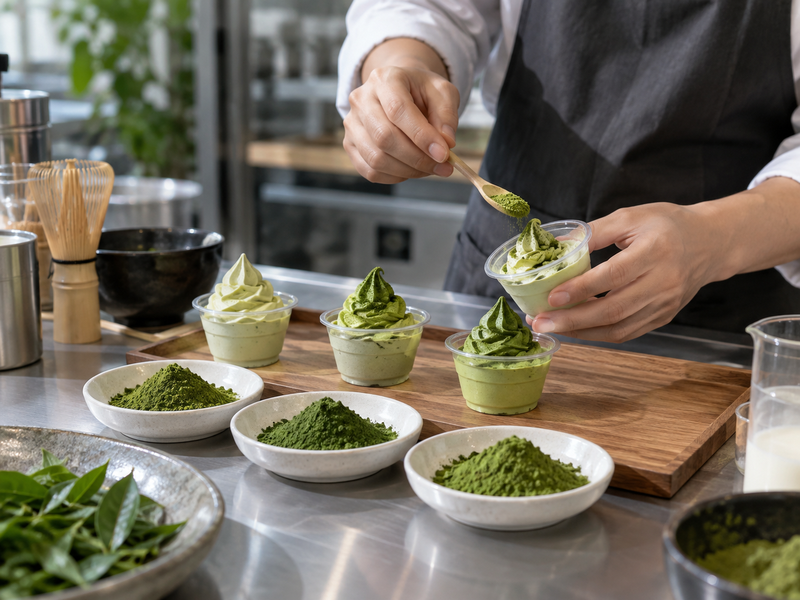
A powder that tastes delicate in water may disappear under ice cream, milk and toppings. Another that is too assertive for plain tea may give a good balance in a frozen dessert. Start by tasting candidate powders in water to identify flaws and texture. Then prepare the same shake formula with each powder at the same weight. Compare tea presence, bitterness, color and any gritty finish. Keep the frozen base, blender time and cup size fixed during the comparison.
Ask the supplier for a representative production lot, specification and storage guidance. Matcha Village describes matcha and blended application ingredients in its company material; those categories help frame sample requests, but the finished shake must be tested with the exact powder offered. If the preferred matcha costs more per kilogram, calculate its cost at the dose needed for a good shake. A lower-priced powder that requires a larger dose can lose its apparent advantage.
Do not choose by color alone. Lighting, base color and photograph editing can make a weak tea look vivid. Evaluate the actual cup under the café’s normal light, then let taste decide whether the color corresponds to enough tea.
3. How Do You Choose the Frozen Base?
Treat the base as a main ingredient
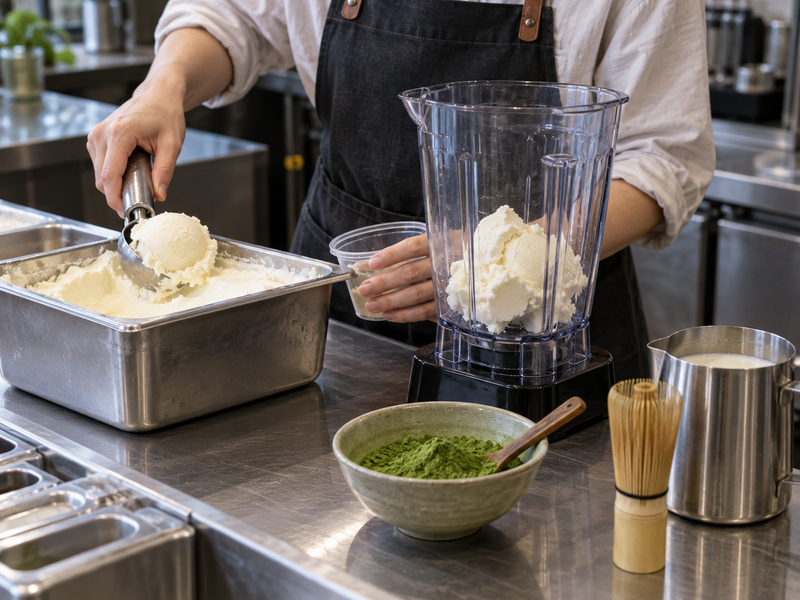
Ice cream, frozen dessert, yogurt and plant-based frozen products bring their own sweetness, fat, flavor and texture. They can change the matcha more than a small adjustment to powder grade. Select one standard base and test it with the tea. Vanilla notes may support matcha, but a very sweet or strongly flavored base can overwhelm it. If the product uses a lower-sugar base, the tea may seem sharper and need a different balance. Do not assume the same powder dose fits every base.
Operational details matter. A base scooped directly from a hard freezer behaves differently from a softened container left beside the blender. Define a permitted handling range and a portion by weight or a calibrated scoop. Keep food-safety controls for dairy and other ingredients in the site’s normal plan. The recipe should state whether milk or another liquid is added and how much. Too much liquid may make the first sip easy but turn the last half into a thin drink.
For a chain, test the brands and pack sizes stores will actually receive. A development kitchen’s premium ice cream is not a useful reference if stores will stock something else.
| Base option | What it changes | Test in the finished shake |
|---|---|---|
| Dairy ice cream | Creaminess and sweetness | Tea visibility and melt |
| Frozen yogurt | Tang and body | Bitterness balance |
| Plant-based frozen base | Flavor and fat profile | Texture after blending |
| Ice plus milk | Lighter cost and texture | Dilution and separation |
4. How Much Matcha Belongs in One Shake?
Develop a dose range rather than guessing a scoop
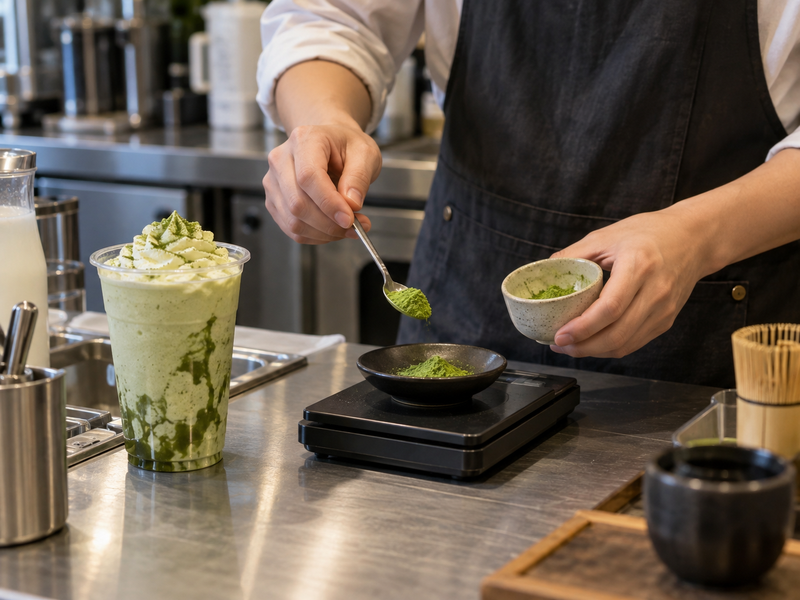
Begin with a measured pilot. For example, a product team could test 2, 3 and 4 grams of the same powder in an otherwise identical standard shake. Those are illustrative development points, not a universal recipe. The right dose depends on powder strength, frozen-base sweetness, cup size and customer preference. Blind tasters can identify the point where tea becomes clear without a harsh finish. Record grams, not a heaped spoon, so the result can be reproduced.
When the team chooses a dose, calculate powder cost per cup and check whether staff can portion it accurately. A calibrated scoop may be fast for service, but weigh several scoops from different workers before approving it. If the large cup has a different ingredient ratio, specify it separately. Do not simply add one extra scoop whenever a shake looks pale; that creates variable cost and taste. Changes to the powder lot should trigger a controlled comparison against the approved reference rather than an unrecorded recipe change.
The drink may use a concentrated matcha base to avoid dry pockets. Count that water or milk in the final liquid volume when optimizing texture.
5. How Do You Avoid Green Clumps?
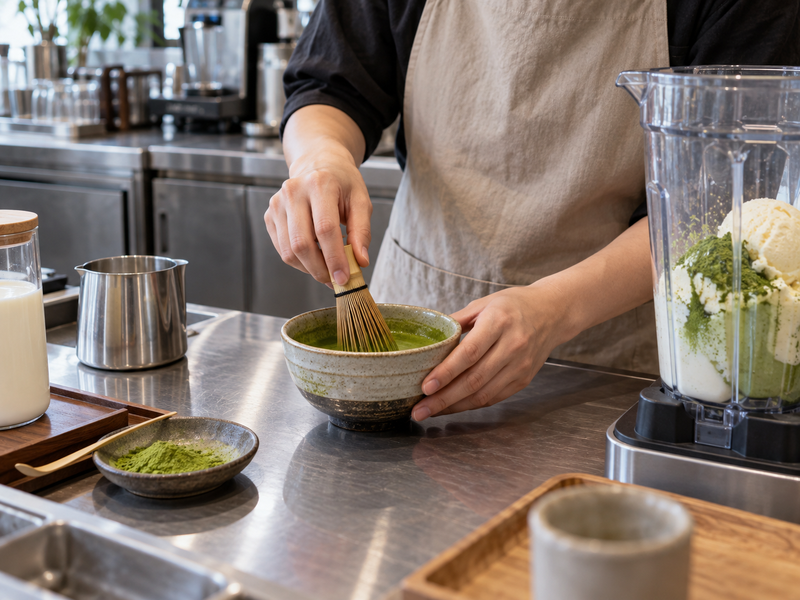
Wet the powder before the frozen ingredients trap it
Fine matcha can collect in dry pockets when tipped straight into cold ice cream. A small smooth base made with a measured amount of liquid is often easier to disperse. Sift soft compacted powder if the selected grade needs it, then whisk the base before adding it to the blender. The exact method should be tested with the equipment used at stores. A powerful development blender may hide a problem that smaller service blenders reveal.
Check the blender wall and the finished cup, not only the top surface. Dry powder can stick above the liquid line or at the bottom of the vessel. Define ingredient order and blending time. Longer blending is not automatically better: it can warm the shake and change thickness. Train staff to remake a drink with obvious dry lumps rather than covering it with whipped topping. If a pack contains hard, damp clumps or a damaged seal, isolate it for review instead of blending away the evidence.
| Problem | Likely cause | Controlled response |
|---|---|---|
| Green specks | Dry powder added to frozen base | Make smooth base first |
| Powder on blender wall | Poor ingredient order | Add liquid before frozen base |
| Hard dry lumps in pack | Storage or seal issue | Isolate and inspect lot |
| Watery finish | Excess liquid or over-blending | Rebalance and retest |
6. What Controls Thickness and Melt?
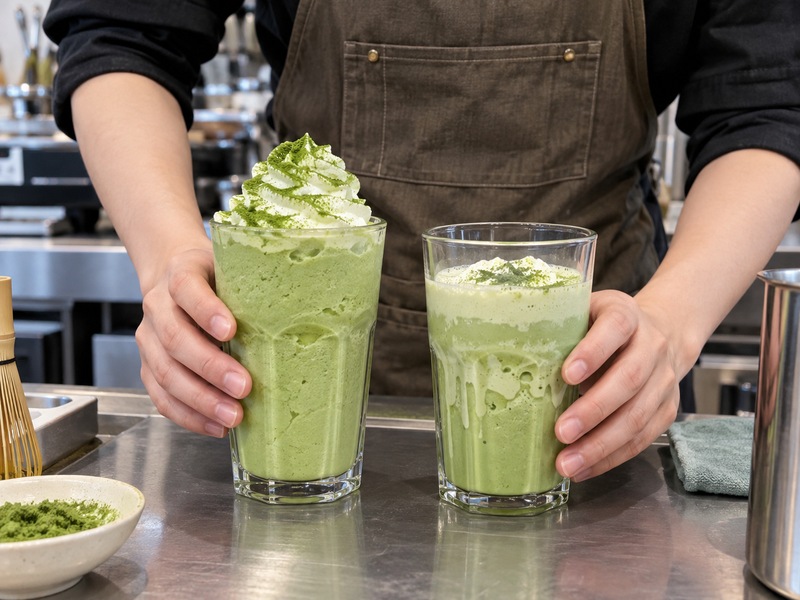
Measure the first and last spoonfuls
Thickness depends on frozen-base amount, temperature, liquid, ice and blending. Test at handoff and after a realistic takeaway interval. A shake can look thick under a camera light and become thin before a customer reaches a table. Use the intended cup and lid, because a narrow straw can make an otherwise good formula hard to drink. If toppings are part of the product, check how they behave as the shake melts; a heavy topping may sink or make the last sips overly sweet.
Define the freezer-to-blender routine. A portion that has warmed on the counter blends differently from one used immediately. Time the process during a busy period, not only in a calm development session. If the machine handles several shakes back to back, note whether later cups become warmer. Record the result in plain terms staff can check: smooth, pourable, no ice shards or dry powder, and able to hold its intended texture for the stated service window.
A stable shake is a product design result, not a promise that a frozen dessert will never melt. Set expectations that fit real service.
7. Can a Plant-Based Version Use the Same Method?
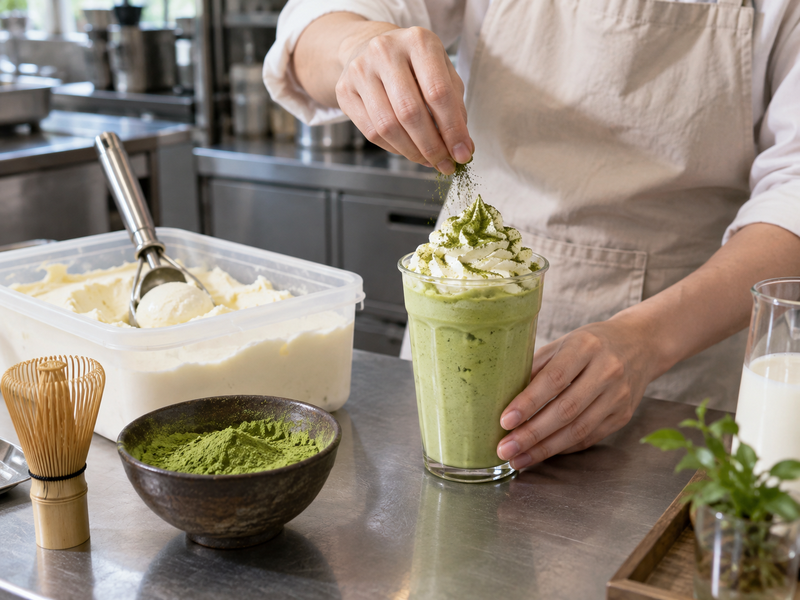
Rebuild the balance with the chosen ingredients
A plant-based frozen base may have a different sweetness, fat structure and dominant flavor. The matcha dose that works with dairy can taste weak or sharp in a coconut, oat or other plant-based formula. Test the complete shake from scratch. Use one base at a time so the team can identify what changed. If the menu calls the drink dairy-free or vegan, verify every ingredient, topping and preparation practice against that claim, including cross-contact handling where relevant.
Texture also needs its own check. Some plant-based bases soften quickly; others can blend grainy. A small amount of liquid may help one formula and thin another. Keep the same measured development approach as for dairy: powder grams, frozen-base weight, added liquid, blending time and final cup. When customers can swap bases freely, consider whether the product quality remains acceptable with each approved option. A menu promise should reflect the versions staff can actually deliver.
Do not assume a plant-based label means a healthier drink. Nutrition and allergen claims need separate review using the actual ingredients and serving size.
8. How Do You Standardize a Busy Shift?
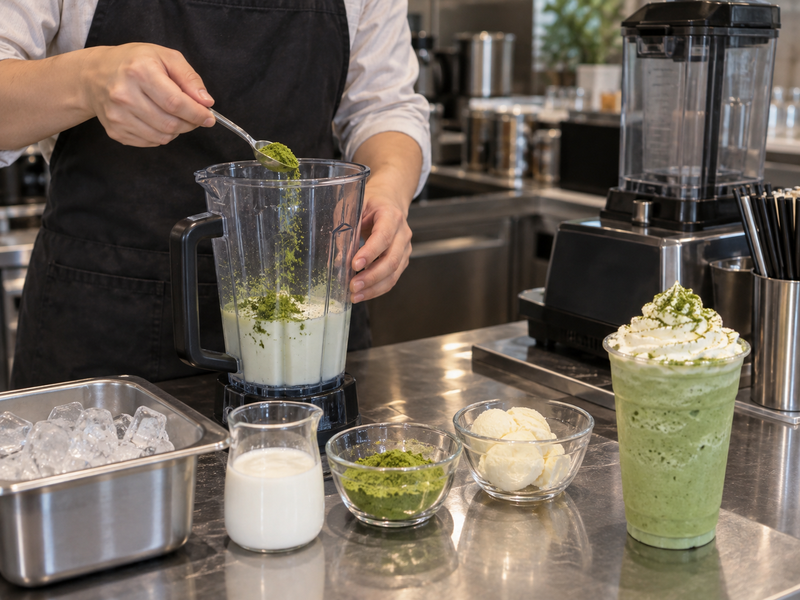
Remove decisions that should have been made in development
A good service card specifies frozen-base weight or scoop count, powder weight, liquid volume, ingredient order, blending time, cup size and toppings. It should show a normal finished cup, not a staged photograph with twice the garnish. Train staff with the exact blender and utensils at the store. Observe several workers during a simulated rush and compare the shakes. If thickness or tea flavor drifts, determine whether the cause is portioning, freezer handling or equipment, then improve the method.
Keep matcha sealed and dry between uses. A service container near steam or a wet scoop can create clumps before the powder reaches the blender. Record lot and opening date. For multi-site chains, use the same approved powder specification and incoming-lot check. A new lot can change color or flavor enough to affect the shake even if the recipe card is unchanged.
| Service control | Record | Audit question |
|---|---|---|
| Frozen base | Weight or calibrated scoop | Are portions consistent? |
| Matcha | Grams or checked scoop | Does the dose drift? |
| Liquid | Measured volume | Is thickness consistent? |
| Blender | Time and speed | Are cups warming or gritty? |
9. How Should the Menu Price Be Set?
Count the complete dessert and its waste
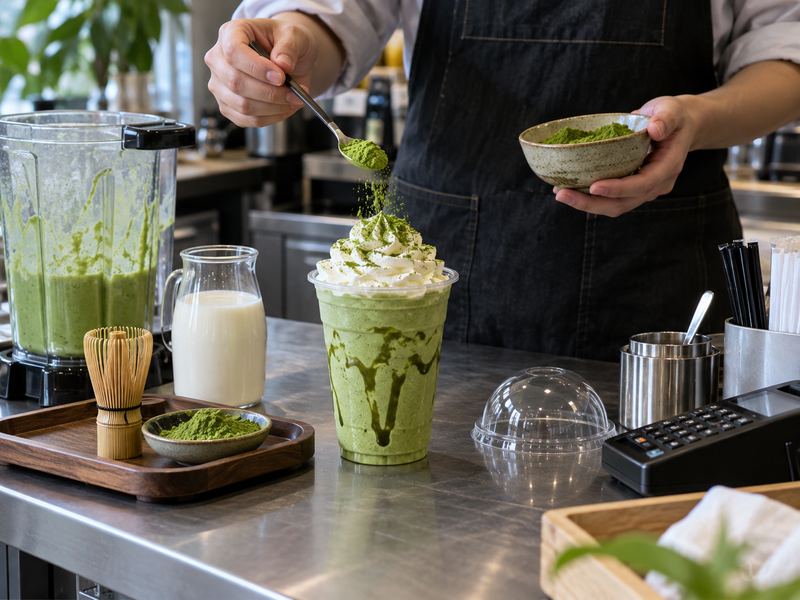
Powder is only one cost. Include frozen base, milk or other liquid, toppings, cup, lid, straw and labor. Factor in product lost while dialing in recipes and normal service remakes. The correct comparison between two matcha powders is cost at the dose each needs to make an acceptable shake. A cheaper powder may require more grams and extra sweetener; a premium powder may offer no perceptible benefit in a very sweet base. Taste first, then calculate.
Price should fit the menu position. A dessert shake can carry a higher ticket than plain tea, but customers will judge the actual flavor and serving size. Avoid using unverifiable origin or health language to justify the premium. If a retailer wants a matcha claim on a printed menu, keep supplier records and make sure the dose and ingredients support the description. Check margin after a pilot using actual usage rather than only theoretical recipe weights.
Delivery adds another question: will the shake still be recognizable when it arrives? If not, limit the channel or redesign the formula before advertising it widely.
10. What Should Be Checked Before Rollout?
Pilot with production ingredients and real staff
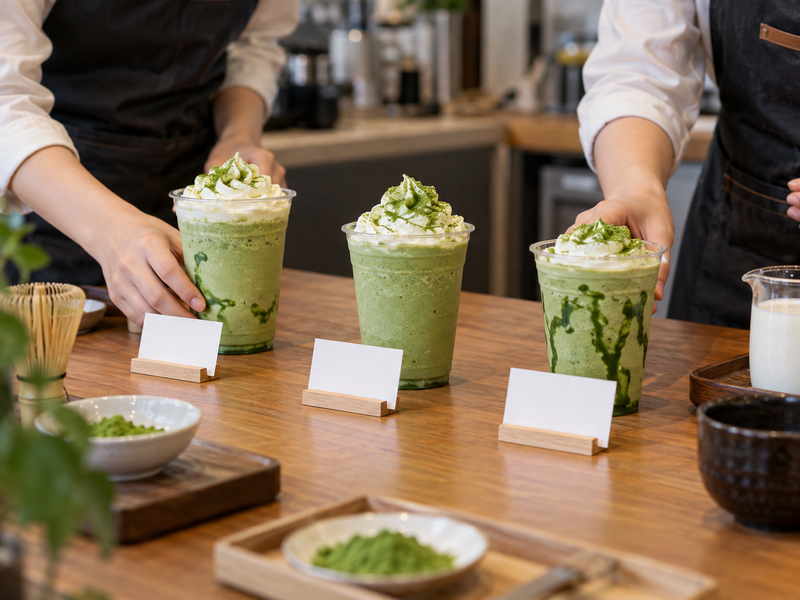
Run a small launch with the final powder lot, frozen base, cups, toppings and blenders. Record preparation time, remake rate, ingredient use, customer comments and repeat orders. Taste samples at opening and during a busy period. A milkshake that wins a quiet kitchen tasting may fail when the ice cream softens, the blender queue grows and workers shorten mixing. Adjust the method or menu offer before a full rollout.
Keep a sealed powder reference and record the approved frozen-base brand and recipe version. When an ingredient changes, retest the product rather than assuming the formula will transfer. Ask the matcha supplier about lot consistency and pack sizes suited to the store’s turnover. Matcha Village offers bulk and OEM formats; a buyer still needs to validate the exact powder, pack and full shake in its own operation.
The final standard is a shake that tastes of tea, holds the intended texture and can be made reliably by the team—not only by the person who invented it.
| Pilot measure | Source | Decision it supports |
|---|---|---|
| Repeat orders | Sales data | Customer acceptance |
| Remakes | Store log | Process robustness |
| Ingredient usage | Inventory | Actual cost |
| Melt and texture | Timed cup test | Delivery suitability |
FAQ
Q1. Can matcha be added directly to ice cream in a blender?
It can work with some equipment, but dry pockets are common. Test a small pre-mixed base and compare the finished texture with the direct-add method.
Q2. Is ceremonial matcha necessary for a milkshake?
No grade word guarantees the best result. Test powders in the full frozen formula and compare tea flavor, texture and cost per serving.
Q3. How do I make a matcha milkshake thicker?
First measure the frozen base, added liquid and blending time. Change one variable at a time and check the shake at handoff and after a short wait.
Q4. Can a dairy recipe be copied for a plant-based shake?
Use it as a starting point, then retest powder dose, sweetness, liquid and texture with the chosen plant-based base and toppings.
Q5. What is the most important chain-service control?
The complete recipe card matters: weighed matcha, standardized frozen-base portion, measured liquid and a fixed blending method. Audit real cups during a busy shift.
For a home recipe reference, see Proportional Plate’s matcha milkshake. For commercial powder selection, see our bulk matcha buyer guide. Pilot the final dessert with the actual ingredients and equipment before setting the menu price.