
Matcha gummy bears can make a promising kitchen sample and still be unsuitable for a retail pack. Powder dispersion, gel strength, sweetness, moisture, and mold size all affect the finished piece. A test kitchen should define the bite first, then run controlled small batches and record what changes. Keep the claim modest: a pleasant gummy prototype is not proof of a safe ambient shelf life or a health effect. Our matcha cake guide covers another food application where the finished product, not the dry powder, decides ingredient fit.
Contents
- 1. What should the finished gummy be?
- 2. Which gelling system should be tested?
- 3. How much matcha belongs in each piece?
- 4. How can powder be dispersed evenly?
- 5. How should sweetness and acidity be balanced?
- 6. What heating and depositing steps matter?
- 7. How do molds affect portion and texture?
- 8. When is a piece ready to demold?
- 9. What packaging and safety work remains?
- 10. How do you scale and cost the prototype?
1. What should the finished gummy be?
Describe texture and serving before formula
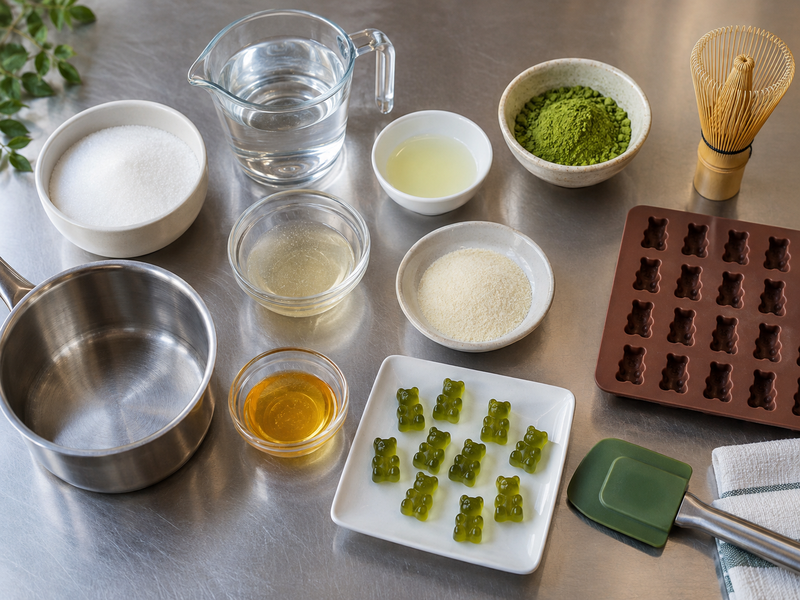
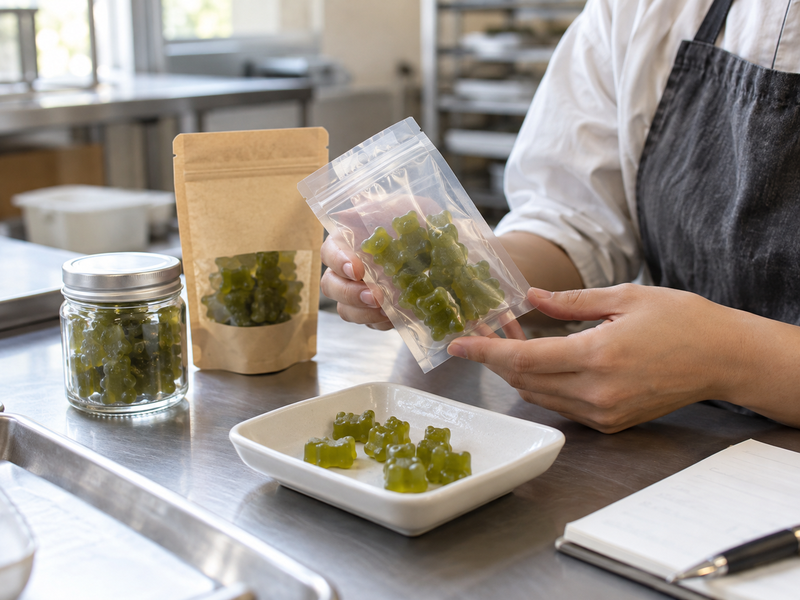
Choose whether the goal is a soft chilled confection, a firmer chew, or a packaged sweet. These are not interchangeable products. Specify target piece mass, shape definition, surface tack, matcha flavor, and how many pieces form one serving. Taste a full serving rather than one tiny bear, because bitterness and sweetness can build across several pieces. Photograph a passing piece beside a size guide and record the force or sensory language the team will use for texture.
The Cooking with Janica home recipe illustrates a simple matcha-and-gelatin approach. It also contains personal caffeine and wellness statements that should not be carried into a commercial product. Your test should ask whether the gummy is enjoyable and reproducible; claims about energy, metabolism, or a precise caffeine amount require separate evidence and review. A clearly defined product brief prevents a green, well-shaped sample from being mistaken for a finished food launch.
2. Which gelling system should be tested?
Treat gelatin and alternatives as different formulas
Gelatin, pectin, and other hydrocolloids can produce different texture and processing requirements. Select one system for the first controlled trial and follow the ingredient supplier’s technical instructions. Gelita’s discussion of gelatin gelling power explains that gelatin grade and concentration affect firmness; that is a reason to record the exact product rather than simply writing “gelatin.” Do not assume an equal-weight swap to agar or pectin will reproduce the same bear.
The choice also changes ingredient and dietary information. Gelatin is animal-derived, while an alternative may suit a different product brief but require different acidity, solids, or heating. Test the candidate system with matcha present, because powder can change appearance and mouthfeel. Ask the gelling supplier for application guidance and a specification appropriate to the intended product. Keep the batch small until texture and depositing are stable. A consumer recipe’s success in one kitchen does not validate a commercial gelling process.
| Gel option | First question | Record |
|---|---|---|
| Gelatin | What firmness is targeted? | Product grade and mass |
| Pectin | What setting conditions apply? | Supplier method and acidity |
| Other system | What process is needed? | Heat and deposit behavior |
3. How much matcha belongs in each piece?
Weigh the tea against final yield
Run a dose ladder with the same gel system, sweetener, mold, and process. Weigh matcha for the batch and divide by the number of saleable pieces after demolding, not simply by mold cavities. A low dose may leave a green hint without tea flavor; a high dose can feel powdery or bitter across a multi-piece serving. Taste at the intended consumption temperature and after the product has reached its approved texture.
Record the exact matcha product and lot. Pure matcha and sweetened beverage powder have different compositions, so they need separate formulas. If a caffeine figure is needed, request product-specific information and calculate against the weighed tea per saleable serving, then have the wording reviewed. Do not infer that a tiny bear is caffeine free or that a stated number from a home recipe applies to your mold. A buyer should select powder by flavor and dispersion in the finished gummy, not by grade language alone.
4. How can powder be dispersed evenly?
Make a smooth premix before the full batch
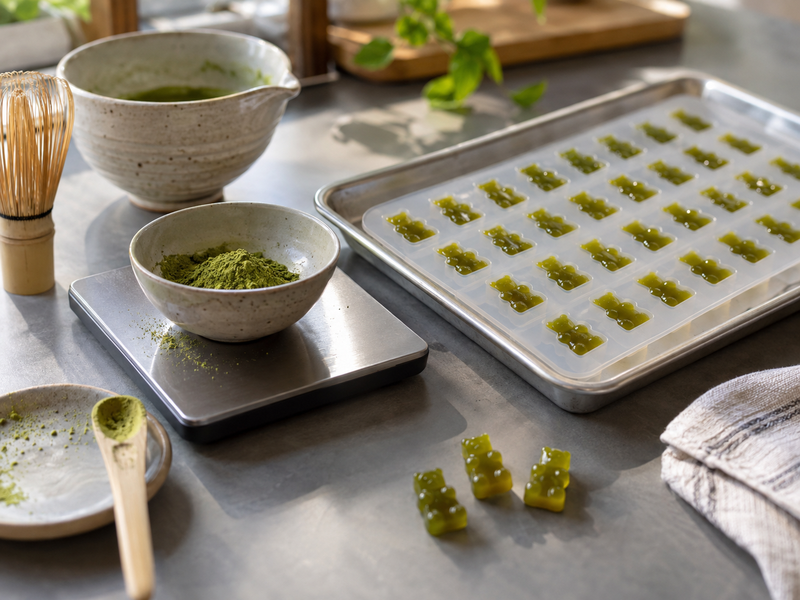
Dry matcha added to a large warm syrup can form clumps that remain visible in translucent gel. Test sifting and a small liquid premix, then combine it with the larger batch under a recorded mixing procedure. Check samples taken from the beginning and end of depositing for color and flavor. A single smooth spoonful from the top of the kettle does not prove uniform distribution. Keep tools dry before weighing the powder and protect the ingredient from steam at the station.
Watch for excessive aeration. Bubbles can make small bears look cloudy and change piece weight, while prolonged mixing can affect the process window of some gelling systems. Use the equipment and mixing time the kitchen can repeat. If powder settles while trays are filled, test a smaller batch or a different sequence. Do not solve settling with an unmeasured last-minute whisk. Each correction should have a mass, timing, and observed result so the team can reproduce the next successful tray.
5. How should sweetness and acidity be balanced?
Taste after the gel is set
Sweetness can soften matcha bitterness, while acid can brighten a confection or make tea taste sharper. Test one sweetener level at a time with matcha and gel mass fixed. Taste the finished set pieces, not only the hot mixture. A syrup that seems balanced while warm can eat differently after cooling. If citrus is added, record its form and amount; juice, acid powder, and flavored syrup are not equal ingredients.
Gelling systems can also respond differently to acidity and solids, so follow the technical guidance for the exact ingredient. Do not change acid, sweetener, and gelatin together and then credit matcha for the result. Keep a plain control and coded trials for sensory review. Ingredient statements for honey, fruit juice, or sugar substitutes should be reviewed before menu claims are written. A matcha gummy should taste like a deliberate confection, not a “healthy” product by implication from its color.
| Trial variable | Hold fixed | Assess after set |
|---|---|---|
| Sweetener | Matcha and gel | Tea balance and tack |
| Acid | Sweetness and gel | Flavor and firmness |
| Fruit flavor | Base formula | Matcha still detectable |
6. What heating and depositing steps matter?
Follow the gelling ingredient’s process
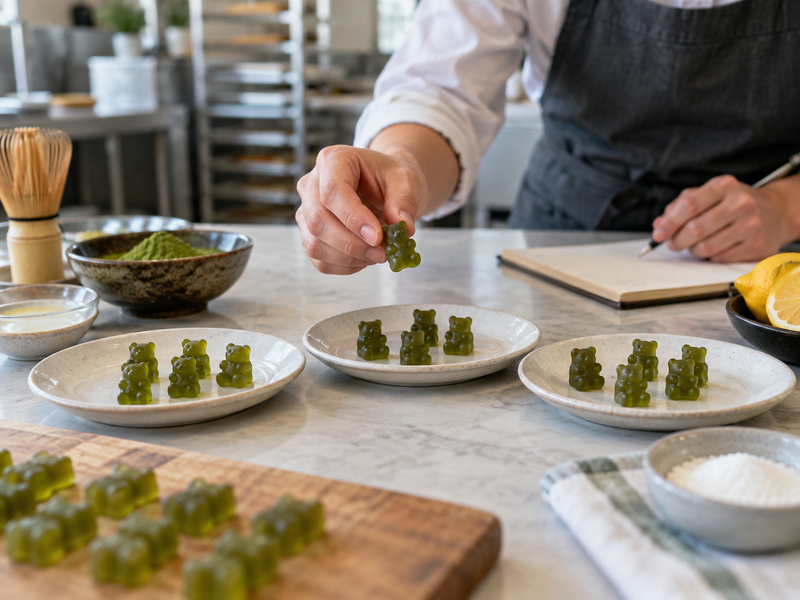
The selected gel dictates how it is hydrated, heated, and deposited. Write the supplier method into the pilot plan, then record actual temperatures and times with the kitchen’s calibrated tools. Do not publish a universal heating number for every gelatin or pectin system. Matcha also needs to be incorporated at a point where it disperses without becoming an uneven paste. Test a small batch before using a full kettle or production depositor.
Measure the mass poured into molds and the amount left on the vessel walls. A narrow process window can cause early setting and incomplete cavities; a mixture that remains too fluid may leak or produce thin bears. Note bubbles and skin formation during deposit. If the first tray differs from the last, reduce batch size or revise the sequence. The trial record should connect texture and appearance to the process that produced them, not only to the ingredient list.
| Process step | Record | Failure to watch |
|---|---|---|
| Hydration | Ingredient and time | Undissolved gel |
| Mixing | Temperature and order | Matcha clumps |
| Deposit | Time and fill mass | Uneven pieces |
7. How do molds affect portion and texture?
Calibrate the cavity, then count good pieces
Mold shape changes how a gummy looks and feels. A thin ear or limb may tear during demolding even when the center is well set. Fill several cavities by weight and check whether the depositor or spoon can reproduce the target mass. Compare small and larger molds with the same formula. The smaller piece may appear firmer because of its shape; the larger one may reveal a soft center. Do not set a serving solely by cavity count without weighing actual finished pieces.
Inspect molds for cleaning access and suitability for the intended food process. A detailed bear shape can trap residue and slow turnaround. During trials, record cavities filled, pieces broken, and saleable yield after removal. If a simpler shape gives much better yield and the same eating experience, it may be the better commercial choice. Packaging should be tested with the actual piece shape, since delicate features may break in a pouch even when they leave the mold intact.
8. When is a piece ready to demold?
Judge texture under the planned condition
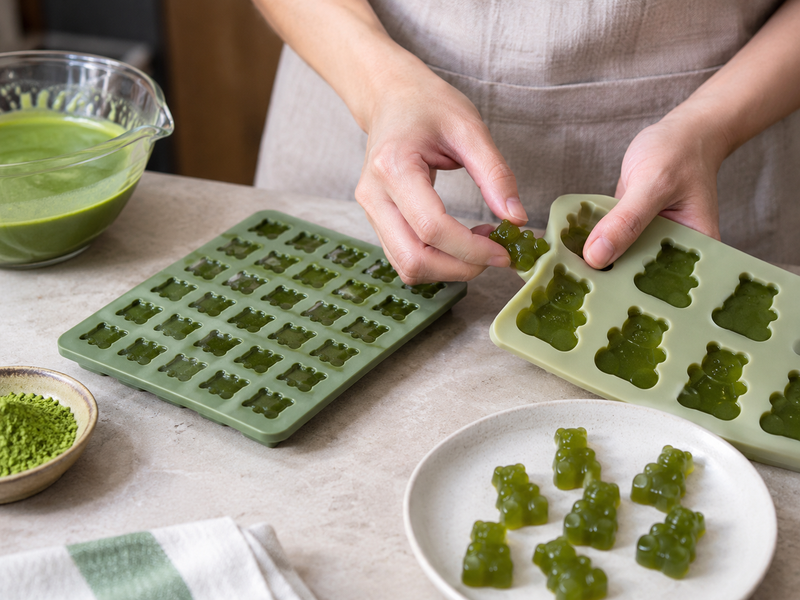
Set a trial schedule based on the gelling system and supplier instructions, then inspect pieces at defined points. Look for clean release, stable shape, surface tack, and a pleasant bite. A piece that releases neatly while chilled may soften or stick later; test it at the temperature and in the package intended for sale. Avoid assuming that additional time alone will repair an incorrect formula. If the bears tear, compare cavity geometry, gel strength, and release method one at a time.
Weigh a sample after demolding and again after the planned quality observation interval. Changes in mass or tack can reveal moisture movement, but they do not prove safety or ambient stability. Record photographs and sensory notes with batch and lot. Do not dust or oil pieces to conceal a tack problem without adding that ingredient and step to the formula, label, cost, and handling review. The passing standard should be clear enough for another operator to identify a tray that needs rework or discard.
| Check point | Observe | Decision |
|---|---|---|
| At release | Shape and breakage | Mold or gel adjustment |
| After rest | Tack and firmness | Process adjustment |
| In package | Sticking and color | Pack or formula change |
9. What packaging and safety work remains?
Keep prototype quality separate from commercial validation
A home-style gummy does not become shelf stable because it contains sugar or looks dry. Commercial distribution may require water-activity, microbiological, process, packaging, and shelf-life work determined by qualified food-safety and regulatory teams for the formula and destination market. The FDA Food Code is a model reference for US retail food settings; packaged confections may be governed by different requirements. Do not print a date or storage claim based solely on a few kitchen observations.
Test package fit for quality: pieces should not stick, sweat, break, or discolor during the proposed route. Review ingredients and allergens from the exact gel, sweetener, flavor, and matcha products. Gelatin source affects dietary statements. Keep the pilot under an approved handling procedure and mark it clearly as a test product until the necessary validation is done. This is especially important if the bears might be mistaken for supplements; avoid medical, energy, or therapeutic language unsupported by the product and rules.
10. How do you scale and cost the prototype?
Use saleable yield and a controlled process sheet
Add matcha, gel, sweetener, flavor, mold-release or finishing ingredients, and package costs. Divide by saleable pieces after deposit loss and broken demolds. Then group the correct number into a serving pack. An apparently cheap batch can become expensive if small cavities are slow to fill or many pieces tear. Track labor and equipment reset as well as ingredient cost. Compare a simpler mold before committing to a highly detailed bear shape.
Scaling a gel system can alter heating, mixing, and deposit timing, so run a staged trial rather than multiplying all masses and assuming the same result. Put ingredient identifiers, weights, process order, measured conditions, mold, set procedure, and yield on one versioned sheet. Have the qualified team approve handling and claims before any sale. A good prototype is an answer to a sensory question; a commercial product requires the additional work to make that answer repeatable and supportable.
| Scale input | Pilot evidence | Production question |
|---|---|---|
| Deposit yield | Saleable pieces | Can fill stay uniform? |
| Gel texture | Coded sensory sample | Does larger batch match? |
| Pack cost | Full serving | Does shape travel well? |
FAQ
Q1. Can gelatin be replaced with agar by equal weight? Do not assume it. Alternative gelling systems need their own formulation and process trials with supplier guidance.
Q2. Why are some bears darker green? Check matcha dispersion and whether powder settled during depositing before changing the dose.
Q3. Does a small gummy contain no caffeine? Matcha naturally contains caffeine. Estimate from product-specific data and tea mass per serving if a number is needed.
Q4. Can a kitchen set an ambient shelf life from a few test batches? No. Safety, process, packaging, and shelf-life work must match the complete product and market.
Q5. What should be costed first? The saleable serving after deposit and demolding loss, including matcha, gel, finishing, package, and labor.
Keep the gummy a test until evidence supports sale
Matcha gummy bears need a defined bite, evenly dispersed tea, a controlled gel process, and a pack that protects saleable pieces. Weigh every trial and record what the finished serving actually does. Bring food-safety and regulatory review into the plan before a kitchen prototype becomes a product promise.