
Matcha meringue cookies need a clear texture target before a bakery chooses the piping tip or the shade of green. A small crisp kiss, a larger piece with a softer center and a chocolate-dipped garnish behave differently during drying and packing. Tea powder adds flavor, but it also gives the team another ingredient to distribute through a delicate foam. Develop the shape, tea addition and drying endpoint in small runs, then test the actual package before planning a retail quantity.
Contents: Texture · Base · Tea · Foam · Piping · Drying · Finish · Packaging · Yield · Approval
1. What texture should matcha meringue cookies have?
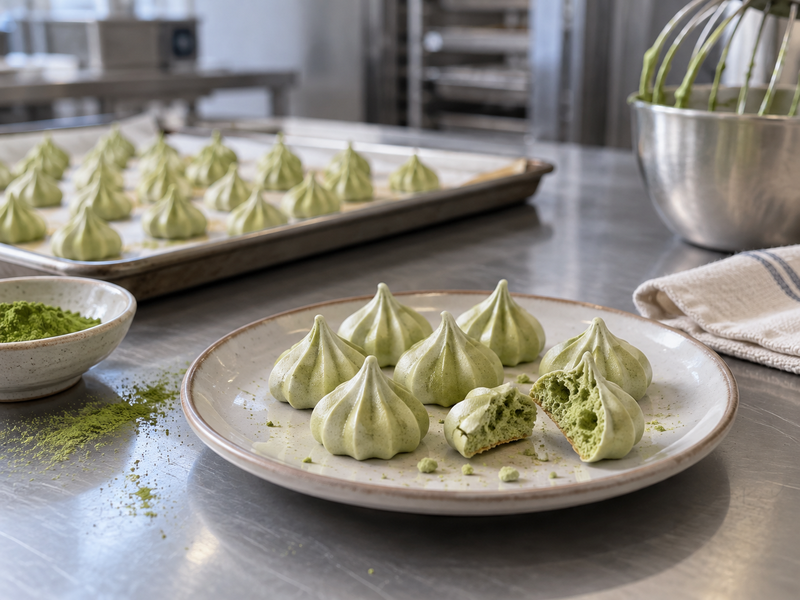
Decide whether the center should be dry and crisp or deliberately softer. Those are different products, and their development checks should reflect that choice. A surface that feels dry does not prove the center matches the target. Break a sample and taste it after the chosen cooling process before approving the tray.
Define the cookie’s role
| Intended use | Useful target | Practical concern |
|---|---|---|
| Packaged small snack | Consistent crisp bite | Moisture and breakage |
| Cafe accompaniment | Comfortable one-bite size | Loose crumbs on service |
| Dessert garnish | Shape suited to plating | Contact with wet components |
| Chocolate-dipped piece | Balanced coating and foam | Additional handling |
The Posh Little Designs reference describes piped matcha meringues with a crisp exterior and a softer center, optionally dipped in dark chocolate. That is one style reference. A bakery seeking a fully crisp retail cookie should establish its own drying endpoint rather than assuming the same result.
Choose the portion around how it will be eaten. A tall decorative kiss may look impressive but break when the lid closes. Test the finished shape in the intended cup, bag or box early enough that packaging can inform the piping specification.
2. Which meringue method should the bakery use?
Use one complete method that the team can execute reliably. French, Swiss and Italian meringue methods arrange sugar, heat and whipping differently. Select a suitable base formula and preserve its sequence during the initial tea trial. Mixing instructions from different methods can leave the operator with an unclear process and little useful evidence when it fails.
Weigh the egg whites and sugar
Egg count alone is an imprecise production unit because white weights vary. Record the actual weight and the egg product used. If purchasing changes from separated shell eggs to a liquid product, check its suitability and repeat the relevant foam trial. Keep the operation’s food safety procedure attached to the selected method.
King Arthur Baking’s meringue recipe provides an additional primary example of controlled sugar addition and different drying targets. Its formula should be followed as a complete recipe if selected; a bakery adapting another base should not borrow isolated amounts or endpoints and assume the same outcome.
Treat sugar as part of the structure as well as the sweetness. If the finished cookie tastes too sweet, first evaluate portion size and tea balance. A major sugar reduction is a new formulation project, not a simple flavor adjustment that can be made during routine production.
3. How can a small matcha trial be set up?
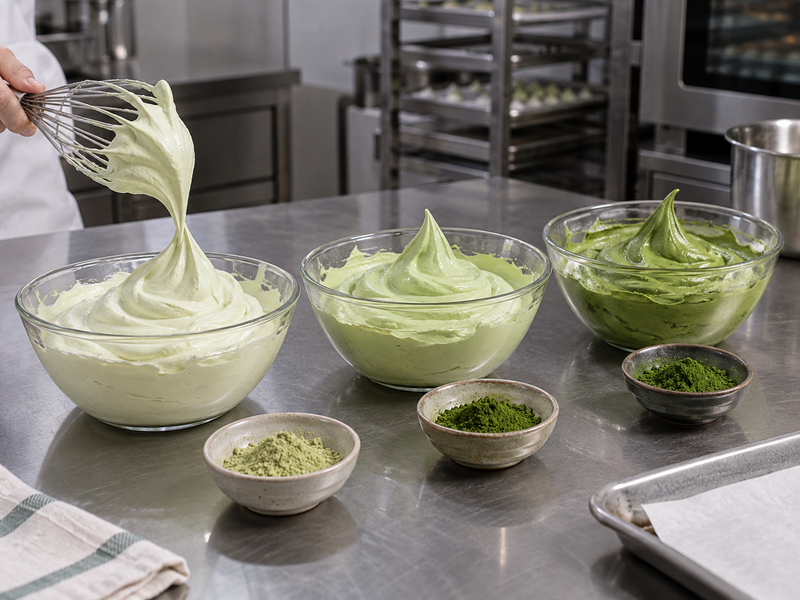
Begin with an established plain meringue base and vary only the matcha addition. The table below proposes screening points based on the egg-white weight in that existing formula. These are untested development suggestions, not a complete recipe or a promise of stable foam at every dose. Retain the base formula’s sugar, acid and process.
Compare tea after drying
| Trial | Egg whites in existing base | Proposed added matcha | Main observation |
|---|---|---|---|
| A | 100 g | 1 g | Is tea flavor identifiable? |
| B | 100 g | 2 g | Does it balance sweetness? |
| C | 100 g | 3 g | Does powder affect foam or finish? |
Prepare separate small batches through the same method when practical. If dividing one foam batch, account for division and folding consistently, and recognize that the final portion may have waited longer. Record those handling differences rather than treating every result as caused only by tea dose.
Taste the dried, cooled cookie. Raw foam is not an appropriate tasting reference, and a pleasing green color before baking does not establish the finished flavor. Keep size and drying conditions comparable across the samples so the tea decision does not become confused with differences in the center’s moisture.
4. How do you recognize a repeatable foam endpoint?
Inspect the equipment before mixing and avoid contamination from fat or yolk. Use the same bowl and whisk setup for the trial series where practical. A small amount in a very large mixer may not behave like the normal batch, so confirm that the tool engages the ingredients properly before drawing conclusions about the formula.
Describe what the operator should see
Photograph the foam at the chosen endpoint: its gloss, the peak on the whisk and how it holds after the whisk is lifted. Record the sequence and actual mixing observations. A timer alone is a weak instruction when mixer size, batch depth or ingredient condition changes.
Sift matcha and incorporate it through the method selected for the base. Avoid dry lumps that require prolonged extra mixing to disperse. If green streaks or specks remain, investigate the addition process in the next small trial. Do not keep beating indefinitely while hoping every defect will disappear.
Compare the foam immediately after incorporation with the material at the end of piping. If the last portions spread or lose definition, record the elapsed handling interval and room conditions. That observation can point to a batch-size or workflow issue instead of an ingredient problem that requires more sugar or a different tea.
5. What controls the size and shape of each cookie?
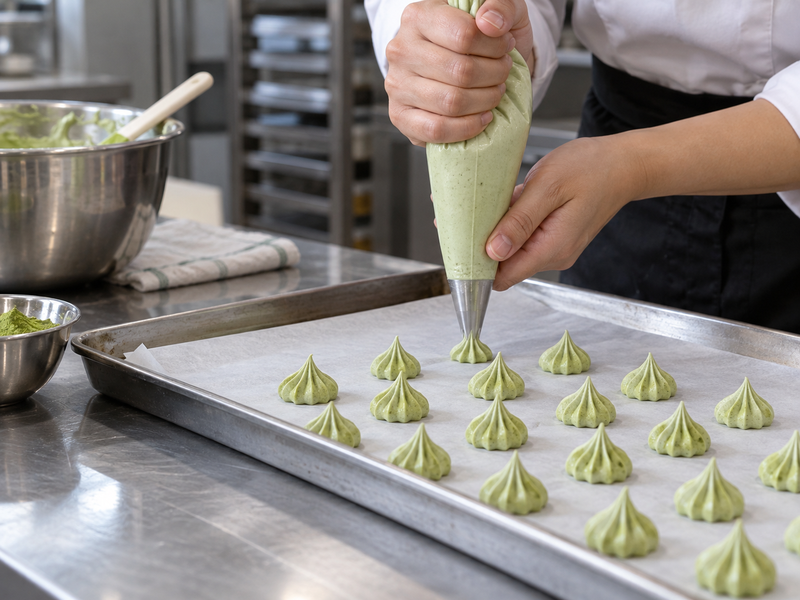
The nozzle, piping angle, pressure and stopping motion all affect the shape. Choose a simple design for the first drying trial. A highly ridged star and a smooth dome may have different surface areas and center thicknesses even when their weights match. Changing the tip should therefore prompt a check of the drying result.
Set more than one dimension
| Piping feature | Record | Why it matters |
|---|---|---|
| Portion weight | Sample run before drying | Consistent amount of foam |
| Base diameter | Measure a few deposits | Tray layout and pack fit |
| Height | Compare side views | Center thickness and clearance |
| Tip type | Exact tool used | Repeatable ridges and release |
Keep a comfortable distance between deposits and enough room for handling the tray. Do not rely on a recipe photograph to estimate production capacity. Count the number of acceptable portions that fit the actual tray layout, including any space the oven or workflow requires.
Have the normal operator pipe a short run. If the first and last pieces differ, check fatigue, bag fill and foam condition. A smaller bag load may be easier to control than one large heavy bag, but the change should be tested for both speed and consistency.
6. How should the drying endpoint be checked?
Use the selected base recipe’s process as a starting point, then inspect cookies from several tray positions. Their outer surfaces may look alike while the centers differ. Break representative pieces after the cooling procedure and compare them with the agreed texture target. For a crisp cookie, a damp or chewy center is a different result that needs attention.
Track the whole oven load
King Arthur describes breaking a meringue open to assess dryness, which is a useful practical check for its crisp version. For production, combine that observation with the actual load, portion size and oven record. A timing that worked for one small tray does not automatically describe a fuller oven.
Watch the underside for excessive coloring and the top for changes that affect the intended appearance. More heat is not always the best response to a slow-drying center. Investigate size, shape, loading and the approved drying process before making a change that browns the exterior while leaving uneven texture inside.
Keep quality checks separate from food safety validation. A dry feel alone does not document the safety of an egg-containing process. The chosen formula and method need the appropriate controls for the operation. Record the approved process instead of replacing it with an informal instruction to bake until they look ready.
7. Should the cookies have a chocolate finish?
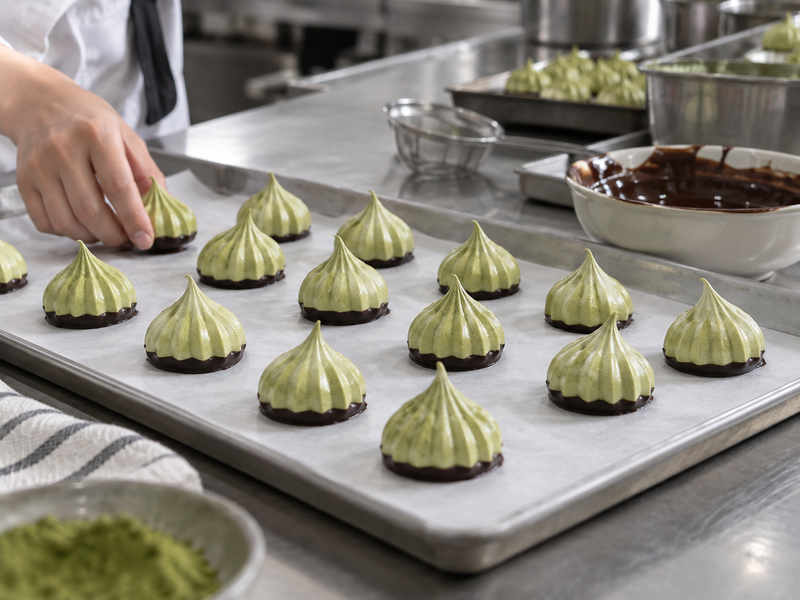
A thin chocolate base can add contrast and change the first bite. It also adds a setting step, another ingredient declaration and more handling of a fragile piece. Approve the plain meringue first, then compare the finish as a separate option. That keeps a coating problem from being mistaken for a foam or drying problem.
Measure the added layer
| Finish choice | Compare | Production consequence |
|---|---|---|
| Plain | Tea and sugar balance | Simplest handling |
| Thin dipped base | Chocolate intensity and pickup | Dipping and setting time |
| Light drizzle | Appearance and loose fragments | Additional decoration step |
| Heavier coating | Bite and total weight | Greater ingredient cost |
Use the chocolate manufacturer’s working guidance and a method that supports the cookie. Confirm clean release from the setting surface. If a dairy-free claim is intended, check every ingredient and the production handling; the absence of milk in the meringue base does not establish the status of a chocolate-dipped product.
Taste the finished piece after the coating has set. Dark chocolate can dominate a small tea meringue, so more coating is not automatically better. Select the amount that gives the intended contrast while leaving the matcha identifiable, and record the actual pickup for costing.
8. How can packaging protect the intended texture?
Package only after the cookies have reached the approved cooled condition. Warm pieces enclosed too early can create unwanted moisture inside the pack. At the same time, leaving finished meringues exposed unnecessarily gives room conditions more opportunity to affect them. Define a practical transfer and packing sequence for the chosen product.
Test the real closure and headspace
Use packaging appropriate to the intended moisture protection and distribution route, with supplier guidance where needed. A decorative jar or folded bag may not seal as expected. Test the actual closure, not a sample container that happens to be available during development. Include the headspace required to protect the piped tips.
Inspect texture and breakage through a product-specific quality study. Keep a record of crispness, tackiness, coating marks and loose fragments. These observations help select packaging, but they do not establish a commercial shelf life by themselves. The final period and instructions need validation for the exact formula and process.
For meringues used as a dessert garnish, test contact with the actual cream, fruit or sauce. A cookie that remains crisp in a sealed pack may soften quickly on a wet dessert. Set the plating sequence around that use rather than assuming its retail packaging performance transfers directly to service.
9. What does a useful production trial measure?
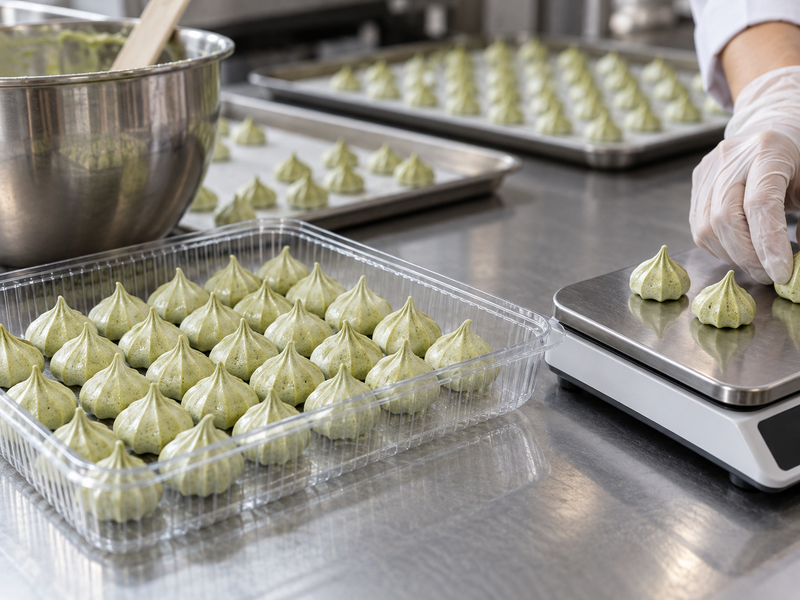
Record usable pieces after drying, transfer, optional coating and packing. Piped count alone overstates output if tips break during handling or centers fail the texture target. Keep reasons for rejection separate so a low yield leads to a focused process change rather than a general instruction to be more careful.
Include oven occupation in the cost
| Record | Measure | Decision supported |
|---|---|---|
| Piped portion | Weight and count | Tray capacity |
| Accepted dried pieces | Texture check and count | Process yield |
| Broken pieces | Stage and cause | Handling improvement |
| Oven occupation | Actual load schedule | Production planning |
| Packing time | Normal staff run | Labor cost |
Meringues may have a modest ingredient cost while using considerable oven time and tray space. Include that capacity in planning, especially if the same oven is needed for higher-temperature bakery work. A small trial’s convenience does not show whether the product fits the normal daily schedule.
For a wholesale pack, calculate the number of intact cookies available at the agreed size and weight. Do not fill a short pack with unapproved smaller pieces without revising the specification. Consistency matters when the buyer uses the cookies as identical garnishes or portions them into a dessert selection.
10. How do you approve the cookie for repeat production?
Approve the base method, tea code, dose, piping tool, dimensions and drying endpoint together. Add the cooling and packing sequence, optional chocolate finish and final sales unit. Photographs should show the whole cookie, a broken center and the acceptable packaged arrangement. This gives the next operator more than a target shade of green.
Make the tea sample request specific
Tell the supplier that the powder will enter a sugar-and-egg-white foam and be evaluated after drying. Include the intended dose and whether chocolate will be added later. The Matcha Village ingredient buyer guide can support a request for traceable pure powder samples suited to the application.
When changing tea lots, compare flavor, color and incorporation in the existing process. When changing the piping tip, repeat the size and drying checks. When changing packaging, reassess texture retention and breakage. These targeted comparisons preserve useful prior work while testing the part that has actually changed.
Schedule a final run in the normal oven load with the regular production team. Have them pipe, dry, transfer and pack from the written sheet, then open a finished pack and inspect both the centers and the intact-piece count before accepting a repeat order.
Frequently asked questions
Q1: Must matcha meringue cookies be crisp all the way through?
No, but the intended texture must be defined. A deliberately softer center and a fully crisp retail cookie need different development targets and appropriate process validation.
Q2: Can sugar simply be reduced to make them less sweet?
Sugar contributes to the structure as well as taste. Treat a substantial reduction as a new formulation trial, keeping the original base as a comparison.
Q3: Why do the last piped cookies lose their shape?
Check elapsed handling time, foam condition, bag size and operator technique. Compare the first and last deposits before deciding that the tea powder is the cause.
Q4: Does a chocolate dip make the product dairy-free?
No. Ingredient status depends on the chocolate and every other component, together with appropriate production controls. Check the full formulation before making any claim.
Q5: What should be checked when changing the piping tip?
Compare portion weight, base diameter, height, drying endpoint and pack clearance. A new shape can change the center thickness even when the amount of foam stays similar.