
Matcha florentines can pair a thin caramelized nut biscuit with a green tea chocolate coating, giving a bakery two distinct textures in a small portion. The challenge is preserving the delicate biscuit while spreading the coating evenly. Too much chocolate can overwhelm the lace-like structure; too little support can turn a gift box into fragments. Start by choosing the florentine format, then develop the nut layer, tea placement and packaging as separate but connected decisions.
Contents: Format · Nuts · Thinness · Baking · Tea · Coating · Handling · Humidity · Cost · Approval
1. Which matcha florentines format do you want?
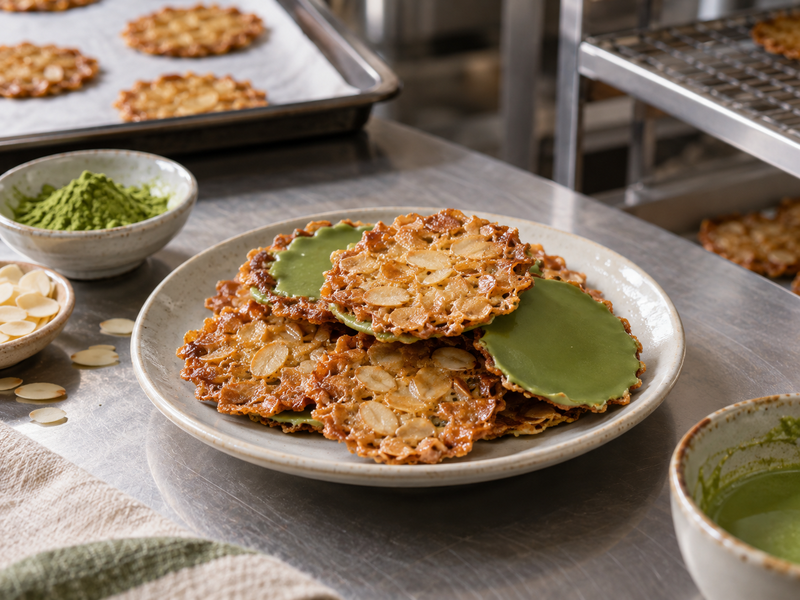
The name covers more than one useful construction. Jugetsudo’s reference recipe places an almond caramel topping over a matcha biscuit base and cuts the slab into portions. A thin, lacy nut biscuit with chocolate on one side is another approach. Those products need different thickness, cutting and handling specifications.
Choose one construction for the first run
| Construction | Tea placement to test | Production concern |
|---|---|---|
| Biscuit base with almond topping | Baked green base | Two layers and slab cutting |
| Thin individual nut biscuit | Matcha chocolate underside | Spread and breakage |
| Free-form lacy sheet | Chocolate on broken pieces | Portion consistency |
This development plan focuses on the thin biscuit with a matcha chocolate underside. The goal is a visible nut structure, a clean tea-colored back and a bite that breaks without an excessively thick chocolate layer. It is a separate interpretation from the layered reference recipe.
Decide whether round, reasonably uniform pieces are essential to the offer. A gift box may need a consistent diameter, while a cafe garnish can accept carefully specified fragments. That decision changes the production method and how saleable yield should be counted.
2. How should the nuts be selected and prepared?
Choose a nut and particle form suited to a thin layer. Sliced almonds give a visible pattern, while finely chopped hazelnuts create a different surface and flavor. Large chunks can make local thick spots that are harder to coat and pack. Specify the actual cut rather than accepting any product described as chopped nuts.
Evaluate flavor before adding tea
Inspect the nuts for fresh aroma and consistent condition. If a preparation step includes toasting, record the method and let the nuts reach the condition required by the base formula before mixing. Switching between raw and toasted nuts can change the final flavor even when all other weights remain the same.
Keep the first trial to one nut type. A mixed-nut product may be attractive later, but it makes thickness and flavor differences harder to interpret. Compare the finished biscuit plain before coating so a strong roasted note is not mistaken for a bitter matcha problem.
Record the supplier, nut variety and cut with the formula. Allergen information should follow the actual ingredients and production handling. A nut substitution needs more than a label update: it can change the layer’s geometry, the eating texture and how readily the biscuit fractures when someone spreads chocolate over the back.
3. How can the biscuit layer be made consistently thin?
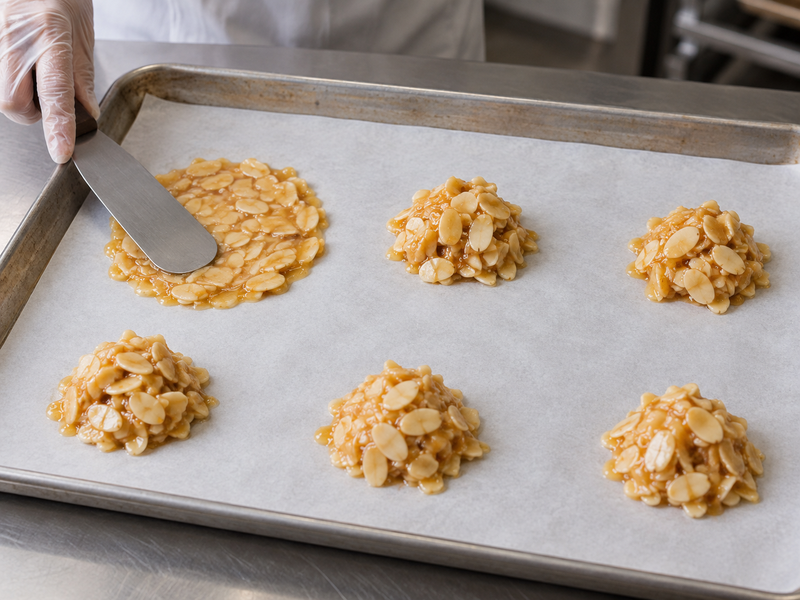
Use a plain florentine base already developed for your kitchen, retaining its sugar, fat, liquid and nut balance during the first matcha project. The tea can be added in the coating later. This keeps the first trial focused on whether the biscuit spreads and bakes into a usable thin structure.
Control the portion and the space around it
| Method | What to standardize | Check after baking |
|---|---|---|
| Individual portions | Deposit weight and spacing | Diameter and merged edges |
| Guided spreading | Starting thickness | Thin and thick patches |
| Large sheet | Area and total weight | Uniformity across the slab |
King Arthur Baking’s free-form florentines demonstrate a sheet approach that avoids relying on every portion spreading into a neat circle. That can be useful context when shape variation becomes a major loss, although its hazelnut formulation is a separate recipe.
For individual rounds, bake a few portions first to establish the clearance they need. Record the starting deposit and cooled diameter. Do not fill a whole tray tightly before observing spread. If rings or molds are considered, test release and labor as well as shape; the additional tool may solve one problem while creating another at transfer.
4. What should the baking trial reveal?
Look for an evenly baked nut and caramel layer with the intended thin structure. Color can vary across a tray, so compare the center, corners and edges of the bake. Use the established base recipe and oven setup as the starting point, then record the endpoint that produces acceptable cooled texture.
Judge the cooled biscuit
A hot florentine may be flexible and difficult to lift. Let it reach the condition specified by the chosen method before handling, and inspect the cooled piece for stickiness, excessive hardness or weak areas. The fact that a piece releases from the liner does not by itself establish the desired bite.
If one edge is dark while the center remains unsuitable, investigate thickness and heat distribution. Extending the bake without addressing those differences may worsen the edge. Keep tray material, liner and loading consistent during comparisons so their effects do not disappear into a vague note about oven variation.
Photograph an acceptable plain biscuit before adding chocolate. The coating can conceal uneven baking on the back. Also retain a few uncoated controls from each trial. They help identify whether later changes in crispness or flavor originate in the biscuit or are associated with the added chocolate and its handling conditions.
5. Where should the matcha flavor be added?
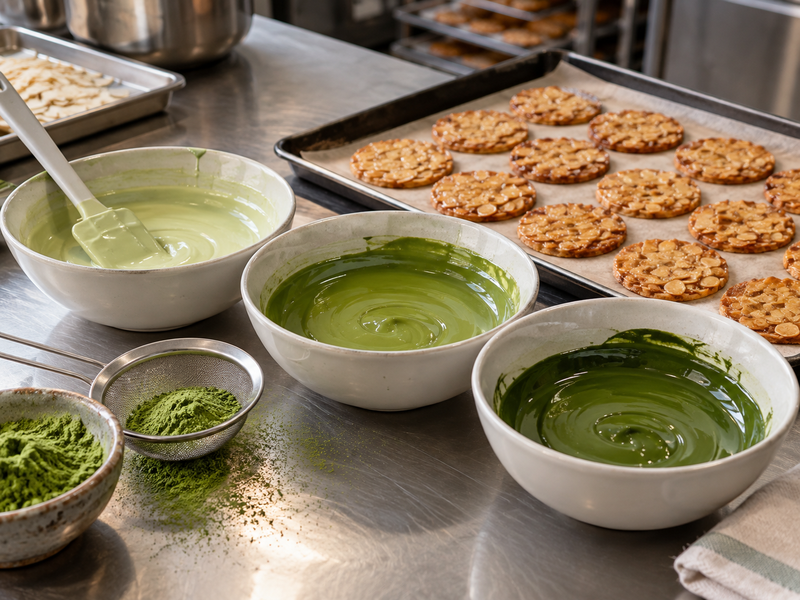
For the thin version developed here, adding matcha to a white chocolate coating makes its placement easy to see and measure. It also lets the bakery keep a familiar nut biscuit base. A baked matcha base, as in the Jugetsudo construction, is a different development route and should not be treated as the same formula with tea moved between layers.
Screen tea in the actual coating
The following are proposed small additions for comparison, not validated coating formulas. Use the same suitable white chocolate and follow its manufacturer’s working instructions. Added powder may change flow, so inspect both flavor and handling.
| Sample | Selected white chocolate | Proposed sifted matcha | Compare |
|---|---|---|---|
| A | 100 g | 1 g | Tea visibility and taste |
| B | 100 g | 2 g | Balance with caramel and nuts |
| C | 100 g | 3 g | Flow and dry finish |
Keep water away from this chocolate-coating process; a watery tea paste would create another formulation. Disperse the dry sifted powder through the selected method and inspect for clumps. Taste it on the actual biscuit at equal pickup weight, because a thicker coating can make a lower dose seem stronger.
6. How do you apply a thin, even chocolate layer?
Select a coating method that supports the brittle biscuit. Spreading a small measured amount on the flat underside can be easier to control than fully dipping a very thin piece. Work over a clean tray so drips and broken pieces can be recorded. Use a suitable spatula and avoid pressing hard against unsupported areas.
Define pickup rather than visual generosity
Weigh a small set of plain biscuits, then the same set after coating and setting. The difference shows how much chocolate was retained. Compare that figure with the amount issued to the coating station so waste and material left on tools are not confused with the product’s actual portion.
If the chosen chocolate requires tempering, follow the manufacturer’s instructions for that product and verify the result through the supplier’s recommended checks. If using a compound coating, follow its own guidance. Do not assume the two systems need identical handling or can be swapped without affecting bite and appearance.
Set coated pieces on the selected food-contact surface and confirm clean release. Inspect the back for thick ridges, uncovered areas and trapped crumbs. A thin green layer should support the intended flavor without turning the delicate nut biscuit into a chocolate-heavy piece that breaks differently when eaten.
7. How can the biscuits be handled with less breakage?
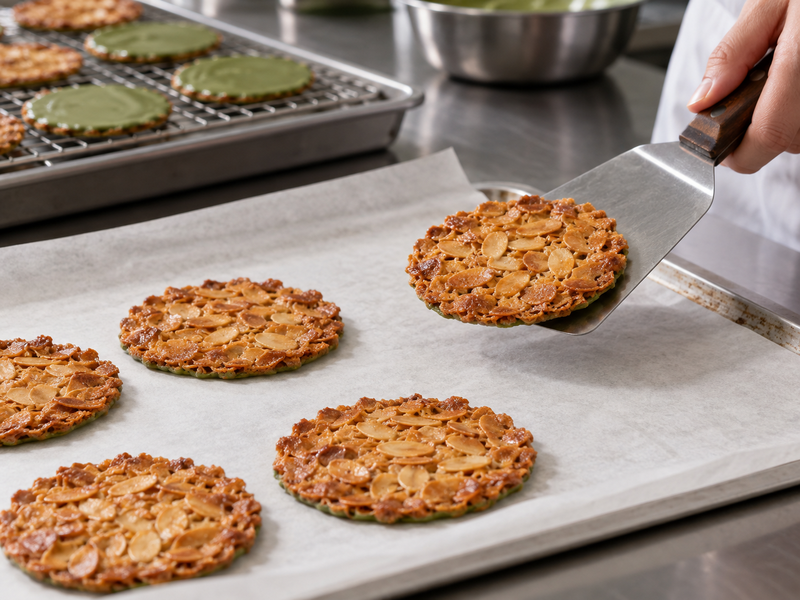
Support the whole piece where practical and reduce unnecessary transfers. Moving biscuits from liner to rack, rack to coating station, station to another tray and finally into a box creates several opportunities for damage. Map those steps and see whether one can be removed without compromising the process.
Record the stage of each break
| Stage | Common handling concern | Trial check |
|---|---|---|
| Liner release | Pulling before suitable condition | Clean supported release |
| Coating | Pressure over a weak area | Flat support under biscuit |
| Tray transfer | Lifting from one edge | Suitable tool and spacing |
| Packing | Tight cavity or stacked pressure | Actual pack handling |
Do not make the biscuit much thicker solely to survive a poor transfer method. That may solve breakage while losing the texture that made the product appealing. Compare a workflow change with a thickness change before selecting the next trial.
Set a definition for acceptable shape. A naturally irregular lacy edge can be part of the product, while a missing quadrant may be a reject. Give staff photographs of both. Clear criteria prevent a development team from counting attractive fragments as saleable pieces when the buyer expects complete rounds.
8. What should be checked for moisture and temperature changes?
The biscuit and coating can respond differently to the surrounding conditions. King Arthur notes that florentines can attract moisture and become soft or sticky. That supports evaluating the pack’s protection, but it does not provide a shelf-life guarantee for another formula or climate. Use the actual product and sales packaging in the quality study.
Inspect both sides of the piece
Check crispness, surface tack, coating appearance and clean removal from the pack. Keep uncoated controls when useful so the team can distinguish a biscuit change from a coating problem. Record the storage and handling conditions observed during the trial rather than writing only that samples were kept normally.
Choose packaging with the supplier’s guidance for the intended product and route. A decorative paper sleeve may offer little protection by itself. A sealed inner pack may be needed, but its suitability should be tested along with the arrangement that prevents physical breakage. Barrier protection and mechanical support address different problems.
Any commercial shelf life needs product-specific validation. Do not infer it from a crisp sample on the day of baking or from the storage advice attached to a different coating. Keep the final instructions consistent with the conditions the business and its distribution partners can maintain.
9. How do you measure saleable yield and coating cost?
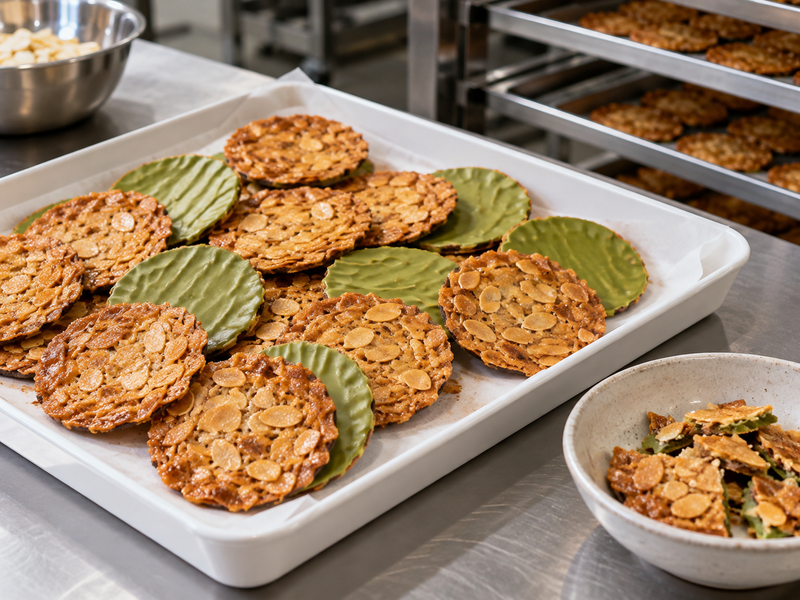
Count saleable pieces after coating and packing, with fragments recorded separately. A batch may have a good ingredient yield but a poor intact-piece yield. If fragments have another approved use, cost that stream separately rather than treating it as proof that the primary product suffered no loss.
Separate size variation from breakage
| Record | Measurement | Decision supported |
|---|---|---|
| Plain biscuit weight | Sample before coating | Portion consistency |
| Finished weight | Same sample after setting | Coating pickup |
| Intact piece count | At each transfer stage | Handling improvement |
| Out-of-size pieces | Count against pack standard | Deposit or spread control |
| Coating station waste | Issued less retained material | True ingredient cost |
Time the coating and packing work. Thin biscuits may be quick to bake but slow to handle. Compare two acceptable methods using normal staff, not only the developer who has practiced the technique repeatedly. A slightly simpler finish may offer a more reliable production rate without changing the eating quality.
Test the box through the intended route. Open it after movement and inspect the bottom for fragments and chocolate marks. Use that result when deciding whether individual cavities, separators or a different piece count are justified by the selling price.
10. What belongs in the final florentine specification?
Specify the construction clearly: thin nut biscuit with matcha chocolate underside, or another separately developed format. Include nut type and cut, plain base formula, deposit method, acceptable dimensions, chocolate code and tea dose. A product name alone leaves too much room for suppliers and operators to imagine different biscuits.
Send a complete coating brief to the tea supplier
Explain that the powder will be dispersed into chocolate and applied as a thin layer beside caramelized nuts. Include the tested dose and desired flavor. The Matcha Village culinary matcha guide provides context for evaluating tea in food, while this particular coating trial should determine approval.
Keep change checks focused on the ingredient affected. New nuts need flavor and geometry checks. New chocolate needs working and set checks. New matcha needs dispersion, taste and color checks at equal pickup. Update allergen and ingredient information to match the final purchased materials.
Before accepting a larger gift order, run the selected deposit and coating method with the normal team. Pack the complete quantity produced, record intact yield after handling and approve an opened-box sample before ordering custom packaging for the full run.
Frequently asked questions
Q1: Are all matcha florentines thin round biscuits?
No. Some recipes use a matcha biscuit base topped with almond caramel. Define the construction before comparing recipes, production methods or supplier samples.
Q2: Can matcha be mixed into the chocolate coating?
Yes, through a controlled trial using sifted powder and the chosen chocolate’s working method. Evaluate flow and flavor at the actual coating weight.
Q3: Why do the biscuits break during coating?
Check support, pressure, biscuit thickness and cooled condition. A gentler transfer or spreading method may help without making the entire biscuit thicker.
Q4: Does a sealed box guarantee crispness?
No. Test the actual inner packaging, formula and handling route. A decorative box alone may not provide the moisture protection or physical support the product needs.
Q5: What should count as saleable yield?
Use the number of finished pieces meeting the agreed size, shape and appearance after packing. Record fragments separately, even if the business can use them in another product.