
Matcha amaretti combine almond richness with green tea in a small cookie that can fit a cafe counter or a boxed bakery range. Getting a green center is straightforward; keeping the almond flavor, bite and portion size consistent takes more attention. Start with an established amaretti base, then compare matcha additions in small, documented batches.
1. What should matcha amaretti feel like when customers bite them? · 2. Which almond flour and matcha specifications help purchasing? · 3. How can a small trial separate tea strength from dough changes? · 4. Which mixing sequence is easiest to repeat? · 5. How should staff portion and coat the cookies? · 6. What should the oven trial measure besides baking time? · 7. How do cooling and packing change the customer’s cookie? · 8. What should a useful rejection guide contain? · 9. How can the bakery calculate a realistic unit cost? · 10. What should happen before the product reaches a second bakery?
1. What should matcha amaretti feel like when customers bite them?
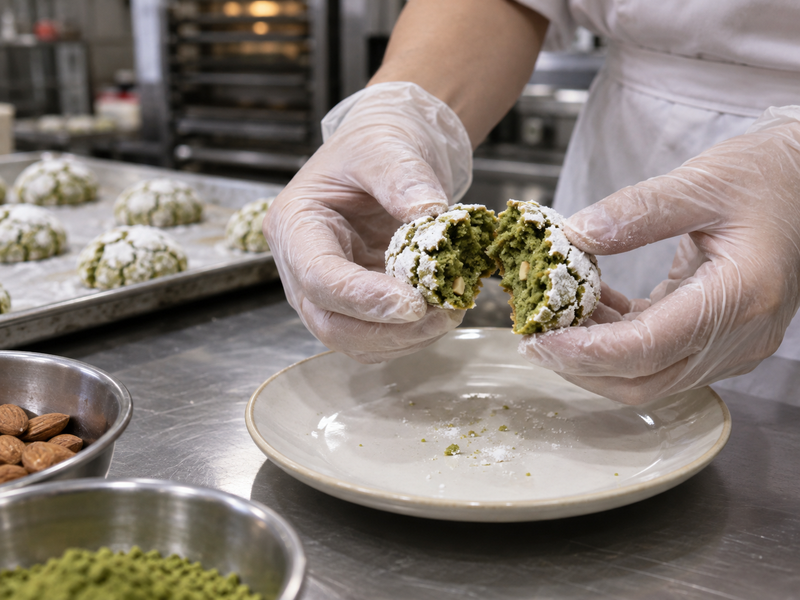
Define the center before choosing a formula
An amaretti brief should say whether the customer will encounter a tender, chewy middle or a drier cookie intended for dipping. A photograph cannot settle that question. Break a sample after it has cooled, press the center gently and taste it with the drink you expect customers to order. Write a description that another baker can use without seeing the development sample.
Love and Olive Oil’s matcha amaretti provide one published example of the soft almond-cookie approach. That reference establishes a recognizable product format. Its home-storage advice should not become the shelf-life statement for a commercially packaged version.
For a cafe trial, propose a modest dome with visible sugar cracks and a center that yields without feeling wet. Decide how much loose sugar the serving plate can tolerate. A heavily coated cookie can look attractive in a photograph yet leave a messy takeaway sleeve. Include that handling detail in the product brief, alongside flavor and appearance. Customers receive the whole serving experience, including crumbs and coating left behind.
2. Which almond flour and matcha specifications help purchasing?
Buy ingredients against the baked sample
Use the almond ingredient named in your base recipe. Fine almond flour, coarse ground almonds and almond paste have different compositions and handling properties. Substituting one because it is available can change the dough before matcha enters the bowl. Ask purchasing to retain the almond supplier and product code throughout the first comparison.
Unsweetened matcha keeps tea dosage separate from sugar. A latte blend may bring sugar or other ingredients into a dough whose sweetness already affects its character. Request ingredient declarations rather than judging a powder from the front of its bag. The site’s culinary matcha guide gives a starting point for application discussions.
| Purchase detail | What to record | Why the bakery needs it |
|---|---|---|
| Almond ingredient | Product code and grind description | Repeat the dough base |
| Matcha | Lot and ingredient declaration | Track the tea comparison |
| Egg white | Product and handling instructions | Keep preparation consistent |
| Coating sugar | Type and supplier | Compare crack appearance |
A more expensive matcha is not automatically the better cookie ingredient. Compare baked samples blind, with equal tea addition and the same almond flour. Purchase against the result you intend to sell, including the finish after cooling.
3. How can a small trial separate tea strength from dough changes?
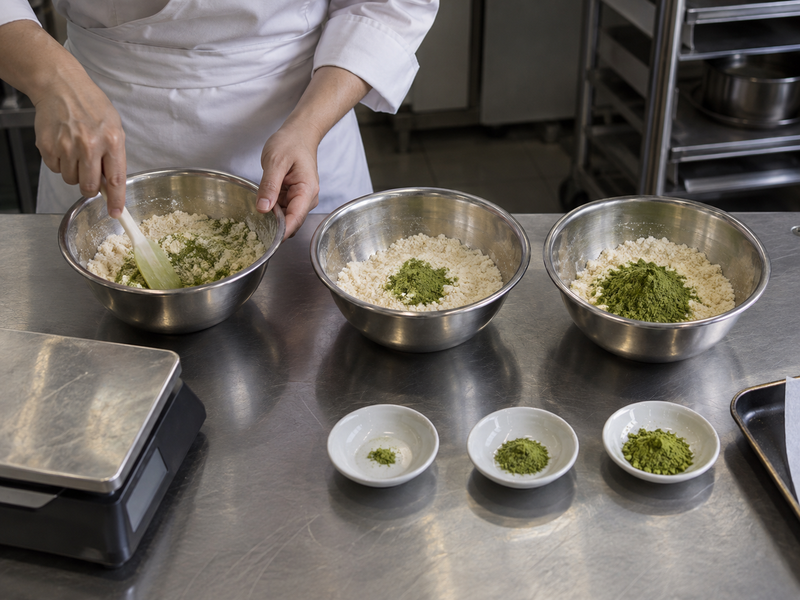
Change the matcha addition alone
Take your bakery’s established amaretti recipe and divide the dry mixture before adding egg white. As a proposed screening exercise, compare matcha additions of 1.5, 2 and 2.5 grams for each 100 grams of almond flour. These are unvalidated trial levels, not a finished production formula. Keep the sugar, egg white and any extract identical across the three batches.
Premix each tea sample thoroughly with its portion of almond flour. Mark the bowls before mixing so a greener sample does not become an unreliable substitute for identification. Record the actual powder weights, including anything left on the scale dish. With small additions, casually rounded spoonfuls can obscure the difference you are trying to test.
Bake a small untreated base alongside the tea versions. That control helps the team recognize what changed when matcha was added. If every version spreads, investigate the base ingredients or handling before blaming tea.
Taste the cookies only after the normal cooling stage. Give tasters a plain description sheet with separate spaces for almond aroma, tea presence, sweetness and aftertaste. Do not combine those observations into a single score until the team agrees which qualities the product needs.
4. Which mixing sequence is easiest to repeat?
Document the method you actually use
Amaretti methods differ. King Arthur Baking’s amaretti recipe mixes egg whites into the dry ingredients, whereas the matcha reference uses beaten whites. Those are distinct starting methods. Choose one complete base and establish its performance before comparing another method.
For a commercial test, photograph the dough at the end of mixing and describe how it releases from the scraper. Record the mixer attachment, batch size and whether the bowl needed scraping. A time entry alone is weak guidance: different mixers can reach noticeably different dough states during the same interval.
| Stage | Useful observation | Action if it varies |
|---|---|---|
| Dry blending | Even powder distribution | Break up tea pockets |
| Egg addition | Actual weighed quantity | Check the batch record |
| Bowl scraping | Dry mixture at the base | Incorporate before portioning |
| Finished dough | Cohesion and surface feel | Compare with the approved sample |
Do not add extra liquid simply because one bowl feels firmer than another. Check weighing and ingredient identity first. If an adjustment is necessary, record it as a new trial. Otherwise purchasing may approve one ingredient combination while production quietly uses another.
5. How should staff portion and coat the cookies?
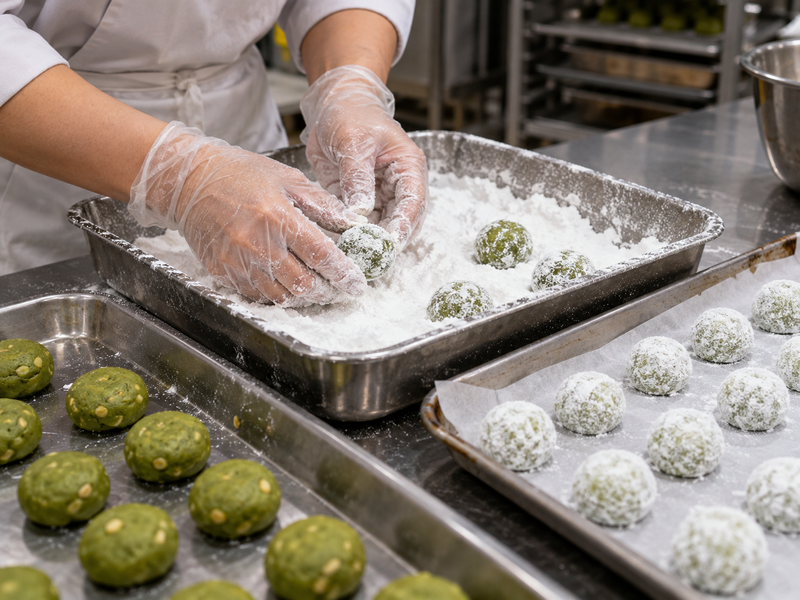
Make the scoop a starting tool
A scoop speeds work, but its nominal size does not guarantee equal dough weights. Weigh several consecutive portions during setup. If they differ, agree on a leveling method and demonstrate it. For a proposed portion comparison, try 16-gram and 20-gram dough pieces; these sizes need baking and serving tests before adoption.
Keep rolling pressure light and repeatable. Staff should not compact one tray heavily and barely shape another. Set aside visibly uneven pieces for examination rather than disguising them with sugar. The shape before baking belongs in your records.
Prepare only the coating sugar needed for the current run. Sugar that has contacted raw dough should stay within your controlled raw-production workflow. Replenish from a clean supply instead of returning used coating to the main ingredient container.
Compare a light coating with a heavier coating on otherwise identical pieces. Judge both the crack pattern and the loose powder in a serving sleeve. A bakery supplying mixed cookie boxes should also check whether sugar transfers onto darker neighboring products. That transfer can make a carefully arranged assortment appear scuffed during transport.
6. What should the oven trial measure besides baking time?
Compare the tray positions
Use the established base recipe’s oven setting as the first pilot condition. Place portions consistently and log the pan material, liner and rack position. Changing a dark pan for a pale one while changing tea dosage creates a comparison that is difficult to interpret.
Inspect the underside as well as the top. A green center can hide behind an overly dark base, and sugar coating can make surface color difficult to judge. Keep a reference photograph of the underside, taken in ordinary bakery lighting.
| Check | Sample location | Record |
|---|---|---|
| Bottom color | Corner and center pieces | Relative browning |
| Dome shape | Full tray | Spread and height |
| Center texture | Fully cooled cookie | Softness and uniformity |
| Coating | Same pieces after handling | Cracking and shedding |
Propose one extra tray check near the anticipated finish, rather than repeatedly opening the oven throughout baking. The exact schedule must come from your equipment trial.
When a tray fails, preserve the observations before adjusting settings. Were all cookies affected, or only the back row? Was the dough held longer before baking? Those details help distinguish an oven-distribution issue from a batch difference and prevent unnecessary recipe changes.
7. How do cooling and packing change the customer’s cookie?
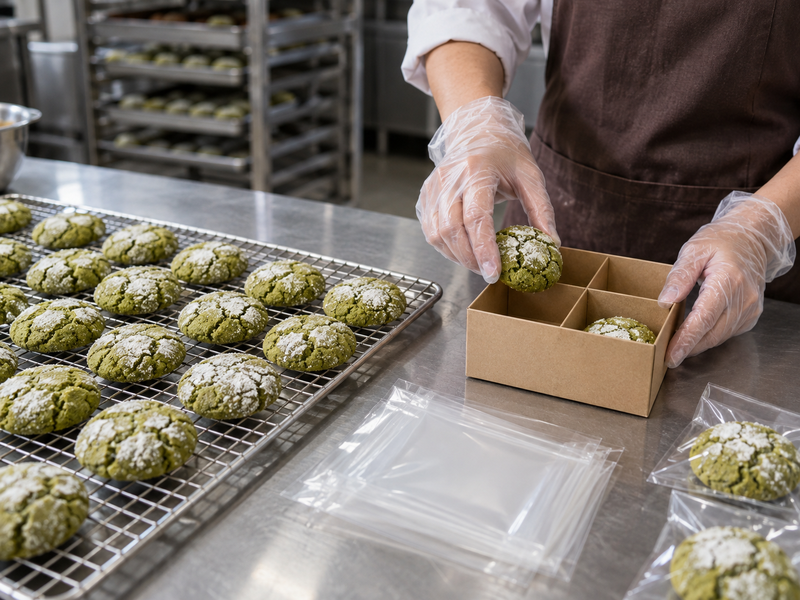
Inspect the cookie inside its real pack
Allow baked cookies to cool under your approved bakery procedure before closing packages. Use the actual sleeve, tray or pouch planned for sale. A display sample on an open rack does not reveal how the packed coating, aroma and center will behave.
Compare a single-cookie pack with the proposed multipack. Look for cracked domes where cookies touch, sugar rubbed off against the film and crumbs collected in corners. If a separator solves those defects, include its purchase price and the time needed to insert it in the costing.
A cooling rack can also become a queue. During a pilot run, count how many trays wait for packing and note where staff place them when space runs out. Expanding the mixing batch may be pointless if cooling and packing surfaces are already occupied.
Commercial shelf life needs evidence for the actual formulation, process, pack and distribution conditions. A pleasant taste at one later sampling point does not prove food safety. Plan sensory checks separately from any required laboratory or process validation, and keep unvalidated dates off the customer label.
8. What should a useful rejection guide contain?
Describe defects that staff can recognize
Avoid an acceptance sheet that says only good color and good texture. Show a cookie with tea streaks beside an evenly mixed piece. Show a flattened shape beside your intended dome. Those comparisons make receiving feedback and line training more specific.
Give staff a route for reporting an unfamiliar defect. If a new almond lot produces a dough that behaves differently, the batch record should capture it before production continues at full scale. Quietly adding more egg white creates a second uncontrolled change.
| Observation | Check before changing the recipe | Sample to retain |
|---|---|---|
| Dark tea streaks | Dry premixing and sifting | Broken cookie |
| Wide spreading | Portion, dough state and method | Raw and baked pair |
| Very firm center | Bake exposure and portion size | Cooled sample |
| Heavy sugar loss | Coating and pack contact | Actual packed unit |
The guide should also distinguish harmless appearance variation from a product outside your specification. Small cracks are part of the intended design; broken halves may not be saleable at the advertised price. Define those commercial decisions before staff have a full tray waiting for an answer.
9. How can the bakery calculate a realistic unit cost?
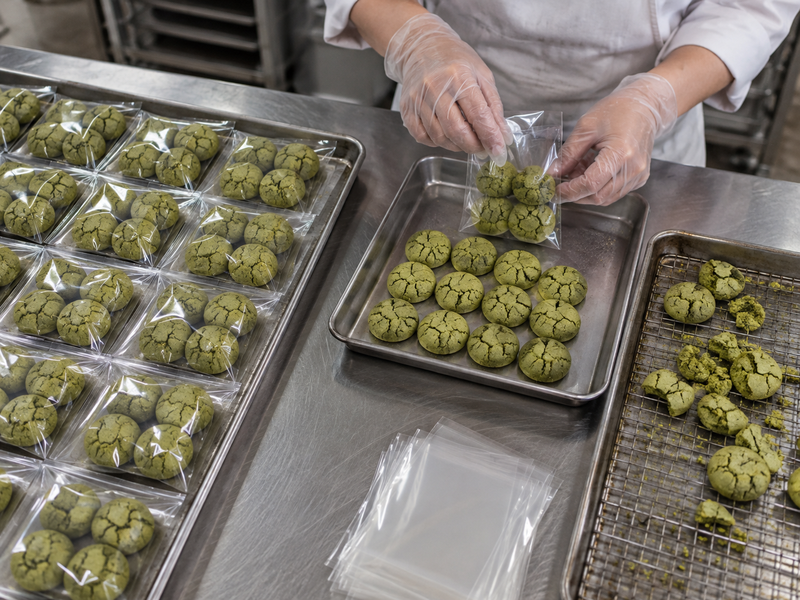
Count saleable pieces after packing
Divide total batch cost by the number of saleable packaged cookies, not by the number initially scooped. Include almond flour, tea, egg white, coating sugar, packaging and labor. Record broken or rejected pieces separately so the team can see where money disappears.
For a hypothetical calculation, a batch costing 24 currency units that yields 60 acceptable packed cookies has a direct cost of 0.40 per cookie. If only 48 survive the process, the same batch costs 0.50 per acceptable cookie. These illustrative figures are not market prices; they show why yield can outweigh a small difference in tea price.
Time the repetitive steps individually. Rolling, coating and inserting cookies into trays may require more labor than mixing. A smaller portion might improve ingredient cost yet increase the number of pieces staff must handle.
Ask the supplier for matcha samples with traceable lot identification. Send the chosen bake, recipe addition level and sensory notes with your inquiry. Matcha Village can then discuss a Chinese-origin ingredient against a defined almond-cookie application rather than an unspecified request for the greenest powder.
10. What should happen before the product reaches a second bakery?
Transfer the working instructions with the sample
A second kitchen needs the approved ingredient codes, portion weight, dough photograph, tray arrangement and packing example. Send a physical retained sample when practical. A recipe spreadsheet without these references leaves room for a different product to emerge under the same name.
Run the handover with the receiving team’s regular equipment and staff. Compare its cookies against the agreed specification after packing, not only when they leave the oven. Record substitutions or unavailable tools before approving a routine order.
| Handover item | Person who confirms it | Evidence |
|---|---|---|
| Ingredient identity | Purchasing lead | Current product codes |
| Portion and coating | Bakery supervisor | Setup sample |
| Baked center | Product developer | Cooled comparison |
| Packaging outcome | Packing team | Finished unit |
Keep allergen and product claims tied to the full recipe and facility controls. Almonds and egg whites remain relevant even when wheat flour is absent. Any gluten-free or dairy-free statement requires review of every ingredient and the production environment.
For the next pilot, ask the second bakery to produce one documented tray using its normal shift team, then return photographs of the underside, broken center and unopened pack.
FAQ
Q1: Can almond flour be replaced with wheat flour?
That changes the base substantially. Use a recipe designed for the chosen flour rather than treating the substitution as a purchasing adjustment.
Q2: Is ceremonial matcha necessary for amaretti?
Choose from baked comparisons. The supplier’s grade name alone cannot predict how tea will taste with almonds and sugar.
Q3: How much matcha should a bakery add?
The proposed screening levels above are starting experiments. Approve the amount only after checking dough handling, baked flavor and cost with your ingredients.
Q4: Can the cookies be called gluten-free automatically?
No. The complete ingredient supply and facility controls must support the claim, including coating sugar and any flavorings.
Q5: Can a home recipe’s storage period be used on a retail pack?
No. Establish the product’s commercial shelf life using its actual process, packaging and intended distribution conditions.