
Matcha melon pan asks a bakery to manage two doughs in one bun: a soft bread center and a cookie cap that spreads, cracks and browns differently. Adding tea to both at once makes a failed trial difficult to diagnose. Develop the bread and cap separately, then judge them as a complete bite. The plan below gives production teams a way to compare tea placement, cap weight, proofing and packaging before turning a successful tray into a regular menu item.
Contents: Design | Selection | Trial | Bread | Cap | Shaping | Proof | Service | Cost | Approval
1. Where should matcha melon pan carry its tea flavor?
Choose a clear product design
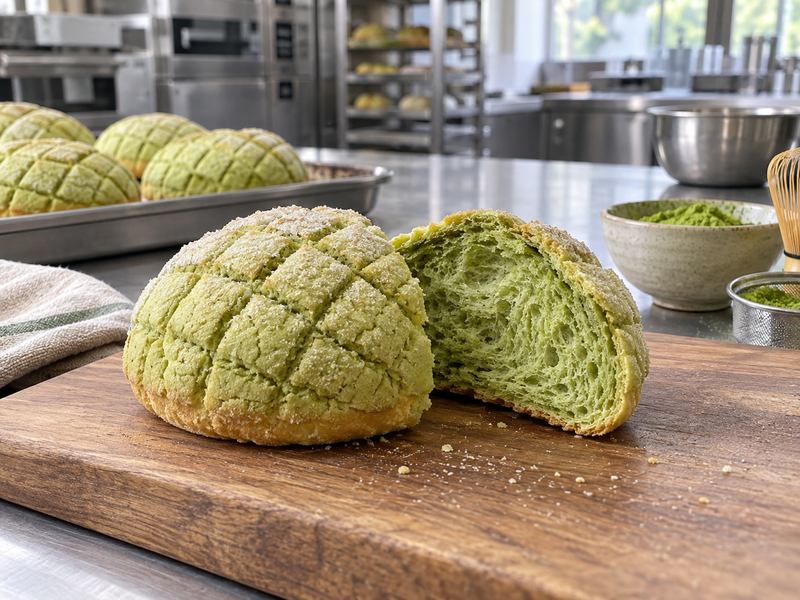
Putting matcha in the bread gives a green interior that appears when the bun is opened. Putting it in the cookie cap places tea closer to the first bite but also exposes it to surface browning. Using both can create a stronger impression, although sweetness and bitterness still need balancing. None of these designs should be selected from color alone.
The Fix Feast Flair matcha melon pan recipe shows tea in both the bun and topping. For a bakery trial, separate those placements before approving the combined version. Keep the bun size and total cap weight constant when comparing them.
| Tea placement | Visible result | Development question |
|---|---|---|
| Bread only | Green crumb | Does flavor survive the sweet cap? |
| Cap only | Green patterned surface | How much browning is acceptable? |
| Both | Green surface and center | Does the whole bite become bitter? |
The name does not require adding melon fruit to this development. If a fruit flavor is intended, specify it as another formula variable and test it after the bread-and-cap structure works.
2. How should you choose powder for the two doughs?
Compare the baked components separately
A supplier may offer several powders suited to bakery use, but the bread and cap can favor different sensory profiles. Taste a small piece of crumb, a piece of cap and a complete bite. The cap contains concentrated sweetness and fat, while the bread has a different texture and dilution. Record where tasters identify tea most clearly.
Request plain matcha with a traceable lot and ingredient specification. Keep the same sample through the first shaping and baking tests. If purchasing wants one powder for both components, judge that convenience against the finished flavor rather than assuming it will work automatically.
The Matcha Village bakery recipe collection gives context for discussing different applications with the supplier. For this enquiry, describe enriched bread and cookie topping explicitly. Include intended pack size and the kitchen’s expected rate of use. A smaller working pack may suit a cafe making occasional trays, while a central bakery needs an opening and resealing procedure matched to its daily production volume.
3. How can you build a controlled tea-placement trial?
Keep the base doughs unchanged initially
Use established plain bread and cookie-cap recipes as controls. A proposed first screen could add 2 grams of matcha per 100 grams of flour in whichever component carries tea. Make four variants: plain control, tea bread only, tea cap only and tea in both. This is an untested screening plan, not a validated melon pan formula. The resulting tea percentage differs between the finished components because their other ingredients differ.
| Variant | Bread tea addition | Cap tea addition | Main comparison |
|---|---|---|---|
| Control | None | None | Base process quality |
| A | 2 g per 100 g flour | None | Green crumb and flavor |
| B | None | 2 g per 100 g flour | Cap flavor after browning |
| C | 2 g per 100 g flour | 2 g per 100 g flour | Combined tea intensity |
Keep butter, sugar, liquid and flour quantities unchanged during this screen. Record whether either dough becomes harder to handle. If the preferred placement needs more intensity, adjust dose in a separate trial. Changing hydration, cap weight and tea simultaneously makes the resulting improvement difficult to reproduce.
4. What should you record during bread dough mixing?
Track dough condition beyond the timer
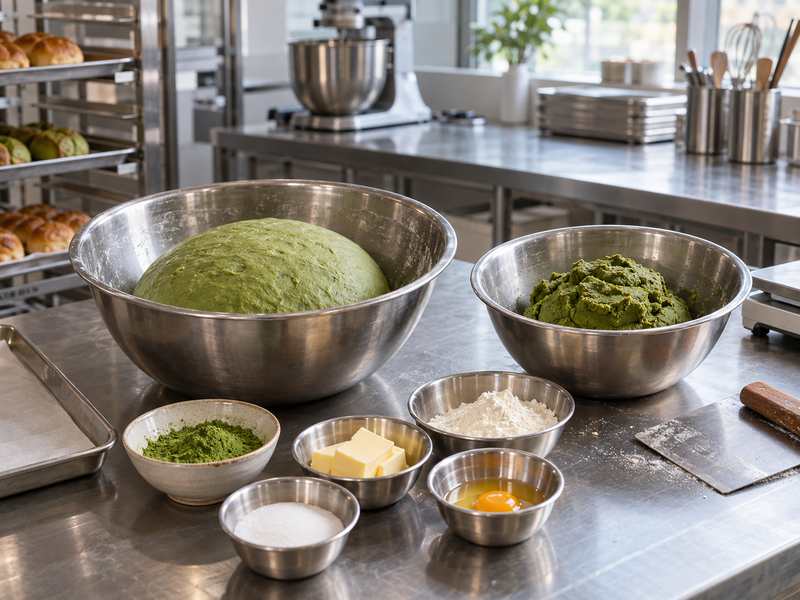
Weigh ingredients and follow the bakery’s established enriched-dough mixing sequence. Record the order of additions, mixer load and finished dough temperature. Butter condition and flour lot can change handling even when the formula remains constant. Keep those details beside the tea sample code so a later comparison has enough context.
Inspect the dough for uniform color and dry green pockets. Blend tea with flour before mixing when that method fits the base recipe. Scrape the bowl at a defined stage. Avoid adding unrecorded flour to make a sticky dough easier to handle; the extra flour changes the formula and can conceal a hydration issue that needs a controlled test.
Evaluate strength and extensibility using the bakery’s usual dough checks. Matcha does not replace the job of bread flour. If the dough tears during rounding, investigate mixing, rest and formula balance before increasing tea further. Weigh the divided pieces and keep their resting conditions consistent. A dry skin formed on one set of pieces can affect shaping and cap adhesion independently of the powder being tested.
5. How do you prepare a repeatable cookie cap?
Control thickness and working condition
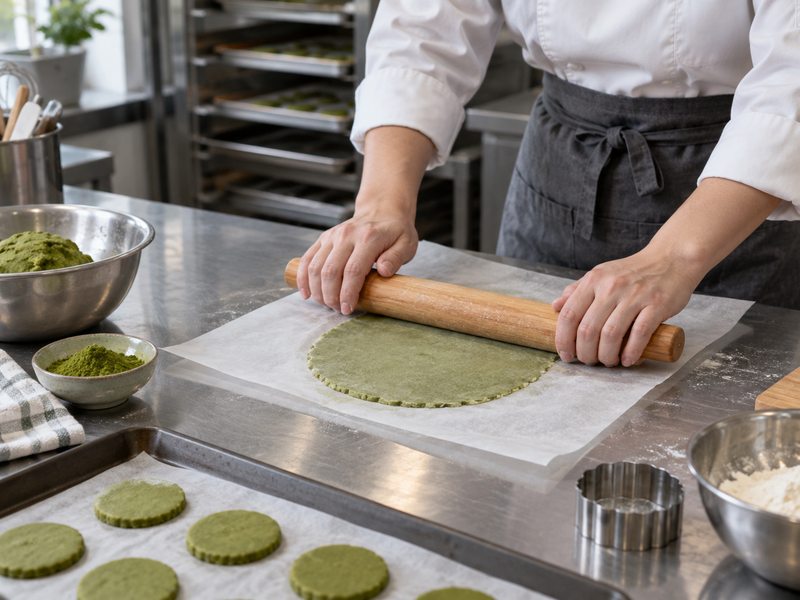
Prepare the cap dough using a consistent butter condition and mixing method. Overly soft dough can stick and stretch during placement; dough that is too firm can crack before the bun expands. Establish the workable condition through a small handling trial and record it alongside the room conditions. A fixed waiting time alone may not transfer between seasons.
| Cap variable | Record | Inspect on the baked bun |
|---|---|---|
| Portion mass | Individual weights | Coverage and sweetness |
| Disc thickness | Consistent rolling guide | Crispness and cracking |
| Working condition | Dough behavior during lifting | Tears and stretching |
| Surface sugar | Actual application method | Appearance and loose crumbs |
Roll or press the cap to a defined diameter using the same method for all variants. Keep scraps separate until the kitchen has assessed whether reworking them changes texture. Repeatedly dusting the bench can add uncontrolled flour to later pieces.
Taste baked cap fragments from the trial, but approve them on the bread. A cap that seems crisp and flavorful alone may become too thick in the assembled bite. The developer should record the bread-to-cap weight relationship, not only the individual formulas.
6. How should the cap and bun be shaped together?
Leave room for expansion
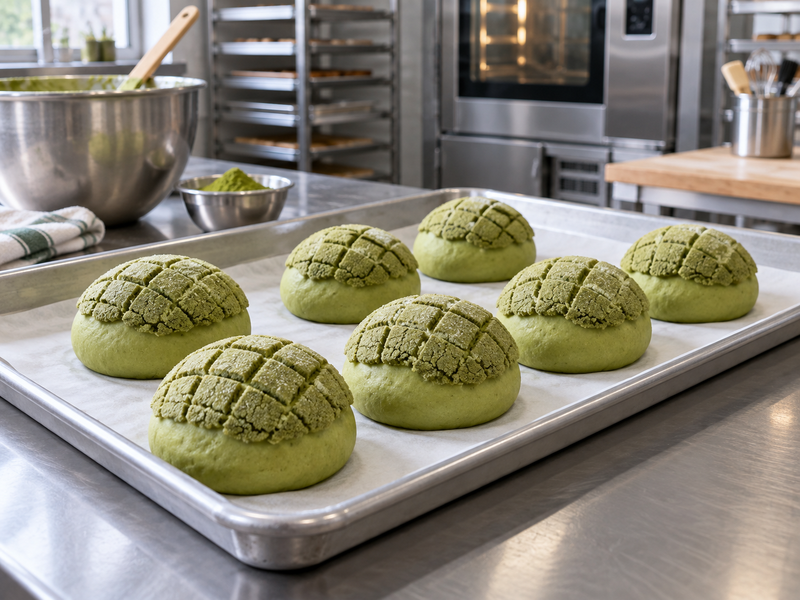
Round the bread pieces consistently and place each cap without pulling one side thinner than the other. Decide how far down the cap should cover the bun. Coverage that extends too far beneath the dough can behave differently from a cap that ends higher on the sides. Record the chosen shape with a side photograph before proofing.
Score the surface using a consistent tool and pressure. The pattern should mark the cookie dough without cutting deeply into the bread. Compare the same grid spacing across trial variants. A shallow mark may disappear during expansion; an aggressive cut can split the cap before the bun finishes proofing.
Track the person shaping each tray during development. If one tray performs better, compare technique before attributing the difference to a tea sample. Cap placement often introduces variation that the ingredient record cannot explain. Ask a second operator to reproduce the preferred method from the written instructions. Their questions reveal missing details, such as how much stretching is acceptable or where the cap edge should sit after rounding.
Create a short shaping sequence that keeps bread and cap portions paired. For example, place one weighed bread piece and one weighed cap portion in each position on a preparation tray, then assemble the tray in order. This proposed working method helps prevent an operator from stretching a small cap to cover an oversized bun. It also makes missing portions visible before proofing begins. Test it with the normal bench space available; a method that requires more trays than the bakery can hold will create another scheduling problem.
7. What should you observe during proofing and baking?
Follow expansion in both doughs
Use the base bread process as the starting point and record proofing conditions. Observe how the bread expands beneath the cap. A tightly applied cap may split in a different pattern from a loose one. Keep a photograph of the tray before proofing and another just before baking to show where those changes occur.
| Observation | Compare with | Next area to investigate |
|---|---|---|
| Cap slides sideways | Placement photographs | Centering and working softness |
| Wide exposed gaps | Cap thickness and scoring | Stretch and score depth |
| Dense bread center | Plain control | Mixing, proof and bake |
| Dark cap, pale crumb | Oven and portion record | Heat profile and deposit size |
Bake under the bakery’s validated process and check the bread center, not only the cap color. An attractive green surface cannot establish doneness. Compare actual tray positions before adjusting the oven profile. If reducing surface browning becomes a priority, test a controlled change while preserving the required cooking outcome.
Judge the completed bun after the approved cooling stage. Hot bread and warm fat can give a misleading impression of softness that does not represent the customer experience.
8. How do you protect the texture after baking?
Test the sales route before choosing the bag
The soft center and crisp cap change after enclosure. Test the actual display, takeaway and distribution route using the proposed packaging. Compare the cap’s resistance to a bite, loose crumbs inside the bag and the softness of the bread. A package that protects against crushing may still trap moisture in a way that changes the top.
Use an approved cooling and packing procedure. Do not close warm buns in bags merely because the crust seems dry. Evaluate condensation and surface tackiness during development, while keeping safety assessment separate from sensory quality. The final storage period requires validation for the complete recipe, process and packaging.
A cafe selling the bun shortly after baking may choose a different production schedule from a brand shipping individual retail packs. Make that distinction before quoting a distributor. If reheating is part of service, test it as a complete step with the actual equipment and portion. Record whether the cap becomes brittle, the center dries or tea aroma changes. Staff need one approved reheating procedure rather than several improvised settings.
9. How do you cost the two-component bun?
Measure both doughs and the assembly work
Calculate bread and cap usage separately. Record cap scraps, flour used during shaping and rejects caused by torn topping. Include the labor spent rolling, wrapping and scoring. A product that uses modest ingredient quantities can still occupy a pastry bench for a substantial part of the shift.
| Cost area | Record | Useful commercial comparison |
|---|---|---|
| Bread dough | Divided mass and yield | Portion size |
| Cookie cap | Accepted discs and scraps | Rolling method |
| Matcha | Dose in each component | Placement strategy |
| Assembly | Minutes per accepted tray | Staffing and selling price |
For an illustrative comparison, adding tea only to the cap may reduce total tea usage while preserving a clear first-bite flavor. It may also expose more of that flavor to browning. Let the sensory trial decide whether this is a useful direction before treating it as a cost-saving recommendation.
Count accepted buns after cooling and packing. Exclude pieces with detached caps or severe deformation if those defects fall outside the agreed standard. Costing theoretical portions makes an unreliable process look more profitable than it is.
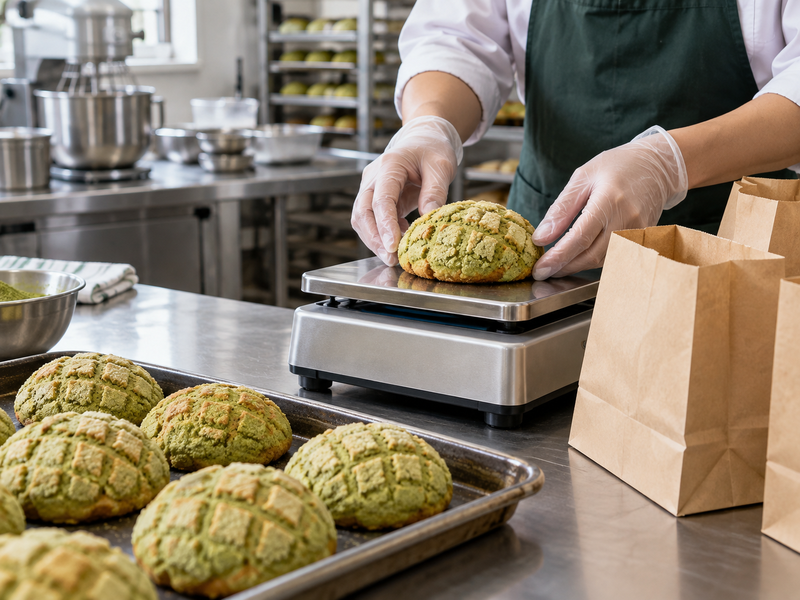
Separate cap scraps from bread scraps in the yield record. Their ingredient costs and approved reuse possibilities differ. Count discs made from fresh cap dough and any discs made from an authorized rework trial, then compare the baked surfaces. Keep that comparison identified rather than blending all scraps into the next batch without review. A developer may otherwise approve a soft cap dough while production gradually changes it through repeated dusting and reworking. Set a clear handling rule only after the bakery has assessed the resulting texture, appearance and food safety requirements.
10. What does the production handoff need?
Specify the assembly as carefully as the formulas
Document the bread and cap recipes, tea codes, portion weights, cap diameter and scoring pattern. Add the accepted proofed shape and baked appearance. Include the working condition for the cookie dough and the treatment of scraps. Those details help the next shift reproduce the product without watching the original developer work.
Review declarations for both components, including surface sugar, release ingredients and any glaze. The FDA allergen resource includes wheat, egg and milk among US major allergens. Check the complete formulation against the intended market requirements.
Ask Matcha Village for the commercial specification associated with the selected tea sample and the proposed supply pack. Send the intended use in bread, cap or both so the quotation reflects the application. Before ordering for several outlets, run one normal-size dough batch with a second operator shaping the caps. Record accepted buns, assembly time and pack performance, then approve the purchasing quantity from that result.
Frequently asked questions
Q1: Does melon pan need melon flavor?
This trial focuses on the bread-and-cookie-cap format. Add a melon flavor only if it belongs in the product brief and test it separately.
Q2: Can one matcha powder serve both doughs?
Yes, if it performs well in both. Taste each baked component and the assembled bun before choosing.
Q3: Why does the cap split unevenly?
Thickness, placement, scoring and dough expansion can contribute. Compare pre-proof photographs before changing ingredients.
Q4: Can the bun be sold in a sealed retail bag?
Test texture, pack integrity and shelf life in the proposed bag. Cafe display performance does not establish retail suitability.
Q5: Which measurement helps control sweetness?
Record the cap-to-bread weight relationship. A heavier cap changes the complete bite even when both component recipes stay unchanged.