
Matcha dorayaki combines two small pancake shells with a sweet filling, so every portion depends on matching three components. Unequal shells look untidy, excessive filling squeezes out and a dark griddle surface can hide the tea color. A cafe or central bakery should develop the assembled bite before fixing its ingredient purchase. This guide uses small comparison batches to connect batter behavior, griddle settings, filling weight and packing performance without presenting an untested formula as a production recipe.
Contents: Format | Powder | Batter | Rest | Griddle | Filling | Assembly | Handling | Cost | Approval
1. What should your matcha dorayaki format be?
Choose the complete bite
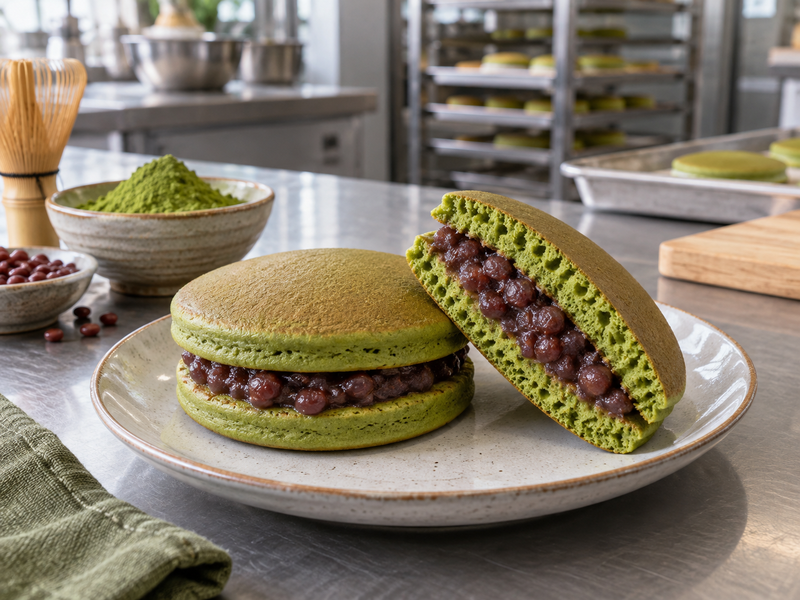
Decide whether tea belongs in the shells, the filling or both. A green shell with red bean paste gives the customer a clear visual cue and a familiar filling contrast. A plain shell with matcha cream creates a different product, with different handling requirements. Combining tea in both components deserves its own sensory trial because the total dose can become excessive.
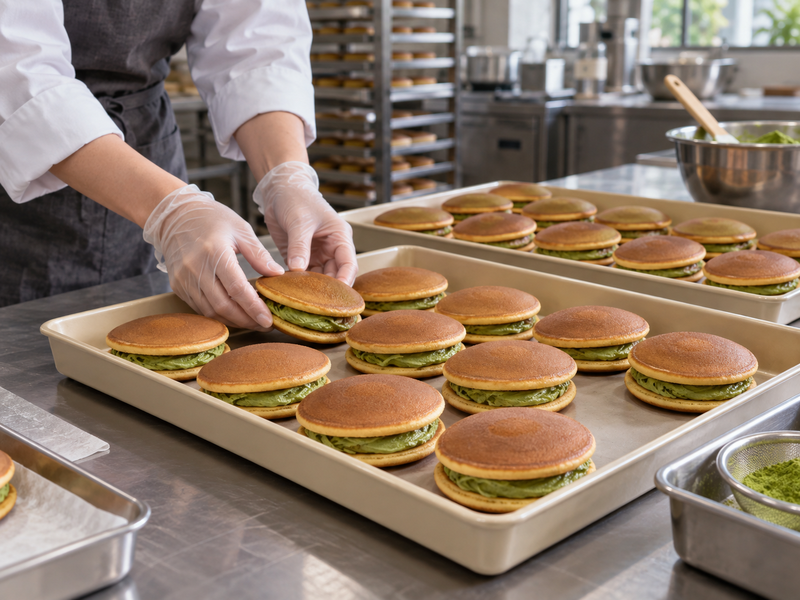
Aiya’s matcha dorayaki recipe shows a matcha pancake-and-red-bean format. It is a useful reference for product identity. For commercial development, define the diameter and filled height before scaling the recipe; the pack must fit the assembled cake without compressing it.
| Format choice | What the customer notices | What the kitchen tests |
|---|---|---|
| Matcha shell, red bean | Tea and bean contrast | Shell color and filling balance |
| Plain shell, tea cream | Soft creamy center | Cold-chain and filling stability |
| Tea shell and filling | Stronger tea presence | Total bitterness and portion size |
Select one format for the initial trial. Too many filling variants make it difficult to tell whether a shell adjustment improved the product.
2. Which tea characteristics suit the shell?
Evaluate through browning and sweetness
Taste candidate powders in the cooked shell, then again with the intended filling. Tea that feels slightly strong alone may become balanced beside sweet bean paste. Conversely, a delicate sample may become difficult to identify after assembly. The shell-only tasting helps diagnose the recipe; the assembled tasting determines whether it works as a menu item.
Ask for unsweetened matcha and a clear ingredient declaration. A cafe latte blend adds other ingredients that change batter solids and sweetness. Request a sample linked to a commercial product code so the purchase can reproduce the development trial. Keep the same tea lot throughout griddle comparisons.
The Matcha Village ingredient guide can support the initial enquiry. Tell the supplier whether the tea will enter a wet batter and whether the shell’s green center or tea aroma carries more weight in the acceptance decision. Photograph the inside and outside separately under consistent lighting. A browned cooking surface can make two otherwise similar powders look different if only the exterior is compared.
3. How can you plan a small batter comparison?
Test the powder against an established shell
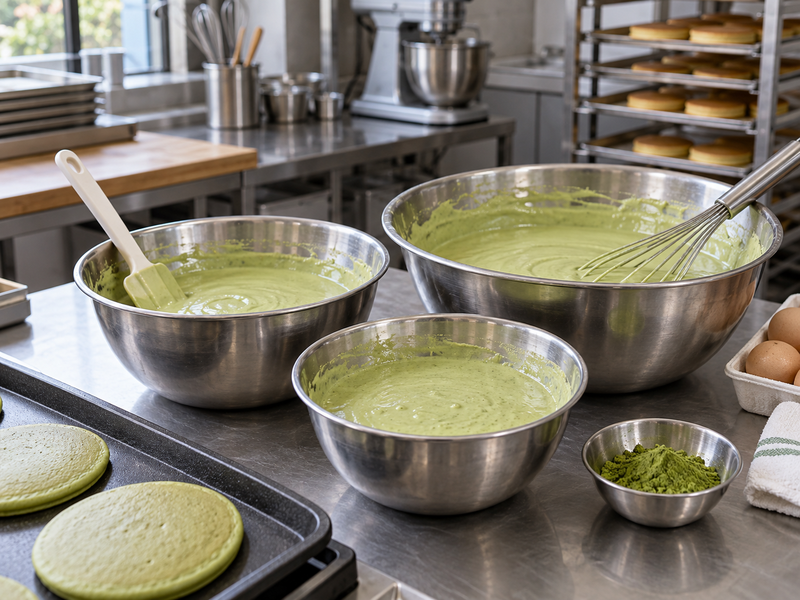
Use a dorayaki base that produces reliable plain shells in your kitchen. As a proposed screen, prepare three independent batches with 100 grams of flour in each and trial 2, 3 and 4 grams of added matcha. Keep all other ingredients unchanged during that comparison. These quantities are suggested development levels, not a validated recipe or a guarantee of the intended texture.
Weigh eggs and liquid rather than relying on egg count or jug markings. Combine matcha with the recipe’s dry ingredients before adding them to the wet mixture. Record the finished batter weight and the weight deposited for each shell. If a batch becomes thicker, measure its spread before deciding to add more water.
| Trial | Base flour | Added matcha | Inspect after cooking |
|---|---|---|---|
| A | 100 g | 2 g | Tea recognition |
| B | 100 g | 3 g | Flavor with bean paste |
| C | 100 g | 4 g | Dryness and restricted spread |
Retain a plain control. If all four batches spread poorly on the same morning, check the base ingredients and griddle before attributing the problem to tea.
4. How should batter rest and depositing be controlled?
Keep the first shell comparable to the last
Follow the base recipe’s controlled resting method and record the start time. Batter can change while the operator cooks a tray of shells, so compare early and late deposits. Use covered containers and the kitchen’s established handling controls for perishable batter. A recipe’s resting suggestion does not authorize an unlimited working period beside a warm griddle.
Choose a ladle, dispenser or piping setup that gives a repeatable deposit. Check the portion on a scale during development. Keep the outlet at a consistent height and deposit in one place rather than drawing a circle. Let the batter spread according to its own consistency. This makes diameter differences easier to trace to the batter or cooking surface.
If the batter needs remixing, define a gentle method and observe the result. Repeated vigorous whisking changes aeration and can make later shells unlike earlier ones. Avoid adding an unrecorded splash of milk whenever a bowl seems thick. Weigh any trial adjustment, identify that sample separately and repeat it in a fresh batch before including the change in the production recipe.
5. How do you make evenly colored shells?
Map the cooking surface
Check griddle behavior across the working area using the method appropriate for the equipment. A thermostat setting does not prove every deposit meets the same surface conditions. Cook an initial set in marked positions and compare the results. If one area browns faster, change the loading pattern or investigate the equipment before changing the matcha dose.
| Variable | Keep consistent | Inspect |
|---|---|---|
| Surface preparation | Oil application and wiping | Patchy browning |
| Deposit | Mass and position | Diameter and thickness |
| Cooking sequence | Loading and turning order | Uneven color between shells |
| Recovery | Pause between rounds | Gradual color drift |
Use the bakery’s established cooking validation and inspect the center as well as the surface. Turn shells with a tool that supports them without squeezing out gas or leaving deep marks. A darker exterior may be acceptable if the shell remains tender and tastes balanced; define that with an approved sample.
Do not apply extra oil to compensate for an unidentified sticking problem during a comparison batch. Record the sticking location and inspect surface condition, batter and cooking stage. Then test the correction deliberately.
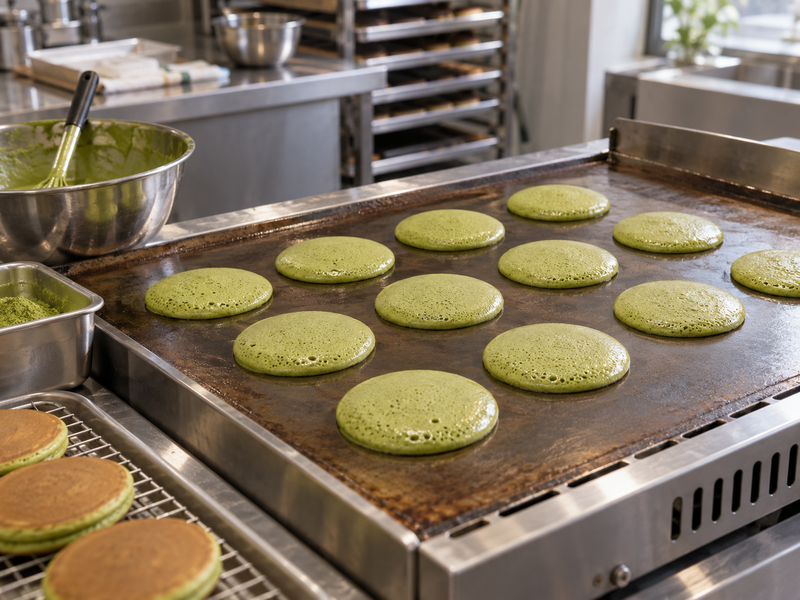
Track the recovery pattern with a short numbered cooking run. Deposit shells in the same positions over several rounds and retain one from each round for comparison. Record any interruption for cleaning, refilling the dispenser or answering another order. A lighter shell after an interruption can have a different cause from a lighter shell in a persistent cool corner. That distinction changes the correction. The kitchen may need a more consistent loading sequence or a defined restart procedure instead of a new batter formula. Keep the trial map with the griddle operating notes.
6. How should you choose and portion the filling?
Specify more than the flavor name
For red bean paste, compare smooth and chunky versions at the same portion mass. Record sweetness, spreadability and how the paste behaves when the customer bites through the shell. A firm paste may make assembly easy but push the shells apart during eating. A loose paste may reach the edge before the pack closes.
Request the filling’s exact ingredient declaration and handling instructions. Purchased paste can differ in sugar, fat, texture and preservative system. Approve a specific product code. If the kitchen makes its own filling, establish its process and storage controls separately before combining it with the shells.
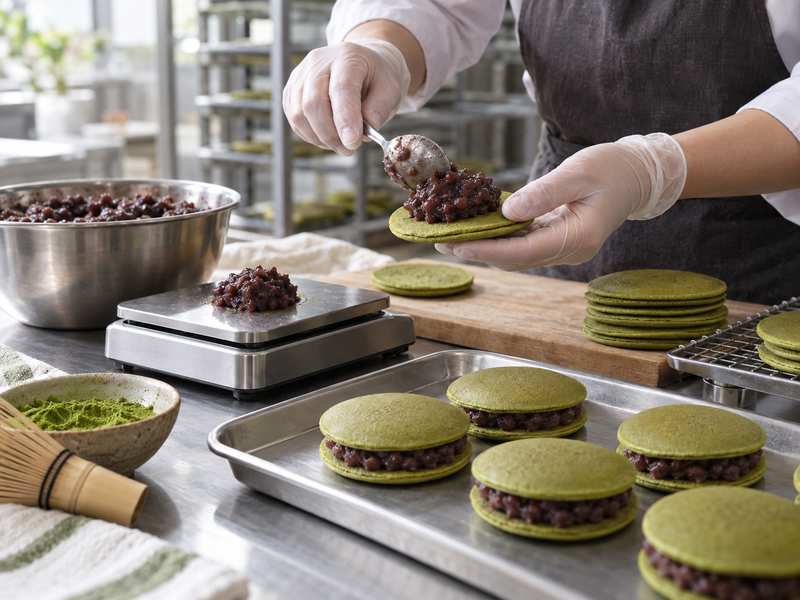
Weigh a proposed filling series, such as 15, 20 and 25 grams between one matched shell size. These are portion trials, not universal serving recommendations. Taste the whole bite and observe squeezing, height and pack fit. Choose the amount that gives the intended balance, then calculate its cost. A slightly smaller filling deposit may expose the tea more clearly, but the commercial team should judge whether customers still see good value in the assembled product.
7. What does a useful assembly trial measure?
Pair shells with a visible standard
Sort shells by diameter and thickness during development. Pairing a thin shell with a thick one can hide inconsistent depositing while creating an uneven bite. Record how many shells need special matching. If the operator spends excessive time finding partners, solve the cooking variation before expanding the assembly team.
| Assembly check | What to record | Reason |
|---|---|---|
| Shell pairing | Diameter difference | Pack appearance |
| Filling deposit | Actual mass | Taste and cost |
| Edge position | Distance from filling to rim | Squeeze-out control |
| Finished height | Several samples per batch | Tray clearance |
Place the filling consistently and spread without tearing the inner surface. Bring the shells together with enough contact to hold the portion while retaining the desired shape. Excess pressure makes the rim look tidy but may compress the center.
Test a bite by hand as the customer would eat it. Observe whether the shell bends, cracks or releases the filling. A clean knife cross section can look excellent even when the portion is awkward to eat. Include that handling result in the approval record.
8. How do you plan cooling and packing?
Follow both components into the package
Establish an approved cooling and holding procedure for the cooked shells and a separate one for the filling. Assemble them only under the conditions in the food safety plan. A cream-filled product needs a different assessment from one made with a commercially prepared bean paste. Do not assign the same storage period to every filling variant because the shells are identical.
Test the intended pack with actual portions. Check whether the top film compresses the cake, whether the bottom becomes tacky and whether the wrapper opens without tearing the shell. Include the normal transport orientation. A product carried vertically in a bag may move differently from one displayed flat in a tray.
Keep quality and safety decisions separate. Sensory checks can identify moisture migration, changes in softness and declining tea aroma, but they do not establish a safe shelf life. Use the recipe, process and package together for validation. Until that work is complete, keep the item within the kitchen’s approved service arrangement and avoid promising a retail storage period to a distributor.
9. How do you cost matched shells and filling?
Count pairs after inspection
Base the yield on accepted pairs, not the number of deposits made. One defective shell can leave a usable partner unmatched. Record rejects for uneven cooking, torn edges and size mismatch separately so the kitchen can identify where the cost arises. Include filling left in the dispenser and product lost during setup.
| Cost component | Measurement | Typical hidden loss |
|---|---|---|
| Shell batter | Deposited and remaining mass | Jug and dispenser residue |
| Cooking labor | Accepted shells per round | Surface recovery time |
| Filling | Actual mass per portion | Overportioning |
| Assembly | Accepted pairs per hour | Searching for matched shells |
A hypothetical batch of 100 shells may appear to yield 50 portions. If eight shells fail inspection and four more cannot find suitable partners, the saleable yield is 44 portions. This example illustrates the calculation; it is not a target reject rate.
Compare powders at the chosen dose and accepted portion yield. Matcha that produces a preferred taste at a lower dose may justify a higher price per kilogram. Include the effect on batter handling before presenting a recommendation to purchasing.
A portion-weight check can reveal hidden overfilling. For illustration, two accepted shells weighing 18 grams each and a 20-gram filling create a 56-gram assembled piece. A finished piece weighing 64 grams needs investigation even if it looks similar. Check shell weights and the filling deposit separately. These figures are arithmetic examples, not recommended portion specifications. Use the weights selected by the product trial to build the same check for production. It allows the supervisor to identify whether variation comes from cooking, assembly or both without dismantling every portion.
10. What should the supplier and kitchen approve?
Turn the preferred sample into a working record
Write the tea product code, batter formula, rest conditions, deposit mass and griddle sequence into one record. Add the filling code, portion weight and assembled dimensions. Include an exterior photograph and a cut sample photograph. Staff should be able to identify both a cooking defect and an assembly defect without guessing which department caused it.
Review all ingredients used in shells and filling. The FDA’s allergen information includes egg, milk and wheat among US major allergens. Prepare the final declaration from the complete formula and destination requirements.
Send Matcha Village the application, selected trial dose, planned batch size and target taste description. Request the corresponding sample code, commercial pack information and available lot documentation. Run one normal production shift with the chosen powder and the approved filling. Have the kitchen lead record accepted pairs, portion weights and packing rejects before the buyer releases the commercial ingredient order.
Frequently asked questions
Q1: Can matcha go only in the filling?
Yes. That creates a different flavor and handling design, so test the assembled product and specify the filling separately.
Q2: Why do shell diameters vary?
Deposit mass, batter condition and griddle position can all contribute. Measure them before changing the recipe.
Q3: Can red bean paste be replaced with cream?
A cream version needs its own formula, cold-chain assessment and shelf-life work. Treat it as a separate product.
Q4: Does a darker shell mean the matcha is poor?
Not necessarily. Cooking and surface preparation affect browning. Compare the interior and a plain control.
Q5: What should a cafe approve before scaling?
Approve the complete portion, including shell pairing, filling dose, pack fit and the actual service procedure.