
Matcha marzipan can become a chocolate center, a sliced petit four or a shaped decoration. Each use asks something different of the almond mixture. A center must taste balanced beneath its coating; a decoration must hold detail; a sliced piece needs a surface that survives handling without excessive sticking.
For a confectionery buyer, the first task is to define that use before comparing tea prices. This article works through base selection, measured tea additions and finishing checks. The suggested additions are unvalidated development trials, and the final product requires its own process, packaging and storage assessment.
Contents: 1. What will your matcha marzipan become | 2. How do almond paste and marzipan differ in purchasing | 3. How much tea should a first comparison contain | 4. How can you achieve even color without excessive working | 5. Which shaping method suits your production volume | 6. What must you test before choosing a chocolate coating | 7. How should you describe defects during a tasting | 8. What belongs in the packaging and label review | 9. How can buyers compare quotations fairly | 10. What should the final production handover include
1. What will your matcha marzipan become?
Choose one finished format
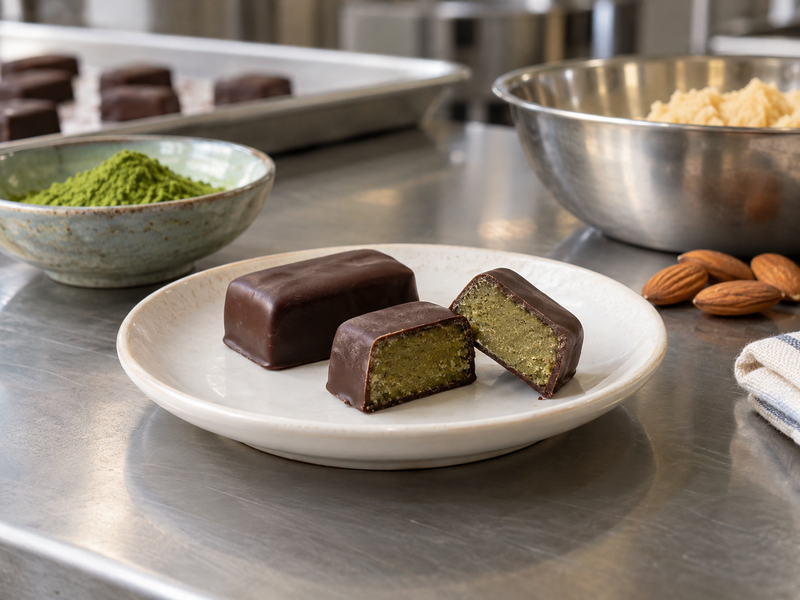
Start with the shape and eating occasion. A small chocolate coated center allows a soft almond texture that may be inconvenient for detailed molding. A thin layer inside a pastry has different cutting requirements from a standalone bar. Write down the intended finished weight, coating and service temperature before choosing a base.
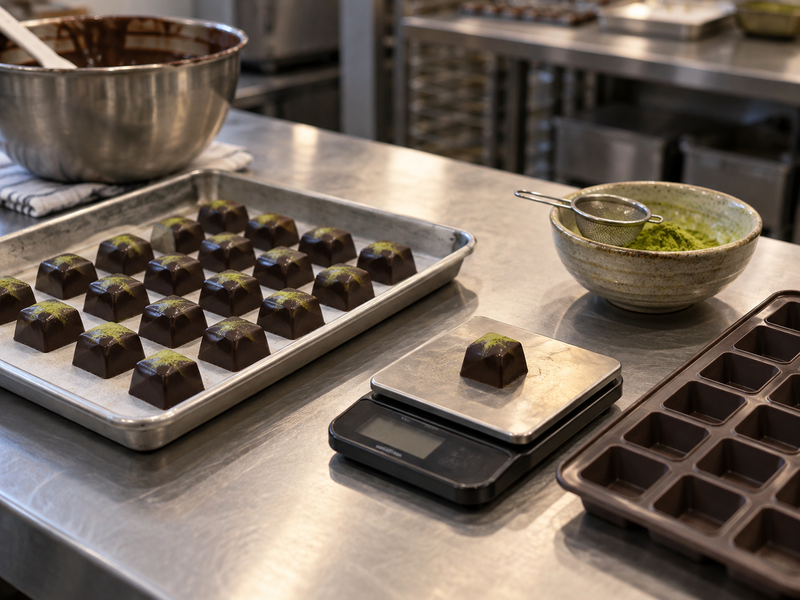
TokyoPony’s matcha marzipan chocolates show one route using ground almonds, maple syrup and tea before chocolate coating. A prepared commercial marzipan is another route. These bases are not equivalent, and a quantity of tea that works in one should not be assumed to work in the other.
| Format | Main acceptance question | Useful first sample |
|---|---|---|
| Coated center | Does almond and tea survive chocolate? | Cut finished bonbon |
| Plain slice | Is the surface pleasant to eat? | Thin rectangular portion |
| Shaped decoration | Does detail hold during handling? | Simple molded leaf |
| Pastry insert | Can it be cut with the pastry? | Complete plated portion |
Keep the first shape simple. Elaborate sculpting can hide a poor texture behind labor and decoration. Approve the flavor and handling of a plain piece before investing in custom molds or an assortment box.
2. How do almond paste and marzipan differ in purchasing?
Read the supplier’s actual specification
Product names alone do not tell you the almond proportion or sugar system. Ask for the full ingredient list and the intended use. Odense’s FAQ distinguishes its higher almond baking paste from its sweeter marzipan for candy making. That manufacturer specific distinction is a good reason to check the exact product rather than order by a familiar name.
Taste and handle a sample at the conditions recommended by the supplier. Note almond aroma, sweetness, smoothness and pliability. A base that is already strongly flavored may leave little room for the tea, while a coarse paste can remain noticeable even when the matcha is finely dispersed.
Record whether the base is supplied ready to use or requires further processing. A ground almond mixture made in house needs a defined preparation method and appropriate ingredient controls. Calling it marzipan on a development sheet does not establish that it behaves like a purchased confectionery paste.
If procurement proposes a substitute, compare complete coated pieces as well as the bare base. A small price advantage may come with a different sugar level or shaping behavior. Keep both supplier identities on the record so later changes are traceable to the actual material used.
3. How much tea should a first comparison contain?
Work with small equal base portions
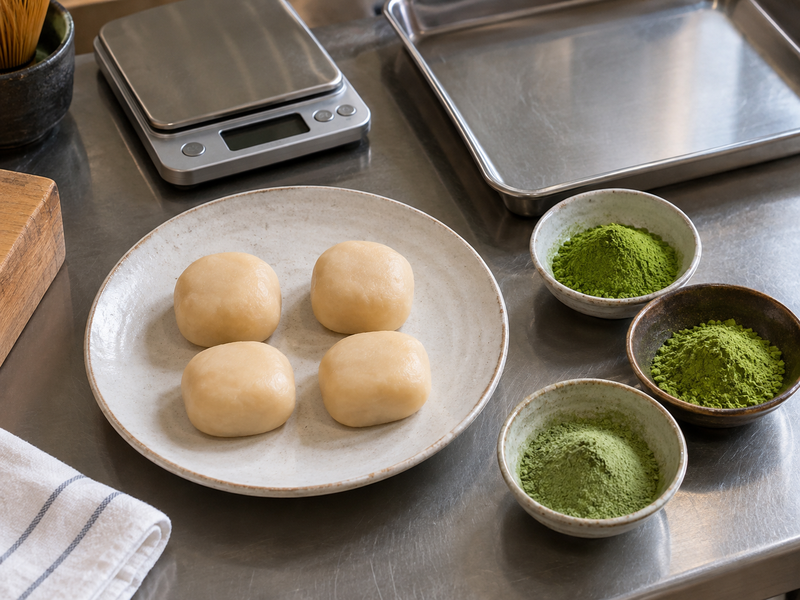
The following is a proposed dose screen for a ready to use marzipan that the business has already approved. It has not been tested as a finished recipe. Weigh four 100 g portions from the same prepared base, then add the tea shown below. Do not alter syrup or water during this first comparison.
| Sample | Marzipan base | Matcha addition | Observation |
|---|---|---|---|
| Plain control | 100 g | 0 g | Existing sweetness and texture |
| Low dose | 100 g | 0.5 g | First recognizable tea note |
| Middle dose | 100 g | 1 g | Almond and tea balance |
| Higher dose | 100 g | 1.5 g | Dryness and bitter finish |
Sift the tea and incorporate it using the same small batch method. Keep an uncoated piece from each sample, then coat another piece with the intended chocolate. The preferred bare center may not be the preferred finished confection.
If a dose makes the base difficult to shape, record that result before making an adjustment. Adding liquid creates a second development question involving texture, handling and storage. Treat that revised mixture as a separate formula, with its own weight record, rather than quietly correcting every sample until all feel similar.
4. How can you achieve even color without excessive working?
Spread the powder before folding
Flatten a small portion of the base, distribute sifted tea over a broad area, then fold and work it according to the paste supplier’s handling advice. For a larger process, assess a suitable mixing method with the equipment operator. Do not assume the time used for a hand sample transfers directly to a mixer.
Look at a cut face, not just the exterior. A smooth green outside can conceal pale streaks in the middle. Cut a small piece from more than one position in the batch and inspect under the same ordinary light. Keep a simple photograph of the accepted distribution for later staff training.
Matcha is a particulate ingredient, so persistent dots may indicate clumps rather than a need for prolonged mixing. Check the powder before incorporation and examine the base’s own almond texture. The Matcha Village solubility explanation helps distinguish dispersion from a promise that the tea will dissolve completely.
Watch the paste as it warms during handling. If it becomes oily or smears, pause the comparison and record the conditions. Avoid adding a handful of sugar to make it manageable without weighing it; that would change both flavor and the cost of the finished center.
5. Which shaping method suits your production volume?
Time the ordinary pieces
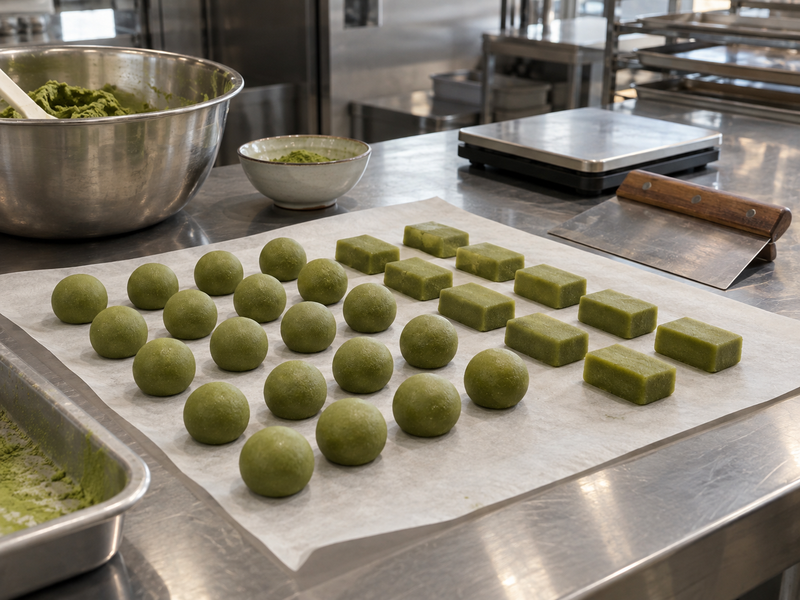
Hand rolled balls are practical for a small run, but their weights can vary. A slab cut into rectangles may use less shaping time and fit a tray more efficiently. Molded pieces can provide a specific look while introducing release and cleaning tasks. Compare the full work involved, including rejected pieces.
| Method | Measure | Likely point to inspect |
|---|---|---|
| Hand rolled centers | Weight spread and minutes | Uneven size under coating |
| Slab and cut | Thickness and edge loss | Cracked or compressed edges |
| Simple mold | Release rate | Sticking in corners |
| Pastry layer | Sheet thickness | Tearing during transfer |
Use a scale to check samples throughout the run. A tray of similar looking pieces can still have enough weight variation to affect portion cost and chocolate pickup. Keep the nominal center weight separate from the finished coated weight in the worksheet.
Choose the shaping aid carefully. Extra icing sugar, starch or oil left on the surface may affect the next step, so record any amount used and assess the complete confection. A release method that makes shaping easier but causes a poor coating finish is not ready for production approval.
6. What must you test before choosing a chocolate coating?
Evaluate the shell and center together
Ask the chocolate supplier for the appropriate working instructions for the selected product. Follow its tempering or melting requirements rather than applying one temperature curve to every coating. Real chocolate and compound coatings may have different instructions, and the purchasing specification should identify which material the business intends to use.
Coat equal center weights with a consistent technique. Weigh a few finished pieces to estimate coating pickup. An apparently small change in shell thickness can affect cost and the amount of almond and tea a customer perceives in each bite. Keep a cut sample for judging that balance.
Compare the finished product at its intended serving condition. Assess how the shell breaks, whether it separates from the center and whether the center is comfortable to chew. Avoid approving the coating only because it photographs with a high gloss immediately after production.
Dark, milk and white chocolate each deserve an actual tasting if they are under consideration. Do not predict a winner from color contrast alone. Keep decorations restrained during this comparison, since extra nuts, candied peel or flavored dust can obscure the interaction the team is trying to evaluate.
7. How should you describe defects during a tasting?
Separate flavor from physical handling
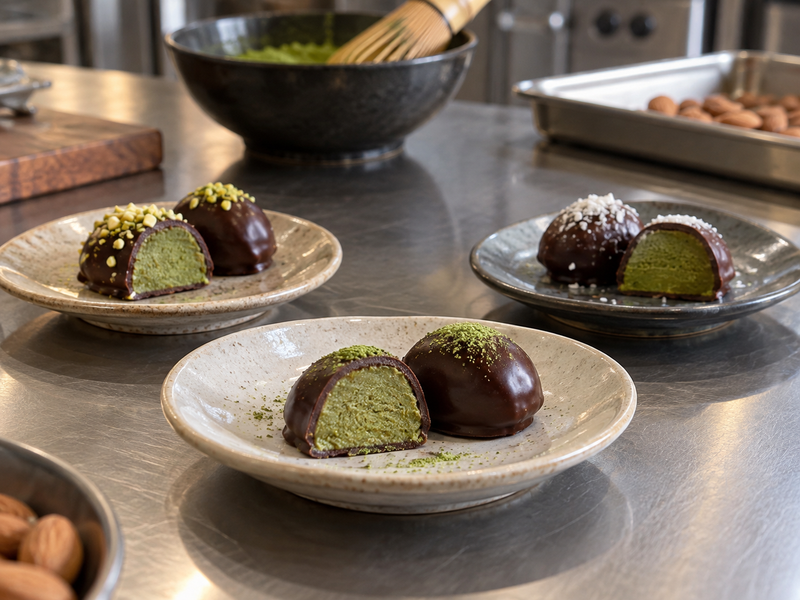
Use specific observations that another person can investigate. Too dry may mean the bare center cracks during rolling, or it may mean the finished confection leaves a powdery sensation. Those are related possibilities, but they are not the same record. Note where and when the problem appears.
| Reported problem | More precise observation | First variable to revisit |
|---|---|---|
| Weak tea | Chocolate dominates the complete bite | Coating weight |
| Gritty center | Particles remain after chewing | Base texture and tea clumps |
| Cracked surface | Edges split during rolling | Base condition and tea dose |
| Too sweet | Almond aroma is hard to identify | Base specification |
Taste a plain base sample alongside the tea versions. It gives the team a reference for problems that were present before matcha was added. A coarse almond ingredient cannot be corrected simply by choosing a more expensive green tea powder.
Ask tasters to finish a normal portion rather than judge a tiny crumb only. The balance of sweetness and bitterness may feel different over several bites. Record whether the intended portion feels satisfying and whether the customer can reasonably identify the flavor promised by the product name.
8. What belongs in the packaging and label review?
Use the complete ingredient list
Review the marzipan, tea, coating and decorations as a single finished recipe. Almond is an obvious ingredient, but the coating or purchased paste may introduce other ingredients that matter to customers and label reviewers. Obtain current documents from the actual suppliers instead of relying on a product description saved from an earlier purchase.
Test the proposed box insert or wrapper with finished pieces. Check whether the confection sticks, transfers color or oil, loses decorations or moves enough to damage the shell. A carefully placed piece on a plate experiences much less handling than a gift box carried home by a customer.
No shelf life follows automatically from combining two purchased products with stated storage periods. The finished formulation, process and package require assessment under the intended conditions. Any added liquid, new inclusion or different coating should be reviewed as a possible change to that specification.
Keep marketing language tied to evidence. Tea content does not establish a health benefit, and a plant based sounding center does not establish that every coating or processing aid meets a vegan claim. Give the label reviewer the full bill of materials and approved supplier documents before artwork is finalized.
9. How can buyers compare quotations fairly?
Use the cost per finished unit
Ask for the proposed matcha pack size, available lot, lead time and supporting specification. Evaluate samples in the chosen marzipan and coating. A tea that tastes appealing in water may have a very different role in a sweet almond center, so application results should accompany the purchasing decision.
| Item | Measurement needed | Costing use |
|---|---|---|
| Marzipan | Center grams per piece | Main base ingredient cost |
| Matcha | Grams per base batch | Tea cost at accepted dose |
| Chocolate | Actual pickup per piece | Coating cost and yield |
| Shaping | Saleable pieces per labor hour | Production capacity |
| Rejects | Broken or unsuitable units | Effective unit cost |
Retain the plain and tea sample codes in the tasting record. When a quote changes, the buyer can see whether it refers to the same material that was approved. If the available lot differs, ask whether a small verification sample can be supplied before the full order is committed.
For an OEM inquiry, describe the finished center dimensions, coating, pack format and target market. Those details are more useful than asking for a generic premium matcha marzipan price. A manufacturer needs to understand the actual product before making a meaningful production proposal.
10. What should the final production handover include?
Make the accepted piece reproducible
Attach the exact base and tea identities to the formula. Include the tea addition, incorporation method, center weight, shape, coating instructions and finished weight range established by your trials. Keep the record clear about which instructions come from ingredient suppliers and which were developed in your own process.
Add photographs of the whole piece and a cut center. A green outside and an even interior are different checks. Include the ordinary acceptable product, not only the most attractive piece chosen for advertising. Staff need a reference they can achieve throughout a realistic run.
Have another operator prepare a short batch using the written sheet. Record any extra dusting, reworking or coating needed to complete it. If these actions were omitted from the formula, either remove the need for them or document them before calculating the launch quantity.
Prepare the next order request with the approved matcha lot requirements, consumption estimate and a retained finished sample. Then run the selected packaging trial with that sample and the actual insert before the business orders printed boxes for the first release.
Frequently asked questions
Q1: Can almond paste replace marzipan directly?
Check the specific products. Almond proportion, sweetness and intended use can differ. Compare the complete confection before accepting a substitution.
Q2: Should matcha be mixed with water first?
The proposed trial uses sifted dry tea. Adding water changes the formula and requires separate handling and storage assessment; it is not a routine correction for clumps.
Q3: Is the darkest green sample the best choice?
Not necessarily. Taste it with the intended coating and assess bitterness, almond character and texture. Color is only one acceptance criterion.
Q4: Can the same mixture make decorations and chocolate centers?
Possibly, but test both uses. A pliable center may not hold fine molded detail, and a firm decorative paste may feel less pleasant to eat.
Q5: Can I use another supplier’s storage period?
Use supplier instructions for their ingredient. Establish the finished confection’s storage and shelf life from its own formulation, process, packaging and qualified assessment.