
Matcha halva combines sesame confectionery with the flavor and color of powdered green tea. For a confectioner, the difficult part is keeping a pleasant crumb while adding enough tea to remain recognizable. More powder, harder mixing and a longer rest are not interchangeable solutions to a weak result.
This guide focuses on tahini based halva for a bakery counter, cafe accompaniment or packaged confection. It sets out a development route rather than a validated manufacturing formula. Begin with an established sesame halva process, then assess the tea, cutting yield and intended package together.
Contents: 1. Which style of matcha halva are you developing | 2. What should you ask a tahini supplier | 3. How can you compare tea doses without changing the candy process | 4. Which syrup details need a written procedure | 5. How do you distribute matcha through the tahini | 6. What makes molding and cutting worth testing separately | 7. How should you assess the finished flavor and texture | 8. Which packaging questions belong in the development brief | 9. How does a buyer calculate the cost of an acceptable piece | 10. What should happen before the first production order
1. Which style of matcha halva are you developing?
Specify the sesame confection
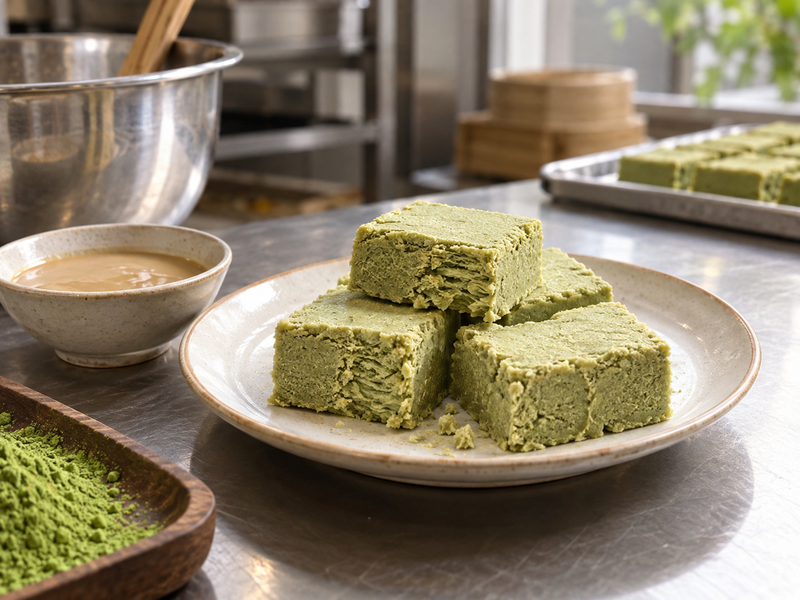
Halva can name different sweets. State that this project uses tahini and cooked sugar syrup, so a production team does not expect a semolina dessert or a flour based sweet. The name on a purchasing document should describe the actual ingredients and intended texture, especially when buyers and manufacturers work in different markets.
Cooking Therapy’s matcha halva recipe demonstrates the sesame and sugar syrup route with tea mixed into the tahini. It is a useful application reference. Its household method does not supply the commercial specifications for your equipment, distribution route or pack size.
| Intended sale | Product requirement | Development priority |
|---|---|---|
| Cut counter portion | Clean enough slices | Cutting loss and crumbs |
| Wrapped individual piece | Consistent dimensions | Fit and surface transfer |
| Dessert crumble | Controlled fragment size | Texture after plating |
| Gift assortment | Stable presentation | Contact with adjacent sweets |
Choose one form first. A crumbly result may suit a plated dessert but fail as a neatly wrapped bar. Keep the acceptance description specific enough that the team does not reject or approve the same texture depending on who is tasting that day.
2. What should you ask a tahini supplier?
Establish a consistent starting paste
Request the ingredient list, sesame type or processing information available, lot code and recommended handling instructions. Ask whether the product is salted or contains additional ingredients. A change in roast character can alter how much tea a taster notices, even when the matcha and sugar weights remain fixed.
Seed + Mill’s product FAQ describes tahini as ground sesame and explains that oil separation can occur. For trials, make the paste consistent according to its supplier’s instructions before weighing a portion. Taking only oily material from the top of a container creates a different starting mixture from scraping dense material off the bottom.
Taste the prepared paste separately, then in the established plain halva. Record roast aroma, bitterness and any coarse sensation. These observations help distinguish a sesame issue from a tea issue later. Use the same container preparation method for every sample in a comparison.
Do not transfer a supplier’s shelf life statement for plain tahini or its own halva to your finished confection. Added ingredients, processing and packaging differ. The supplier can support ingredient selection; the finished product still needs its own technical assessment.
3. How can you compare tea doses without changing the candy process?
Keep the base method fixed
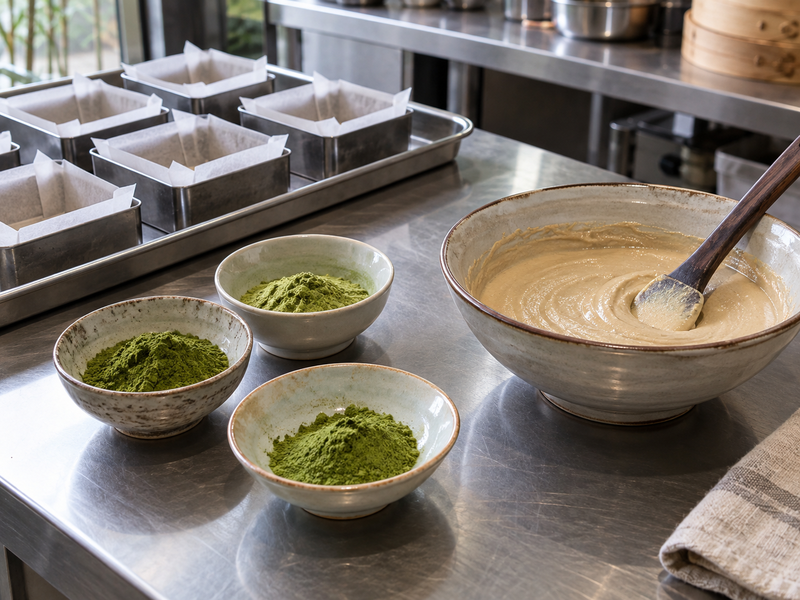
Use a plain sesame halva formulation that the confectioner already controls. The following tea additions are proposed, unvalidated trials per 200 g of tahini in that formulation. All sugar, water and other ingredients remain at the established amounts. This keeps the question focused on tea addition rather than simultaneously inventing a new sugar system.
| Sample | Tahini basis | Added matcha | Question to answer |
|---|---|---|---|
| Control | 200 g | 0 g | What is normal for this process? |
| A | 200 g | 1 g | Is tea detectable through sesame? |
| B | 200 g | 2 g | Is flavor balanced after setting? |
| C | 200 g | 3 g | Does bitterness or dryness increase? |
Prepare separate small batches if dividing hot syrup would introduce inconsistent cooling or timing. Weigh and sift the tea before cooking begins, then disperse it into the tahini portion. Do not improvise extra water to loosen a tea mixture without recording that as a new formulation.
Keep the same mold depth and mixing approach across comparisons. Label the batch records, not the food with improvised edible markers. Assess the resulting pieces at a common point in your approved process so differences in setting time do not obscure the tea comparison.
4. Which syrup details need a written procedure?
Control the existing cooking endpoint
The syrup stage deserves a trained confectionery operator and suitable equipment. Follow the established base formula’s endpoint rather than choosing a universal temperature from a tea article. Sugar concentration, batch size, equipment and the chosen confection style are part of that process; adding matcha does not remove the need to control them.
Record pan type, batch weight, thermometer identification and the endpoint actually reached. Note any visible crystallization before combination with the tahini. A batch that already behaves differently in the pan should not be used to conclude that a tea powder causes a texture problem later.
Have the prepared tahini mixture, mold and tools ready before the syrup is finished. Searching for a liner while hot syrup waits changes the sequence and creates unnecessary handling. Keep staff roles clear when one person cooks and another receives the batch for mixing or molding.
If the recipe is new to the business, establish the plain version first with an experienced confectioner. Once that process gives repeatable results, introduce the tea comparison. Otherwise a sticky or hard result could come from the base process, and an expensive matcha sample may be blamed without useful evidence.
5. How do you distribute matcha through the tahini?
Inspect the mixture before syrup arrives
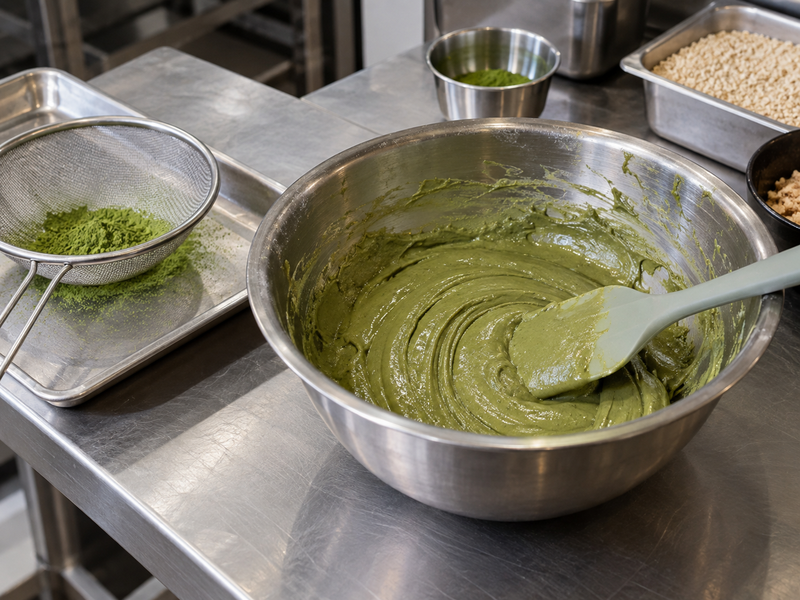
Sift the weighed powder and blend it thoroughly into the prepared tahini. Scrape the bowl sides and bottom with a suitable spatula. Examine a thin smear for dry specks. This is easier to correct before syrup addition than after the confection starts changing texture and becomes harder to work.
| Observation | First check | Next controlled comparison |
|---|---|---|
| Dark dry dots | Tea clumps in the initial paste | Sift before incorporation |
| Uneven green bands | Bowl scraping and mixing sequence | Standardize the tahini blend |
| Oily top layer | Tahini preparation | Homogenize the source container |
| Weak tea aroma | Dose and sesame roast character | Compare tea in the same base |
Set a practical visual endpoint for the paste, supported by a photograph under ordinary kitchen light. Avoid requiring an unusually bright green that the actual ingredient cannot deliver. Photographs should document the mixture as it appears, without color filters that make later batches look defective by comparison.
After the syrup is added, follow the established mixing endpoint for your base. Do not continue mixing simply to chase tiny color variations that should have been addressed earlier. Record when the mixture changes consistency and how readily it transfers into the mold.
6. What makes molding and cutting worth testing separately?
Measure saleable portions
Select a mold that produces the intended finished thickness. A deep loaf and a shallow slab present different cutting tasks, even when they contain the same batch. Record the fill weight and spread the mixture consistently according to the approved method rather than compressing one sample much more firmly than another.
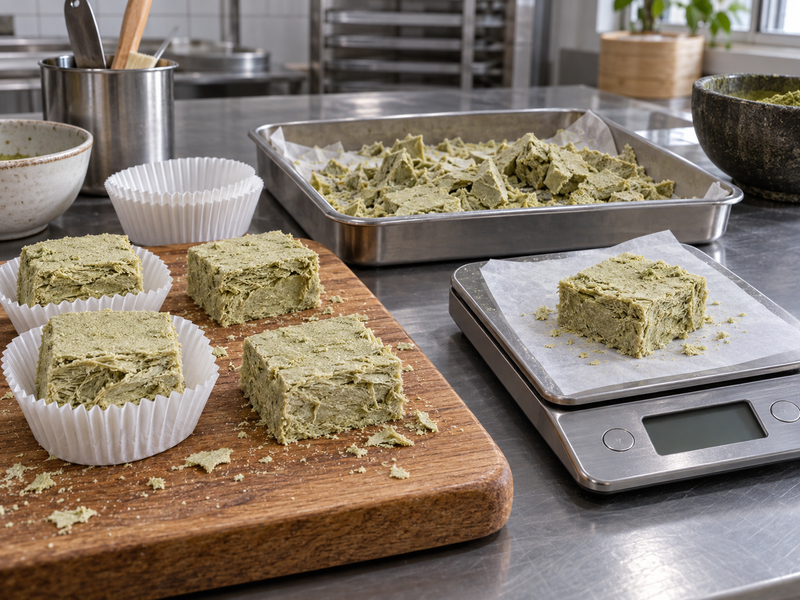
Once the product is ready for cutting under that method, compare a few realistic portion sizes. Count intact pieces, edge trimmings and loose crumbs. Keep all three weights. The amount that leaves the mold is not automatically the amount that can be sold in a gift box.
Use a suitable clean cutting tool and document the technique that gives acceptable edges. A photograph of one perfect center piece can hide severe damage at the corners. Photograph the entire cut slab before selecting the best looking portions for product photography.
Crumbs may have another approved use, such as a dessert topping, but do not assign them full retail value in the first costing. Confirm that the secondary use has demand and a defined handling procedure. Otherwise the business may appear profitable only because unusable fragments have been counted as sales.
7. How should you assess the finished flavor and texture?
Taste equal pieces under equal conditions
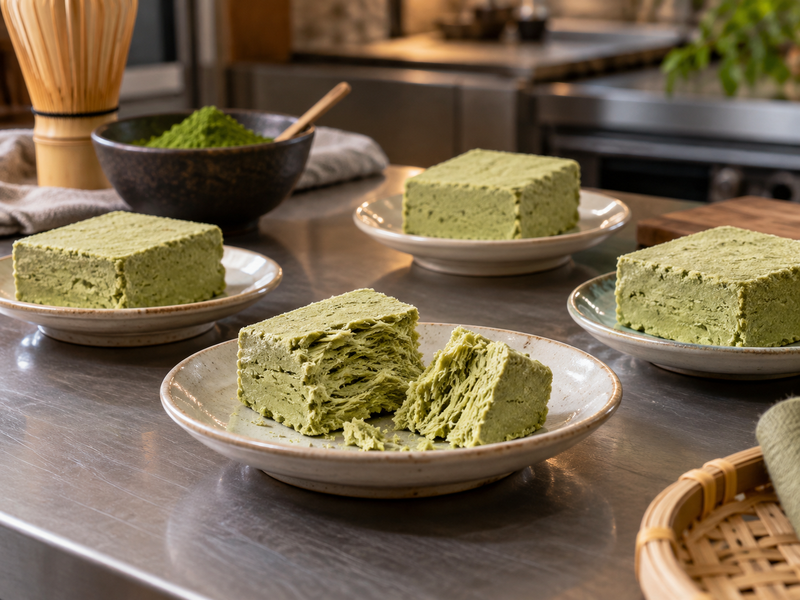
Present comparable portions at the same serving temperature and stage of the approved process. Ask tasters to describe sesame aroma, tea recognition, sweetness, bitterness and the way the piece breaks in the mouth. Avoid a single question such as which is best; it gives little direction when none of the samples meets the product brief.
| Attribute | Useful description | Decision it supports |
|---|---|---|
| Tea recognition | Clear, faint or hidden | Dose and tea selection |
| Sesame character | Light or strongly roasted | Tahini specification |
| Break | Flaky, sandy, sticky or hard | Process investigation |
| Finish | Pleasant or lingering bitter | Upper limit for tea addition |
Try the confection by itself before pairing it with coffee or tea. A beverage can change the perceived sweetness and leave the team approving a product that only works in one setting. Then repeat the assessment in the intended service context, such as a small piece beside an espresso.
Retain comments that disagree with the group average. If some tasters find the highest dose bitter, check whether that level is necessary for the target customer. A darker color alone is a weak reason to accept an unpleasant finish.
8. Which packaging questions belong in the development brief?
Check the contact surfaces
Put trial pieces into the actual proposed wrap, tray or box. Observe crumbs, surface oil marks, sticking and breakage during realistic handling. A display plate does not reveal how the confection behaves when it touches paper, sits beside another sweet or moves through a delivery route.
Ask packaging suppliers for material information appropriate to the food and market. Do not assume decorative paper is suitable for direct contact because it looks attractive. If a liner is needed, test the complete arrangement, including how easily a customer can remove the portion without crushing it.
The finished formula and intended storage conditions need a qualified shelf life assessment before a dated retail product is launched. Appearance and flavor observations alone cannot establish safety or a commercial best before period. Keep technical validation separate from the informal tasting used to choose a tea dose.
Sesame is central to this product. Review the full ingredient and allergen information for tahini, chocolate or nut inclusions if used, and the production environment. The Matcha Village labeling guide can organize questions for a supplier; final label decisions require the actual recipe and destination requirements.
9. How does a buyer calculate the cost of an acceptable piece?
Include cutting and wrapping losses
Use the weighed batch record to calculate ingredient cost, then divide by saleable portions. Record tea cost separately so a purchasing team can see its contribution without overlooking tahini, sugar, labor and packaging. A small saving on powder may be less important than a change that reduces broken bars.
| Cost record | Unit to retain | Why it matters |
|---|---|---|
| Tea addition | Grams per batch | Links flavor choice to price |
| Tahini intake | Prepared grams | Avoids container separation errors |
| Intact output | Pieces and total weight | Establishes saleable yield |
| Wrapping | Minutes per batch | Reveals manual labor demand |
| Packaging | Cost per finished piece | Includes liners and inserts |
Compare supplier samples in the selected formulation. Ask for lot identification, pack sizes and available specification documents. Do not treat a grade name as evidence that the tea will work in sesame confectionery. Request a repeat sample if the proposed order will come from a different lot than the one evaluated.
For a seasonal assortment, estimate consumption from the planned number of saleable pieces and expected development waste. Order timing should leave room for the actual packing trial, rather than assuming the first successful kitchen batch is ready for distribution.
10. What should happen before the first production order?
Run one complete handover batch
Give a second trained operator the chosen formula and written process. Include the tahini preparation, tea dispersion, syrup endpoint, mixing stop point, mold weight and cutting dimensions. Observe where that person needs extra explanation. Those questions identify gaps that may have been invisible while the developer did every step personally.
Use the proposed production packaging and prepare a realistic number of portions. Record time spent wrapping, rejected pieces and any changes in appearance during the planned handling route. Correct the specification before the sales team promises a format that production cannot consistently deliver.
Agree what triggers a new application check: a different tahini specification, tea lot with a changed sensory profile, larger kettle, new mold depth or different package can justify another trial. Keep the acceptance record with the purchase documents so the buyer understands which version was approved.
Send the selected matcha dose, intended batch size and required documents to the ingredient supplier. Request confirmation of the actual available lot and pack format, then reserve enough material for a complete repeat of the chosen halva process before committing to the launch quantity.
Frequently asked questions
Q1: Is matcha halva made from sesame or semolina?
This article concerns the sesame version made with tahini and sugar syrup. State the style explicitly because the name halva is used for several kinds of sweet.
Q2: Can I replace the sugar with a liquid sweetener?
Treat that as a separate formulation project. A different sweetener changes more than flavor and should not be substituted into an established candy process without testing.
Q3: Why does the color look uneven?
Inspect the matcha and tahini mixture before syrup addition. Clumps, incomplete bowl scraping and inconsistent tahini can create different problems that need separate corrections.
Q4: Can I sell the crumbs as a topping?
Possibly, with a defined product specification and handling procedure. Cost the main confection using its saleable portions until the secondary product has a practical outlet.
Q5: Does adding tea establish a longer shelf life?
No. Use a qualified assessment of the finished formulation, process and package. Do not borrow a storage period from the tea, tahini or another manufacturer’s halva.