
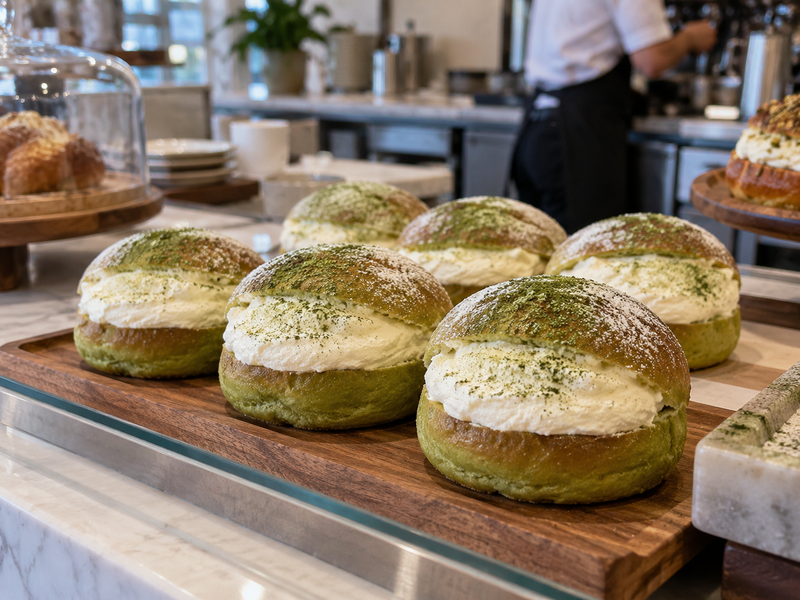
Matcha maritozzi are awkward for a busy pastry case: the bun must stay soft, the cut must expose a generous stripe of cream, and the filled product needs controlled cold service. A bakery can solve those problems with a weighed bun, a measured filling deposit and a short display trial. Macphie’s commercial recipe offers a useful reference for an enriched dough and matcha finish. The trial below tests a different question: which version can staff fill, present and sell consistently in their own case?
Contents
- 1. What should a finished matcha maritozzo look and feel like?
- 2. How should the first dough batch be weighed?
- 3. Where should matcha enter the bun or cream?
- 4. What proof gives a bun that fills cleanly?
- 5. How should the bakery control the split?
- 6. How much chantilly belongs in each bun?
- 7. What does chilled display do to the product?
- 8. How can a team calculate saleable yield?
- 9. Which ingredient and food controls need review?
- 10. What should the final bakery specification include?
1. What should a finished matcha maritozzo look and feel like?
Define the case sample before mixing
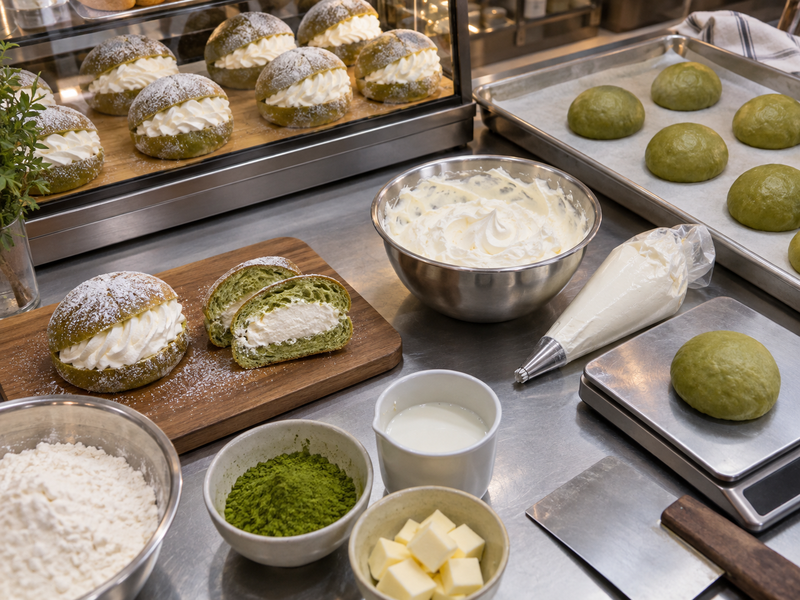
An Italian maritozzo is a soft, enriched bun cut lengthwise and filled with whipped cream. King Arthur Baking’s version keeps the bottom of the roll attached and levels cream at the cut edge. Those details give a production team an observable target. Choose a finished bun mass, cream stripe width and number of portions per tray before changing flour or matcha. Photograph a passing sample from above and through the cut. Record whether it can be lifted with tongs without squeezing cream onto the packaging.
For a pilot, compare three buns at case opening and again at the planned afternoon sale time. Taste the cream and crumb together; a dramatic green bun can still have barely perceptible tea flavor. Ask two staff members to score softness, tea presence, cream definition and ease of handling without seeing the test code. These are internal sensory criteria, not published standards. A clear pass sample gives mixers and counter staff the same product to reproduce.
| Case check | Measure in the pilot | Reject signal |
|---|---|---|
| Bun | Cooled mass and width | Uneven size or dense center |
| Split | Cut depth and intact base | Hinge tears during filling |
| Cream | Grams and visible stripe | Spill or bare pocket |
| Service | Appearance after case hold | Wet cut edge or collapsed fill |
2. How should the first dough batch be weighed?
Record actual ingredients, not a formula nickname
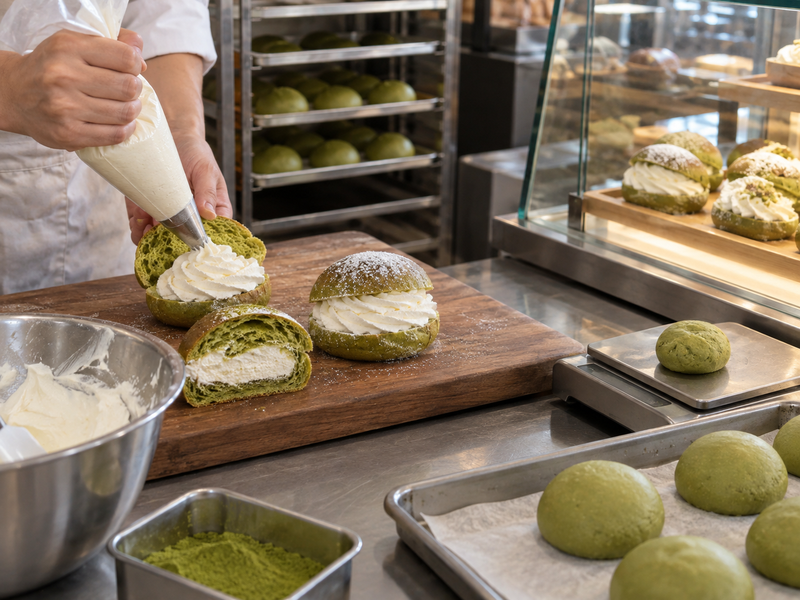
Macphie’s formula uses bread flour, sugar, yeast, water, egg, milk and butter alongside its named commercial ingredient. It mixes before adding softened butter, then scales and proofs the dough. A bakery using different ingredients should build its own gram-based formula rather than assume that a substitute behaves identically. Start with one flour lot and weigh every ingredient. Record mixed dough mass, bowl temperature, mixing time and the point at which butter is incorporated. A soft dough that seems sticky during mixing may become manageable after a rest; adding unrecorded flour makes later trials hard to compare.
Divide one pilot into portions by scale. If the target raw bun is 70 g, treat that as a trial setting and compare it with a 80 g version while keeping filling proportion constant. Note dough loss on tools and the number of buns actually shaped. Bake both sizes on the same tray only if they can be identified and each reaches its intended endpoint. Write down the practical minutes needed to mix and round a full tray; labor belongs in the buying decision as much as ingredient cost.
| Dough record | Example trial entry | Why it matters |
|---|---|---|
| Raw portion | 70 g or 80 g | Changes cut area and yield |
| Mixed dough | Total grams | Reconciles ingredient input |
| Bench additions | Extra flour in grams | Exposes drift between operators |
| Dough condition | Temperature and handling note | Explains shaping differences |
3. Where should matcha enter the bun or cream?
Compare two designs with the same total tea
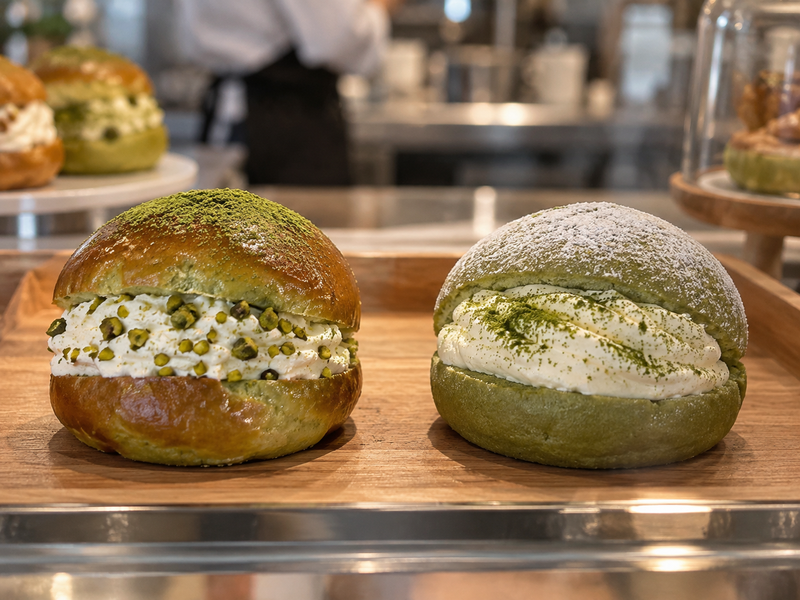
The Macphie reference lists matcha powder and finishes the filled bun with tea. It does not establish how much powder a different bakery should put into dough or chantilly. Trial three formats: a lightly colored bun with plain cream, an uncolored bun with matcha cream, and a split dose between both components. Hold the total matcha grams per finished item constant at first. That lets a tasting panel compare placement without confusing dose and format. Sift powder into a small dry ingredient portion for dough, or disperse it thoroughly before folding into cream, then note visible specks.
Matcha color at the cut face may differ from the browned crust. Photograph each version under the case lighting that customers will see. Taste after filling and again after a realistic hold because cream can mute tea flavor and the bun can absorb moisture. Ask suppliers for a lot-coded sample, ingredient statement, price and pack size. Compare candidates in the actual bun and cream instead of selecting by the hue of a powder pile. The best grade is the one that passes the bakery’s product and cost tests.
4. What proof gives a bun that fills cleanly?
Judge proof through shape and crumb
The Macphie method states a warm, humid proof and a short hot bake for its own formula. Treat those figures as recipe-specific, since dough size, yeast, equipment and ingredients will differ. Write down proof cabinet setting, time in the cabinet and visible increase in bun height for each tray. Mark several raw buns with a measured width and height, then repeat after proof and cooling. This is more useful than calling a tray “ready” because the clock rang.
Underproofed pieces may split unpredictably in the oven; overproofed pieces may lose the rounded surface that supports a neat cream stripe. Cut two cooled buns from each trial to look at the crumb and hinge strength. If the top collapses when opened, first compare proof condition and portion tension before changing cream. Keep one variable fixed per test: either proof time, portion size or shaping method. Repeat the chosen method with a full rack load, where cabinet airflow and oven recovery may differ from a six-piece sample. A bun that survives that load is closer to a useful production setting.
| Proof observation | Capture | Decision use |
|---|---|---|
| Height | Millimeters before and after | Compare expansion |
| Surface | Photo before baking | Spot tearing or spreading |
| Baked profile | Width and height | Judge fillable shape |
| Cut crumb | Photo and touch score | Check softness and strength |
5. How should the bakery control the split?
Cut a hinge, then test the fill opening
Cool buns fully before the first split. A warm crumb compresses beneath a serrated blade and can make an otherwise sound proof look dense. Use a marked knife or guide to cut from one end to the other at the same height, leaving an intact base. King Arthur’s maritozzi method also uses a lengthwise slit that keeps the roll joined. For a production test, note the depth in millimeters and count hinges that tear when the bun opens. A centered cut can be visually attractive yet leave too little base to hold a generous fill.
Compare a shallow and a deeper split on buns of the same weight. Pipe each with the same measured amount of cream, then close the package and lift it with service tongs. Record cream movement and damage. If the cream stripes vary, check cut geometry before increasing filling. A printed photo beside the cutting station can show the intended mouth width better than “open carefully” in a recipe. Keep rejected or damaged buns in the yield record, since the split is part of the cost of this item.
6. How much chantilly belongs in each bun?
Weigh the stripe, not the spoonful
Whipped cream can look generous while hiding large air pockets. King Arthur’s reference spoons about two to three tablespoons into each of its buns, then smooths the face. A café should convert its chosen deposit to grams. Pipe 20 g, 25 g and 30 g into otherwise identical buns as an initial trial, with those amounts explicitly treated as test points rather than a standard. Weigh the bag before and after filling a set of six to find actual average deposit and piping loss. Record cream temperature, whipping endpoint and how well the stripe holds its edge.
Photograph the cross-section after a gentle transport simulation and after a short chilled case hold. The heaviest option may look best at filling but smear in a sleeve or make the bun difficult to eat. Taste sweetness and matcha intensity together. If matcha goes into cream, keep its dose proportional to the cream batch and identify the mixing order. Write down any stabilizer actually used and obtain its ingredient and allergen statement. A good service deposit balances appearance, cost and handling rather than maximizing cream weight.
| Fill trial | Cream per bun | Record after hold |
|---|---|---|
| A | 20 g | Stripe width and mouthfeel |
| B | 25 g | Stripe width and mouthfeel |
| C | 30 g | Stripe width and mouthfeel |
7. What does chilled display do to the product?
Test the intended case and handoff
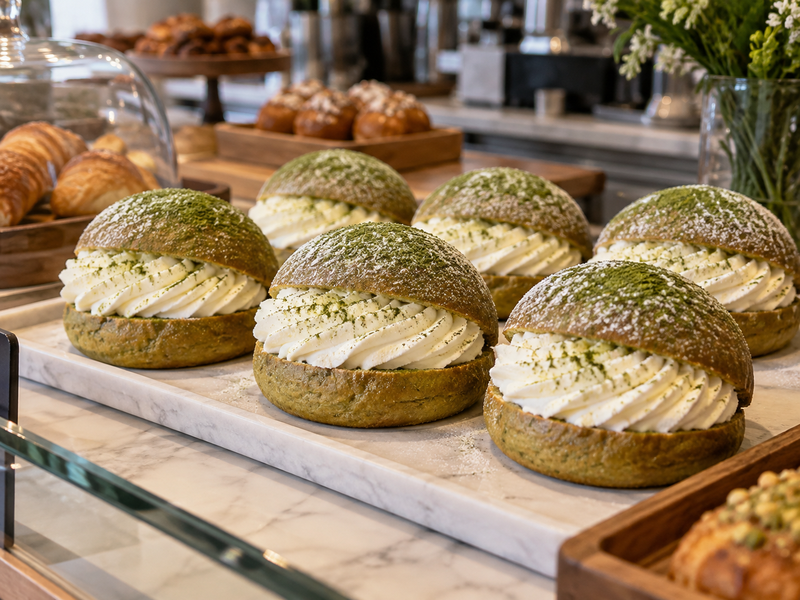
King Arthur advises serving filled maritozzi immediately or the same day. That is a quality cue, not a validated shelf life for a different recipe. Run a short case trial using the café’s actual temperature-controlled display, packaging and service tools. Mark each bun with fill time and batch code. Photograph at loading, during the busy period and near the planned final sale point. Taste whether the cut crumb becomes damp, the cream takes on a dry edge or the tea finish dulls under the lights. Check packaging for condensation after transfer from the case.
Cream-filled buns require the operator’s food-safety plan and local rules. The FDA Food Code is a US retail model, not a universal rule or proof of this product’s safety. Do not infer a safe hold from an attractive photograph. Log case temperatures and actual time outside refrigeration during filling and handoff, then have the site’s responsible person approve the service plan. Separate quality rejection, such as a soggy crumb, from temperature or handling violations.
8. How can a team calculate saleable yield?
Count the buns a customer would buy
Calculate cost from actual saleable units, not the number scaled on the bench. For each pilot, record ingredient masses, raw portions, bake loss, split damage, cream deposit, case rejects and unsold pieces. Matcha cost per item equals powder used divided by saleable count; a high-priced powder may still be reasonable when the dose is small, while overfilling can dominate the difference. Time mixing, proof supervision, splitting, whipping and final filling. Labor rises if the recipe needs a specialist to make the cut look consistent.
Compare a same-day fill plan with a smaller, more frequent fill schedule. The second approach may reduce visual decline but add labor and case replenishment. Run both during a realistic service period before choosing. Keep unfilled and filled losses separate so the bakery knows whether to adjust production forecasting or the filling process. Record customer returns or staff complaints against the batch code, not as anonymous anecdotes. A buying team can then compare matcha samples on flavor and yield alongside the quoted kilogram price.
| Yield line | Unit | Owner |
|---|---|---|
| Scaled and baked buns | Count | Bakery lead |
| Split rejects | Count | Filling team |
| Cream consumed | Grams | Filling team |
| Saleable filled buns | Count | Counter lead |
| Unsold after planned service | Count | Counter lead |
9. Which ingredient and food controls need review?
Check the actual formula and the route to sale
Egg, wheat and milk commonly appear in an enriched bun and cream filling. The FDA names all three as major allergens, although labeling obligations depend on the market and sales format. Obtain current ingredient and allergen statements for every purchased material, including any commercial improver, topping or cream stabilizer. Matcha should have a lot identifier and specification tied to the incoming pack. Record a substitution before staff use it; the same product name can mask a changed ingredient list.
Build a cleaning and changeover plan for the equipment that handles flour, egg and dairy. Keep a written cold handling method for filled buns from preparation through display and delivery. Staff should know who can release a batch when a refrigerator alarm, long bench interval or missing label interrupts service. This article cannot establish a safe holding time or claim that a specific ingredient makes cream stable. The final operating procedure belongs to the business’s food-safety team and applicable jurisdiction. Keep quality test sheets distinct from safety records so neither gets mistaken for the other.
10. What should the final bakery specification include?
Make a passing batch reproducible
The production sheet should show ingredient brands and gram weights, matcha lot and dose, mixing sequence, target raw portion, proof observations, bake setting, cooled dimensions, split depth and cream deposit. Add two photographs: a passing unfilled bun and a finished cut face. Include the planned tray count, batch code, cold service procedure, packing method and reject reasons. If staff cannot use the sheet during a morning rush, shorten prose and put measurements beside the step where they belong.
Have a second operator make the chosen formula without coaching. Compare raw weights, proofed dimensions, cooled texture, filling deposit and case appearance with the first trial. Fix ranges only after repeated successful batches show what the equipment can hold. If the supplier proposes another matcha grade, repeat the same baked and filled test before switching. Matcha Village can discuss grades and bulk purchasing for this application, but a buyer should request the specific sample and current documents needed for its market. Purchase against a tested specification, not a color adjective in a catalog.
For grade selection before the pilot, compare the matcha powder for baking guide with the bun and cream tests above.
FAQ
Q1: Can matcha maritozzi use culinary matcha? Yes. Compare grades in the finished bun or cream at an equal dose, then assess taste, color and cost per saleable item.
Q2: Why does the cream spill from the split? Check cut depth, bun size and weighed deposit before changing the cream recipe.
Q3: Can the buns be baked before the filling shift? Test unfilled bun quality under the bakery’s storage plan, then fill according to the approved cold-service procedure.
Q4: Which fill level should a café choose? Use a short weighed comparison and choose the version that survives case display and handoff cleanly.
Q5: Does same-day quality mean a bun is safe all day? No. Quality observations do not replace a site-specific food-safety plan or local holding requirements.