
Matcha quiche can fail even when its first slice looks attractive. Wet vegetables seep into the crust, a dark green custard hides an unset middle, and a hot wedge breaks before it reaches a café plate. Build a measured trial around custard dose, ingredient moisture, center set and saleable wedges. The Matcha & CO recipe puts matcha in the pastry with salmon and spinach filling. This guide tests matcha in the savory custard instead, so that buyers and kitchen teams can judge its contribution after baking and reheating.
Contents
- 1. What should a café matcha quiche deliver?
- 2. How should the first custard trial be built?
- 3. How much matcha should enter the custard?
- 4. How should vegetables be prepared for filling?
- 5. What does the crust need before filling?
- 6. How can a baker identify center set?
- 7. What happens when a wedge is reheated?
- 8. How should the kitchen measure wedge yield?
- 9. Which ingredient and service checks apply?
- 10. What belongs in a repeatable quiche specification?
1. What should a café matcha quiche deliver?
Specify the wedge, not just the whole tart
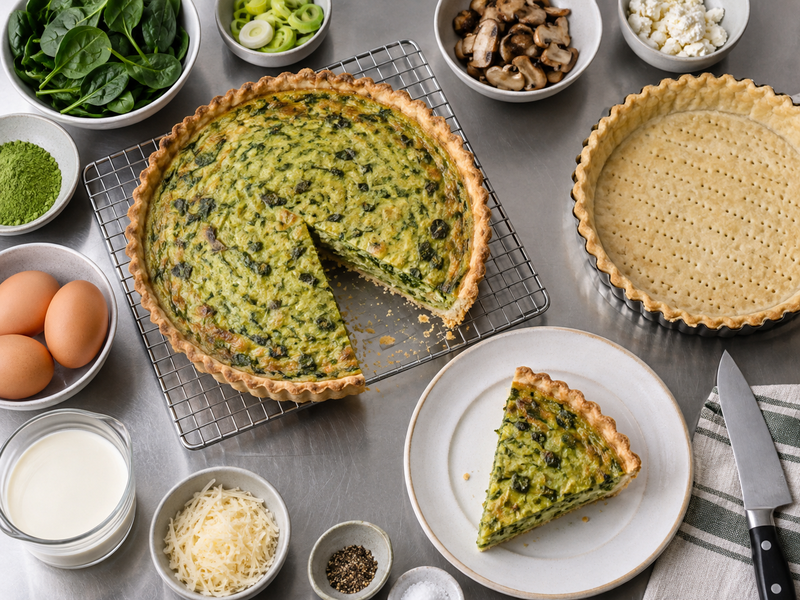
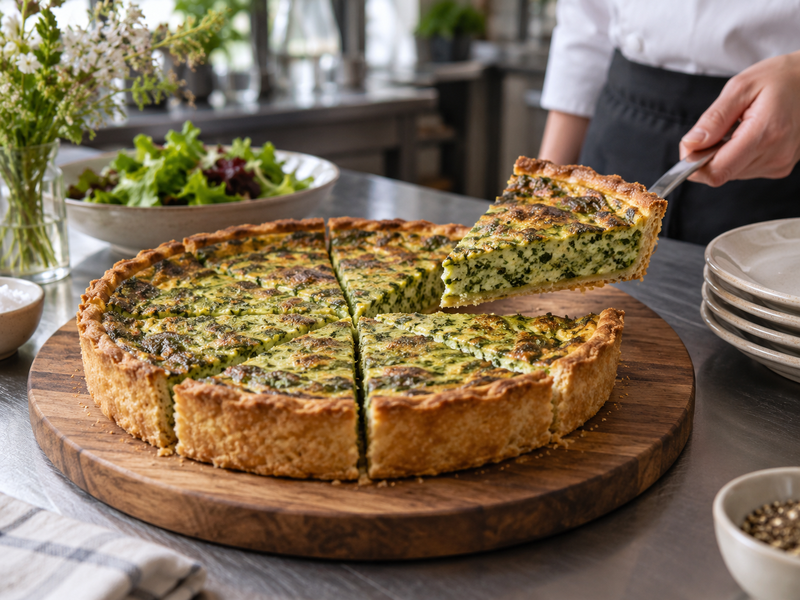
Define the item as served: a clean triangular wedge with a set savory custard, a crisp enough base and a matcha flavor that survives the egg and dairy. Decide whether the menu sells a hot brunch wedge, a room-temperature plated lunch item where permitted, or a chilled take-away portion. Each format changes the test. A whole quiche may photograph well while its sixth cut crumbles into the tin. Choose a pan diameter and a planned wedge count, then score every portion rather than the first display slice.
The Matcha & CO reference uses a roughly 15 cm mold, matcha in crust and salmon, spinach and cheese in the filling. That is a recipe example, not a required production format. A café may need a larger pan or a vegetarian filling. Photograph the top, side and underside of a finished wedge under service lighting. Taste tea, salt and vegetable flavor together. The product should have a reason for matcha beyond green color: a mild tea note that works with the chosen filling.
| Finished-wedge check | Pilot record | Failure signal |
|---|---|---|
| Portion geometry | Diameter and wedge count | Broken point or unequal slices |
| Custard | Center texture after cooling | Wet pocket or rubbery bite |
| Base | Underside photo | Damp or compressed pastry |
| Tea flavor | Blind tasting note | Lost beneath filling |
2. How should the first custard trial be built?
Keep the liquid ratio stable during tea tests
For a practical pilot, choose one egg, milk and cream combination and weigh its total liquid. The reference quiche uses three eggs with milk and cream in its filling; it places matcha in the crust. Record that distinction so the team does not attribute a custard claim to the source. Mix the base custard gently to avoid adding unnecessary bubbles, then divide it into equal cups for matcha comparisons. Every cup should receive the same mass of vegetables, cheese and seasonings.
Weigh the filled shell before baking, including all additions. A kitchen that estimates the ladle volume can accidentally compare different custard depths instead of different tea doses. Note egg size or liquid egg specification and the dairy products actually used. If plant-based alternatives enter the trial, treat them as a separate formulation; their set and flavor may differ. Use one pan type and one tray position for the first comparison. Change filling composition only after the baseline custard sets and cuts reliably.
| Baseline entry | Record | Reason |
|---|---|---|
| Egg and dairy | Grams by ingredient | Repeats custard depth |
| Pan and shell | Diameter, height, mass | Explains bake variation |
| Vegetables | Cooked and drained grams | Tracks added water |
| Total deposit | Grams per shell | Predicts wedge size |
3. How much matcha should enter the custard?
Dose against the liquid phase
Matcha is a fine suspension, not a flavor that dissolves away. Whisk a weighed amount into a small portion of the custard liquid, then return it to the main batch and mix evenly. For an initial in-house comparison, try 0.5%, 1% and 1.5% matcha by the weight of eggs plus liquid dairy. These are trial settings, not a published standard. Keep pan, filling and bake conditions fixed. The darkest green version may taste harsh after reheating, while a pale version may disappear beside spinach or cheese.
Photograph cut custard after cooling and score the same pieces blind for tea, egg, salt and any gritty sensation. Ask a supplier for lot-coded samples and current specification, then compare two powders at the same dose in the same formula. A powder that excels in a drink may perform differently after baking with egg and fat. Convert each tested dose into matcha cost per saleable wedge. If the tea is hard to detect, first reduce strongly flavored toppings or adjust placement before doubling the powder. An expensive dose cannot rescue a damp crust.
4. How should vegetables be prepared for filling?
Measure water loss before adding custard
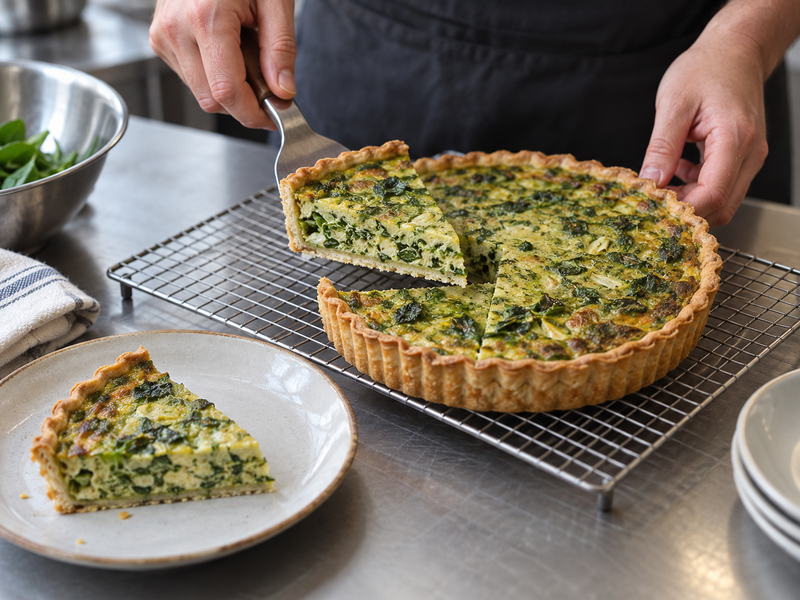
Spinach, mushrooms and courgettes can add substantial water during cooking and baking. Prepare the selected vegetable in one repeatable way: wash, cut, cook and drain it, then weigh its cooked mass before it enters the shell. For a spinach trial, record raw weight, cooked weight and mass after pressing or draining. The point is not a universal moisture target. The kitchen needs a method that prevents puddles while retaining flavor and an attractive cut face. Spread filling evenly across the crust rather than building a wet mound in the middle.
If using smoked salmon like the reference, record its deposit separately and review the supplier’s ingredient and allergen information. Fish and vegetables change salt balance, so taste after the chosen preparation method. Compare two vegetables only after the custard dose and shell method have settled. Photograph the bottom of each cooled wedge; moisture problems often appear there before the top looks wrong. A tray that leaks at the cut face may need a drier filling, less deposit or a stronger pre-bake, not more oven time for the custard.
| Vegetable check | Example measurement | Interpretation |
|---|---|---|
| Raw mass | Grams per batch | Purchasing yield |
| Cooked mass | Grams after heat | Water reduction |
| Drained mass | Grams before filling | Reproducible deposit |
| Cut-face liquid | Photo after cooling | Pass or revise method |
5. What does the crust need before filling?
Test a pre-bake that survives service
The reference recipe rolls a matcha pastry shell and fills it before baking. For a café trial focused on custard, keep matcha in the filling and compare a blind-baked shell with the shop’s current quiche crust method. King Arthur’s Quiche Lorraine fills a partially baked shell. That gives a useful process reference, though pan, dough and filling still determine the result in another kitchen. Note crust thickness at the base and wall, docking or weights used, pre-bake duration and cooled shell mass.
Fill two shells with equal weighed custard and vegetables. The underside should remain sufficiently firm after cooling and the planned reheating step. If one shell shrinks or slumps, evaluate dough rest, lining and pre-bake before blaming the tea. A very dark pre-bake may protect crispness but look burnt beside a green filling. Photograph each shell before filling so a later broken wedge can be traced to the shell stage. Use a clean cutting tool and consistent cooling interval for the comparison; cutting a hot quiche can make a sound crust seem weak.
6. How can a baker identify center set?
Record temperature with appearance and texture
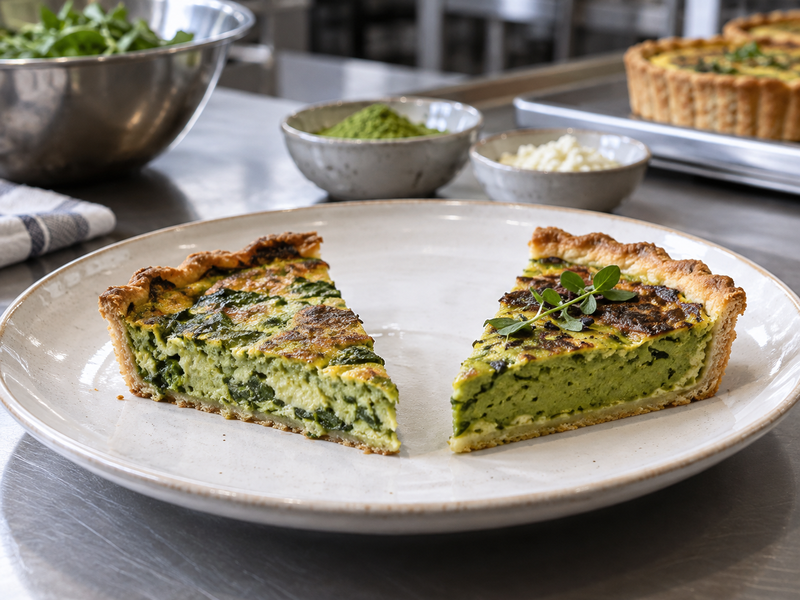
The original Matcha & CO recipe calls for a 180°C oven and a 30–40 minute bake for its particular mold and filling. Do not transfer that time to a deeper café quiche. Log oven setting, pan material, tray load, bake minutes and the center reading from a cleaned probe. King Arthur’s quiche recipe describes a center that still wobbles while a digital thermometer reads 160–165°F. That is a reference for its formula, not a safety certification for every filling or jurisdiction.
Compare the center and edge after a fixed cooling period. A pan removed when the top looks fully rigid may cut dry at the rim, while a loose center may release water. Record the reading, visible wobble, cooled slice and eating texture together. If the center requires far longer than the edge, test a shallower deposit or smaller pan before pushing the entire tart through a longer bake. Have the site’s food-safety procedure determine the required cooking checks for its egg product and intended service, rather than treating a visual cue as sufficient.
| Bake record | Why keep it | Decision |
|---|---|---|
| Center temperature | Repeats endpoint | Compare with local plan |
| Center movement | Captures visible set | Check after cooling |
| Edge texture | Detects overbake | Adjust depth or heat |
| Cooled cut | Shows true structure | Approve or repeat |
7. What happens when a wedge is reheated?
Trial the actual service equipment
Many cafés bake quiche before the lunch rush and reheat individual portions. A matcha custard can look smooth at first cut yet weep or toughen after a second heat exposure. Cool the trial quiche under the shop’s approved procedure, cut planned wedges, then reheat in the intended oven or other equipment. Record portion mass, starting condition, equipment setting, time and the center check required by the site’s plan. Compare the first and last wedge of the pan; differences may come from unequal filling distribution.
Taste immediately after reheating and after the normal handoff interval. Note custard water on the plate, crust softness, tea aroma and any bitter edge. If a wedge slumps, return to the bake and filling records before adding a thickener. A stronger set may improve the point but damage mouthfeel. Test one controlled change at a time. The FDA Food Code is a model for US retail operations; the kitchen’s approved cooling, holding and reheating rules still govern service in its own location.
8. How should the kitchen measure wedge yield?
Include the portions that break
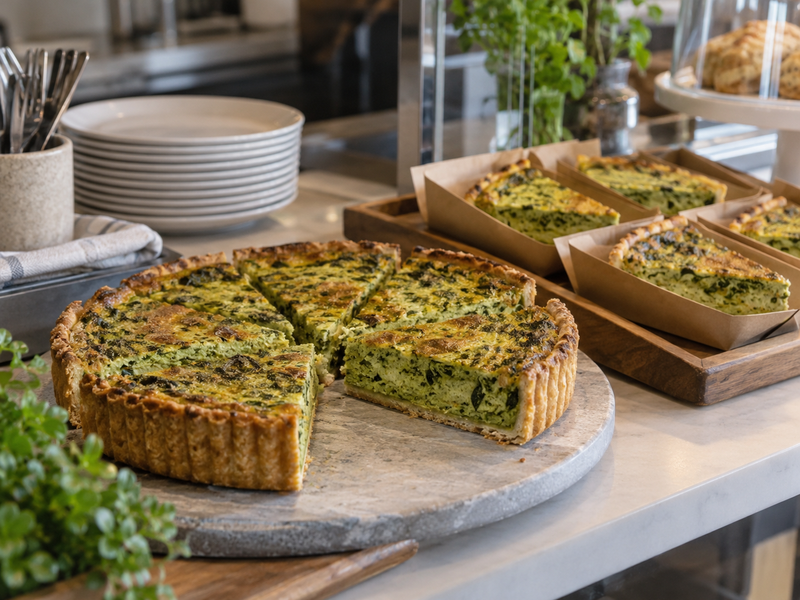
Decide the saleable wedge count before cutting. Mark the pan rim, use the same cooled cutting interval and wipe the blade between cuts. Record whole cooled mass, intended count, actual saleable count and the reason for each rejected piece. A high matcha dose can be a small ingredient cost, but one lost wedge on a six-portion quiche changes unit economics substantially. Include cooked vegetable yield, trim, crust breakage and unsold portions in the cost sheet.
Run the test with the service team rather than a recipe developer alone. Ask staff to transfer a wedge into its real box or onto its real plate; the point may crumble only during that movement. Time cutting and packaging for one pan and for a full service batch. If a wider wedge is needed for stability, update menu price and portion count together. Log yield by pan and date so a new supplier lot or changed pan is visible. The product decision should use cost per saleable wedge, including labor and waste, rather than a cost per whole quiche.
| Yield line | Unit | Use |
|---|---|---|
| Cooled whole quiche | Grams | Confirms bake and deposit |
| Planned versus saleable wedges | Count | Calculates real yield |
| Breakage and trim | Count or grams | Directs process fixes |
| Labor and packaging | Minutes and cost | Sets menu margin |
9. Which ingredient and service checks apply?
Review the actual menu formula
Quiche commonly contains wheat, milk and egg; salmon adds fish. The FDA lists these among major allergens for US labeling, but the business must check the rules for its own market and sale format. Obtain supplier ingredient statements for pastry, dairy, cheese, fish and matcha. A plant-based cream or cheese substitute needs its own review. Keep lot identifiers with the batch record, especially when a menu version changes during testing.
Write down approved cooking, cooling, cold holding and reheating steps before launch. The recipe test measures color, taste, cut quality and yield; it does not establish safe shelf life. Counter staff need an approved answer about ingredients and storage. If the quiche is packaged for resale, send the final label through normal regulatory review. If the café changes a vegetable or garnish, update the specification and allergen information before service. A clean wedge is useful only when the shop can make and serve it under its operating controls.
10. What belongs in a repeatable quiche specification?
Set ranges from successful full pans
Write the production sheet in the order staff work: pan and crust details, shell pre-bake, vegetable preparation, gram deposits, custard formula, matcha dose, mixing sequence, filling layout, bake checks, cooling, cutting and service method. Add a photo of a passing underside and a passing center cut. A phrase such as “bake until set” is too loose when a dark filling hides surface cues. Record the exact probe location and the site’s approved endpoint.
Have another operator make a full batch and compare every pan, including edge and center wedges. Set acceptable ranges only after that repetition shows which weights and times the team can control. Ask a matcha supplier for a sample tied to a quoted grade and specification, then run it through the chosen custard rather than approving by powder color. Matcha Village can discuss bulk powder options, but the café should make its purchase choice from its own bake, reheating and yield records. A formula is ready for a menu trial when the second operator can produce the same plate without verbal correction.
The culinary grade matcha guide can help shortlist powders; approve the purchase in the baked quiche, not from the dry sample.
FAQ
Q1: Does matcha quiche need matcha in the crust? No. The cited reference uses it there; this trial measures tea in the custard so the café can compare that format.
Q2: Which matcha dose should a café buy for? Start with small weighed custard comparisons and calculate cost at the dose that passes tasting.
Q3: Why is the bottom crust wet? Check vegetable draining, custard deposit and shell pre-bake before extending the whole bake.
Q4: Can a wedge be reheated for service? Test it in the actual equipment under the site’s food-safety plan, then score texture and plate appearance.
Q5: What counts as yield? Count wedges that survive cutting, transfer, reheating and the planned service window.