
A mobile matcha cart can run out of ice before the speeches end, lose power at a garden venue or build a queue longer than the event schedule allows. A matcha cart catering guide should begin with guest arrival patterns and a timed drink build, then work backward to staff, stock, water, power and load-in. The 58 Hester catering reference describes made-to-order matcha and asks clients for guest count and venue details. This guide turns those questions into an operations sheet that a caterer, venue and product supplier can review before service.
Contents
- 1. What service promise is the cart making?
- 2. How should guest count become a throughput plan?
- 3. Which menu fits the service window?
- 4. What must the venue confirm before load-in?
- 5. How should water, power and waste be planned?
- 6. How much chilled stock and reserve material is needed?
- 7. How should the cart and staff be arranged?
- 8. What belongs in the setup and service timeline?
- 9. How should the team handle interruptions?
- 10. What closes the event and improves the next one?
1. What service promise is the cart making?
Define the cup and the guest experience
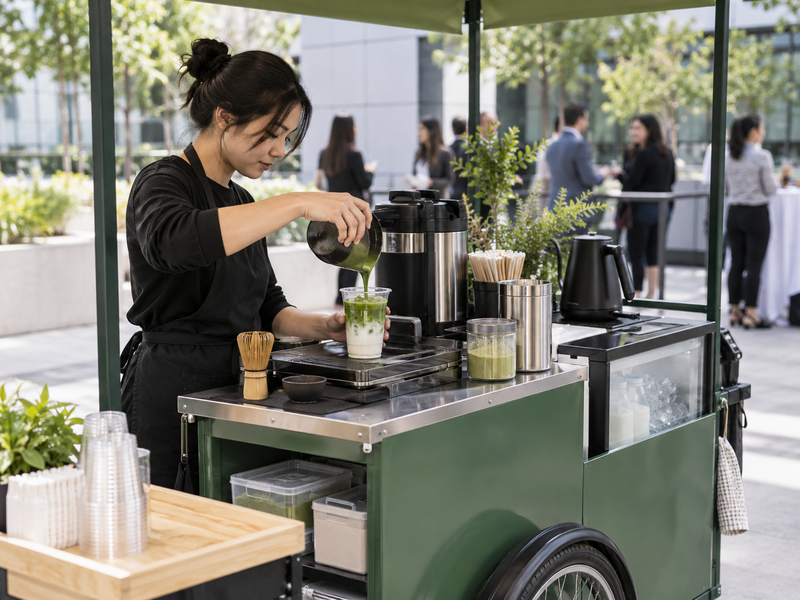
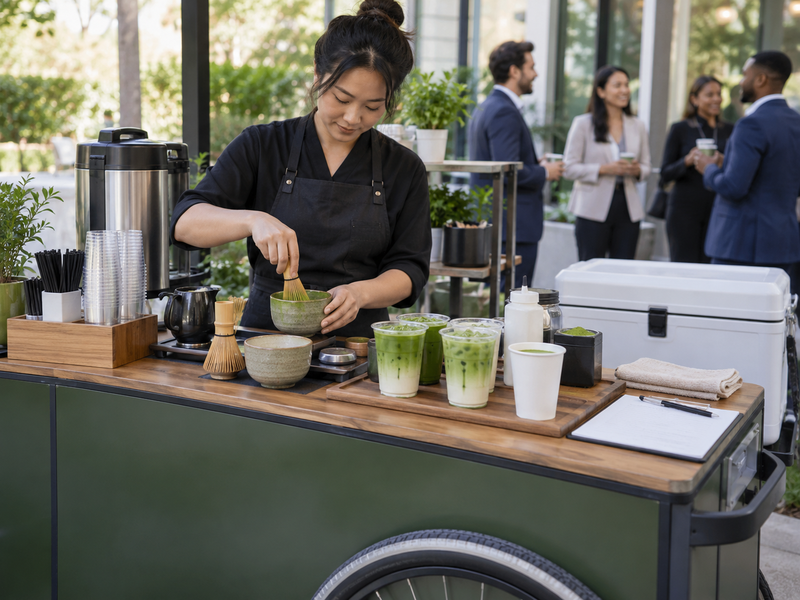
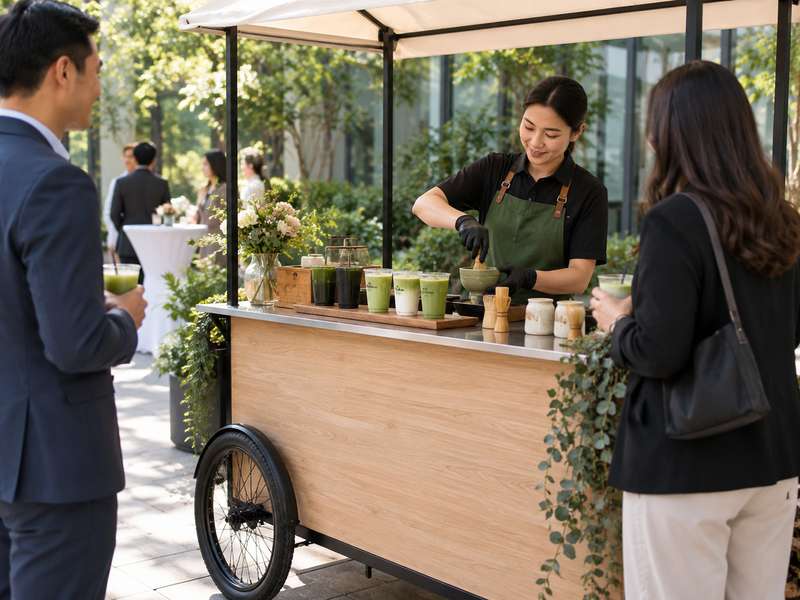
The reference describes a barista whisking matcha to order and pouring it over milk and ice. A caterer can offer that visible preparation, a faster batched concentrate prepared under its approved process, or a restricted menu with one signature latte. These choices produce different queue times and equipment needs. Put the promised drink size, flavor options, service hours and estimated cups in the event proposal. State whether cups, straws, lids and branded materials are included.
Ask the client when guests will arrive. A three-hour event with one concentrated break can create a harder peak than a shorter reception with steady traffic. Confirm whether the cart serves all guests or sits beside other beverage stations. Name the peak. An average cups-per-hour number hides the fifteen minutes after a keynote or ceremony. Photograph the intended cup and write a sensory target for the matcha, milk and sweetness so staff can check quality after transporting ingredients. A mobile setup should deliver the same approved drink that the client tasted in the planning session.
| Service promise | Confirm with client | Operational effect |
|---|---|---|
| Drink menu | Number of recipes | Prep and queue time |
| Cup size | Ounces or milliliters | Ingredient forecast |
| Service period | Start, peak and end | Staffing |
| Guest choice | Milk and sweetener options | Stock and allergen setup |
2. How should guest count become a throughput plan?
Time a complete order, not only whisking
Measure a full service cycle: greeting, taking an order, dosing matcha, mixing, adding milk and ice, lidding, payment if any and handing over the cup. Run the test with the actual menu and two or three staff, then record cups completed in a timed interval. Use the measured rate to model the expected peak arrivals. A provider’s claim about how many guests one cart serves applies to its own equipment and team, not automatically to another operation.
Make a simple queue model for the busiest interval. If guests are expected in one thirty-minute block, compare the number wanting matcha with measured cups possible in that period. Include staff breaks and restocking time. If capacity falls short, shorten the menu, pre-position ingredients, add a second production position or agree to a longer service window. Count the handoff. Drinks can be made quickly yet pile up if one person must also collect payment and answer questions. This throughput trial is an internal planning method, not a guarantee about event attendance.
| Throughput input | Source | Use |
|---|---|---|
| Expected matcha orders | Client estimate | Demand case |
| Peak arrival window | Event schedule | Queue case |
| Timed cups per station | Rehearsal | Capacity |
| Restock minutes | Rehearsal | Effective service time |
3. Which menu fits the service window?
Limit variation where it slows the line
Offer recipes the cart can make consistently with its water, refrigeration and workspace. A plain iced matcha latte, one sweetened version and one plant-based milk option may be easier to serve than a long menu of fruit purées. A hot drink adds heating equipment and different vessel handling. Taste every planned recipe at the event’s expected serving temperature and in the actual cup. Choose matcha based on flavor in those drinks, not a grade label alone.
Prepare recipe cards with grams of matcha, water volume, milk volume, ice weight and syrup dose. Record allergen information for dairy and any plant-based drinks. If the client asks for a custom flavor or branded cup, set an artwork and ingredient approval date before purchasing. Rehearse the menu together. A recipe that takes forty seconds alone may take much longer when the same station handles three milk choices and a fruit topping. Our barista training guide gives wider drink consistency checks; an event menu needs additional speed and transport tests.
4. What must the venue confirm before load-in?
Check the route from vehicle to serving point
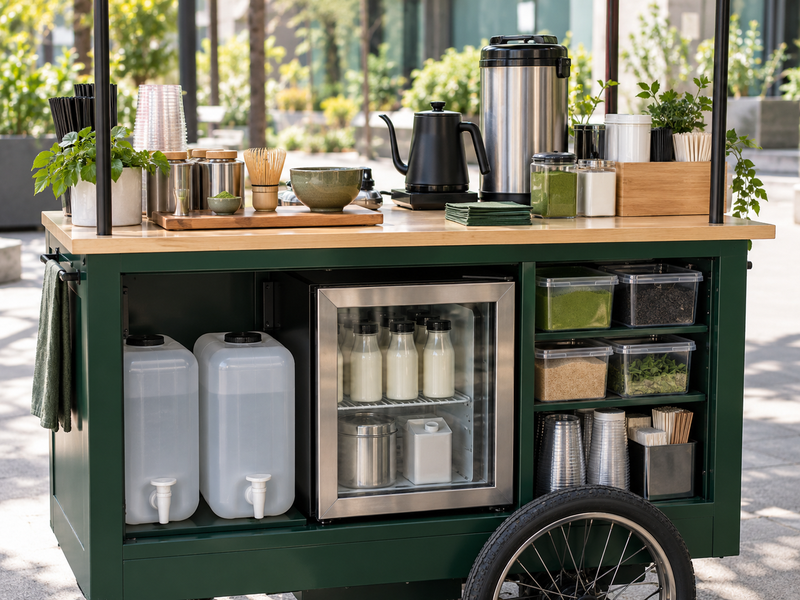
Ask for a site map showing vehicle access, loading time, elevator dimensions, door widths, steps, floor protection requirements and the exact cart position. A cart that fits the floor plan can still fail to pass a narrow service corridor. Confirm whether outdoor ground is level and suitable for loaded wheels. Check weather cover and a backup position if the event is outside. Ask who signs off the final location and when the caterer may begin setup.
The 58 Hester reference asks for a clear path, a defined footprint and power for its own carts. Use those as prompts, not dimensions for a different cart. Measure the actual cart, side tables and queue area. Mark where guests will enter and exit so the line does not block catering traffic or emergency routes. Walk the route. A phone description of “ground-floor access” can hide a curb, tight turn or long push from the loading bay. Confirm permits, insurance or site requirements with the event organizer and local authority where applicable.
| Venue item | Evidence | Lead owner |
|---|---|---|
| Load-in route | Dimensions and photos | Venue coordinator |
| Cart footprint | Measured layout | Caterer |
| Queue area | Floor-plan mark | Event planner |
| Outdoor backup | Weather plan | Event planner |
5. How should water, power and waste be planned?
Specify utilities in units the venue can verify
List every powered device and its nameplate demand, then ask the venue to confirm circuit availability, outlet location and cable-routing rules. A kettle, refrigerator and blender may not all be able to share the same outlet. Have a qualified person review electrical needs and extension equipment. For water, estimate preparation, handwashing, utensil cleaning and spare volume from a timed trial. Confirm the approved potable-water source and wastewater disposal route before arriving.
The FDA Food Code is a US model for retail and temporary food operations, including water and holding provisions. Local event permits and the caterer’s approved plan govern the actual setup. Do not assume bottled water on a shelf replaces a required handwashing arrangement. Measure the return flow. Melted ice, rinse water and empty milk containers need a waste route that does not cross the customer queue. Include bins, liners and end-of-event removal in the venue agreement.
6. How much chilled stock and reserve material is needed?
Forecast by cups and protect the cold chain
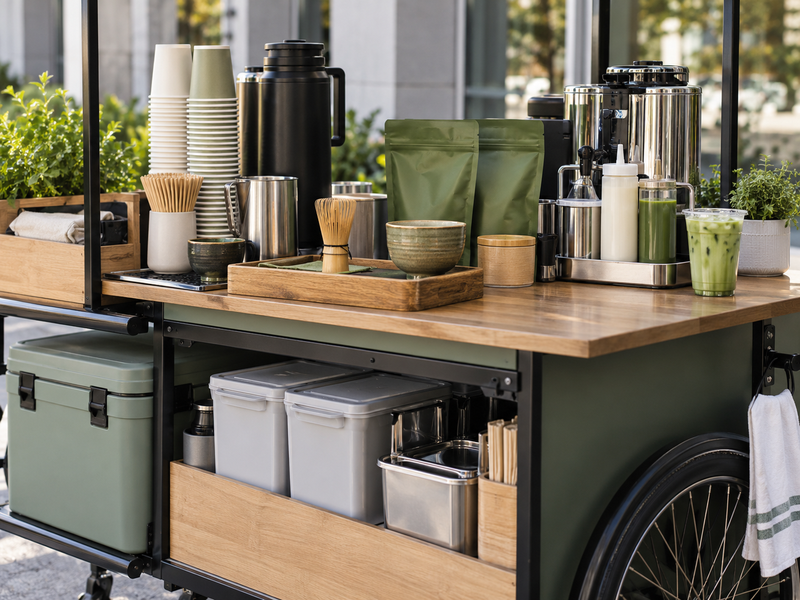
Multiply expected cups by the approved recipe dose for matcha, milk, ice and syrup. Add an explicit reserve for demand uncertainty and losses; choose the percentage from event history or a documented planning assumption. Divide stock between ready-to-use material at the cart and sealed reserve stock held under the business’s approved storage plan. Label containers with ingredient and batch information. Keep a count sheet so staff can see when to request replenishment.
Milk and prepared fruit bases need temperature control according to the local food-safety plan. The FDA Food Code offers a US model, but the caterer must verify its site rules and equipment. Check cooler capacity while fully loaded, during transport and at service. Record thermometer readings if the plan requires them. Budget the ice twice. Ice used in drinks and ice used to keep ingredients cold serve different purposes and should appear on separate lines. Never infer a safe holding period from the event’s length alone.
| Stock line | Formula | Reserve question |
|---|---|---|
| Matcha | Grams per cup × forecast cups | Extra sealed pack? |
| Milk | Milliliters per cup × mix forecast | Cold capacity? |
| Drink ice | Grams per cup × forecast cups | Refill source? |
| Cooling ice | Cooler plan | Separate from drink ice? |
7. How should the cart and staff be arranged?
Give each task a place and an owner
Lay out a sequence from order to drink handoff. Keep cups, matcha, water, whisking tools, ice, milk and lids within safe reach while separating waste and used utensils. Decide who takes orders, who prepares tea, who finishes cups and who restocks. One person may cover more than one role at a small event, but the handoff should still be written. Test the layout with a full cart and actual staff, not a diagram alone.
Use labels for milk choices and separate utensils or procedures according to the approved allergen plan. Give the person who handles cash or a tablet a way to return to food work under the hygiene procedure. Watch the crossing hands. If the finisher repeatedly reaches across the tea maker for ice, the layout will slow down and spill during a rush. Move stock or swap roles, then time the revised cycle. A second cart should have its own utility and stock plan rather than relying on the first station’s capacity.
8. What belongs in the setup and service timeline?
Schedule before the first guest arrives
Write a timeline backward from the promised service start. Include travel buffer, venue access, unload, cart movement, utility connection, handwashing setup, cooler check, ingredient staging, recipe test and staff briefing. Ask the venue when deliveries may enter and whether another vendor will occupy the same loading bay. The client should know the latest time it can change the menu or guest count without disrupting purchasing and prep.
During service, mark planned restocks and staff breaks. At the end, allow time for stock count, waste removal, equipment cleaning, utility disconnect and venue inspection. Do not quote teardown as instantaneous. Run the clock once. A rehearsal at the actual venue, or at least a measured mock setup, will expose missing cables and long walks to the ice reserve. Keep one contact list for venue, event lead and the person authorized to change the service plan.
| Milestone | Planned time | Evidence of completion |
|---|---|---|
| Load-in | Venue slot | Cart at position |
| Utility test | Before food setup | Power and water confirmed |
| Recipe check | Before doors open | Approved sample cup |
| Teardown | After service | Venue handoff signed |
9. How should the team handle interruptions?
Define a response before the queue forms
List likely disruptions: power loss, late load-in, cooler failure, missing ice, equipment fault, a sudden guest surge or a menu ingredient running out. Assign a response and decision owner for each. A backup kettle or water source may help only if it fits the site’s electrical and food-safety approval. If a chilled ingredient leaves approved conditions, follow the caterer’s documented discard procedure rather than guessing from appearance.
Give staff a short menu fallback: which drinks remain possible, how the client is notified and what the sign will say. Recalculate throughput if the backup method takes longer. If a queue blocks an access route, move pickup or pause orders with the venue’s cooperation. Practice one failure. A rehearsal with the primary whisking station unavailable shows whether staff can keep serving safely and whether reserve stock is reachable. Record what happened after any real interruption so the next event plan reflects evidence.
10. What closes the event and improves the next one?
Reconcile cups, stock and venue handoff
At teardown, count served cups, unused sealed stock, open ingredients and waste by category. Compare actual demand with the forecast and peak service rate. Record queue observations, equipment faults, restock trips and the time the cart cleared the venue. Check that wastewater, trash and borrowed power equipment were handled under the venue agreement. Obtain a final sign-off if the site requires one.
Use the numbers to revise the next quote and load list. If staff used twice the planned drink ice, find whether cup fill or guest mix changed. If the queue peaked for only ten minutes, a menu simplification may be more useful than an entire second cart. Matcha Village can discuss powder selection and bulk supply for mobile service, but the caterer should test each proposed lot in its transported recipe. Keep the run sheet. Actual cup counts, stock movement and setup minutes make the next event plan more accurate than memory or a polished event photograph.
FAQ
Q1: How many guests can one matcha cart serve? Time the actual menu and staff, then compare measured peak capacity with the event arrival schedule.
Q2: What venue information should be requested? Ask for load-in route, cart footprint, queue area, utilities, water, waste and site requirements.
Q3: How much matcha should be packed? Multiply dose per cup by forecast demand, then add a documented reserve based on uncertainty and prior events.
Q4: Can milk be kept at the cart all day? Follow the caterer’s approved temperature-control plan and local rules; validate cooler capacity during transport and service.
Q5: What should the team record after service? Count cups, stock, waste, queue peaks, interruptions, setup time and teardown handoff.