
A matcha latte with protein powder combines tea, a specified dairy or plant protein ingredient, and a milk base. For a café, the challenge is a smooth hot or iced cup that staff can repeat without clumps, excessive foam, or misleading nutrition copy. This guide focuses on latte service. It differs from a thick matcha protein shake and from an animal-sourced collagen latte.
Search-intent reference: “Protein Matcha Latte”. The title signals a simple protein-and-tea cup; this article develops the separate commercial specification.
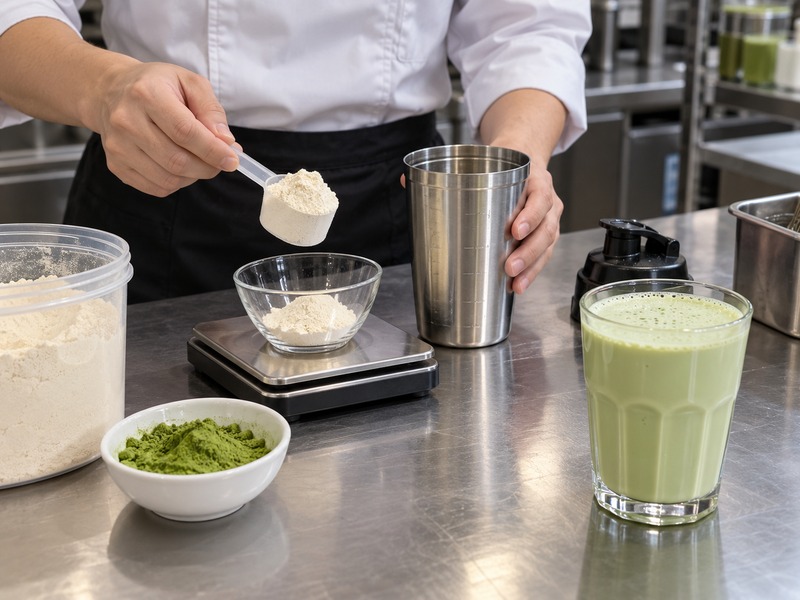
1. What should this latte promise customers?
Set texture and ingredient expectations
A protein latte should still taste like matcha and milk. Decide cup size, sweetness, tea intensity, target body, temperature options, and whether powder flavor may be noticeable. Customers may expect a drinkable latte rather than a thick meal-style shake. Test that distinction in blind cups. Use the cup as the brief: an ingredient list cannot tell a bar team how the finished drink should pour, foam, and taste after a short wait.
Record whether the menu will offer dairy protein, plant protein, or both. Each choice changes allergens and may change the customer’s interpretation of the drink. A plant milk does not make the beverage dairy-free if whey protein remains in the formula. Avoid outcome promises about recovery, muscle gain, or weight control unless evidence and local law support the exact wording. An internal formulation target can include a measured protein ingredient dose without turning it into a public nutrition claim. Keep menu language tied to verified ingredients and tested finished composition.
2. Which protein powder belongs in a latte?
Compare source and reconstitution
Whey, casein, soy, pea, and blended plant proteins behave differently in milk and hot water. They also carry different allergens, flavors, sweeteners, gums, and serving instructions. Ask for the full ingredient statement, protein content basis, source, lot traceability, storage directions, and technical handling guidance. A vanilla-flavored powder may contain enough sweetener to change the whole latte formula. Read past the front label: “protein powder” describes a category, not a consistent raw material.
Prepare coded samples at equal finished mass and evaluate solubility, graininess, foam, aftertaste, and color after adding matcha. A powder that looks smooth in a shaker bottle may leave visible particles in a café cup. Check how quickly its texture changes while waiting. For a chain, use a supplier with stable specifications and notice of formula changes. If procurement proposes a substitute, repeat both hot and iced trials. Supplier cost per kilogram matters less than cost per accepted cup at the amount needed for the desired taste and texture.
| Protein route | Potential service benefit | Watchpoint |
|---|---|---|
| Whey blend | Familiar dairy profile | Milk allergen and hot behavior |
| Soy | Plant protein route | Soy label and flavor |
| Pea blend | Plant-based option | Graininess and aftertaste |
| Flavored blend | Fewer syrup steps | Hidden sweetness and gums |
3. Which matcha holds its flavor in a protein base?
Test the finished latte, not dry tea
Protein ingredients can add cereal, dairy, or vanilla notes that compete with tea. A beverage-suitable matcha needs to remain recognizable without harsh bitterness when the selected protein and milk are present. Compare candidates at equal tea mass in the full recipe. Taste at handoff and after a short, realistic wait. Check the color: beige or yellow powder can dull a green latte even when the matcha itself looks bright.
Request matcha identity, origin, lot code, storage guidance, ingredient statement, and test documents relevant to the sales market. Compare particle feel and sediment, since a protein mix can hide matcha clumps until the drink settles. If a premium grade is proposed, quantify the value in the complete latte and in per-cup cost. Matcha Village offers bulk tea discussion through its homepage; send the exact protein ingredient and base milk in the sample brief. An approved grade should be supported by repeat trials, not a photograph of powder alone.
4. What pilot formula supports a controlled trial?
Weigh powder dose and liquid mass
The table gives an illustrative 400 g hot drink before foam loss, not a validated production formula or a nutrition claim. It uses one specified protein ingredient. If that ingredient is pre-sweetened, the added syrup level should be tested again. Record all grams and the resulting poured mass. Keep a baseline: changing powder source, tea grade, milk, and sweetener at once makes texture complaints impossible to trace.
Prepare another version with a different protein dose while holding the other ingredients fixed. Ask tasters to describe graininess, sweetness, tea note, and body rather than giving only a preference score. Track residue in the mixing vessel because it alters the actual ingredient amount served. A hot cup should be evaluated after cooling for several minutes; an iced adaptation needs its own ice and liquid calculation. Any nutrition panel or “high protein” wording must rely on the final product and the rules of its selling market, not the number printed on a powder scoop.
| Ingredient | Illustrative 400 g hot cup | Trial role |
|---|---|---|
| Specified milk or plant base | 300 g | Body and background flavor |
| Water for premix | 64 g | Powder dispersion |
| Protein powder | 20 g | Measured ingredient dose |
| Matcha | 4 g | Tea flavor and color |
| Syrup | 12 g | Sweetness adjustment |
5. How should staff build a hot version?
Separate dispersion from heating
Mix matcha into a small measured liquid portion, then disperse protein according to the supplier’s guidance and the tested café method. Combine with milk under a controlled heating process. Some protein systems thicken, foam, or form visible clumps under heat, so the exact temperature and sequence need bench trials. Watch the wand and pitcher: a smooth cup top can conceal powder coating equipment walls or settling at the base.
Record water temperature, milk temperature, mixing time, tool model, and poured mass. A hot version made on one steamer may not behave the same on another. Test both peak-period output and the cleaning time needed to remove protein residue. If staff use a powdered premix, validate its blend uniformity and moisture protection before replacing separate portions. A safe hot service method follows the site’s food safety and allergen procedures. Do not heat an ingredient outside its supplier directions merely to dissolve a stubborn clump.
6. What changes in an iced protein latte?
Cold mixing and ice need their own design
Cold milk can slow powder wetting, and ice can make undispersed protein harder to detect until the drink sits. Establish a liquid premix before adding ice, then test a shaker or blender using the actual store equipment. Count ice in the served mass and note how the cup tastes after melt. Inspect the base: pale sediment and green matcha particles are different symptoms that may need different process changes.
Do not simply pour a hot formula over ice. That changes concentration and may create an inconsistent cup. Write an iced formula with its own milk, water, protein, matcha, syrup, and ice masses. Observe foam after shaking; a thick layer can make fill level look generous while reducing liquid yield. If a plant milk version is offered, test the exact carton, since stabilizers and added oils affect mixing. Set a pickup window from sensory and applicable food safety controls. A complete drink should remain acceptable without expecting a customer to repair a badly dispersed formula.
| Format | Process focus | Defect to record |
|---|---|---|
| Hot dairy | Heating and foam | Clumps or scum |
| Hot plant | Base compatibility | Split texture |
| Iced dairy | Cold premix | Bottom sediment |
| Iced plant | Powder wetting and ice | Grainy finish |
7. How can foam and sediment be controlled?
Measure what the customer receives
Protein powders can create large foam volumes in shakers and blenders. Matcha particles can settle even when the protein stays dispersed. Record poured liquid mass, foam height after a fixed time, sediment, and mouthfeel. A cup that looks full at handoff may shrink as foam collapses. Weigh the finished drink: visual fill alone cannot detect a short pour. Compare staff members and equipment settings during a normal service trial.
If foam is excessive, check mixing speed, ingredient order, protein type, and milk system before adding an untested anti-foam ingredient. If sediment appears, sample the base and surface separately to identify whether it comes from protein or matcha. A sieve can catch visible lumps during a trial, but it may remove part of the intended powder dose. Track what is retained before adopting it as a service step. A central premix could improve uniformity, yet it adds batch testing, allergen handling, and storage requirements. Fix the process in a way staff can repeat quickly.
8. Which quality records support a chain rollout?
Link complaints to ingredients and methods
Retain current specifications for matcha, protein powder, milk base, and syrup. Record lot codes, portion method, equipment setting, cup mass, and sanitation checks at service. If a drink tastes chalky, review protein lot and dispersion. If green color fades, examine tea lot and base color. A complaint about excess foam can trace to shaker method rather than raw material. Name each symptom: a general “bad texture” category hides the practical cause.
Store powders protected from moisture according to supplier directions and label opened packs. Train managers to compare a coded reference cup with current production after any ingredient change. Keep allergen cross-contact practices clear when whey or soy powders share a station with other products. A new supplier or new formula version needs a short reapproval in both hot and iced service. If the concept moves to ready-to-drink packaging, commission a separate process, package, microbiological, sediment, and shelf-life program. A café standard cannot validate a bottle.
| Complaint | Likely check | Useful record |
|---|---|---|
| Chalky bite | Protein source and mixing | Lot and tool setting |
| Green clumps | Matcha premix | Order of addition |
| Foam collapse | Shaker and milk base | Timed cup photo |
| Short fill | Foam volume and pour | Finished mass |
9. How should labels and nutrition claims be checked?
Separate ingredient quantity from a public claim
“Made with protein powder” must accurately describe the formula. A declared protein amount or nutrient-content claim requires calculation or analysis of the finished serving and review under the target market’s rules. Powder labels may report protein per scoop, yet the scoop, serving size, and whole drink differ. The FDA explains claim categories for U.S. foods; other markets have their own criteria. Approve wording after the recipe: nutrition copy tied to an early pilot can become wrong when milk or powder changes.
Review allergens across every ingredient. Whey is milk-derived; soy protein may require soy declaration; flavored blends can carry more ingredients than staff expect. A plant-base option is not dairy-free if its protein is whey. Avoid unverified claims about fitness results, satiety, recovery, or health outcomes. If a chain sells a similar matcha protein shake, distinguish the latte by its drinkable body, tea and milk character, and hot-service capability. Menu descriptions should help customers choose a format without implying a clinical effect.
10. How should buyers source and cost the latte?
Compare accepted cups across suppliers
Calculate powder grams, matcha, milk, sweetener, cup, lid, labor, cleaning, waste, and remakes per accepted serving. A low-priced protein powder may require a higher dose or create a reject rate that removes its apparent saving. A costly powder may be worth the price only if the final cup meets a defined sensory target. Use real shift data: powder left in pitchers and foam-related underfills belong in the cost calculation.
Send the protein supplier a hot and iced application brief, target market, dose range, pack preference, projected volume, allergen needs, and required documents. Send the tea supplier the full milk and protein matrix. Matcha Village can discuss bulk matcha via its contact page; protein ingredient qualification remains a separate supplier decision. Approve both ingredients only after repeatable cup trials and label review. A sustainable menu item needs a clear drink specification, a workable bar method, and a margin based on saleable output.
| Cost element | Measure | Decision use |
|---|---|---|
| Protein | Actual grams per accepted cup | Ingredient cost |
| Matcha | Grade and grams | Tea presence |
| Service | Build and cleaning time | Peak labor |
| Waste | Residue and remakes | True margin |
FAQ
Q1: Can any protein powder be added to a latte? No. Source, flavor, solubility, heat behavior, and allergens need testing in the complete drink.
Q2: Is a whey latte dairy-free with oat milk? No. Whey remains a milk-derived ingredient.
Q3: Why does an iced cup have sediment? Check cold premixing, powder source, matcha particles, and hold time before changing the formula.
Q4: Does adding protein powder permit a high-protein claim? Not automatically. Review finished composition and market claim criteria.
Q5: Is this the same as a protein shake? This brief targets a drinkable tea-and-milk latte with hot and iced service standards.