
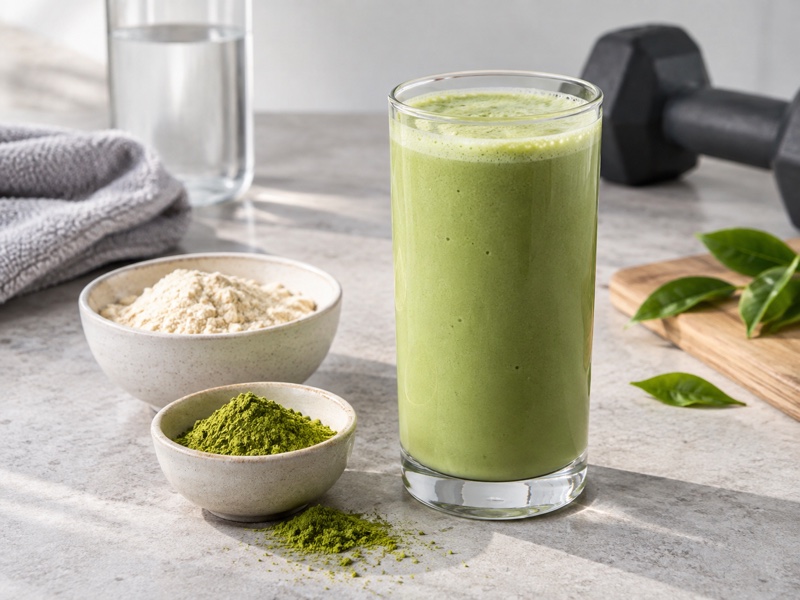
A matcha protein shake combines tea powder with a protein source in a drink meant to deliver both flavor and a measurable nutrient amount. The development problem is that protein can taste chalky, matcha can taste astringent, and a thick cold shake can hide either problem until the final sip. Run a matrix test with the actual protein, liquid, and serving temperature before choosing a tea grade. The 310 Nutrition matcha shake recipe shows a consumer blending format; a brand or café needs consistent protein delivery, dispersion, ingredient control, and a truthful label or menu claim.
1. Who will drink the shake, and when?
A café customer ordering breakfast on the way to work has a different expectation from a gym customer buying a post-workout bottle. Define serving size, desired protein amount, sweetness, viscosity, and drinking time. A thick smoothie can feel satisfying in a wide cup yet frustrating through a narrow straw. A ready-to-drink bottle needs a different shelf-life and processing plan from a shake blended on demand. Use those contexts to write a product brief before testing flavors.
Include an unsweetened or lightly sweetened control if the concept allows it. Some audiences expect tea bitterness, while others expect a dessert-like shake. Blind-taste the final drink at the proposed temperature and after the typical time between preparation and consumption. Ask whether the matcha remains recognizable after protein and flavorings, whether the mouthfeel stays smooth, and whether a sediment ring forms at the bottom. Those questions are more useful than a single “liked it” score.
| Product route | Main use case | Development risk |
|---|---|---|
| Made-to-order café | Immediate drinking | Staff dose variation |
| Powdered mix | Consumer shakes later | Reconstitution and moisture |
| Chilled RTD | Retail distribution | Process and shelf stability |
2. Which protein source should the team test?
Whey, casein, soy, pea, and blends each contribute different flavor, body, and dispersibility. Do not choose a protein solely by its grams per scoop. Prepare each candidate at the same target protein content in the same liquid, then add matcha at a fixed dose. Taste plain protein controls first; a bitter or beany base may make tea look worse than it is. Check the ingredient’s complete specification, including sweeteners and emulsifiers already present in a commercial protein blend.
Protein selection also changes allergen and dietary claims. Whey and casein derive from milk, soy is a major allergen in the US, and plant-based does not automatically mean free of cross-contact or other allergens. The FDA food allergy guidance is a starting point for US labeled products; verify rules for each market. If the shake will be positioned as vegan, review every ingredient and processing aid rather than treating the protein source as sufficient proof.
3. What matcha profile survives a protein matrix?
Pure matcha gives a brand more control than a pre-sweetened latte mix. Compare several grades in the finished protein base, not only in water. A powder with gentle umami may disappear under vanilla or cocoa flavor, while a stronger powder may sharpen a pea-protein aftertaste. Use matched tea masses for the initial screen. Then adjust each finalist to a comparable perceived tea intensity and calculate cost per serving. That shows whether a lower-cost powder still wins after its higher use rate is counted.
Matcha Village offers pure matcha and custom blends for food and beverage applications. Request a lot-specific sample and documents needed for your market and quality plan. Record dry powder color, but judge the color in the blended drink after chilling. Some protein bases already have a tan or gray tone that dulls green. A brighter powder cannot always overcome an incompatible base without adding too much tea.
| Candidate | Fixed comparison | Approval question |
|---|---|---|
| Matcha A | Same protein and tea mass | Is tea clear without harshness? |
| Matcha B | Same protein and tea mass | Does mouthfeel improve? |
| Matched-flavor retest | Adjusted tea mass | Which costs less per approved cup? |
4. How do powder order and mixing affect chalkiness?
Test the order of addition. Hydrating protein first may reduce dry pockets, while a small matcha slurry can prevent green specks. If both powders are tipped together into cold liquid, a blender may disperse them quickly but the resulting foam or heat rise can alter the drink. Compare a hand shaker, blender, and commercial mixer using the same ingredient masses. Inspect the lid, vessel wall, and bottom for retained powder. A product can meet protein targets on paper but deliver less if a visible paste remains in the blender.
Test consumer-style mixing
Measure viscosity and graininess immediately and after the intended hold. Some formulas thicken as protein hydrates; others form sediment. A useful test includes a standard straw or bottle opening and the final sip. If a guest must shake repeatedly, decide whether that instruction is acceptable for the channel. For a powdered retail product, test consumer-like mixing with ordinary cold water or milk, not only a laboratory high-shear mixer.
5. How should sweetness be balanced against tea and protein?
Run a sweetness ladder after selecting a plausible protein and tea pair. Sugar, fruit, syrup, or nonnutritive sweeteners can each mask a chalky note differently. Banana makes a shake familiar but can dominate matcha and complicate color. Vanilla can support a creamy profile; cocoa creates a different product. Keep the total drink mass steady as sweetener changes. Taste at the actual service temperature, since cold can suppress sweetness and aroma. A sample that tastes balanced at room temperature may seem bland straight from a cooler.
Do not cover a bad base with ever more sweetener. Compare the protein control and matcha version at each sweetness level. If all high-protein trials need a dessert level of sugar, revisit the protein ingredient or target. Record the exact sweetener source and grams per serving for nutrition work. A café menu can offer a choice of sweetness, but a branded bottle needs one validated formula and label.
| Adjustment | Possible benefit | Watch for |
|---|---|---|
| More tea | Clearer matcha | Astringency and sediment |
| More sweetener | Softer bitter edge | Sugar and flavor masking |
| Flavor addition | Familiar profile | Tea becomes unrecognizable |
| Different protein | Better base taste | Nutrition and cost change |
6. What liquid and temperature should be standardized?
Water makes protein and tea defects easier to detect, while milk or plant beverages add body and sweetness. Select the intended liquid and test any customer substitutions separately. A shake built with dairy milk can taste thin or grainy when made with a different oat beverage. Record starting liquid temperature, ice mass, blending time, and final temperature. Ice melt changes both viscosity and nutrient amount per ounce; portioning by cup fill alone can hide a diluted drink.
For a made-to-order bar, test the first and last drink in a batch if the operation preps a concentrate. For packaged RTD, do not extrapolate from a countertop blender: heat treatment, homogenization, packaging, and storage can change color, flavor, and protein stability. Work with a qualified beverage technologist and process authority for the actual route. A cold shake tasting is a screening experiment, not commercial shelf-life validation.
7. How can separation be judged fairly?
Prepare the same shake in its final cup or bottle, then inspect at handoff, after a short wait, and at the proposed consumption limit. Mark any clear layer, foam cap, sediment, or protein clump. Gently invert the bottle or stir the cup and see whether it recovers. A small amount of reversible settling may be acceptable for a freshly blended drink, but a shelf-stable retail bottle has a much stricter appearance and stability challenge. Define acceptance based on the channel before judging samples.
Do not use green color as a substitute for stability. Matcha particles and protein can both contribute sediment, so compare a protein-only control and a matcha-only control. If the full formula separates while each control remains stable, an interaction may be responsible. Change one factor at a time: powder grade, protein source, liquid, or mixing method. This approach saves development cycles and avoids adding stabilizers without knowing what problem they need to solve.
| Sample | What it isolates | Observation |
|---|---|---|
| Protein only | Protein hydration | Chalkiness or settling |
| Matcha only | Tea dispersion | Green sediment |
| Full shake | Interaction | Layers, grain, flavor |
8. What nutrition and caffeine statements are supportable?
Calculate or test the nutrient profile of the finished serving using reliable ingredient data and the applicable labeling method. “High protein” or “good source” is a regulated nutrient content claim in the US, not a casual synonym for “contains protein.” The FDA’s label-claims guidance explains that such claims must meet authorized criteria. Have regulatory staff review serving size, protein declaration, and any other claims. A café may face different menu requirements, but its stated grams should still reflect the delivered drink.
Check the caffeine statement
Matcha adds caffeine, yet powder mass alone does not establish an exact finished serving amount. Obtain lot or ingredient data if a numerical caffeine statement is planned. Avoid promising energy, focus, recovery, or weight benefits merely because protein and tea share a cup. The product can be described precisely by flavor, ingredient source, texture, and measured nutrition. Claims that outrun evidence can create more trouble than they create demand.
9. What belongs in a commercial test sheet?
List ingredient SKUs and lots, protein grams targeted per serving, matcha mass, liquid mass, ice, mixing order, equipment setting, and serving vessel. Record the mass of finished drink delivered to a customer and any residue left in the machine. Add sensory targets for tea flavor, sweetness, viscosity, color, and sediment at defined times. For a dry mix, include reconstitution instructions and the water or milk used in validation. This sheet should allow another operator to reproduce the result without watching the developer.
Procurement should calculate cost per saleable drink, not cost per dry powder kilogram. Include protein, tea, liquid, packaging, cleaning, and waste from overfilled or rejected portions. If a higher-grade matcha needs less powder or wins a simpler flavor system, it may be cheaper in the finished product. Ask suppliers for application samples and lot records before committing to a large order. Keep retained material from the approved trial for incoming checks.
| Test-sheet field | Measurement | Reason |
|---|---|---|
| Protein target | Grams per delivered serving | Nutrition accuracy |
| Matcha dose | Grams per serving | Flavor and caffeine review |
| Mix sequence | Time and equipment | Repeatable dispersion |
| Hold observation | Interval and condition | Channel suitability |
10. What makes the formula ready for sale?
Approve the exact drink, not an ingredient idea. The shake should deliver its measured protein target, recognizable matcha flavor, acceptable texture through the consumption window, compliant claims, and a cost that supports the channel. Run the final method with normal staff and equipment. Taste several consecutive servings; the first and last should not differ because tea settled in a pitcher or protein pasted onto the blender wall. A retail version also needs process and shelf-life validation in its actual package.
Use a sample request from Matcha Village to compare tea options in the selected protein base. Keep the winning lot and formula as controls for reorder testing. If the product fails, identify whether the problem comes from protein, tea, sweetness, or mixing before adding more flavor. A smooth final sip and an accurate label will do more for repeat purchase than a bright green first photograph.
FAQ
Q1: Can a café use any protein powder? Test the exact powder; sweeteners, flavors, and texture vary widely.
Q2: Why does the shake taste chalky? Protein choice, hydration, high solids, and tea dose can contribute. Compare single-ingredient controls.
Q3: Is a plant-protein shake automatically vegan? Check every ingredient, processing aid, and relevant cross-contact statement.
Q4: Can a blender trial justify a bottled shelf life? No. Bottled products require validation in their actual process and package.
Q5: Can a brand say “high protein”? Only if the finished product meets the applicable legal criteria and the claim is reviewed for its market.