
A matcha latte with heavy cream can use cream in the liquid base or as a separate whipped layer. Those two routes produce different texture, cost, and service risks. Cafés need a defined recipe and chilled dairy controls before offering either. This guide compares the routes for a B2B menu team and differs from an Einspanner matcha guide focused on a sweet cream-topped specialty cup.
Search-intent reference: “Whipped Matcha Latte”. The title reflects interest in cream texture; the operational guidance here is original.
1. Which heavy-cream format is the product?
Choose the intended bite before buying ingredients
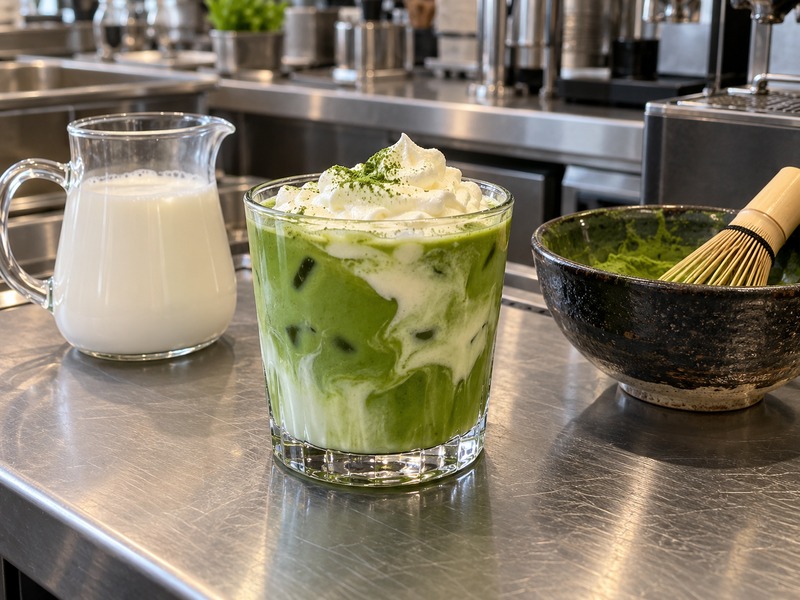
Cream blended into the latte increases body throughout the cup. Whipped cream on top creates a layered sip and a visual finish. A café can offer both, but they need separate recipes, service methods, and cost sheets. Decide whether customers should stir before drinking or experience the cream layer separately. Define the product: a photo of a white cap over green tea cannot tell staff how the drink should taste by the final sip.
Set serving mass, tea intensity, sweetness, cream proportion, hot or iced availability, and the expected pickup interval. An integrated cream latte may feel rich but make green color paler. A topping can keep the green base visible while adding more preparation time. Test both in the planned cup and with the planned lid. A tall whipped cap can be crushed by a flat lid or spill during takeaway. Menu copy should describe the actual format so customers do not mistake a cream-in-base latte for a dessert-style topped drink.
2. What should a dairy cream specification cover?
Fat, handling, and supplier consistency
“Heavy cream” can refer to products with different fat levels, stabilizers, processing histories, and whipping behavior across markets. Select the exact commercial item and request ingredient, allergen, storage, and shelf-life information from the supplier. Observe pour viscosity, whip response, flavor, and separation in the matcha cup. Test the carton: a kitchen trial with one cream cannot validate a future substitution simply because both are sold under the same category name.
Record delivery temperature and opened-pack handling under the café’s food safety plan. For whipped topping, measure yield and texture after a defined whipping procedure. For liquid cream, test how it blends with milk and matcha, including any oily film after waiting. A cream with added sugar or flavor changes the total formula and label. Dairy allergen disclosure must remain clear even when the rest of the drink uses a plant milk. Procurement should ask how supply interruptions and specification changes will be communicated to store operations.
| Cream property | Liquid-base trial | Whipped-top trial |
|---|---|---|
| Fat and body | Mouthfeel after mixing | Whip structure |
| Flavor | Tea masking | Top-sip balance |
| Storage | Chilled handling | Prepared topping hold |
| Ingredients | Label and allergens | Label and allergens |
3. Which matcha stays clear in a rich latte?
Screen tea against fat and dairy aroma
Heavy cream can soften bitterness and reduce the perception of delicate tea aroma. A grade chosen in water may appear weak when a cream layer reaches the tongue before the green base. Compare candidate matcha lots in both proposed formats at a fixed tea dose. Taste the base alone and the intended full sip. Look below the topping: a visually rich cup still needs a matcha layer with clear flavor after cream is mixed in.
Check color, aroma, bitterness, particle feel, and sediment at handoff and after a realistic wait. Request identity, origin, lot code, storage guidance, and test records suited to the sales market. A finer or higher-priced grade should be purchased only when the finished drink shows a difference worth its cost. Matcha Village describes bulk matcha supply on its homepage; give the supplier the exact cream and milk ratios when requesting samples. Keep a coded reference cup for later lot comparisons.
4. What pilot formula separates the two routes?
Record cream in the cup, not only the recipe name
The table gives two illustrative 400 g iced cups. Both use the same matcha mass, but cream sits in different locations. The whipped topping mass is measured after preparation, so its added air does not change the ingredient calculation by eye. These are starting designs, not validated menu recipes. Compare fairly: taste the cups in their intended manner and after a stir; do not infer that equal cream grams produce equal sensory results.
Keep the cream supplier item, milk base, syrup, cup, and ice consistent during the comparison. Weigh finished drinks and note how much cream remains on tools or in piping bags. A topped version may need less syrup in the base if the cream is sweetened. The table assumes unsweetened cream and a separate syrup dose. Test lower and higher cream levels by changing one variable per trial. A hot version needs another formula because ice and whipping behavior differ. Record the actual saleable yield after staff prepare several cups at normal pace.
| Ingredient | Integrated cream | Whipped top |
|---|---|---|
| Milk base | 230 g | 230 g |
| Water for matcha | 45 g | 45 g |
| Matcha | 4 g | 4 g |
| Heavy cream | 40 g in base | 30 g on top |
| Syrup | 11 g | 11 g |
| Ice | 70 g | 80 g |
5. How should liquid cream be incorporated?
Mix without hiding tea or making an oily layer
Disperse matcha in a measured water portion before combining it with milk and cream. Set the mixing order and tool on the actual café line, then inspect the cup after waiting. A rich mixture may look smooth at the surface while green tea particles collect below. Use a timed check: judge color, body, oil film, and tea flavor after the period a customer might spend walking from pickup to a table.
Pour cream by mass rather than a casual splash. A few extra grams can change cost and make tea harder to taste. Test the same formula in dairy milk and a plant base if both will be offered; cream still makes either cup dairy-containing. For hot service, record heating method and temperature under the cream and milk supplier guidance. Cleaning pitchers and frothers after high-fat dairy takes time, which belongs in the operating procedure. A chain should use a versioned recipe so staff do not improvise the proportion during a busy shift.
6. How should a whipped layer be made and held?
Control texture before it reaches the cup
A whipped layer needs a defined cream temperature, whipping method, target texture, and portion mass. Overwhipped cream may sit in a stiff mound that does not blend into the latte; underwhipped cream may run down the cup quickly. Test the actual dispenser or piping method that stores will use. Inspect the top at pickup: the layer should still match the menu photo after the normal handoff delay.
Prepared cream requires a safe chilled handling plan with a defined hold set by food safety staff. Record batch time, cream lot, tool sanitation, and remaining product at close. If sugar or flavor is mixed into the topping, include it in the ingredient and nutrition calculations. Taste the sip through the layer and the mixed drink. A thick topping can make the customer encounter only cream until they stir, so a spoon or clear serving cue may be needed. Compare portion waste from bags and dispensers before selecting equipment for a chain.
| Whipped-top check | What to record | Failure sign |
|---|---|---|
| Whipping endpoint | Time and texture | Stiff or runny layer |
| Portion | Grams per cup | Cost drift |
| Chilled hold | Batch time and temperature | Unsafe or poor texture |
| Takeaway | Lid fit | Crushed topping |
7. How do hot and iced cups behave differently?
Develop separate service specifications
Ice changes dilution and how long a whipped layer keeps its shape. A hot base changes cream texture and can make a topping melt into the cup. A liquid-cream hot latte may be easier to deliver consistently than a hot whipped-top version, but only a service trial can settle that choice. Watch the cup over time: the format must remain acceptable until the customer drinks it, not merely during the barista’s final pour.
Test with the intended takeaway lid and cup material. A hot drink with cream in the liquid phase needs temperature and foam checks; a topped hot drink needs a visual and safety review for the cream layer. An iced drink needs ice mass and sediment observations. Keep separate formula codes and training photos for every offered variant. If stores cannot execute all versions reliably, reduce the menu to the one with the clearest customer value and the most stable operating method. Do not use one generic “cream matcha” recipe for all temperatures.
8. Which food safety and allergen controls matter?
Manage a chilled dairy component
Heavy cream is a perishable dairy ingredient. Receiving, storage, opening, dispensing, and prepared topping holds should follow the café’s food safety plan and local rules. Keep cream protected from warm counters and unclean tools. Set a rejection rule for incorrect temperature, damaged cartons, and expired or unlabeled prepared batches. Keep lot traceability: a complaint about taste or texture should lead to the exact cream and matcha lots used in the cup.
Milk allergen disclosure is necessary for dairy cream, including a plant-milk latte finished with cream. Check syrups or flavoring for other allergens and use appropriate cross-contact practices. A “dairy-free” or “vegan” menu option cannot contain heavy cream. If a supplier changes cream formulation, revisit the label and whipping method. A ready-to-drink or packaged product needs its own processing, microbiological, and shelf-life work; a café’s chilled topping protocol does not support a retail bottle date.
9. What quality defects should managers log?
Separate ingredient and process causes
A pale cup may have too much cream or a weak matcha dose. Oil pooling can come from the cream or poor integration. A collapsed topping can reflect whipping endpoint, hold conditions, or lid contact. Green clumps point toward tea premixing. Record the symptom: “looks wrong” gives little guidance for correction. Use photos at a fixed interval and weigh several cups during a shift.
Compare the current drink with a reference prepared from approved lots. If a new matcha lot tastes weaker, test it in the same cream and milk base before blaming the tea. If topping yield changes, verify cream temperature, equipment, and the supplier specification. A manager should record remakes by cause so finance can see the real cost. Staff training can solve portion inconsistency; a formula change is appropriate only when the approved method itself fails. For a chain, a short audit card covering cream mass, cup weight, and appearance may be enough for daily checks.
| Defect | Possible check | Evidence |
|---|---|---|
| Weak tea | Cream dose and tea lot | Reference-cup taste |
| Oil film | Cream item and mixing | Timed surface photo |
| Collapsed top | Whip endpoint and hold | Batch and lid record |
| Green clumps | Matcha premix | Pitcher inspection |
10. How should a café cost and source the cream latte?
Include the cream station in unit economics
Cost matcha, milk, cream, syrup, ice, cup, lid, labor, sanitation, and remakes per accepted drink. Whipped cream has preparation and bag residue; integrated cream has pour variation and potential milk waste. Compare both at their final serving mass and menu price. Count the saleable cup: a cheap carton does not lower cost when the topping creates high waste or slower service.
Send a matcha supplier the exact cream format, base milk, tea target, monthly demand, market, pack preference, and document requirements. Ask the cream supplier for specification consistency and handling guidance. Matcha Village can discuss tea samples through its contact page. Test representative commercial lots in the actual recipe before signing off. The chosen format should have a clear tea note, a cream texture customers can understand, a safe service method, and a margin based on observed output.
| Cost line | Integrated route | Topped route |
|---|---|---|
| Cream | Pour grams | Whipped deposit grams |
| Labor | Mix and clean | Whip, portion, clean |
| Waste | Pitcher residue | Bag or dispenser residue |
| Pack | Standard lid fit | Top clearance |
FAQ
Q1: Can heavy cream be mixed into matcha latte? Yes, after testing tea flavor, body, dispersion, and the exact cream dose.
Q2: Is whipped cream the same formula as liquid cream? No. Topping structure and location require separate preparation and cost standards.
Q3: Is a plant-milk latte with heavy cream dairy-free? No. The cream remains a dairy ingredient.
Q4: How long can whipped cream wait at the bar? Set a chilled hold from the site’s food safety plan and validated handling method.
Q5: Can a cream latte be bottled from a café recipe? A packaged version needs independent process, package, and shelf-life validation.