
The best syrup for matcha latte service depends on tea grade, milk base, sweetness target, hot or iced format, and the customers a café serves. Vanilla, caramel, fruit, and spice syrups can each work, but a label or a single sip cannot establish a chain-wide choice. This guide gives buyers a measured comparison method. It addresses purchasing and dosing finished syrups, separate from making a matcha syrup.
Search-intent reference: “Best Syrups for Matcha Lattes 2026 | Barista Picks”. The title signals a flavor-selection search; the procurement framework here is original.
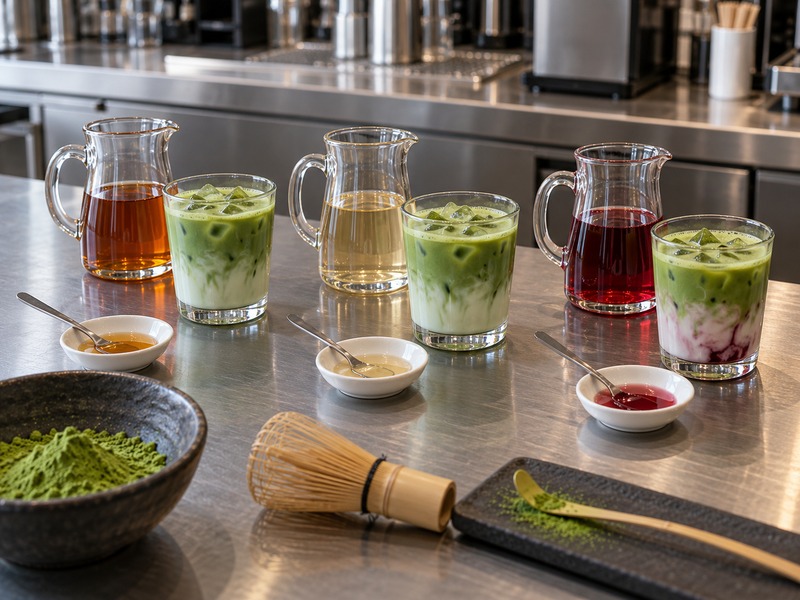
1. What does “best” mean for a café chain?
Define the job before tasting bottles
A syrup can be the best choice for a seasonal iced drink and a poor fit for an everyday hot latte. Set the menu role, target sweetness, tea visibility, customer price, allergen policy, and expected service speed. Decide whether the syrup should support matcha or become the lead flavor. Write a selection brief: without one, a tasting panel may choose the sweetest sample while the final drink no longer tastes like tea.
Use a fixed matcha and milk formula during screening. Compare syrups at equivalent perceived sweetness where practical, then check cost at the chosen dose. Record aroma, tea presence, color, mouthfeel, aftertaste, and staff handling. A café should also examine supply reliability and open-bottle storage. The result may be one core syrup plus a limited seasonal rotation rather than a long list that slows the bar. A buying decision needs a cup standard and a unit-cost model, not only a barista preference from a tasting session.
2. How does matcha grade affect syrup choice?
Test the exact tea used at service
A delicate tea can disappear under a heavy caramel or spice flavor. A more assertive grade may retain its identity, though bitterness can clash with sharp fruit notes. Taste candidate syrups in the complete latte using the approved matcha dose. Compare both stirred and unstirred cups, since syrup may sit at the base. Keep tea visible: a syrup that makes the opening sip pleasant but leaves no matcha character fails a matcha-led product brief.
Request matcha specifications, lot information, storage guidance, and market-relevant documentation from the tea supplier. If a syrup is being chosen for a future grade change, test both grades before launch. Base milk also matters: coconut, oat, dairy, and soy carry different flavors and sweetness. A syrup that fits one base may taste artificial in another. Matcha Village offers bulk matcha discussion on its homepage; buyers can share syrup candidates and milk matrix when requesting samples. A coded panel reduces the influence of bottle design or brand recognition.
| Tea and syrup check | Question | Record |
|---|---|---|
| Tea clarity | Can matcha still be tasted? | Coded cup notes |
| Color | Does syrup shift green? | Fixed-light photo |
| Aftertaste | Is the finish balanced? | Timed tasting |
| Lot repeatability | Does a new lot match? | Reference-cup comparison |
3. Which flavor families should a menu trial?
Choose a short candidate list
Vanilla can round tea bitterness without adding a competing color. Caramel creates a cooked-sugar note and may deepen the drink visually. Fruit syrups can add acidity and bright aroma, but their color and acid profile may affect a milk-based latte. Spice syrups can suit seasonal menus yet dominate matcha if used at a high dose. These are trial tendencies, not universal rankings. Limit the panel: a few flavors tested well reveal more than dozens tasted quickly at unequal doses.
Evaluate one plain latte control alongside each flavored cup. Include a syrup-free matcha reference so panelists can identify what the added flavor changes. Record whether a candidate works hot, iced, or both. A fruit flavor may taste lively cold but clash with heated dairy; a spice may need a different sweetness level. Ask syrup suppliers for flavoring composition, colorants, allergens, storage instructions, and pack size. Menu naming should match the actual ingredient experience rather than promising fresh fruit when the drink uses only a flavored syrup.
| Flavor family | Possible menu role | Trial watchpoint |
|---|---|---|
| Vanilla | Core gentle flavor | Tea may become faint |
| Caramel | Sweet dessert-style cup | Color and syrup pooling |
| Fruit | Seasonal iced cup | Acidity and milk fit |
| Spice | Limited seasonal menu | Aroma dominance |
4. How should sweetness be compared across brands?
Measure dose instead of counting pumps
Syrups differ in concentration and viscosity. One pump stroke may deliver a different mass from another bottle, and the output can shift with temperature. Weigh a series of pump strokes and calculate the average dose before tasting. Start with a common matcha-milk base and adjust each syrup until the drinks have comparable perceived sweetness. Separate flavor from sugar: a sweeter syrup may win a blind panel because of its sugar level rather than a better match with tea.
Check whether the milk base already contains sugar. A sweetened oat drink can leave little room for syrup before the cup tastes cloying. If a no-added-sugar option is planned, review every compound ingredient and market claim rule. Alternative sweetener syrups need a separate aftertaste and body trial; they may not behave like sugar syrup in layering or cold mixing. Record grams per cup in the approved recipe and train staff on that measure. A pump count can be included only after calibration with the actual syrup and equipment.
5. What pilot formula supports syrup screening?
Fix the base and vary only the syrup
The illustrative 400 g iced cup below is a screening baseline, not a final menu formula. Matcha, milk, water, and ice stay fixed while the syrup candidate changes. If one syrup needs a different mass to reach similar sweetness, adjust water so finished mass remains comparable. Keep cup size constant: panels cannot fairly compare flavor when one sample contains less milk or more melted ice.
Mix matcha into the same measured water portion for every cup. Add syrup in a consistent place in the sequence, then use the same shaker or stir method. Taste at handoff and after the expected pickup interval. Record cup weight, color, sediment, syrup pooling, and aroma. A candidate should advance only if it performs at a commercially acceptable dose. Calculate its actual cost using grams, not a supplier’s suggested pump number. If a hot menu item is intended, run a separate trial with a hot formula because the ice and flavor perception change.
| Ingredient | Illustrative iced baseline | Trial instruction |
|---|---|---|
| Specified milk base | 250 g | Hold constant |
| Water for matcha | 45 g | Hold constant initially |
| Matcha | 4 g | One approved lot |
| Trial syrup | 21 g | Adjust to sweetness target |
| Ice | 80 g | Fixed mass and type |
6. Does one syrup work in hot and iced lattes?
Evaluate both conditions separately
Heat releases aroma differently and can make some flavors seem sweeter or more dominant. Cold service slows mixing and can leave a viscous syrup at the base. A vanilla candidate may translate across both formats, while fruit or spice may need a different dose. Test the exact hot and iced procedures rather than carrying a single pump setting between them. Observe the last sip: syrup left at the bottom can make a drink that began balanced end overly sweet.
For hot trials, document milk temperature, syrup addition order, foam, and tea aroma as the cup cools. For iced trials, record ice mass, mixing time, and the result after a realistic wait. If stores offer dairy and plant milk, test both with the chosen syrup. A syrup that blends in one base may separate or taste different in another. Keep separate recipe codes for each approved variant. A short menu can still have a clear hot and iced standard without forcing one formula to serve all conditions.
7. How do color and aroma influence the choice?
Use a fixed-light cup reference
Matcha’s green appearance can be changed by dark syrup, colored fruit syrup, milk tone, and time. Photograph cups under fixed light at handoff and after the planned wait. Record whether a color shift is part of the intended design or a defect. Smell the syrup alone, then in milk, then in the complete latte. Judge the full cup: an attractive bottle aroma can overpower tea once the drink is mixed.
Do not assume that a clear syrup has little sensory effect. Vanilla can hide tea at a high dose; a dark caramel can look dramatic while making green muddy. A fruit syrup may need an acidity check with the chosen milk, since curdling or separation would be unacceptable. Ask suppliers for relevant pH or ingredient information when a trial raises a compatibility question. The final drink should be tasted at customer temperature and through the actual straw or lid. Packaging and service method can change what aroma reaches the customer.
| Observation | Possible cause | Action |
|---|---|---|
| Muddy green | Syrup color or milk tone | Compare controlled cups |
| Tea aroma lost | Flavor dose too high | Retest lower syrup mass |
| Base pooling | Viscous syrup and weak mixing | Check order and tool |
| Milk separation | Acid or ingredient interaction | Review formula and supplier data |
8. Which service checks keep syrup dosing stable?
Calibrate pumps and control opened bottles
Train staff to dispense the approved syrup mass with the actual pump, spoon, or measured pour. Check pump output after a bottle or pump model changes. Syrup that thickens in a cool room may deliver a smaller dose per stroke; a warm bottle may drip between drinks. Weigh the pump: a calibration check is faster than diagnosing a week of inconsistent cups from customer complaints.
Follow supplier instructions for opened-bottle storage and cleaning. Label bottles with identity and lot so a flavor complaint can be traced. Keep syrup nozzles free from tea or milk contamination under the site’s sanitation procedure. Test a few cups during normal service for final mass, sweetness, tea note, and visible pooling. If a seasonal flavor sells slowly, opened-pack waste can dominate cost. Choose bottle sizes matched to throughput. A central syrup station should not rely on staff memory for which pump belongs to which concentration.
9. What supplier documents should a buyer request?
Screen ingredients and operating fit
Request the syrup’s full ingredient and allergen statement, product specification, storage guidance, pack options, lot code, and change-notice process. Ask about colorants, acidity, and flavor components when they affect the drink brief. For matcha, request the corresponding tea specification and market-relevant tests. The buyer needs records for the exact materials used in an approved cup. Keep approval tied to a lot: a sample bottle without a matching commercial supply route cannot anchor a chain menu.
Review label and menu claims against the complete recipe. A syrup called “strawberry” by a supplier does not automatically support wording about fresh berries. A sugar-free syrup does not make the entire latte sugar-free if the milk base contains sugar. If a syrup contains dairy or nut-derived material, allergen handling changes even when the matcha itself is plain tea. Confirm landed price, lead time, minimum order, and pack size. Supplier reliability matters because a rushed substitution can change sweetness and tea flavor across stores.
10. How should the final syrup be chosen and costed?
Use sensory, service, and margin evidence
Score each candidate on tea compatibility, sweetness at measured dose, hot and iced performance, color, supplier documents, service speed, and unit cost. Compare price per accepted cup, including syrup drips, open-bottle waste, packaging, labor, and remakes. A higher-priced syrup may be economical at a lower dose, but that must be shown in the finished drink. Run a shift trial: a laboratory winner can fail when staff pump quickly and customers collect cups later.
Approve one core syrup and any seasonal option with a versioned recipe, reference cup, pump calibration, and change-control rule. Matcha Village can discuss tea grade matching through its contact page; share the milk base, syrup candidates, target market, and volume. This sourcing question differs from making matcha-flavored syrup from scratch. The best syrup for a given menu is the one that lets tea remain recognizable, staff work accurately, and the price reflect a reliable saleable cup.
| Decision line | Measure | Approval question |
|---|---|---|
| Flavor | Coded cup score | Does tea remain clear? |
| Service | Measured pump output | Can staff repeat dose? |
| Supply | Documents and lead time | Can stores reorder it? |
| Margin | Cost per accepted cup | Does price work? |
FAQ
Q1: Is vanilla always the best syrup? No. It is one candidate; test it against the chosen tea, milk, and customer brief.
Q2: Should a syrup replace matcha? No. Keep a measured tea dose and verify tea flavor in the finished latte.
Q3: Can the same pump count be used for every syrup? No. Calibrate output by mass for each syrup and pump.
Q4: Does sugar-free syrup make a sugar-free latte? Not by itself. Review the milk base and complete recipe under market rules.
Q5: Is this a recipe for matcha syrup? No. It is a purchasing and dosing framework for syrups added to a latte.