
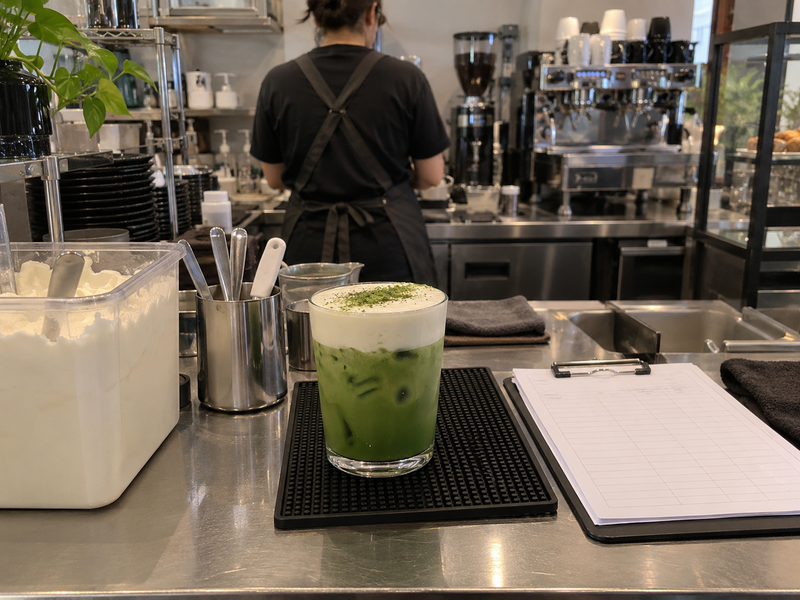
Einspanner matcha pairs a tea base with a soft sweet cream layer. A home recipe such as Hummingbird High’s layered matcha einspanner shows the appeal: the first sip meets cream, then matcha, and the two mix as the drink is finished. A café needs to turn that effect into a service recipe. The cream must sit long enough to reach the guest, the tea must remain recognizable after mixing, and the staff must know how to make and handle both components. Use measured trials before putting the drink on a board.
Contents
- 1. What makes this drink an einspanner?
- 2. Which matcha base works under cream?
- 3. How should the sweet cream be made?
- 4. How thick should the cream cap be?
- 5. Which build order gives a useful layer?
- 6. What happens after the guest stirs?
- 7. How should a café handle the cream?
- 8. What allergen questions need answers?
- 9. How do you price the finished cup?
- 10. When is the recipe ready to launch?
1. What makes this drink an einspanner?
Define the experience in the cup
The drink borrows from a sweet-cream-topped coffee tradition and applies it to matcha. Its identity in a café is the contrast between a tea layer and a soft cream cap that a guest can sip through or stir in. The name alone will not tell customers whether the drink contains milk below the cap, how sweet it is, or whether it is served iced. Put those details in the menu description. A guest ordering a “matcha latte” may expect milk; a version built from tea and cream without additional milk is a different experience.
Write a target sentence before recipe testing: “the first sip is lightly sweet cream, followed by a distinct tea finish.” That gives tasters something observable to evaluate. Avoid a cap so thick that the guest finishes the sweet portion before reaching the matcha. Avoid a very thin foam that disappears before the cup leaves the counter. The visual separation should support the flavor, not replace it. Ask a person unfamiliar with the recipe to drink it as served and describe the sequence. Their answer is a better menu test than a photo alone.
| Component | Job in the drink | What to check |
|---|---|---|
| Matcha | Clear tea flavor | Taste after cream mixes |
| Milk, if used | Body and volume | Does it dilute tea? |
| Sweet cream | Rich first sip | Soft texture and sweetness |
| Ice | Temperature | Dilution during wait |
2. Which matcha base works under cream?
Taste it with the full topping
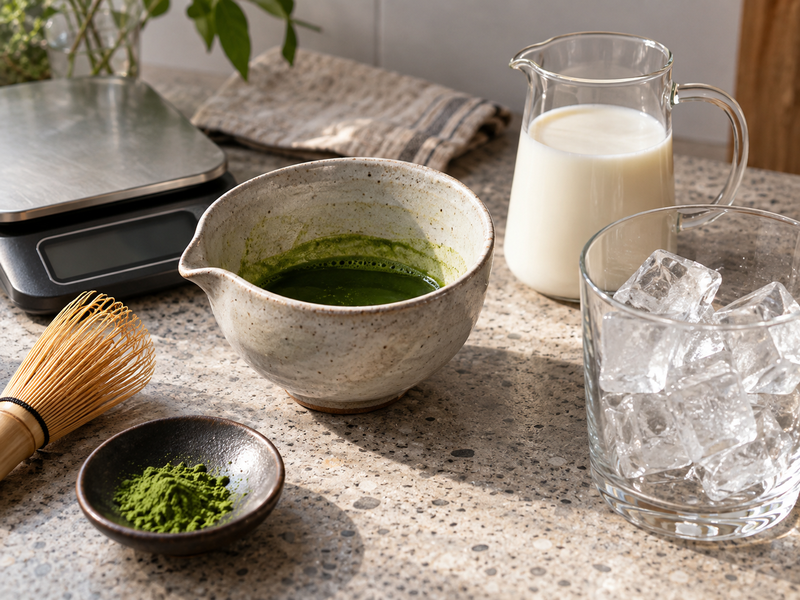
Choose a powder that stays identifiable when cream and any milk are added. Prepare candidate matcha lots at a measured dose and water amount, then build the same cream-topped cup around each. A powder that is beautiful in plain tea may become faint under dairy. A stronger powder may provide a useful finish at fewer grams, but taste it for astringency after the cream is stirred through. Judge the drink at the temperature and size you plan to sell.
Ask the supplier for a commercial-lot sample and the documents your operation needs. Record the lot, price per gram and approved preparation. For a small dose ladder, keep the cream amount fixed and change only matcha powder. If every sample needs an unaffordable amount to survive the cap, reduce cream or reconsider the format. The matcha ratio guide explains how to record a full recipe rather than a powder-to-water number alone. Here, the cream is part of the final dilution and flavor balance. A buying decision made with plain whisked tea is only a first screen.
3. How should the sweet cream be made?
Define a texture staff can recognize
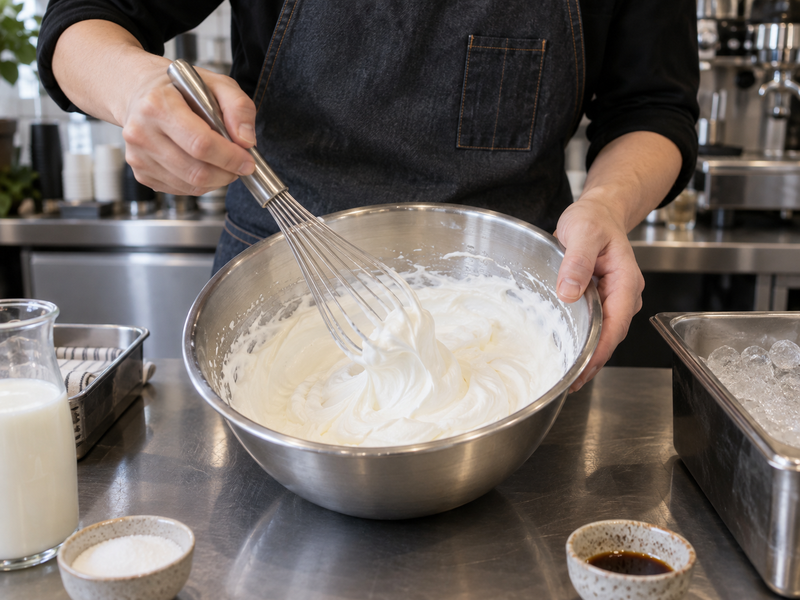
Hummingbird High whips heavy cream, sugar and a little salt to soft peaks for its home version. A café can use that as a texture reference, then test its own ingredients and equipment. The cap should hold a soft mound when spooned but remain pleasant to drink through. Whipping too little may give a flat liquid layer; too much can turn the topping stiff and difficult to pour or sip. Use a weighed recipe and a defined mixing method rather than “whip until done.”
Test the actual portion size. A mixer may make one cup’s cream differently from a larger batch. Record the ingredient temperature and the tool used, because both can change the result. If adding vanilla or another flavor, test whether it competes with tea. Do not assume a plant-based cream behaves like dairy cream; approve it as a separate recipe. A soft cap is a sensory feature, but it also has an operational limit. Make a small pilot batch and observe its texture through a normal service window under the operation’s approved handling rules. The goal is a topping staff can produce consistently, not a perfect peak in one demonstration cup.
| Cream trial | Likely service result | Decision |
|---|---|---|
| Loose and pourable | Quick mixing | May lose cap quickly |
| Soft peak | Sits above drink | Test sip and wait |
| Very stiff | Strong visual mound | May be awkward to drink |
4. How thick should the cream cap be?
Taste three measured portions
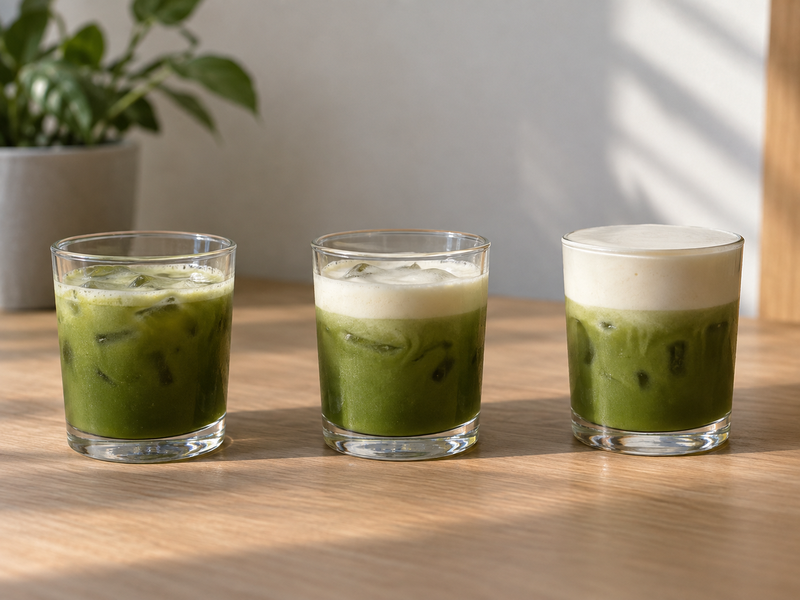
Make three cups with the same matcha base and different measured cream portions. For example, use 20, 35 and 50 grams of prepared topping as a trial ladder for a fixed cup. These numbers illustrate a test, not a standard recipe. Ask tasters to take a first sip without stirring, then stir and taste again. Record whether the tea remains present and whether the last third of the drink becomes excessively rich. Photograph the cups under the same light at assembly and after a short wait.
The right thickness depends on cup shape, ice load and how the drink is served. A wide cup can make the same gram weight look thin; a tall narrow glass can make it look dramatic. A straw may bypass the cap and defeat the intended first sip. Test the lid and straw provided to takeout customers. A topping that reaches the rim can also spill when a lid is fitted. Give staff a measured portion and a visible fill target, then confirm the two agree in the chosen vessel. If the cap is too large to keep the drink balanced, scale it down before trying to overpower it with more matcha.
5. Which build order gives a useful layer?
Test the sequence at service speed
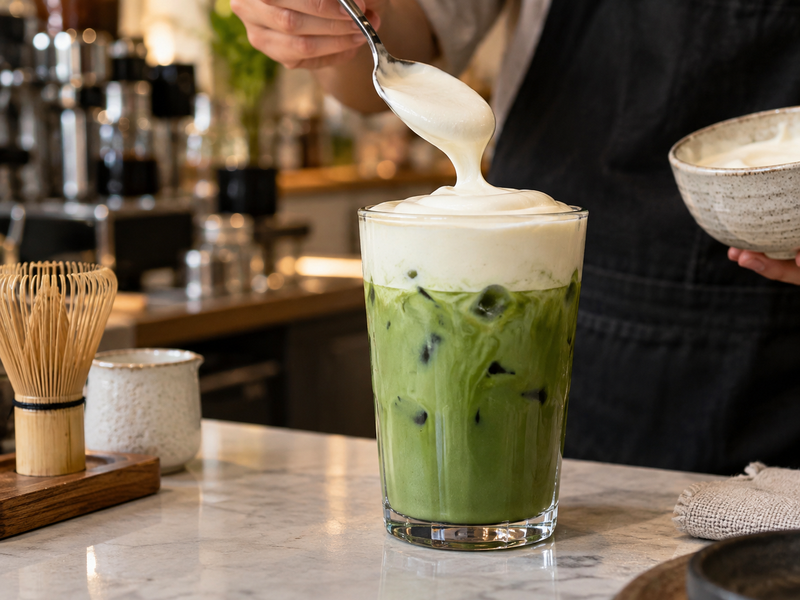
The reference recipe adds ice and milk, places some cream, pours matcha, then finishes with more cream. That can create a distinctive swirl, but a café may prefer a simpler tea base topped once. Test both orders with the same measured ingredients. The order can affect appearance, first sip, foam stability and cleanup. Ask a second barista to build the drink while timed during a realistic service simulation. If the layered version requires careful spoon placement that only one person can repeat, it may belong on a slow service menu rather than a busy counter.
Use a glass that shows the layer without making overfilling likely. Put ice, milk and matcha amounts on the card. If the tea concentrate is poured over cream, check whether it cuts through the cap and whether that is desirable after the drink sits. A cup that looks good for ten seconds and becomes muddy before handoff is not ready. Do not choose the sequence from a video; choose it from the cup delivered to a customer. Keep a photo of the approved appearance and a short note on acceptable variation. Natural mixing is part of the drink, but staff should know what a normal build looks like.
| Build choice | Advantage | Trial question |
|---|---|---|
| Cream on top once | Faster handoff | Does cap stay soft? |
| Cream split around tea | Visible swirl | Can staff repeat it? |
| Tea poured last | Strong green accent | Does first sip change? |
6. What happens after the guest stirs?
Approve the mixed drink too
Many guests will stir the cream into the tea. Taste the cup both ways. A successful layered drink can become overly sweet and pale once mixed if the cream portion is too large. A very concentrated tea base may balance that mixing but taste harsh when reached before the cream. Set a target for both stages: pleasant first sip through the cap and a coherent latte after stirring. The guest should not have to follow a precise drinking instruction to make the recipe work.
Try the drink at the counter and after a short pickup wait. Ice melt alters the mixed cup; the cream may also thin as it warms. Record the time and temperature conditions used in testing, without promising an exact stability window beyond what the operation verifies. If a delivery service is part of the plan, test the actual lid and travel interval. A distinct white cap in a photograph can become a uniform pale drink by arrival, which may be acceptable if the flavor still meets the menu description. Decide explicitly. The menu should describe what most customers will experience, not a styling moment available only at the prep bench.
7. How should a café handle the cream?
Put food safety before convenience
A dairy cream topping needs an approved receiving, cold holding, preparation and discard procedure. Use the supplier’s storage guidance and the food-safety rules adopted where the café operates. The FDA Food Code provides a model for retail food safety in the United States, but it does not replace local requirements or an operation-specific plan. Do not copy a home recipe’s room-temperature timing into a commercial batch without review.
Label prepared containers with contents, lot or batch identity and the dates required by your plan. Use clean tools for portioning; do not leave a shared spoon in a warm service area if the procedure requires cold holding. Decide whether cream is made per drink, in small batches or in a larger prepped volume. Test yield and waste for each choice. A small batch may be slower but easier to manage on a low-volume day. Train staff on what to do when the cream texture changes or a container exceeds its approved window. The visual cap is worthwhile only when the preparation behind it is controlled.
| Handling point | Record or action | Reason |
|---|---|---|
| Supplier pack | Ingredient and date | Traceability |
| Prepared batch | Time and identity | Approved hold control |
| Service utensil | Cleaning method | Consistent hygiene |
| Leftover topping | Discard rule | Avoid guesswork |
8. What allergen questions need answers?
Review every version on the menu
Heavy cream and whole milk make a dairy version. If a guest requests a plant-based option, replacing only the milk beneath the cap does not remove dairy from the cream. A separate plant-based topping needs its own supplier statement and performance trial. The FDA’s allergen information is a useful U.S. reference for major allergens; the café must check its exact ingredients and local obligations. Shared blenders, pitchers or spoons may also matter when answering a guest’s question.
Write an ingredient matrix for matcha, milk, cream, sweetener and garnish. Include any flavored syrup or premade topping. Give staff a clear answer for the base version and a list of approved substitutions. Avoid a menu icon that implies every variant is dairy free because one ingredient uses oat milk. When a supplier reformulates a topping, revisit the matrix and recipe. The sensory and allergen checks should happen together: a safe substitution that collapses the cap or overwhelms the tea needs a new product decision, not a quick label edit.
9. How do you price the finished cup?
Count topping waste and added labor
Cost matcha at the dose that tastes right under the cream. Add milk, cream, sugar or syrup, ice, cup, lid and garnish. If cream is prepared in batches, divide the batch cost by usable portions after realistic residue and discard, not by theoretical yield. Time the extra whisking, spooning and cleaning steps during service. A premium menu price may support a slower drink; the decision should be made with actual labor and ingredient figures.
Compare the margin of the cream-topped drink with the café’s standard matcha latte. If the cap adds cost but guests mostly stir it in and cannot taste the difference, the format may need a stronger tea base or smaller topping. If the drink offers a clear new experience, the extra cost can be visible in the price. Review large and small cup sizes separately. Scaling all components by volume may give an awkwardly large cream cap. The worksheet should contain the approved grams and milliliters so purchasing can forecast matcha and cream without relying on an attractive photo.
| Cost item | Measure in the approved cup |
|---|---|
| Matcha | Powder grams |
| Cream cap | Usable prepared grams |
| Milk and sweetener | Served amount |
| Service labor | Added preparation time |
10. When is the recipe ready to launch?
Test the cup in another person’s hands
Approve the recipe when the tea remains clear after mixing, the cap has a repeatable soft texture, the chosen build works at service pace, and the operation can handle the dairy or plant topping under its food-safety plan. Let a barista who did not design the drink make several cups from the card. Taste them without coaching. If the appearance or sweetness varies widely, clarify the card or simplify the build before printing the menu.
Keep the matcha lot, topping ingredients, allergen matrix, recipe, cost and approved photo together. Set a trigger to retest when powder, cream brand, milk or cup changes. If a supplier substitution occurs, the first new cup should be evaluated at the same serving conditions as the old one. A name borrowed from another drink style still needs to stand on its own at your counter. Sell the version that a guest can drink as intended and that staff can make again during the next rush.
Frequently asked questions
Q1. Is einspanner matcha a coffee drink?
It is a matcha variation inspired by a cream-topped coffee style. The menu should name its tea base and ingredients clearly.
Q2. Should the cream be stiff?
A soft cap is easier to sip through. Test a texture that holds during handoff without becoming a dense dessert topping.
Q3. Can the drink be made without dairy?
Yes, with separately approved milk and topping products. Test flavor, texture and allergen information for that version.
Q4. How much matcha should the base contain?
Use a measured dose ladder in the finished drink and select the lowest dose that meets the tea-flavor target without an unwanted finish.
Q5. What changes require retesting?
Retest a new matcha lot, topping formulation, milk, cup or build method before making the substitution routine.