
Matcha latte vs matcha milk tea is a menu decision about texture, sweetness, tea intensity, equipment, and toppings. The names overlap in consumer use, so a chain needs internal specifications before it can promise two distinct drinks. This comparison helps beverage buyers set those specifications and test both cups on a normal service line. Every example dose below is a trial starting point rather than a universal standard.
Search-intent reference: “Matcha Milk Tea vs Matcha Latte: In-Depth Comparison …”. The title indicates a comparison search; this article addresses the operational choices a B2B buyer faces.
1. How should a café define each drink?
Write a house definition before printing menus
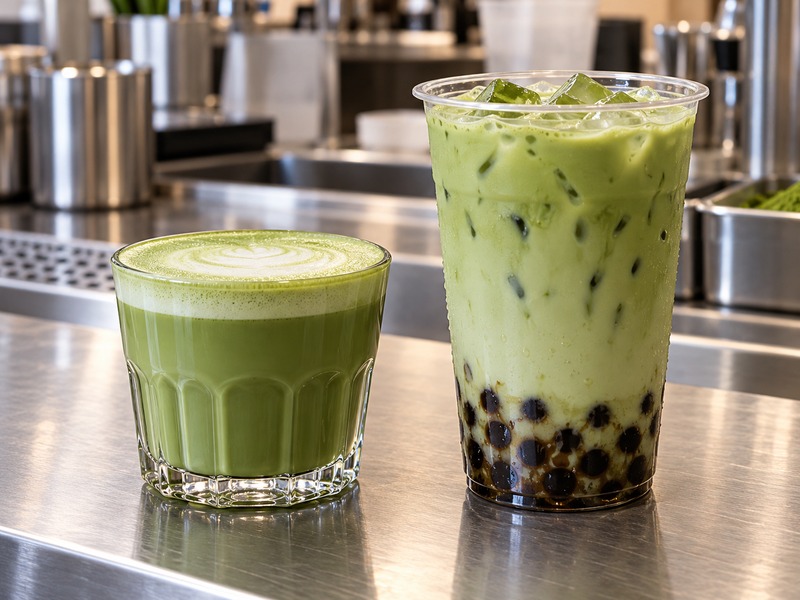
A matcha latte usually presents tea dispersed into a milk-forward cup, hot or iced, with a smooth body and limited additions. Matcha milk tea often belongs to a broader tea-bar format: colder service, a sweeter profile, optional toppings, and a build designed for sealing or takeaway. Those are practical menu conventions, not fixed legal definitions. Some markets use the names interchangeably. For operators: customer-facing names work only when the recipe, cup size, and service promise are clear to staff.
Describe each item by tea dose, liquid composition, sweetness, temperature, texture, toppings, and expected handoff time. Then ask a tasting panel whether two blind-coded cups feel different enough to justify separate stock keeping and training. A latte might emphasize a clean tea note; a milk tea might use syrup and pearls. Neither choice is automatically better. A chain should document what its local customers expect before copying a competitor’s menu language. A concise menu description can prevent a customer from ordering one format while expecting the other.
2. Does the tea base need a different matcha grade?
Judge powder in the full matrix
Milk, sugar, ice, and toppings can mute fine tea aromas. A grade that shines in a lightly sweetened latte may taste weak in a milk tea with a flavored syrup. Compare candidates at matched dose in each finished cup. Record green color under the same light, tea aroma, bitterness, particle feel, and separation after the planned wait. Check both recipes: choosing a powder only from a water tasting can create an expensive mismatch at the bar.
Request identity, origin, lot code, ingredient statement, storage directions, and market-relevant test documents. Decide whether one grade can serve both drinks or whether two grades earn their inventory cost. One grade simplifies ordering and stock rotation; separate grades may deliver a clearer distinction. Consider a shared tea premix only after confirming that its concentration, hold time, and sanitation fit both builds. Matcha Village lists bulk matcha options on its homepage; buyers should request samples for the exact milk and syrup systems under review.
| Tea criterion | Latte trial | Milk tea trial |
|---|---|---|
| Flavor | Tea beside milk | Tea beside syrup and toppings |
| Color | Unmixed and stirred cup | Cold cup after sealing |
| Texture | Foam or smooth pour | Shake and straw draw |
| Cost | Powder grams per cup | Powder grams per saleable cup |
3. How does the milk system change body?
Test exact supplier products
A latte often relies on milk texture as part of its identity. Dairy or a barista-style plant drink may be steamed for hot service or poured over ice. A milk tea can tolerate a lighter body if syrup and toppings provide weight, but the choice depends on the house style. Check the commercial carton, not only a category such as “oat milk.” Added sugar, oil, stabilizers, and protein vary by product and influence foam, sweetness, and separation. Use the actual base: a prototype made with a different carton gives weak evidence for rollout.
Set one milk specification for each recipe and document substitutions. If both drinks offer dairy and plant versions, each has its own sensory and allergen checks. A plant base that looks beige can dull the green of matcha. A sweetened base can leave too little room for syrup control. Compare total liquid weight rather than cup volume alone because foam and ice can hide differences in ingredient cost. For hot drinks, record heating method and final sensory result. For iced drinks, observe dilution and sediment after the customer-facing wait.
4. What role should sugar play in each format?
Measure sweetness separately from tea dose
A latte can be unsweetened or lightly sweetened, depending on the brand brief. Milk tea often starts with a defined syrup level and may offer a customer choice. That flexibility creates a production problem when syrup pumps vary or toppings add sugar. Define sweetness in grams per reference cup, then test reduced and higher settings without changing matcha. Keep the variables apart: adding extra tea to cover too much syrup can raise cost while leaving an unbalanced drink.
Ask syrup suppliers for ingredient and allergen declarations, concentration guidance, pack sizes, and lot controls. Calibrate pumps or weigh test doses during training. A menu claim such as “no added sugar” needs review of the complete formula, including sweetened milk bases and inclusions. Do not equate a lower sugar setting with a health outcome. Taste the drink after ice melt; a cup that is balanced at build can become bland after a long pickup delay. Record syrup waste and drips when calculating unit cost.
| Sweetness control | Decision | Audit method |
|---|---|---|
| Base milk | Sweetened or unsweetened | Approved carton specification |
| Syrup | Reference grams per cup | Weighed pump check |
| Toppings | Included or optional | Portion weight |
| Ice melt | Acceptable pickup window | Timed tasting |
5. Do toppings create a separate product?
Consider handling alongside taste
Pearls, jelly, foam, or a dusted finish can move a matcha milk tea into a different service class. Toppings alter the drink’s perceived sweetness, portion weight, allergen profile, and shelf life. They can also force a wider straw, a sealing machine, and a separate prep station. A latte may need none of these. Count the work: a topping that looks inexpensive per kilogram may require cooking, chilled storage, portioning, and end-of-shift waste.
Set a preparation and holding standard for each topping under the site’s food safety plan. Weigh portions rather than using a scoop that changes with operator technique. Examine whether the topping blocks the straw or masks tea flavor. A chain can test a plain milk tea and a topped version as separate menu items; that reveals whether the topping earns its equipment and labor. Keep supplier lot information for inclusions, especially when a complaint concerns texture or spoilage. Menu photographs should match the approved portion, not an overloaded styling cup.
6. Which equipment and labor steps differ?
Map the complete station flow
A hot matcha latte may require a whisk, milk steamer, and cup assembly. An iced milk tea may require a shaker, syrup pump, topping station, sealer, and different cups. The exact route depends on menu design. Time each build during a normal shift, including powder weighing, equipment cleaning, and topping refill. Watch the bottleneck: a drink that takes thirty seconds at an empty bar may queue behind pearl prep during a rush.
Set a premix policy if staff cannot disperse matcha for every order. Any prepared base needs a defined container, mixing step, hold period, traceability, and sanitation process. If both drinks share one premix, confirm that its tea concentration works after separate dilution. Record service errors such as wrong syrup level, missing topping, or dry green clumps. A shared training card can still show two distinct assembly sequences. Staff should not have to infer which drink gets steamed milk and which gets shaken from the menu name alone.
| Process step | Latte example | Milk tea example |
|---|---|---|
| Tea dispersion | Whisked concentrate | Measured premix |
| Milk handling | Steam or cold pour | Cold measure and shake |
| Flavor addition | Optional light syrup | Defined syrup dose |
| Finish | Open cup | Topping and seal |
7. What starting formulas allow a fair comparison?
Fix cup mass before tasting variations
Use matched finished mass and the same matcha lot for a comparison trial. The table below is an illustrative pair of 400 g iced cups, not a market standard or approved recipe. The latte places more mass in milk and less in syrup. The milk tea reserves space for topping and a sweeter build. Ice is included in both totals. Read the arithmetic: a visual side-by-side comparison is misleading if one cup contains far more liquid or tea.
Blend or shake each according to its intended method, then weigh the poured cup. Taste blind at handoff and after a realistic delay. If the difference is too small, adjust one variable at a time: syrup, milk, topping, or tea dose. Record consumer reactions to the names and descriptions separately from sensory results. A cup can taste distinct yet be labeled confusingly. For a hot latte, create a separate formula with no ice rather than warming the iced ratios. Commercial release also requires food safety and labeling review for the actual ingredients.
| Ingredient | Illustrative latte | Illustrative milk tea |
|---|---|---|
| Milk base | 270 g | 230 g |
| Water or tea premix liquid | 50 g | 55 g |
| Matcha | 4 g | 4 g |
| Syrup | 6 g | 21 g |
| Topping | 0 g | 30 g |
| Ice | 70 g | 60 g |
8. How should quality checks distinguish the two?
Specify defects by drink
Both drinks need matcha lot checks, measured portions, clean equipment, cup weight, and visible-clump inspection. A latte also needs foam or smooth-pour criteria, depending on the format. A milk tea needs syrup and topping checks, straw function, and seal integrity if packed for takeaway. Create separate reference photos and timed tasting cards. Use the intended wait: immediate tasting will not reveal whether ice dilution or topping texture undermines the customer cup.
When a complaint arrives, collect recipe code, ingredient lots, operator, time, and a photograph if possible. A dull latte may trace to a milk substitution; a weak milk tea may trace to syrup masking or extra ice. Check the whole build before blaming matcha. Train managers to weigh a few cups during routine audits, with tolerances derived from pilots. Topping safety and storage belong to the same quality plan as the beverage base. A retail bottled adaptation needs separate processing, package, microbiological, and shelf-life validation.
9. How should a buyer compare true unit cost?
Include ingredients, labor, and waste
Cost by measured grams per accepted cup. The tea price may be identical across both items while syrup, topping, cup, lid, and labor create different margins. Add the cost of topping cooking and waste, steamer cleaning, shaker sanitation, sealing film, remakes, and overfilled cups. Use the same selling size in the comparison. Count saleable output: a lower raw-material price is not a saving if the drink creates more discarded topping or service errors.
Run sensitivity checks for matcha dose and milk base price without changing quality targets. If a single grade serves both products, inventory may be simpler, but that advantage should not excuse a weak finished cup. Compare a shared premix with separate preparation after including labor and opened-pack waste. Ask suppliers for lead times, minimum orders, and pack sizes that match store throughput. A finance sheet should show contribution by drink and the operational assumptions behind it, not just the arithmetic from an ideal bench recipe.
| Cost line | Latte watchpoint | Milk tea watchpoint |
|---|---|---|
| Tea | Grade and dose | Visibility beside syrup |
| Milk | Foaming base | Cold base and dilution |
| Labor | Steaming and cleanup | Topping prep and sealing |
| Waste | Foam and remakes | Unused topping and syrup |
10. Which format should a brand put on the menu?
Choose by a measured pilot
Use a tasting panel, a timed rush simulation, and a cost sheet for both formats. A café that wants tea clarity and a compact equipment list may favor a latte. A tea bar with topping capacity may find milk tea commercially useful. A chain may sell both only when customers can understand their difference and stores can execute it. Write the decision down: approved ingredients, serving mass, build method, sensory target, training time, and expected gross margin belong in the launch file.
Position this comparison beside existing single-drink guides rather than repeating them. Matcha Village already has a matcha milk tea guide; this article helps a buyer decide which format to serve and what each costs to run. Request matcha samples with both draft formulas, target market, projected volume, and required quality documents. A clear house definition keeps menus honest and purchasing efficient: staff can make two genuinely different cups from specifications they can follow.
FAQ
Q1: Are matcha latte and matcha milk tea legally fixed drink types? Names vary by market and brand; define ingredients and preparation clearly for customers.
Q2: Must milk tea contain pearls? No. Toppings are a menu choice, though they can create a meaningful product distinction.
Q3: Can one matcha grade serve both? Yes, if it meets sensory and cost targets in both complete recipes.
Q4: Can a sweetened plant milk replace syrup? It can change sweetness, but test flavor and label wording with that exact base.
Q5: Which format costs less? Cost measured ingredients, equipment time, packaging, topping waste, and remakes in your own operation.