
A matcha latte cookie needs a clear tea note and a creamy milk impression in one baked bite. Too much milk powder can brown the dough, while too much matcha can turn it dry and bitter. Bakeries should define the latte flavor, spread, crumb, and packed life before choosing a powder or copying a drink recipe.
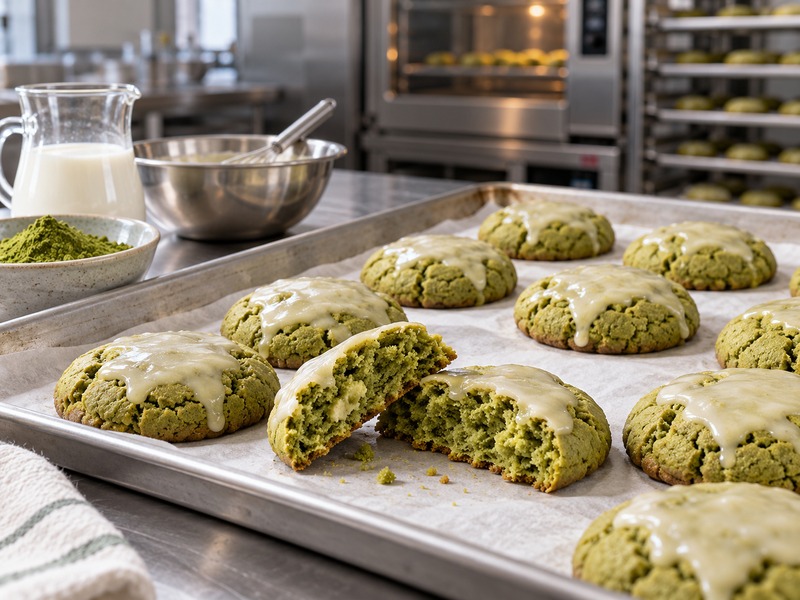
SERP intent reference: Matcha Latte Cookies. Gluten-free, Dairy-free Recipe!.
1. What makes a cookie taste like a matcha latte?
A matcha latte cookie should taste of tea softened by a deliberate creamy element. That element may come from milk powder, white chocolate, dairy butter, or a documented plant-based alternative. Merely naming a standard matcha cookie “latte” can disappoint buyers if no milk impression remains after baking. Define a sensory target alongside cookie size, texture, and sales format. A café cookie and a sealed retail pack face different holding demands.
Tea plus milk note
Latte flavor target: Decide whether the cookie is soft, crisp, or chewy, and whether a visible pale swirl or coating is part of the offer. A strong vanilla flavor can imitate sweetness while masking tea; use it deliberately rather than as a rescue for weak matcha. The product brief should name the ingredient that creates the latte note. If a dairy-free version is planned, it requires its own formula and label review rather than a simple milk-powder omission.
2. Which matcha and milk solids should bakers select?
Culinary matcha can work in cookies when its flavor remains clear through butter, sugar, and milk solids. Screen powders in baked cookies at equal dose, then compare cooled color and bitterness. Milk powder, whey powder, white chocolate, and plant-milk powders differ in sugar, protein, fat, and allergen status. Request supplier specifications for each. A cheaper milk powder may brown faster or absorb differently, changing both appearance and texture.
Ingredient pairing
Baked-milk behavior: Test the milky component in the exact cookie base. White chocolate chunks create pockets of sweetness but not necessarily an even latte impression. Milk powder spreads through dough but can shift browning and dry solids. A plant-based powder may contain starch or emulsifier that affects spread. Keep one milk ingredient fixed while comparing tea grades. A matcha powder that looks vibrant dry may finish olive under an overbrowned cookie surface.
| Latte cue | Ingredient route | Check |
|---|---|---|
| Tea | Matcha in dough | Baked flavor |
| Creamy note | Milk or plant solids | After cooling |
| Sweet pockets | White chocolate option | Uniform deposit |
3. How should a matcha latte cookie formula be weighed?
Use flour as 100% on a baker’s percentage sheet. An illustrative trial may use matcha around 3–5% of flour and milk powder around 4–8%, with the house cookie base adjusted after spread and moisture checks. These are screening ranges, not a universal formula. Record butter or fat, sugar, egg or liquid, leavening, salt, milk solids, and matcha in grams.
Flour-basis trial
Tea and milk solids: Milk powder and matcha both add dry mass. Replacing flour or adding them on top of a base formula can yield different spread and chew. Run a plain control, a matcha-only control, and the latte version under the same oven load. That comparison shows whether the milk component delivers a recognizable benefit. A large white chocolate inclusion may raise sweetness and reduce the need for base sugar, but it must be trialed rather than estimated from the bag.
The milk note can be measured through comparisons rather than assumed from an ingredient name. Bake matched trays with no milk solids, one measured milk-powder level, and one white-chocolate option. Taste cooled cookies blind. Record which version still suggests a latte after a day in the chosen pack. A formula with more dairy may smell richer warm yet turn dull after storage.
4. What mixing order distributes both powders?
Sift matcha with flour and milk powder or use a validated premix so no concentrated green or pale powder pockets remain. Cream fat and sugar to the house endpoint, add liquid components, then incorporate the dry blend without overmixing. Scrape the bowl at a fixed point. If white chocolate pieces are used, fold them in after the dough base is uniform.
Dry blend and dough rest
No green pockets: Record dough temperature and rest time. Powdered milk may absorb water during rest, changing scoop or depositor behavior from the start to the end of a shift. A warm dough can spread more, while a cold dough may portion poorly. Trial both ends of normal floor time. Staff should not add milk by eye when dough feels stiff; that can alter water activity and pack life. Use weighed correction trials controlled by the bakery lead.
| Baker’s % item | Trial range | Watch |
|---|---|---|
| Matcha | 3–5% of flour | Bitterness and color |
| Milk powder | 4–8% of flour | Browning |
| Base formula | House control | Spread and chew |
5. How can a bakery scale baking and portioning?
Set deposit mass, tray spacing, oven zone, and bake endpoint for the final equipment. Milk sugars can accelerate browning at the cookie edge, which may hide matcha green. A lighter bake may show better color but leave a weak center, so quality needs both appearance and texture checks. Test full trays across rack positions. A single center-tray sample cannot represent commercial yield.
Tray-load controls
Browning versus green crumb: Compare cookies deposited early and late in a batch for spread and top color. Check whether milk powder clumps block a depositor or whether white chocolate pieces cause weight variation. Measure diameter, thickness, and cooled mass from edge and center positions. If a cookie turns brown before its center sets, adjust oven profile, size, or milk ingredient before dropping all tea powder. Record accepted pieces, not only total pieces baked.
6. Which quality checks confirm the latte profile?
Taste a fully cooled cookie without coffee or frosting. The tea note should appear clearly, followed by a creamy milk impression, without dry powder or scorched milk flavor. Cut a sample to inspect green crumb and inclusion distribution. Check spread, crack pattern, edge color, center texture, and broken pieces after packing. A warm cookie may seem softer and sweeter than the product guests buy.
Cooled-cookie tasting
Creamy note after bake: Use a reference cookie made from approved lots under routine oven conditions. If latte flavor disappears, compare milk-powder dose and grade before adding vanilla. If tea tastes harsh, examine matcha dose and bake color. If the surface looks gray, check powder age, heat, and air exposure. Take photographs under the same light so teams can separate a recipe drift from a phone-camera difference. Quality should describe which defect triggers hold or rework.
| Process check | Measure | Failure |
|---|---|---|
| Dough | Temperature and rest | Spread drift |
| Oven | Zone and tray position | Brown edge |
| Pack | Breakage and texture | Low yield |
7. How should unit cost reflect milk ingredients?
Calculate matcha and milk-solids spend from grams per dough batch, then divide by accepted cookies after bake and breakage. Add butter, sugar, flour, eggs if used, inclusions, labor, tray use, and packaging. White chocolate can change piece cost substantially if deposit weight varies. A higher matcha grade might permit a lower dose; evaluate finished flavor and unit cost together.
Accepted-cookie cost
Pack yield: A café may sell individual large cookies, while wholesale retail packs need uniform smaller pieces and more packaging. Use separate yield sheets. Count dough left in mixers, pieces rejected for dark edges, and breakage during bagging. If a dairy-free or gluten-free variant is proposed, cost its distinct ingredients and cleaning controls rather than assuming the same margin. A premium name should be supported by an actual latte flavor guests can taste.
A dairy-rich cookie can lose green color faster under a hot oven profile, increasing rejects at the edges. Count accepted pieces separately by tray position and compare powder grades only after the bake is stable. White-chocolate chunks can change deposited mass; check pieces at the start and end of the run. Unit cost should include that variation rather than assume every scoop contains the same number of chunks.
8. How should cookies be packed and stored?
Cool cookies fully before sealing so steam does not soften the surface or create condensation. Choose packaging around the target texture and route. A crisp cookie needs protection from moisture; a soft cookie may dry out in a loose sleeve. Matcha color can fade under light, while milk-rich flavors may pick up nearby odors. Test the actual bag, case light, and distribution handling before choosing a shelf date.
Moisture and light study
Milk flavor during hold: If white chocolate pieces or a coating are present, inspect bloom or smearing through the planned temperature range. A frozen dough SKU requires its own bake, lot, and storage instructions; it does not share the baked cookie’s shelf date. Document when the clock begins and what happens after a retail pack is opened. Shelf life must follow finished-product quality and safety evidence, not the best-before date on milk powder or matcha.
| Cost line | Basis | Waste |
|---|---|---|
| Matcha and milk | Grams per accepted piece | Overdose |
| Inclusions | Actual pickup | Weight drift |
| Pack | Each sale unit | Broken pieces |
9. Which allergens and labels need approval?
Milk powder or white chocolate commonly brings milk; cookie flour brings wheat, and eggs may be present. Review all purchased ingredients and shared-line cross contact. A dairy-free or gluten-free claim requires a separate qualified formula and control program; a SERP recipe title does not establish that status for this bakery’s cookie. Matcha origin or grade claims need supplier support.
Milk and wheat declaration
Variant integrity: A batch record should connect matcha and milk-solid lots to dough mixing, deposit checks, oven profile, cooling, and pack code. If purchasing changes milk powder, repeat color and spread trials before release. The label should name actual ingredients, not a vague “latte flavor” alone if that obscures allergens. A consumer complaint about bitter tea or scorched milk needs enough lot and process detail to identify its likely cause.
10. What should a wholesale cookie pilot prove?
Run the chosen dough on the intended mixer, depositor, oven load, cooling racks, and bagging line. Compare a matcha-only control with a latte formulation while holding tea grade and dose fixed. Have reviewers taste cooled cookies and packed samples near the proposed selling window. Measure accepted-cookie yield, breakage, and labor. Include more than one tray position and a normal dough rest interval.
Full-run bakery trial
Milk note at shelf date: If the latte cookie only differs in marketing copy, change the formula or the name. If milk powder improves taste but darkens edges, adjust the bake or powder choice and rerun. Give the matcha supplier baked-crumb photographs and the inclusion rate rather than a request for “bright green tea.” Approve a purchase grade when the cookie delivers creamy tea flavor and target margin under normal production and distribution conditions.
| Record | Purpose | Review |
|---|---|---|
| Ingredient lots | Tea and dairy trace | Receiving |
| Bake sheet | Oven and deposit | Release |
| Label proof | Allergens and claims | Before print |
Send Matcha Village the flour-based matcha rate, milk-solids ingredient, target cookie size, oven profile, and cooled crumb photographs when requesting powder grades. Compare tea flavor and green color after full bake and pack hold, with the milk component fixed. Purchasing should approve the grade that meets latte flavor without forcing excessive powder or reducing accepted-cookie yield.
FAQ
Q1: Do matcha latte cookies contain coffee? A matcha latte flavor can come from tea and milk without coffee; define the actual formula.
Q2: Can milk powder be omitted? Yes, but a dairy-free version needs a separate way to create its creamy note and a new trial.
Q3: Why did the cookie turn brown? Check milk solids, sugar, oven heat, piece size, and bake time before changing tea grade.
Q4: Can a gluten-free SERP recipe be copied for production? A commercial bakery needs its own validated formula, allergen controls, and finished-product checks.
Q5: How should matcha be purchased for cookies? Compare approved grades in fully baked, cooled, packed cookies at the intended dose.