
Matcha latte vs matcha tea compares a milk-based beverage with matcha dispersed in water. A café choosing between them must consider tea grade, customer expectations, bar equipment, serving size, and unit cost. This guide compares the finished cups and gives buyers a way to trial both. It addresses menu positioning; a separate latte preparation guide covers the mechanics of making one drink.
Search-intent reference: “Matcha Latte vs Traditional Matcha: Taste & Texture …”. The reference title signals a sensory comparison; the B2B analysis here is original.
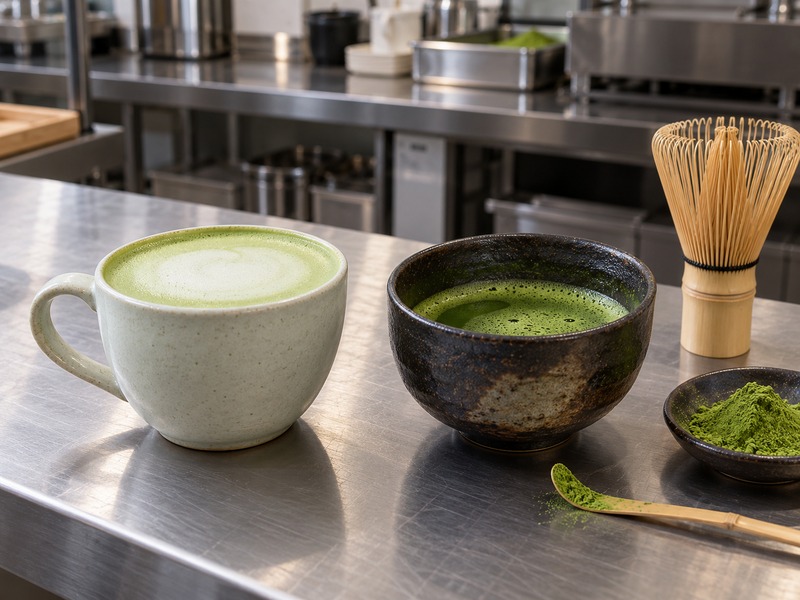
1. What is the operational difference between the cups?
Water and milk create separate products
Matcha tea is powdered green tea dispersed in water and consumed with its suspended particles. A matcha latte adds milk or a plant drink, often with optional sweetener. The added base changes color, body, aroma, and serving mass. It can soften bitterness but may obscure the tea character a customer seeks. Define the cup: a café should specify liquid, tea mass, temperature, sweetness, and portion size rather than relying on the word “matcha” to describe two very different items.
Traditional tea service may emphasize a small cup, visible whisking, and focused tasting. A latte may fit a larger takeaway cup and a quicker routine once the bar flow is set. Those choices affect queue time and training. Neither format automatically signals higher quality. A well-made tea can fail when powder clumps; a latte can fail when milk masks tea or develops poor foam. Write a separate acceptance standard for each and test both with the same matcha lot before deciding whether to stock one grade or two.
2. How do taste and texture differ in a blind trial?
Describe sensations without value judgments
Tea made with water exposes matcha’s aroma, bitterness, sweetness, and particle feel directly. Milk introduces its own flavor and fat or protein texture. A plant base may add cereal, nut, or coconut notes. In a blind comparison, ask panelists to rate tea clarity, bitterness, body, aftertaste, color, and mouthfeel. Avoid asking only which drink they “like,” since preference mixes format with formulation. Use matched conditions: compare each cup at its intended serving temperature after a realistic handoff wait.
Observe the final sip. Suspended tea particles can settle in either drink, yet a latte may also show milk separation or foam collapse. A tea cup may taste stronger near the base if it sits untouched. A timed service test reveals whether a gentle stir instruction, a different dispersion method, or shorter hold improves consistency. If a buyer plans to market a premium tasting experience, the water preparation should reveal useful sensory differences among tea grades. If customers want a soft dessert-like drink, the latte matrix deserves separate grade testing.
| Sensory item | Matcha tea | Matcha latte |
|---|---|---|
| Tea aroma | Directly exposed | Shared with milk aroma |
| Body | Water and tea particles | Milk solids and tea particles |
| Color | Green in water | Green shifted by base color |
| Finish | Tea-led | Tea and base-led |
3. Should buyers use the same matcha grade?
Test the economic value of grade differences
A delicate powder may make sense in a water cup where the tea carries the entire flavor. A latte may accept a different grade if milk masks some subtle notes, though bitterness and color still matter. This is a trial question, not a rule that every latte needs inexpensive powder. Prepare each candidate in both formats at a fixed dose and record the sensory change. Judge the finished drink: dry-powder color and a grade label do not establish customer value.
Request current specifications, lot codes, origin information, ingredient statements, storage guidance, and market-relevant test records. If certifications are required, verify the exact tea and destination market documents. A café carrying two grades adds storage, stock rotation, and staff error risk. One shared grade can simplify operations if it performs well in both cups. Compare cost per accepted serving, not only price per kilogram. Matcha Village lists bulk tea options on its homepage; send both drink briefs when requesting samples.
4. How can tea dose be compared fairly?
Hold serving mass and tasting method constant
A small water cup and a large latte should not be compared by tea grams alone. Record matcha mass, total liquid mass, milk percentage, ice if any, and served volume. A dose that tastes balanced in a small tea bowl may seem faint in a larger milk drink. Set a target tea profile in each format and titrate powder in measured steps. Check the ratio: the same four grams in two very different cup sizes tells customers a different sensory story.
The table offers illustrative pilot builds, not serving guidance or nutritional advice. A foodservice team should adjust them against its chosen grade, target flavor, caffeine communication, and local labeling rules. Use the same powder lot for the initial comparison, then trial candidate grades. A hot water preparation and a hot latte need separate mixing steps; do not change water temperature, milk, and tea dose in the same tasting session. Record the full recipe so the purchasing decision can be repeated by another store.
| Illustrative cup | Matcha | Water | Milk base | Purpose |
|---|---|---|---|---|
| Tea tasting | 2 g | 80 g | 0 g | Expose tea character |
| Latte tasting | 4 g | 40 g | 260 g | Assess tea beside milk |
| Strong latte trial | 5 g | 40 g | 259 g | Test greater tea presence |
5. Which tools and training does each format need?
Make bar work explicit
Water-based tea can use a bowl and whisk, an electric whisk, or another validated dispersion method. A latte needs tea dispersion plus milk handling, and hot service may need a steamer. The experience a brand wants determines which tools are suitable. A showpiece whisking step may create customer value but also changes queue time and training. Time the complete build: include setup, weighing, preparation, handoff, and cleaning rather than only the visible whisking motion.
Train staff to recognize dry tea pockets, incorrect water temperature, weak foam, and wrong fill mass. If a chain uses premixed tea concentrate, define its preparation, safe holding, agitation, and traceability. A shared concentrate might serve both formats if dilution is controlled. Record which cup receives milk and which does not, especially when serving a customer with a milk allergy. Use dedicated or properly cleaned equipment according to the site’s allergen plan. A one-page training sheet with accepted-cup photos is more useful than a broad instruction to “make matcha.”
6. How do hot and iced service change the comparison?
Cold changes aroma and dilution
Hot tea shows aroma quickly and allows matcha to disperse under a controlled whisking method. An iced tea drink needs a separate cold build to limit clumps and account for ice dilution. A hot latte adds milk heating and foam; an iced latte adds cold-base texture and sediment checks. Compare formats at the temperatures customers will actually receive. Do not compare unlike cups: a hot tea can seem more aromatic than an iced latte simply because aroma is released differently.
Set an ice mass and a timed wait for iced tasting. Photograph color at handoff and after the expected pickup period. For hot drinks, test whether tea bitterness or milk sweetness changes as the cup cools. A store may need two menu descriptions, since “matcha tea” can refer to hot or iced preparation in different markets. Run any chilled batch or concentrate under a defined food safety process. The result should be a service standard that operators can follow, not a one-time sensory impression from a calm training room.
| Format | Main change | Audit point |
|---|---|---|
| Hot tea | Whisking and temperature | Clumps and aroma |
| Iced tea | Ice dilution | Timed flavor and sediment |
| Hot latte | Milk heating | Foam and cup temperature |
| Iced latte | Cold-base behavior | Separation after waiting |
7. How should the two drinks be positioned on a menu?
Describe what the customer will taste
A concise tea description can mention the tea-forward, water-based cup and its serving size. A latte description can mention milk choice, sweetness level, and hot or iced availability. Avoid assuming customers know a traditional tea service format. A menu photo should match approved cup size and color. Use direct language: “matcha whisked with water” and “matcha with steamed oat milk” tell a customer more than unexplained premium labels.
Check ingredient and allergen wording for every variant. If the latte offers sweetener, specify the default and options. The tea cup may have no milk, but shared bar tools can still require cross-contact controls. Avoid unsupported claims about energy, detox, weight, or treatment. A brand can compare customer purchase patterns in a controlled menu pilot without inventing broad demand figures. Record returns and staff questions, since repeated confusion over one item may signal a naming problem rather than a formulation failure.
8. Which quality records keep both cups consistent?
Use a different finished-cup reference for each
Incoming tea needs a specification and lot record. Cup-level checks should cover matcha dose, liquid weights, mixing method, appearance, and a timed sensory reference. For tea, watch particle clumps and bitterness. For latte, watch milk source, foam or pour quality, and color in the full base. Keep two references: a good water cup cannot prove that a dairy or plant latte will look and taste right.
Ask stores to capture a small number of routine measurements that staff can perform during service. A weighed reference cup and a photo under consistent lighting may be enough for a daily visual check. Investigate changed tea color against tea lot, water, milk, and mixing before attributing it to one supplier. Retained ingredient samples can help if they are labeled and stored under appropriate conditions. Any retail packaged tea or latte needs separate process design and shelf-life testing; a café quality card cannot establish a bottled product’s stability.
| Check | Tea cup | Latte cup |
|---|---|---|
| Powder dose | Weighed grams | Weighed grams |
| Liquid base | Water source and mass | Milk item and mass |
| Texture | Suspension and foam | Foam, body, sediment |
| Complaint trace | Tea lot and method | Tea and milk lots |
9. How does the true unit cost differ?
Calculate cost at the served cup
A water-based tea uses fewer ingredients but may use a higher-cost grade or more staff time if its service ritual is part of the offering. A latte adds milk, a larger cup, possible sweetener, and milk waste during steaming. Compare the complete accepted cup rather than ingredient cost alone. Include tea grams, milk or water, cup, lid, labor, cleaning, overpour, and remakes. Watch the margin: a higher menu price does not mean better economics if the format takes more labor during peak hours.
Make a sensitivity sheet for matcha grade and dose. A premium tea may show its value clearly in water and less clearly in milk. Yet a lower-cost tea that turns muddy in a latte can cause returns or a weak product. Test real staff at normal pace to estimate labor. If two grades are stocked, include storage and opened-pack waste. Ask suppliers for pack sizes suited to turnover. A purchasing review should state why a grade was chosen for each recipe, so a later price change does not trigger an untested substitution.
10. What decision should a buyer make after trials?
Let customer fit and service capacity decide
Use a coded tasting, a timed service trial, and a cost sheet to compare both drinks. A tea-focused shop may find a water cup central to its identity. A busy café may sell more lattes, but its own pilot must show that the recipe holds up under service. Some brands need both, with distinct descriptions and prices. Close the trial with evidence: approved recipe, staff method, quality reference, ingredient specification, and customer feedback belong in one decision file.
This comparison is separate from teaching a latte recipe. It helps procurement decide where a tea grade’s flavor value appears and what equipment each menu format asks of stores. Matcha Village can discuss samples through its contact page; provide the water-cup and milk-cup formulas, projected volume, destination market, and required documents. A menu succeeds when each drink tastes like its description and can be reproduced from a clear operating sheet.
| Decision factor | Choose tea when | Choose latte when |
|---|---|---|
| Customer goal | Tea character leads | Creamy beverage leads |
| Station | Water whisking fits service | Milk handling fits service |
| Grade value | Nuance survives in water | Tea remains clear in milk |
| Economics | Price covers ritual | Price covers milk and labor |
FAQ
Q1: Does matcha tea contain milk? A water-based matcha tea recipe does not, but cafés must manage shared-equipment cross-contact.
Q2: Is a latte always sweeter? No. Sweetness depends on the milk base and added sweetener in the house formula.
Q3: Should both drinks use the same tea dose? Not automatically. Set each dose against cup mass, flavor target, and cost.
Q4: Can one grade serve both formats? It can if blind tasting and documentation support it in both cups.
Q5: Is the water-based cup cheaper? Compare tea grade, labor, serving size, pack, and waste before deciding.