
A customer asking for “matcha latte no sugar” may mean no syrup, no added sugar, or a drink with no sugar at all. Those requests are not equivalent, especially when milk contains natural sugars. Cafés need a precise recipe and menu description before training staff to leave out a pump.
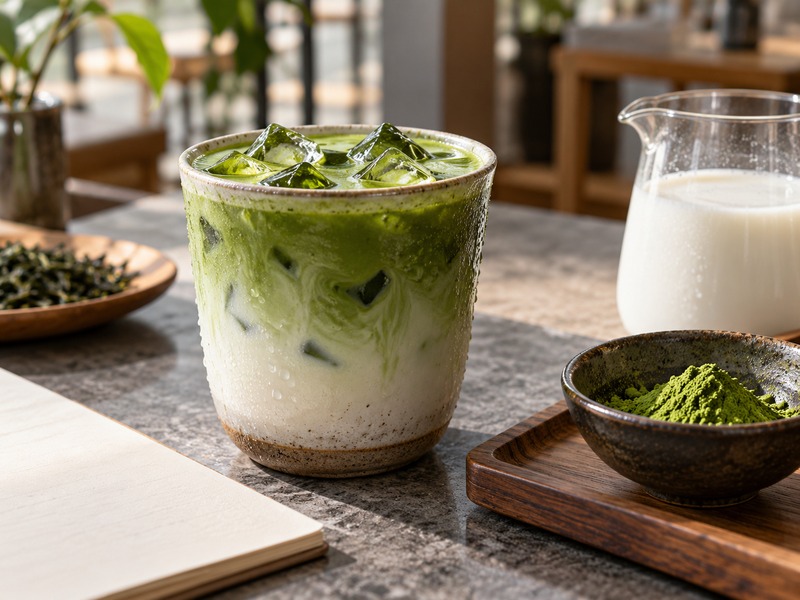
SERP intent reference: Easy Iced Matcha Latte Recipe (No Sugar).
1. What does “matcha latte no sugar” mean on a menu?
A café can offer a latte with no sugar added during preparation, but that does not automatically make the finished drink sugar free. Dairy milk contains lactose, and plant drinks may contain sugars or sweeteners depending on the carton. Define the standard recipe, optional milks, and how staff respond when a guest asks for “no sugar.” A brief menu phrase should not promise a nutrient level the café has not verified.
Claim and order definition
No syrup is a recipe choice: Distinguish a plain unsweetened order from a regulatory claim. “No syrup added” describes the service action; “no added sugar” and “sugar free” may have market-specific requirements. The purchasing team should collect carton labels and ingredient statements before copy is printed. This product is a cup formulation problem, not a ranking of alternative sweeteners. Write the standard build so every store can serve it without improvising a substitute.
2. Which matcha and milk work without sweetener?
Sweeteners can hide bitterness and rough powder texture. Compare matcha grades at the intended dose in the selected unsweetened milk or plant beverage. Look for clear tea flavor, manageable bitterness, fine dispersion, and a green color that survives normal service. Ask the milk supplier for sugar content and ingredient details. A carton labeled “plain” may still have added sugar or flavoring; the ingredient list and nutrition panel settle the question.
Ingredient screen
Clean tea profile: Different milks change perceived sweetness and body even without added sugar. Dairy lactose tastes less sweet than syrup, while some unsweetened plant bases can taste grainy or thin. Keep one milk fixed while comparing matcha, then test optional milks separately. A premium powder is useful only if its finished cup improves enough to justify dose and cost. Request production-grade samples and lot specifications rather than choosing from dry color or ceremonial marketing language.
| Menu wording | Means | Review |
|---|---|---|
| No syrup added | Service action | Recipe card |
| No added sugar | Ingredient-wide claim | Market rules |
| Sugar free | Nutrient claim | Verified criteria |
3. How should a no-added-sugar cup be formulated?
An illustrative medium cup may start with 1–2 g matcha and milk set by cup size, with a small measured water portion for powder dispersion. That is a bench range, not a finished recipe. Record total liquid, ice mass for cold service, and whether the milk contains sugar. Avoid adding a flavored powder mix that already includes sweetener while calling the cup unsweetened.
Measured base recipe
Tea dose against dilution: A higher tea dose can produce stronger flavor and more bitterness at the same time. Trial two grades at fixed grams before increasing inclusion. Change milk type or dilution only after recording the tea result. Taste the cup at intended temperature and after a carry interval. If a guest wants optional sweetener, provide it as a separately named customization with its own cost and ingredient disclosure. The core recipe should remain reproducible without it.
Keep the word “unsweetened” attached to the verified milk carton, not merely to the order ticket. Some cafés use a plain dairy base for hot drinks and a flavored plant beverage for iced drinks. That substitution changes the finished sugar profile and menu wording. Build a separate ingredient file for each approved base and reject silent replacements during procurement.
4. What preparation sequence limits clumps and harshness?
Sift or break up matcha clumps and disperse the weighed powder in a small controlled liquid portion. Use the temperature and tool approved in the store method. Whisking dry powder directly into cold milk can leave bitter pockets; an excessively large water concentrate can dilute milk body. Pour the concentrate into measured milk and mix completely before lidding. Keep the process short enough for normal tickets.
Powder wetting
Measured water portion: Do not boil matcha in an effort to make an unsweetened cup taste stronger. Heat can change flavor and color, while it will not replace a suitable grade. For hot service, use the chosen milk’s steaming method and observe final cup temperature. For iced service, check that powder remains suspended after the expected wait. If staff repeatedly add milk to soften bitterness, the recipe card or powder choice needs revision rather than more discretionary pouring.
| Trial input | Basis | Watch |
|---|---|---|
| Matcha | 1–2 g medium cup | Bitterness |
| Milk | Approved unsweetened carton | Natural sugars |
| Water and ice | Measured by format | Dilution |
5. How should hot and iced recipes differ?
An iced cup loses strength as ice melts and may taste less aromatic when cold. A hot cup shows tea aroma readily but can expose bitterness as it cools. Write separate milk, water, ice, and matcha values for both formats. A single shared dose may still work, but it must be verified. Use the same purchased milk and a fixed cup size in comparison trials.
Two temperature cards
Ice melt without syrup: Check an iced cup after normal pickup time, not just at assembly. Inspect sediment, dilution, and the absence of sweetener hidden in a premix or topping. For hot service, taste with the lid on and after a brief carry. If a plant milk foams poorly, that is a base-milk issue, not proof the unsweetened formula needs syrup. Any sweet cream topping would change the drink and its menu description; keep optional additions explicit.
6. Which sensory checks replace a sweetness target?
With no added sweetener, a cup needs a clear tea flavor and a clean finish. Train reviewers to describe bitterness, astringency, grain, color, milk body, and aftertaste separately. “Too strong” is not a useful diagnosis until dose and dilution are known. Taste at the guest’s serving temperature. A powder that looks bright may still leave a chalky bottom in cold milk.
Tea-led acceptance
Bitterness endpoint: Use a simple reference cup made with the approved grade and milk lot. Compare routine store cups to it after the normal handoff delay. If a cup tastes harsh, check weighed powder, water volume, milk temperature, and hold before rejecting the powder. If it tastes weak, inspect ice melt and carton choice. Ask whether the drink remains enjoyable without syrup through the final sip, not just the opening seconds after mixing.
| Cup check | Hot | Iced |
|---|---|---|
| Flavor | After lid and carry | After ice melt |
| Texture | Foam and smoothness | Clumps and sediment |
| Color | At service | At pickup |
7. How should cafés cost an unsweetened latte?
Cost matcha by weighed grams, milk by actual fill, and water, ice, cup, lid, and labor by the routine build. Removing syrup may save an ingredient line, but powder grade and milk choice may dominate cost. Count remakes from bitterness or clumping. If a higher grade works at a lower dose, compare finished cup cost rather than price per kilogram.
Accepted-cup margin
Sweetener omission is small: Unsweetened plant milk may have a different cost and shelf handling pattern from dairy. Keep option-level margins rather than averaging all “no sugar” orders together. If the café offers a preweighed matcha sachet to prevent dose drift, include packaging and waste. A popular no-syrup order may simplify service, but that claim should be tested against actual ticket time and acceptance. Build price from accepted cups, not from a perfect tasting sample.
A no-syrup cup may appear cheaper on a recipe sheet, but a guest who finds it bitter can trigger more remakes or customizations. Track acceptance at the intended tea dose before setting price. If a gentler grade costs more per kilogram but reduces rejects, its cost per accepted cup may be lower. That decision requires routine service data, not a single sweetened tasting sample.
8. How should the ingredients be stored and handled?
Matcha powder needs sealed, dry, light-protected storage. Milk and plant beverages follow their supplier and local opened-container rules. A prepared matcha-milk base is perishable and needs its own validated use window; it cannot borrow the date on either original pack. Record opening and batch times. If a store predispenses powder, keep the portions dry and traceable to a lot.
Powder and milk controls
No premix shortcut: Run a hold trial for any proposed premixed base and for the final drink. Observe color, sediment, separation, and microbiological criteria set by the operator. Do not keep unfinished cups for later topping or sweetening as a way to avoid waste. Delivery adds travel time and ice melt, so test that route separately. A no-added-sugar label does not alter food safety requirements for milk or the assembled cup.
| Cost item | Basis | Loss |
|---|---|---|
| Matcha | g per cup | Overdose |
| Milk | mL per cup | Opened carton |
| Service | Pack and labor | Remakes |
9. Which claim and allergen checks are needed?
Review the complete formulation, including milk, plant beverage, flavored toppings, and any matcha premix. Dairy, soy, oat, or nuts may require allergen declarations or cross-contact notices by market. A “no added sugar” claim requires checking every purchased ingredient and local legal criteria. “Sugar free” is a separate claim and cannot be inferred from a no-syrup recipe.
Menu wording approval
Natural milk sugars: Keep a current carton label and lot file for each approved milk. Staff should know that changing a standard dairy cup to a sweetened oat product can change sugar content. Matcha contains caffeine, so avoid caffeine-free wording. Do not make weight-loss or other health claims from omission of syrup. Have regulatory or label staff review printed menus and online ordering, where a customer may see only a short product name.
10. What should the no-sugar pilot prove?
Run hot and iced cups with routine baristas, the intended milk brands, and the actual cups and lids. Record tea dose, liquid mass, service time, clumps, bitterness at pickup, and remake rate. Include milk from more than one delivery lot if practical. Give reviewers no sweetener unless they are evaluating a clearly named optional customization.
Store and label signoff
Normal milk and tea lots: If taste fails, change one variable per trial: powder grade, milk base, temperature, or dilution. Do not hide the problem with a new sweetener while retaining a no-added-sugar product name. Once a formula passes, quality should approve ingredient and claim wording for each target market. Purchasing can then order the specified matcha grade and milk brand against a written cup standard.
| File | Question | Owner |
|---|---|---|
| Ingredient labels | Any added sugar? | Purchasing |
| Recipe card | What is omitted? | Operations |
| Menu claim | Allowed wording? | Regulatory |
When requesting samples from Matcha Village, send the unsweetened milk brand, tea dose, hot and iced cup sizes, and notes on bitterness after pickup. Compare grades at the same measured dose without syrup or sweetener. Buy the powder that tastes balanced in the approved base, then have the label team review “no added sugar” wording against the full ingredient file and target market rules.
FAQ
Q1: Does no added sugar mean zero sugar? No. Milk can contain naturally occurring sugars, and claims require market review.
Q2: Can a café use a sweetened plant milk? It changes the recipe and may conflict with a no-added-sugar claim; check its label.
Q3: How can bitterness be reduced without syrup? Screen matcha grade, dose, milk, dilution, and preparation temperature in finished cups.
Q4: Is this the same as choosing a sugar substitute? No. The standard build omits added sweetener; optional substitutes are separate customizations.
Q5: Can a premixed matcha latte be held all day? Only if the prepared mixture has a validated safety and quality use window.