
The best sweetener for matcha latte depends on the tea, milk, serving temperature, and customer. Plain sugar can make a crisp tea flavor easier to notice. Honey adds its own aroma. A flavored syrup may sell a seasonal drink while hiding a costly matcha powder. There is no useful winner without a defined drink. For a café or beverage brand, the right question is which sweetener gives the intended taste, dissolves in service, and keeps the label honest. These ten checks create a fair tasting plan.
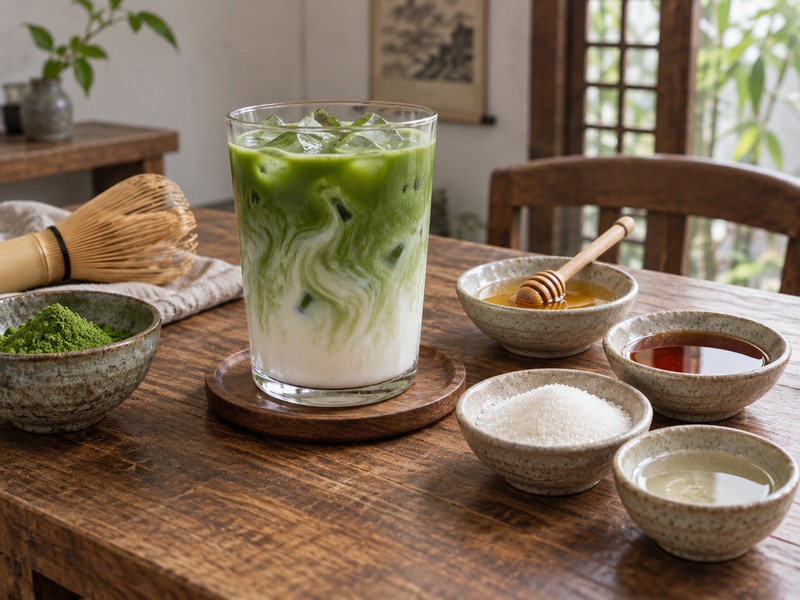
1. What does the customer expect from the latte?
Define the flavor target
An unsweetened ceremonial-style latte, a dessert drink, and a lightly sweet office beverage have different targets. Set a starting sweetness level and describe the desired finish: tea-forward, creamy, floral, caramel-like, or neutral. A team that only asks whether a drink is “sweet enough” may choose a syrup that conceals the tea. Taste the latte without sweetener first. The starting matcha and milk decide how much help the drink actually needs.
The ranked article on ways to sweeten matcha collects possible additions. A commercial choice needs a narrower test. Fix the matcha weight, milk type, liquid volume, and serving temperature. Then compare sweeteners at a similar perceived sweetness rather than at the same spoonful. A spoon of honey and a spoon of granulated sugar do not necessarily produce the same taste or cost.
| Drink position | Sweetness aim | Tea test |
|---|---|---|
| Tea-forward | Low | Can guests still identify matcha? |
| Standard café | Moderate | Is bitterness balanced? |
| Dessert | High | Does tea survive the toppings? |
| Customizable | Multiple levels | Can staff dose consistently? |
2. How does ordinary sugar perform?
Use a neutral baseline
Granulated sugar is inexpensive, familiar, and fairly neutral in flavor. It helps a team learn whether more complex sweeteners add enough value to justify their cost. In a hot latte it can dissolve readily with stirring. In an iced latte, crystals may collect at the bottom unless they are dissolved in a small warm portion first. A plain simple syrup offers a practical way to deliver the same flavor profile in cold service, but its sugar concentration and pump size must be recorded.
Run a baseline with no sweetener, one moderate sugar dose, and a higher dose. Do not judge the sweetest cup as the winner simply because it is easy to like on the first sip. Taste the final sip after ice has melted and the drink has warmed slightly. Note whether sweetness is uniform, whether the matcha becomes muddy, and whether staff can prepare the cup without extra tools. A neutral benchmark makes later honey or maple trials easier to interpret.
3. When does honey help rather than compete?
Match its aroma to the tea
Honey can add floral or earthy notes that make a latte feel warmer and more distinctive. Its flavor varies by source and batch, so a strong honey can dominate a delicate matcha. It also mixes slowly into a very cold drink. If honey is the menu story, test it against the actual milk and tea instead of assuming a “natural” ingredient will taste better. A strong dark honey may suit a bold-flavored latte while a light one keeps more room for the tea.
Measure honey by weight, not a vague drizzle. Test whether the chosen process mixes it evenly in the intended service time. A premixed honey syrup may be operationally useful, but then its water content, storage, and portion must be specified. Honey still contributes sugars. The FDA’s added-sugars guidance treats honey and syrups as part of the added-sugars discussion; swapping table sugar for honey should not be presented as removing sugar from the drink.
| Option | Flavor effect | Cold mixing issue |
|---|---|---|
| Sugar | Mostly neutral | Crystals can remain |
| Simple syrup | Mostly neutral | Dilution must be counted |
| Honey | Floral or earthy | Thick in cold liquid |
| Maple syrup | Caramel-like | Can compete with tea |
4. Is maple syrup a good match?
Look beyond the first sweet sip
Maple syrup brings recognizable caramel and woody notes. In a latte with a roasted or stronger tea character, that can be appealing. In a light, grassy matcha it may obscure the reason the customer ordered matcha at all. Try at least two levels. A small amount might round the flavor without making the drink taste like a breakfast topping. Taste it in the intended cup after ice dilution; maple’s impression can change as the milk and tea mingle.
Review cost and supply consistency. A café that advertises real maple syrup should use a controlled amount and be able to document the ingredient. A flavored syrup with a maple-like taste is a different product and should be described accurately. Watch for a dark tint that changes the latte’s visual appeal. The value of maple lies in a deliberate flavor combination, not in a claim that it is a nutritional shortcut around sugar.
5. What do flavored syrups change?
Count flavor, sweetness, and dilution together
Vanilla, brown sugar, lavender, fruit, and caramel syrups each alter more than sweetness. A vanilla syrup may soften bitterness; a fruit syrup may add acidity that changes milk texture or color. The water in syrup also changes the final beverage volume. Test a complete recipe, not a dry spoonful of syrup. Record the pump’s actual output because pump labels and staff pressure do not always match the assumed dose. If the syrup carries color or preservatives, review the full ingredient statement.
Flavored syrup can be an excellent menu tool when the drink is honestly presented as a flavored matcha latte. It becomes a problem when the flavor hides poor tea quality or creates a sweetness level customers cannot adjust. Offer a lower-syrup version in a test panel and see whether people still enjoy the tea. Seasonal drinks can use a distinctive syrup while the core latte remains simpler. This keeps the menu flexible and gives buyers a clearer specification for base matcha powder.
| Variable | Keep fixed during test | Why it matters |
|---|---|---|
| Matcha | Same lot and grams | Tea intensity stays comparable |
| Milk | Same brand and volume | Fat and sugar affect taste |
| Syrup | Weighed dose | Pumps vary |
| Ice | Same mass | Dilution changes sweetness |
6. Can a low-calorie sweetener work?
Test the finish and label language
High-intensity sweeteners can deliver sweetness with little added sugar, but they may leave a different aftertaste or lack the body of sugar. The FDA describes several sweeteners used in foods and beverages. A finished product still needs a label appropriate to the exact sweetener, formulation, and market. “Sugar-free,” “no added sugar,” and “low calorie” are different claims; do not infer one from using a sweetener packet.
Test a small range of doses because perceived sweetness can rise sharply. Ask tasters to score first sip, aftertaste, and matcha visibility separately. Some formulations include bulking ingredients that change mixing or mouthfeel. If the drink is made at the counter, give staff a measured recipe and a way to answer ingredient questions. A low-calorie option should serve customers who want it; it need not replace the standard latte if the standard tastes better.
7. How should iced and hot lattes be tested?
Use the real preparation sequence
Hot liquid can dissolve sugar and honey more easily, but heat also changes aroma and perceived sweetness. Ice chills the drink and dilutes it over time. Test both finished formats rather than assuming one recipe transfers. For an iced latte, prepare matcha with the normal water amount, combine sweetener in the usual order, add milk and ice, then taste at handoff and after several minutes. For a hot latte, taste at a comfortable drinking temperature rather than straight from the steamer.
Record any undissolved material at the bottom of the cup. If sugar is dissolved in warm matcha first, ensure the process does not force staff into an impractical extra step. Some cafés may prefer a syrup for speed; others can use a premeasured dry sugar dose in a hot preparation. The right method fits the actual line. A beautiful laboratory glass is not a useful result if service needs three additional containers to produce it.
| Format | Main risk | Practical check |
|---|---|---|
| Hot | Overly sweet as it cools | Taste at drinkable temperature |
| Iced | Poor dissolution | Inspect bottom of cup |
| Shaken | Excess foam or spill | Use actual shaker |
| Bottled | Separation over time | Run shelf-life and stability work |
8. How should added sugar be communicated?
Count the whole drink
Milk and flavored components may contribute sugars in addition to the added sweetener. For packaged U.S. beverages, the nutrition panel and ingredient list must be evaluated for the finished formula. The FDA lists a Daily Value of 50 grams for added sugars on a 2,000-calorie diet, a labeling reference rather than a recipe target. A café can still communicate options clearly: unsweetened, lightly sweet, or standard, with the actual dose controlled internally.
Avoid health halos. Honey, maple syrup, and agave may sound less processed than white sugar, yet they still increase the drink’s sugar content. If customers request less sweet, reduce the sweetener instead of simply replacing it with another sugary ingredient. Keep ingredient descriptions precise. Staff should know whether “unsweetened” means no syrup added or a genuinely unsweetened milk and matcha combination. The distinction can matter to customers making dietary choices.
9. What does each option cost per cup?
Compare finished portions, not bottle prices
Divide the purchase price by the number of real servings at the chosen dose. Include waste from sticky bottles, expired syrup, and inconsistent pumping. Honey may be costly but worthwhile for a premium drink if the taste is distinct. A neutral simple syrup may be economical and fast but requires preparation and proper handling. A flavored syrup can support a higher menu price, although that does not guarantee profit if staff overpour it.
Use the same portion assumptions when comparing vendors. Taste a current lot of matcha with each option; a different tea might change the winning sweetener. The Matcha Village site is one place to start a tea sample request, but the final choice should follow the drink test and landed cost. Put the chosen recipe in grams or milliliters, and audit a few staff-made cups. A theoretical margin disappears quickly when the real pump delivers twice the planned dose.
10. Which sweetener should a café choose?
Make a decision from a blind panel
Prepare three or four finalists at matched perceived sweetness. Label cups with codes, rotate tasting order, and ask tasters to rate matcha flavor, overall liking, aftertaste, and fit with the intended menu name. Include a plain sugar or simple syrup control. Then review mixing time, label accuracy, supply, and cost. A sweetener that scores slightly higher but slows service or needs an unsupported claim may not be the best choice for launch.
Keep a second drink style available if the audience is split. For example, a lightly sweet core latte and a more flavored seasonal latte can coexist without forcing one recipe to satisfy everyone. Retest if the matcha lot, milk, or syrup changes. The “best sweetener” is a documented choice for a defined cup, and the documentation helps a café maintain that cup when purchasing and staffing change.
| Decision factor | Winning question | Record |
|---|---|---|
| Taste | Is matcha still clear? | Blind scores |
| Mixing | Can staff make it quickly? | Timed trial |
| Label | Are claims accurate? | Ingredient review |
| Margin | Does dose fit price? | Cost per serving |
FAQ
Is honey healthier than sugar in a matcha latte?
Honey can add appealing flavor, but it still contributes added sugars. Judge it for taste and use the finished drink’s nutrition information for dietary decisions.
What sweetener dissolves best in an iced matcha latte?
A measured liquid syrup usually mixes more readily than dry crystals in a cold cup. Test the exact syrup and preparation order because concentration and temperature matter.
Can I make a matcha latte without any sweetener?
Yes. Start with a matcha and milk that taste balanced together, then let customers add sweetness if they want it. “Unsweetened” should describe the full recipe accurately.
Does maple syrup overpower matcha?
It can. A small dose may complement a stronger tea, while a large dose may dominate a delicate one. Taste the finished latte at the planned portion.
How should a café compare sweeteners fairly?
Hold tea, milk, volume, and serving temperature constant. Compare finalists at similar perceived sweetness and record flavor, mixing, label, and cost separately.