
Sweet cream cold foam can turn a matcha latte into a drink with a thick top, but a topping that drains or tastes too sweet hides the tea. The base and foam need separate formulas. A café should measure fat, sugar, deposit mass, and sip performance before adding the item to a multi-store menu.
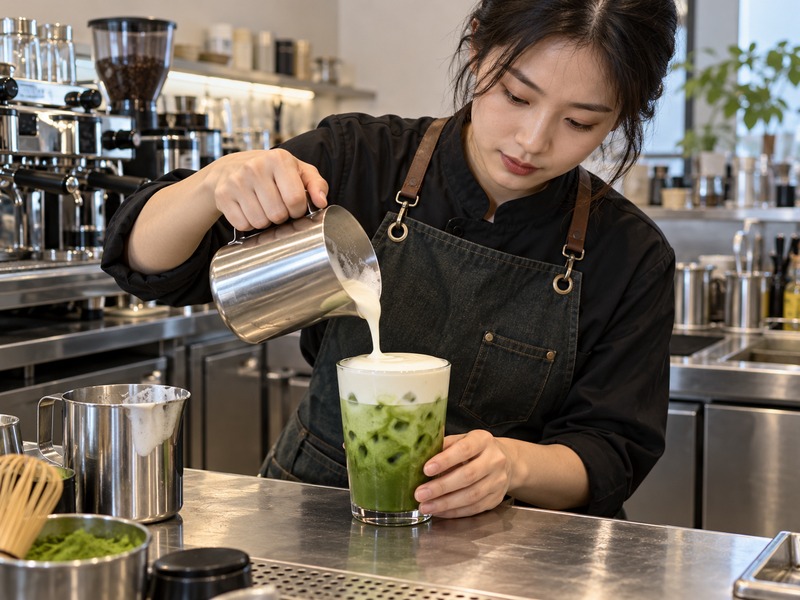
SERP intent reference: Matcha Latte With Sweet Cream Cold Foam.
1. What does sweet cream cold foam add to a matcha latte?
A standard build places a matcha latte in the lower cup and a pourable sweet dairy foam on top. The foam contributes sweetness, dairy aroma, and a different mouthfeel at the opening sip. It is thinner and more fluid than a spooned whipped-cream cap. Define cup volume, base strength, foam grams, lid, and whether guests are expected to sip through the layers or stir.
Two-part drink design
Tea below, cream above: A visually thick topping can be commercially weak if it collapses before pickup or blocks the sip opening. Set a reference cup at the time the guest receives it. Matcha must remain recognizable after cream reaches the mouth. If the base is iced, account for ice space and dilution. If hot service is planned, test it as a separate product because a cold topping changes rapidly on warm liquid.
2. Which cream and matcha should buyers choose?
Sweet cream cold foam can use a blend of cream, milk, and sweetener, but the exact fat and sugar profile controls aeration and pour. Ask dairy suppliers for composition, microbiological documentation, and opened-pack rules. Compare tea powder in the lower latte at the planned strength. A strong matcha grade may be needed to remain clear through sweet foam; a bitter one may clash after the topping dissipates.
Dairy and tea specification
Cream fat target: Screen dairy options at a fixed foam process. A richer blend can hold bubbles but feel heavy; a leaner blend may pour beautifully and drain within minutes. Vanilla or other flavoring can mask tea, so test plain sweet cream before adding variants. Use the same cup and sip lid for powder trials. A dry matcha sample says little about the full beverage. The best purchase grade is the one that stays pleasant both under foam and after partial mixing.
| Component | Function | Control |
|---|---|---|
| Matcha base | Tea flavor | Powder grams |
| Sweet cream foam | Top texture | Fat and sugar |
| Cup and lid | Sip path | Headspace |
3. How should base and foam formulas be weighed?
Build the latte base and cream foam as separate weighed recipes. A medium iced cup might screen 1–2 g matcha in its lower phase and about 35–65 g foam above it. These are bench ranges, not a finished menu standard. The foam sugar level should be measured in grams and checked against any sweetener already present in the base. More foam raises sweetness, cost, and headspace demand together.
Subformula balance
Sweet top versus tea base: Taste the cup through the lid and after stirring. A base that tastes too bitter alone may be balanced under foam, but customers should not encounter an unpleasant end portion of the drink. If the opening sip is overly sweet, reduce foam sugar or deposit rather than adding tea until the base becomes harsh. Record the foam liquid mass before aeration and deposited foam mass after. Volume alone is a poor control because aeration changes it.
A sweet topping changes the base recipe even when matcha stays below it. Run a controlled tasting with one base and several foam sugar levels at a fixed deposit mass. Then hold foam constant and vary matcha dose. This separates a genuinely weak tea grade from a topping that simply overwhelms it. Record opening-sip and stirred-cup scores independently so purchasing can see the tradeoff.
4. What cold-foam method keeps it pourable?
Keep cream components cold under the café’s food safety plan. Combine them in a defined order, then aerate with the intended frother until the mixture pours as a soft, uniform foam. A stiff peak belongs to a different style of topping. Use a measured batch size; small single-cup batches and large service pitchers can aerate differently. Deposit promptly after preparation or within a validated cold hold.
Aeration endpoint
Drainage check: Measure a sample’s mass in a fixed-volume cup to track density. Check for liquid draining from foam while it sits, and note whether sugar or vanilla separates. If the foam becomes too stiff, operators may be overwhipping or using a richer dairy blend than the specification. If it vanishes, review fat level, temperature, and mixing energy before adding stabilizer. A stabilizer, if used, becomes part of the ingredient and allergen file and needs its own trial.
| Bench item | Trial range | Watch |
|---|---|---|
| Matcha | 1–2 g medium cup | Flavor beneath foam |
| Foam | 35–65 g | Sweetness and clearance |
| Ice | Named cup mass | Dilution |
5. How should an iced matcha latte be assembled?
Disperse matcha in a small measured liquid portion, then add milk or water according to the base card. Fill the cup with the specified ice mass, leaving a measured space below the lid for sweet foam. Pour foam gently so it forms a distinct top without punching into the green base. A lid that scrapes foam away changes the portion customers receive.
Cup sequence
Foam headspace: Test the final cup, not only an open glass. Sip lids, dome lids, and flat lids require different clearance and can change foam flow. Inspect for matcha streaks on the lid and a green base diluted by ice at pickup. If a warm version is offered, test topping melt and temperature independently. A formula intended for cold service should not be transferred to hot milk simply because both use the word latte.
6. What shows that the topping survives service?
Check foam height at deposit, after lid placement, and after a realistic pickup delay. Taste the opening sip through the actual lid and a later sip when cream has mixed with tea. Look for large bubbles, watery drainage, and a slick fat layer on the cup wall. The base should still show a clear tea flavor. Record the amount of foam left under the lid after drinking.
Pickup foam check
Opening-sip balance: If the top drains, check dairy composition and holding time. If it forms a heavy cap, check overaeration and deposit mass. A drink can look attractive for a photograph while guests receive mostly sweet cream. Have ordinary staff produce several cups in sequence, then compare the earliest and latest. A release standard should describe foam density and sensory balance in words a shift lead can use without a pastry specialist.
| Foam test | Measure | Failure |
|---|---|---|
| Density | Mass per fixed volume | Too stiff or thin |
| Pickup | Height and drainage | Collapse |
| Sip | Cream-to-tea balance | Sweet cap |
7. How should the foam change cup economics?
Cost matcha base by tea grams, milk, sweetener if any, ice, cup, and lid. Cost foam separately from cream, milk, sugar, flavoring, and usable output after pitcher residue or drainage. Add frothing labor and cleaning. A foam batch that loses structure before sale creates hidden waste even when ingredients are inexpensive. Divide foam cost by accepted topped cups, not planned portions.
Two-component margin
Dairy batch yield: A richer cream blend may command a premium menu price, but fat cost and cold storage need to fit expected volume. Compare a made-to-order foam with a prepared batch using the same pickup standard. The base matcha grade should be compared at the dose that works beneath foam; a cheaper powder requiring more grams may not save money. Include remakes caused by poor foam or underfilled base in the finished cup cost.
Cream foam cost also depends on overrun and drainage. Weigh the frother vessel before mixing, the accepted deposits, and leftover liquid after the service window. A visually tall foam may deliver less mass than expected, while a draining batch creates waste and inconsistent sweetness. Include the extra cold storage position and cleaning minutes if the topping requires a dedicated station.
8. How should cream foam be held and cleaned?
Cream foam is a perishable dairy component. Follow local rules and supplier directions for opened milk and cream, then validate the prepared foam’s own use window. Label batches with time and ingredients. Keep frother heads, pitchers, and lids clean under a documented schedule because residue can affect both safety and aeration. Matcha powder remains sealed and dry until preparation.
Dairy cold chain
Pitcher use limit: Test foam near the end of the proposed holding window for drainage, flavor, and temperature. A cold pitcher left at the station can drift during a busy shift; the operating plan should name where it returns between uses. Do not top old matcha cups with fresh foam to make them look new. The assembled drink should be sold promptly and delivery tested with movement, lid contact, and ice melt.
| Cost line | Basis | Loss |
|---|---|---|
| Tea base | g per accepted cup | Overdose |
| Cream foam | Accepted cups per batch | Pitcher residue |
| Service | Frothing and pack | Remakes |
9. Which allergens and menu words need review?
The standard sweet cream foam contains dairy, so milk allergen information must be clear even if the matcha base uses plant milk. Vanilla, stabilizers, and flavored syrups may add other ingredients or allergens. A “dairy-free matcha latte” becomes misleading when topped with dairy cream. A plant-based foam alternative needs its own ingredient statement, process trial, and name. Matcha contributes caffeine.
Milk declaration
Named topping: Keep dairy brand and lot, matcha lot, foam batch, and base card linked for complaint review. A customer who asks for no sugar may still receive sweetened cream if a cashier changes only the base; the ordering system should make the topping visible. Avoid health claims based on tea or cream. Describe the texture and flavor guests receive. Any change in foam ingredients can change both label and density, so quality review should precede purchasing substitution.
10. What should a store pilot prove?
Pilot under normal store traffic with the final cream blend, matcha base, cup, ice, frother, and lid. Measure foam density, deposited mass, drainage after pickup, opening-sip balance, service time, and remakes. Include foam from the end of a permitted batch. Ask staff whether the topping process fits the line without leaving dairy warm on the counter.
Full-cup release
Foam through lid: Compare two matcha grades beneath one fixed foam. If both disappear under sweet cream, adjust foam sugar or portion before ordering more powder. If one grade tastes harsh after foam mixes in, reject it despite a strong opening sip. Sign off on the base and topping as separate specifications and on one complete cup standard. A finished drink should pass both the visual handoff and the full drinking experience.
| Record | Links | Decision |
|---|---|---|
| Dairy lot | Milk and cream | Trace |
| Foam batch | Time and recipe | Hold |
| Menu proof | Topping and allergens | Sale |
Give Matcha Village the matcha base formula, milk or water dilution, foam sugar and fat targets, and a cup photo after the normal pickup delay. Compare powder grades at equal base dose beneath the same foam. The buying decision should keep tea flavor present through a sweet opening sip while operations fixes the cold foam recipe, deposit mass, and dairy handling rules.
FAQ
Q1: Is sweet cream cold foam the same as whipped cream? No. This version should pour and blend during a sip; whipped cream forms a denser cap.
Q2: Can a plant-milk latte have dairy foam? Yes, but the complete drink then contains dairy and must be described accordingly.
Q3: Why does foam drain before pickup? Check fat level, cold temperature, aeration, and prepared-batch hold time.
Q4: Should matcha be added to the foam? This build places matcha in the lower latte; a green foam would be a different formula and menu item.
Q5: How should cafés cost the topping? Measure deposited foam and accepted cups per batch, including pitcher residue and remakes.