
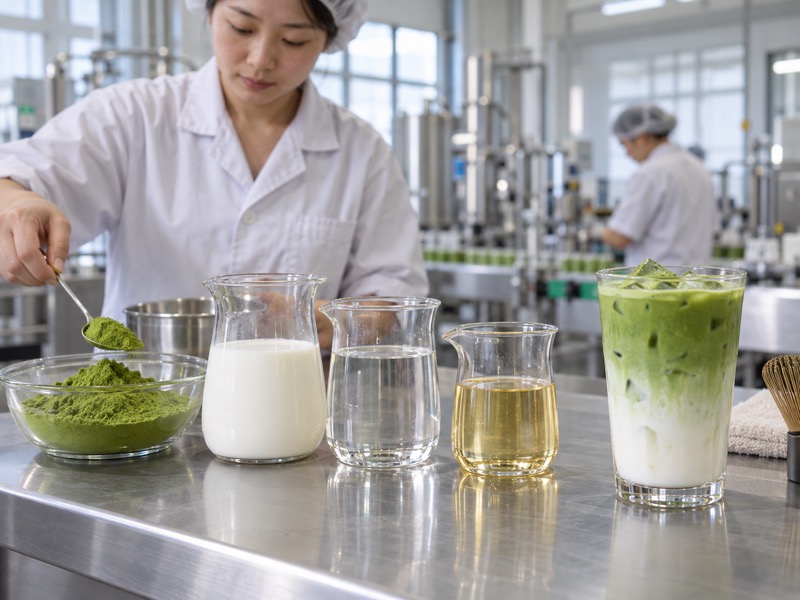
Matcha latte ingredients can be as simple as powdered tea, water and milk. Many commercial versions add sweetener, flavor, foam, stabilizing ingredients or a premix. The longer list is not automatically better; each ingredient should solve a clear taste or operating problem. The Tea Spot’s matcha latte guide shows a home preparation route. A café or beverage brand needs to define the finished cup, test each component and document what customers actually receive.
For: café buyers, beverage developers, private-label teams and ingredient suppliers. Decision: which ingredients belong in the recipe and which only add cost, claims or complexity.
1. What is the minimum viable formula?
Start with tea, liquid and purpose
Make a plain control using matcha, measured water and the intended milk or plant drink. Taste it before adding syrup or flavoring. This reveals whether the tea and base can carry the product. A latte can be unsweetened, lightly sweet or dessert-like, but the target should be written before additions begin. Define cup size, hot or iced service, tea intensity and expected body. Without that target, teams often add ingredients to fix a problem they have not named.
Keep a control sample. Every new component should be compared against the plain latte at the same final volume. Ask whether it improves flavor, texture, service or shelf performance. If tasters cannot detect the ingredient or it creates a new issue, consider removing it. A short ingredient list can be easier to train, label and cost, but only if it delivers the experience promised to the customer.
| Component | Core job | First test |
|---|---|---|
| Matcha | Tea flavor and color | Finished-cup tasting |
| Water | Disperse tea | Clump check |
| Milk or plant drink | Body and foam | Hot and iced trial |
2. Which matcha should be selected?
Taste it with the base
Request identified powder samples and prepare them at equal dose in the same recipe. Compare color, aroma, bitterness, savory depth, mouthfeel and tea clarity after milk and ice. A delicate powder can taste excellent in water yet vanish in a sweet latte. A strong powder may survive milk but leave an unpleasant finish. Grade names and dry color help describe candidates; the served cup decides which one belongs in the formula.
Record accepted dose and lot. Calculate grams per final cup and keep a reference sample. Ask the supplier for specification, storage guidance, pack size, traceability and change notice. If the menu uses an origin or organic claim, obtain documents for the actual material and have the claim reviewed for the market. A new tea lot should be trialed against the accepted recipe before every barista starts using it.
3. Why is water an ingredient decision?
It changes more than volume
Water is often used to disperse matcha before milk is added. Its source, temperature and amount can affect taste, clumping and the final tea-to-milk balance. Use the shop’s actual water supply during development. Make a measured pre-mix, then taste the complete latte. Too much water can thin a small hot drink; too little may leave a paste that is hard to integrate. Set a reproducible water method rather than “add a splash.”
Check the cold route. An iced latte may be prepared with a warm pre-mix followed by cold milk, or by a separately validated cold mixing method. Test both under real service conditions. A water dispenser may vary during a shift, so check that staff can repeat the accepted result. If the business moves to another location with a different water supply, make a short comparison rather than assuming the formula is unchanged.
| Water variable | Why test it? | Record |
|---|---|---|
| Source | Taste and consistency | Shop supply |
| Temperature | Dispersion and aroma | Equipment setting |
| Amount | Strength and body | Grams per cup |
4. Which milk or plant drink fits the product?
Compare actual brands and formats
Dairy milk, oat drink, soy drink and other bases bring different sweetness, body, color and foam behavior. Compare them at the same final cup size with the chosen matcha. A base that tastes good cold may perform differently when steamed. A plant drink’s own grain or nut note can support or cover the tea. If the café offers several bases, create tested recipe variants where needed rather than assuming one tea dose works everywhere.
Handle allergens from the whole formula. A drink made with oat liquid may still contain milk if the matcha premix includes milk powder. Shared pitchers and steam wands also matter for cross-contact controls. Obtain ingredient and allergen statements for every component. Menu staff should be able to explain what is in each version without guessing. The best base is the one that makes the intended drink and can be handled safely in the actual operation.
5. How should sweetness be added?
Keep flavor and sugar separable when useful
Sugar, honey, flavored syrup, fruit puree and sweetened milk each bring more than sweetness. They change flavor, body, cost and label content. Make a small dose ladder in the chosen base and taste at serving temperature. A sweetener that seems balanced in a hot cup may become weak or excessive after ice dilution. If customers can choose less sweet, check whether the formula still has enough tea and any named flavor when sweetener is reduced.
Read the complete recipe. A matcha latte powder or plant drink may already contain sugar. Request verified ingredient and nutrition information before describing a product as unsweetened or low sugar. If a syrup supplies both vanilla flavor and sweetness, reducing it changes two variables. A clean formulation separates those functions when customers can customize the drink. Record the accepted amount in the cup, not a number of inconsistent pump strokes.
| Sweetening route | Advantage | Check |
|---|---|---|
| Separate sugar | Flexible level | Staff dosing |
| Flavored syrup | Fast flavor and sugar | Tea masking |
| Sweetened premix | Simple service | Limited customization |
6. When do other ingredients earn a place?
Require a measurable benefit
Foam, cream, spices, fruit, protein and other additions can create distinct menu products. Each should be tested against the plain latte for a clear purpose. Does it improve flavor, texture, appearance or convenience enough to justify added cost and complexity? A topping that looks good but makes the drink overly sweet may not. For packaged drinks, functional ingredients may affect processing and shelf behavior, so the technical team must validate them in the commercial route.
Keep claims separate from taste. An added ingredient does not automatically support a health promise. Review any nutrition, performance or dietary statement under the relevant market rules and evidence. Train staff on allergens and the exact ingredients in each menu variation. The goal is a range customers can understand, not a cup overloaded with fashionable components.
7. How should the ingredients be assembled?
Set order and mixing method
Matcha is suspended powder. Pre-disperse it in a measured liquid before adding milk where that route works for the product. Test the actual whisk, shaker or mixing tool, then check the last sip for sediment. A layered drink may intentionally place tea over milk, but the team should taste it after a normal stir as well as in layers. Ingredient order can change foam, appearance and the ease of making multiple cups during a rush.
Write a bar recipe. Specify ingredient codes, amounts, cup size, ice, preparation sequence, equipment and handoff cue. Let ordinary staff make several consecutive drinks. If a component is prepared in advance, validate its quality and food-safety hold with the venue’s controls. A recipe that works only with a developer’s improvised adjustment is not ready for routine service.
8. What changes in a bottled latte?
Test the intended process
A ready-to-drink latte needs its own formulation and validation. Tea particles can settle; milk or plant ingredients can change texture; color and aroma can shift through processing and storage. Fill the proposed package and test it through the technical team’s safety and shelf program. A fresh café recipe cannot simply be bottled and given a date code. The correct ingredient list and process depend on the product and market.
Check the consumer’s last sip. If the label says to shake, test whether normal shaking restores a pleasant, uniform drink. Sample early and late production fills. Record tea distribution and appearance at points through the intended sale period. A visually stable bottle may still fail taste, while a drink with minor settling may be acceptable if accurately described and easily remixed. Decide from validated product evidence.
| Product route | Key check | Evidence |
|---|---|---|
| Fresh café cup | Service speed and taste | Shift trial |
| Short-held base | Uniformity and handling | Timed samples |
| Bottled latte | Safety, shelf and settling | Product study |
9. What should the buyer keep on file?
Connect every ingredient to the cup
Keep supplier specifications, ingredient and allergen statements, lot codes, pack sizes, storage guidance and approved alternates for matcha, milk, sweeteners and additions. Retain the accepted recipe and a reference cup description. If a supplier changes a component, the team can identify what to retest. This matters particularly for private-label products, where the brand name stays the same while manufacturing ingredients may change behind it.
Cost the formula honestly. Calculate actual grams or milliliters per sellable cup, labor, pack and expected waste. A cheap premix may need a large dose; a premium matcha may be efficient at a lower dose. Compare complete recipes, not individual ingredient prices. Make sure the menu and label reflect the formula actually bought and served.
Put ingredient substitutions through the same approval route. A new oat drink may have a different sugar level, and a new syrup may change both flavor and allergen information. Keep the previous and proposed formulas side by side so the team can see what changed. Test the new cup at the same size and temperature, then update the cost sheet and staff card together. Small, undocumented swaps are a common reason the drink customers receive drifts away from the product the menu originally described. A short controlled comparison is cheaper than retraining the bar after complaints appear.
10. What pilot approves the ingredient list?
Test the full menu cup
Shortlist recipes that meet the taste target and ingredient requirements. Prepare coded hot and iced cups at the intended sizes. Let staff use the actual equipment during a normal shift. Record dose, preparation time, clumps, sediment, taste, temperature, appearance and guest comments. For a packaged drink, include the actual process and pack. Keep one plain control in the comparison so every extra ingredient has to justify its place.
Sign off the exact formula. Approve ingredient codes, lot standards, recipe versions, claims, allergens, cost and retest triggers together. The next step is a controlled service or production pilot with the finished cup as the deciding evidence. Matcha latte ingredients are right when each one has a job and the whole drink remains clear, repeatable and honestly described.
| Approval gate | Pass question | Evidence |
|---|---|---|
| Flavor | Is tea clear in the final cup? | Blind tasting |
| Service | Can staff make it consistently? | Timed trial |
| Claims | Does wording match ingredients? | Document review |
| Cost | Is margin based on real portions? | Cup cost sheet |
A useful release check uses the full drink, not a spoonful of dry powder. Prepare it with the specified liquid and cup size, then compare sweetness, tea flavor and texture after the normal service delay. A recipe that works only at the test bench needs revision before staff training.
For the base ingredient decision, see the milk for matcha latte guide.
Reference: How to Make a Matcha Latte (Hot & Iced) is a home preparation reference. The commercial formula checks above are independent.
FAQ
Q1: What are the basic matcha latte ingredients? Matcha, water for mixing and milk or a plant drink; sweetener is optional.
Q2: Does a matcha latte contain coffee? Usually not, unless espresso is intentionally added and listed.
Q3: Can one recipe work with every milk? Test each common base; taste and foam can change.
Q4: Is a premix the same as pure matcha? No. Check its full ingredient statement, sweetness and preparation method.
Q5: What should be approved before launch? The exact ingredients, recipe, allergens, claims, service result and cost per sellable cup.