
The best milk for matcha latte is the one that makes your chosen tea taste clear and stays workable at your service temperature, price, and customer mix. Dairy may round sharp notes; oat or soy may foam well in one format and obscure tea in another. A café buyer should compare candidates in one standardized recipe before committing to a case contract. The Matcha Yaad milk guide reflects the consumer question; the tests below turn it into an operational decision covering hot and iced cups, ingredient statements, waste, and repeat orders.
1. What job should the milk perform in this latte?
Write the product brief before collecting cartons. Is the target a tea-forward latte with a light body, a creamy sweet drink, or a milk-free visual with a strong green layer? The milk should support that target. A rich dairy milk may soften astringency but reduce tea definition. A lightly flavored plant beverage may let tea lead yet feel thin. Neither outcome is inherently good or bad; it depends on the menu promise and what customers reorder. Taste the tea-and-water control first so the team knows what the powder contributes.
Separate hot and iced criteria. A hot latte needs pleasant steamed texture and stable microfoam. An iced latte needs a clean taste after ice melt and may need visual layering. Some bases excel in one and fail in the other. Keep standard serving size, tea dose, and sweetness fixed during the initial screen. If a candidate tastes weak, do not immediately raise matcha: record the weakness, then decide whether the base or powder should change.
| Latte goal | Milk priority | Check |
|---|---|---|
| Tea-forward | Low flavor interference | Blind taste against water control |
| Creamy | Body and balanced sweetness | Mouthfeel after serving |
| Hot service | Foam stability | Standard steam and pour |
| Iced service | Flavor under dilution | Taste after ice melt |
2. How can a buyer compare dairy and plant milks fairly?
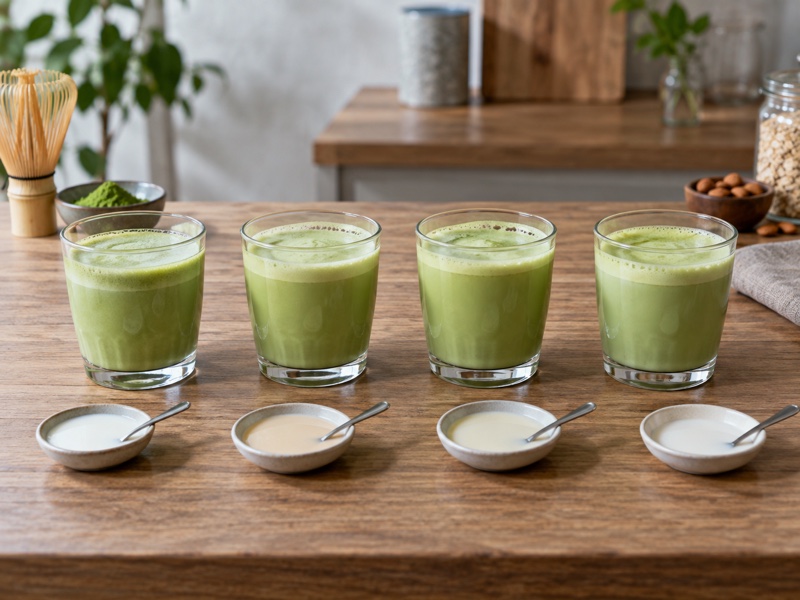
Use the same matcha lot, dose, cup, drink mass, water pre-whisk, sweetener, and service temperature. Code the cups so tasters do not know which carton they are drinking. Compare plain dairy milk, one oat product, one soy product, and any locally relevant alternative. Avoid treating categories as single ingredients: two oat drinks can have different fat, sugar, gums, and protein. Record the exact SKU and ingredient statement for every candidate.
Retest finalists at target flavor
Run a second round only for finalists. In that round, adjust matcha dose or sweetness to give each milk a fair chance at the target flavor. The first round reveals what the milk does under identical conditions; the second reveals the cost and complexity of making it work. If a plant base requires much more tea, calculate that cost per cup before choosing it on a carton price alone. A chain should also repeat the test with the water and equipment used in representative stores.
3. What does dairy milk contribute beyond creaminess?
Dairy milk brings a familiar sweetness and body that can soften tea bitterness. Its fat and protein level affects mouthfeel and steaming, so whole, reduced-fat, and lactose-free products should not be treated as interchangeable. A lactose-free milk may taste sweeter even without more total sugar because lactose is broken into simpler sugars; verify how that changes the recipe’s perceived sweetness. For a hot latte, test at normal steaming practice and taste immediately and after a short wait. For iced service, check whether milk aroma crowds the tea.
Milk is a major allergen in the US. If a café sells plant-based alternatives, write an equipment and communication procedure to manage cross-contact. Packaged products must follow the applicable labeling rules. The FDA food allergen guidance gives US requirements; other markets differ. A procurement swap between dairy brands can also change flavor or foam, so an approved SKU should remain part of the recipe card.
| Dairy option | Potential benefit | Check before approval |
|---|---|---|
| Whole milk | Fuller body | Does it mute tea? |
| Reduced-fat milk | Lighter cup | Does foam and body hold? |
| Lactose-free milk | Accessibility for some guests | Perceived sweetness |
4. How do oat, soy, almond, and coconut compare?
Oat drinks often supply body and cereal sweetness, yet the degree varies by brand. Soy can supply a fuller protein texture but may add a beany note and is a major allergen in the US. Almond drinks may be lighter and bring a nut flavor; almond is a tree nut requiring appropriate allergen handling. Coconut can pair with tea but easily becomes the dominant aroma. Test exact products in both hot and iced builds, including any “barista” version under consideration. Marketing labels do not substitute for a cup test.
Measure how each base behaves after opening and during a busy shift. Some settle in the carton and need shaking. Others foam inconsistently when staff use a cold pitcher. Check the ingredient declaration for sweeteners and stabilizers, especially if the café describes a drink as unsweetened or simple. If a plant milk wins for dietary choice but loses tea flavor, you may decide to offer it as an option rather than the signature default. That decision keeps the menu broad without weakening its flagship cup.
5. Does the matcha powder change the milk ranking?
Yes. A matcha with gentle vegetal sweetness may pair well with a neutral milk and disappear in a rich oat base. A bolder powder may retain tea flavor in dairy but feel too sharp with a thin almond drink. Screen milk against the powder the café actually intends to buy. If the tea lot changes, repeat at least a small bridging test. The tea grade name alone does not tell you how it will taste with a particular milk or sweetener.
Matcha Village advises buyers to test pure matcha grades in the intended application. Request samples and compare them at fixed dose in the same milk. Then check matched finished flavor and total ingredient cost. A premium powder may be useful in an unsweetened hot latte, while a culinary or selected premium grade may be sufficient in a flavored iced drink. Approval belongs to the finished cup, not the supplier’s category label.
| Tea-and-milk test | Hold constant | Decision |
|---|---|---|
| Milk screen | One approved tea and dose | Best base behavior |
| Tea screen | One selected milk | Best powder flavor |
| Final pairing | Target taste and cup size | Cost per acceptable serving |
6. How should hot foam be tested?
Steam the same volume in the same pitcher using normal staff practice. Record starting temperature, steam endpoint, foam texture, pour behavior, and how long the surface remains attractive. One expert barista’s best pour is not a chain standard. Ask several staff members to prepare coded cups, then judge the foam after a normal handoff delay. A base that gives attractive latte art but tastes oily or hides matcha should not win solely on photographs.
Observe bar workflow
Also assess cleanup and workflow. Some plant milks leave a film that takes longer to rinse from a steam wand or pitcher. A base that scorches easily can create waste during busy periods. Train staff on a temperature range appropriate to the chosen product and equipment; do not assume dairy steaming habits transfer exactly. If the café offers both dairy and plant lattes, separate or clean tools according to its allergen procedure. A good milk choice must fit service as well as taste.
7. What changes in an iced matcha latte?
Ice dilution, layering, and cold mouthfeel change the ranking. Weigh ice and liquid. Make the same tea concentrate for each milk and pour it with the same sequence. Photograph at handoff and after a realistic pickup time. Some milks create a beautiful white-and-green division but taste uneven through a straw. Others mix quickly and deliver a consistent flavor. Taste both layered and stirred so presentation does not override the drinking experience.
If customers ask for less ice, decide how the store replaces volume. More milk dilutes the tea, while more water changes body. A fixed policy prevents a “light ice” cup from drifting in cost and flavor. Cold can dull sweetness, so a milk that tastes sweet when warm may feel restrained over ice. Test any syrup setting separately after choosing the base. Avoid changing milk, tea, ice, and sugar at once; otherwise the preferred cup cannot be reproduced with confidence.
| Iced test | Measure | Failure signal |
|---|---|---|
| Ice load | Mass per cup | Inconsistent dilution |
| Layering | Photos over pickup interval | Fast muddy mixing |
| Stirred taste | Blind sample | Tea disappears |
| Final sip | Sediment and sweetness | Syrup or powder pool |
8. How should sweetness and ingredients influence the purchase?
Compare the nutrition panels and ingredient lists before pricing. A sweetened plant drink may allow less added syrup but does not make sugar vanish from the finished cup. An unsweetened carton may contain other components that alter texture. If a menu says “no added sugar,” review the entire recipe and the rules for that claim in the destination market. Avoid implying a milk is healthier or more sustainable solely from its type; those claims require their own evidence.
Create a plain standard latte for each finalist and a sweetened variant if the menu will sell both. Taste both without knowing the milk. A base that wins in a vanilla latte may lose in a plain matcha latte. Keep the winning ingredient SKU on the station sheet. If purchasing later substitutes a carton, staff should run a short test rather than treating any product with the same plant name as identical.
9. What is the real serving cost of each milk?
Calculate cost per saleable cup from carton price, usable volume, tea dose, syrup, waste, and labor. Track opened-carton turnover at slow and busy stores. A plant milk with a low case price may waste more if it sells rarely and must be discarded after opening according to the product instructions and your food safety plan. A more expensive base may need less tea or syrup to achieve the target. Include those interactions rather than ranking carton prices alone.
Do a rush-hour line test for each finalist. Time retrieval, shaking, pouring, steaming if applicable, and cleaning. Count remakes from failed foam or wrong milk selection. A buyer may choose one default milk and two optional substitutes, with price differences that reflect actual cost. Keep menu and POS labels clear so an allergen-sensitive customer receives the intended drink. The milk strategy should be operationally simple enough to maintain across shifts.
| Cost item | Measurement | Why it matters |
|---|---|---|
| Milk | Used volume per cup | Base cost |
| Matcha | Grams needed for target | Pairing cost |
| Open-carton waste | Discarded volume | True purchase cost |
| Remakes | Cups per shift | Service loss |
10. Which milk should the café finally approve?
Approve a milk only after the plain cup tastes right, the relevant hot or iced service test passes, staff can repeat it, allergen information is clear, and cost fits the menu. There may be different winners for hot and iced drinks. That is acceptable if the menu and station procedures make the distinction easy to execute. Retain a carton from the approved lot and a reference matcha sample when new deliveries arrive, especially after a supplier change.
For a tea-forward house latte, start with a plain recipe and build options around it. Request Matcha Village beverage samples if the current powder does not hold its flavor across candidate milks. The test should end with a clear choice and a written reason: taste, foam, guest needs, or cost. “Best milk” then means best for this cup, in this café, with these ingredients and this service route.
FAQ
Q1: Is oat milk always the best plant option? No. Brands differ in sweetness, body, and foam. Test the exact carton.
Q2: Can the same milk win for hot and iced lattes? It can, but evaluate both formats separately.
Q3: Should a café change matcha when it changes milk? Run a bridging taste; milk can change how strongly the tea appears.
Q4: Does “barista” on a carton guarantee good foam? No. Check it with your steam wand, staff, and cup.
Q5: Can plant milk be called allergen-free? Do not make that assumption. Review ingredients, cross-contact, and local rules.