
The matcha bowl name many buyers look for is chawan, the Japanese word for tea bowl. It describes a utensil used to prepare and drink tea, not a single fixed size or decorative style. Tezumi’s guide to chawan styles shows how varied these bowls can be. A café or retail buyer should understand the term, then choose a bowl that works with the actual tea dose, whisk, washing routine and selling channel. A beautiful object can still be too narrow to whisk in or too fragile for a busy counter.
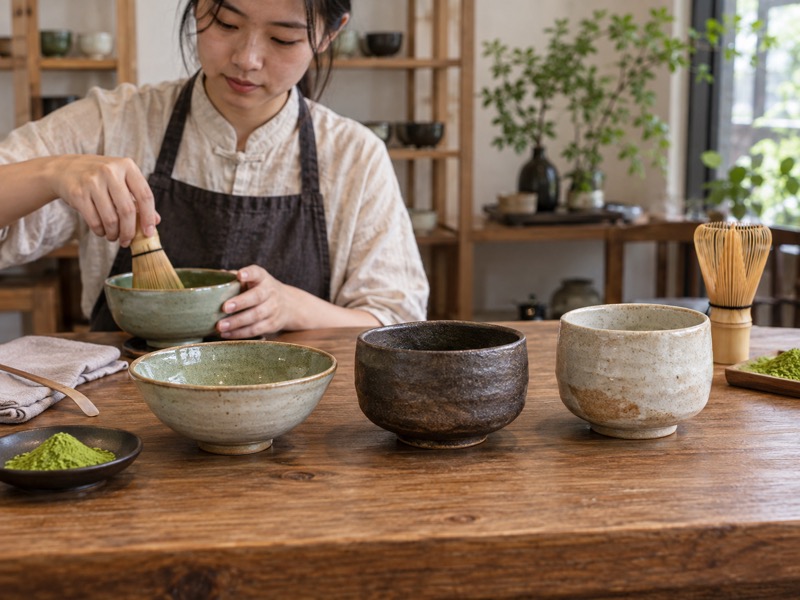
For: tea retailers, café buyers, gift-set developers and hospitality teams. Decision: which bowl can be described accurately and used repeatedly in its intended setting.
1. What does “chawan” mean in this context?
Use the term plainly
Chawan means tea bowl. In matcha service it refers to the vessel used to whisk and often drink the tea. There are many materials, shapes and styles, with cultural contexts that cannot be reduced to one silhouette. A retail description can say “matcha bowl (chawan)” so customers understand both the familiar function and the Japanese term. Do not use the word as a guarantee of handmade origin, ceremonial status or a specific firing method unless the product record supports those details.
Separate function from story. A bowl may be suitable for a café workshop without being a historically significant tea-ceremony piece. A collector’s bowl may be unsuitable for daily commercial washing. Ask the supplier for maker, material, dimensions and care guidance. If the brand uses a named style, check that the description is accurate rather than applying a broad cultural label for visual appeal. Clear naming helps customers buy the right tool.
| Term | Useful meaning | Do not infer |
|---|---|---|
| Chawan | Tea bowl | One fixed shape |
| Matcha bowl | Practical English use | Handmade origin |
| Named style | Specific design context | Unverified authenticity |
2. Which shape is easy to whisk in?
Give the whisk room
The inside width, wall slope and depth affect whisk movement. A wide bowl gives a bamboo whisk space for a quick back-and-forth motion; a narrow cup can force the whisk into the wall. The bowl should also contain the intended water volume without splashing. Test with the actual whisk and powder dose used by the café or kit. Watch several people prepare matcha. A shape that feels comfortable to one expert may be awkward for a beginner.
Check the bottom. A smooth accessible bottom makes it easier to disperse powder and inspect for dry pockets. Decorative interior textures can look attractive but complicate whisking or cleaning. A wide shallow bowl may cool quickly; a deeper one may retain warmth but restrict movement. These are practical tradeoffs rather than universal rules. Choose from a trial with real tea, not only dimensions in a catalog.
3. How much volume does the bowl need?
Match capacity to the recipe
Start with the tea and water amount the operation intends to serve. Add enough headroom for whisking and a steady handoff. A bowl that technically holds the liquid to its rim may splash when whisked. A very large bowl can make a small serving look sparse and can be costly to ship. Request internal dimensions or a sample, then measure comfortable working capacity with the actual recipe. For a kit, include a simple preparation guide that fits the bowl and whisk supplied.
Test with users. Ask staff or customers to lift and drink from the bowl. Weight, rim shape and heat through the wall matter. A heavy display piece may be pleasant at home but tiring in repeated workshops. A café may prefer a sturdy, stackable bowl even if a more delicate one photographs better. A buying specification should state usable capacity and handling, not only outside dimensions.
| Use | Capacity concern | Trial |
|---|---|---|
| Plain matcha | Whisking headroom | Prepare full serving |
| Workshop | Beginner spill risk | Multiple-user test |
| Retail kit | Fit to included recipe | Complete kit trial |
4. Which material and glaze should be checked?
Ask for food-use information
Ceramic bowls vary in clay, glaze, firing and finish. A buyer should obtain the supplier’s material and care information and check applicable food-contact requirements for the selling market. Do not judge safety by color or a rustic look. Examine the rim, interior and foot for rough edges, chips, cracks or glaze defects. A matte finish may feel appealing but could be harder to clean in a high-use setting. Test a sample through the intended washing routine.
Avoid unsupported labels. Words such as “lead-free,” “dishwasher-safe” or “handmade” need evidence for the specific product. A bowl can have a beautiful glaze without being practical for a commercial washer. Keep the maker or supplier declaration and product code tied to the batch ordered. If the manufacturer changes glaze or production location, repeat the review before using old copy and photographs for the new stock.
5. How should color and style serve the tea?
View the drink inside the bowl
A dark interior can make green foam stand out; a light interior can reveal powder flecks and color variation. Neither is inherently better. Prepare the same tea in several bowls under normal light and compare the appearance. Then drink from them. A dramatic shape may photograph well but cause awkward sipping or make it hard to see the tea surface. Choose style with function, especially when the bowl is part of a café service standard.
Describe styles carefully. Tezumi’s chawan guide covers many historic and modern forms, and names can carry specific traditions. A retail team should not copy a style name from a similar-looking photo without confirming its maker and construction. If the bowl is contemporary and simply inspired by a tradition, say so. Accurate, modest copy can still make an attractive product. It also gives staff a clear answer when a customer asks what makes the bowl special.
| Visual choice | Benefit to test | Function check |
|---|---|---|
| Dark interior | Foam contrast | Can staff see residue? |
| Light interior | Color visibility | Does staining show? |
| Textured form | Distinctive feel | Cleaning and comfort |
6. What matters in a café setting?
Test repeated handling
A café bowl needs to survive preparation, handoff, washing and storage many times. Check weight, stability on the counter, ease of lifting with warm liquid and resistance to ordinary chips. Observe staff during a rush. If bowls cannot be stacked safely or take too much space, the visual choice may become an operational burden. Keep a replacement plan; a signature bowl with long reorder time can disrupt the presentation standard.
Write a service routine. Specify the bowl, tea dose, water amount, whisk, cleaning and inspection. Staff should know when a chipped or cracked bowl is removed from use under the venue’s rules. Test whether the dishwashing route matches the supplier’s care guidance. A beautiful sample is not enough to approve a commercial order; the full service cycle determines whether it belongs on the counter.
7. How should a retail kit be assembled?
Make the pieces work together
A bowl, whisk, scoop and tea can look coherent in a box yet fail when a customer tries to use them. Assemble the proposed kit and follow its instructions from start to finish. Does the whisk move freely in the bowl? Is the tea dose measurable? Is the bowl comfortable to hold? Can the contents be repacked without damage? Use the actual selling package and include clear care and preparation guidance.
Check every claim. If a kit says its bowl is Japanese-made or dishwasher-safe, keep documents for that product. If matcha is included, its ingredient, origin and shelf information need separate review. A bundle does not merge different supplier claims into one. The kit should help a beginner make a pleasant bowl while giving an experienced buyer enough detail to assess the tools.
8. What should be tested in packaging and transport?
Ship a full case
Ceramic breakage can erase a margin quickly. Pack bowls in the final retail box, then test the distribution route and handling expected for the business. Check rim and foot protection, movement inside the box and damage after shipment. A single sample sent with generous padding is not proof that a production case will arrive intact. Record damage rates and supplier response terms. For e-commerce, consider the extra outer carton and return handling.
Preserve the experience. A gift set should arrive clean and ready to present, not dusty or chipped. Packaging should explain contents without implying a bowl style or origin the supplier cannot support. If a bowl is sold in several glaze variants, make sure photos and product codes match what is picked and shipped. A precise catalog reduces returns caused by expectation gaps as well as physical damage.
| Distribution point | Main risk | Check |
|---|---|---|
| Retail box | Bowl moves inside | Packed shake test |
| Case | Rim and foot damage | Case trial |
| Online order | Extra handling | Delivered sample |
9. How should buyers compare suppliers and price?
Include usable units
Compare material and food-contact documents, dimensions, finish consistency, minimum order, lead time, packaging, damage allowance and replacement availability. Calculate cost per usable delivered bowl, not only the factory quote. A lower-priced bowl with more chips or glaze variation can cost more. For a café, add replacement frequency and washing labor. For a retail kit, add packaging and returns. Keep a reference sample for color, dimensions and finish.
Ask for change notice. A supplier may update glaze, kiln, mold or packing. Those changes can affect appearance and function. Agree on what must be communicated before the next order. If the bowl is paired with a branded tea, a shift in color or size can make old photographs inaccurate. A small incoming inspection using the approved sample can catch problems before bowls reach the shelf or café floor.
10. What trial should approve the bowl?
Use it, wash it, ship it
Prepare matcha with the intended whisk and recipe, let several people hold and drink from the bowl, then clean it by the planned method. Inspect for residue and damage. Pack a small production sample in the final format and send it through the normal route. Record usable capacity, whisking comfort, wash time, chip rate, delivered appearance and cost. A bowl should be approved as a working utensil and a sellable object.
Keep the description tied to the item. Save the product code, maker information, dimensions, care statement, food-use documents, photos and approved sample. The next action is a small practical trial rather than a large order based on a catalog image. The matcha bowl name may be chawan, but the buyer’s best answer is a bowl that performs well and is described accurately.
| Approval gate | Pass question | Evidence |
|---|---|---|
| Whisking | Is there room and control? | Prepared bowls |
| Care | Can it be cleaned as planned? | Wash trial |
| Delivery | Does it arrive intact? | Packed shipment |
| Copy | Are claims supported? | Supplier records |
For an online kit, photograph the bowl beside the actual whisk and include its filled working capacity. This gives a customer more useful context than outside diameter alone. Keep the approved sample when reordering so a changed rim or glaze can be noticed before kits ship.
The matcha tea accessories guide places the bowl alongside the other tools in a working set.
Reference: Know Your Chawan: A Guide to the Famous Matcha Bowl Styles provides cultural and style context. The buying and use checks above are independent.
FAQ
Q1: What is the Japanese matcha bowl name? Chawan means tea bowl and is commonly used for the bowl in which matcha is prepared and drunk.
Q2: Is every chawan the same size? No. Shapes and sizes vary; test usable capacity with the intended recipe.
Q3: Does a bowl need a named historic style? No. A contemporary bowl can work well if its description is accurate and its function suits the user.
Q4: Can a café put any ceramic bowl in a dishwasher? Follow the specific supplier’s care guidance and the venue’s food-use controls.
Q5: What should a kit buyer test? The bowl, whisk, tea, instructions and packed shipment as one complete product.