
Matcha flavor is often described as “earthy,” “sweet” or “umami,” but those words are too broad to choose a supplier lot for a café. The same powder can taste different in plain water, a sweetened latte and a baked cream. AIYA’s pairing guide suggests citrus, vanilla, nuts, mint, chocolate and berries as companions. A buyer needs to go further: identify what the tea tastes like on its own, set a recipe target, then test whether an added flavor supports or hides it. This guide provides a repeatable tasting method and a way to turn notes into a purchasing decision.
Contents
- 1. What do you want matcha to contribute?
- 2. How should a blind sample tasting be set up?
- 3. Which preparation variables must stay fixed?
- 4. What flavor notes should tasters record?
- 5. How do water and milk change perception?
- 6. Which pairings deserve a small trial?
- 7. How do sweetness and acidity affect balance?
- 8. How should a café compare powder lots?
- 9. What should the menu description say?
- 10. When is a flavor decision ready to scale?
1. What do you want matcha to contribute?
Decide whether tea is the lead or the supporting note
A whisked bowl of matcha makes tea the whole experience. A vanilla latte can use tea as a distinct flavor beneath milk and sweetness. A cookie may use tea to give color and a gentle finish. None of these jobs is wrong, but the purchasing criteria differ. Write one sentence for each menu application: “tea should remain identifiable after milk,” or “tea should be pleasant without sweetener.” This is more useful than asking a supplier for its “best” grade without describing the product.
Set a target intensity and a limit. A café may want a clear tea finish without a sharp aftertaste; a bakery may tolerate a stronger powder to remain perceptible after heating. Taste with the actual serving size. A tiny bench cup can exaggerate strength compared with a large iced drink. If the finished item relies on vanilla or berry syrup to hide an unpleasant tea base, the powder or recipe may need changing. Keep the objective tied to what the guest will receive, not to a marketing label on the bag.
2. How should a blind sample tasting be set up?
Remove cues that bias the first sip
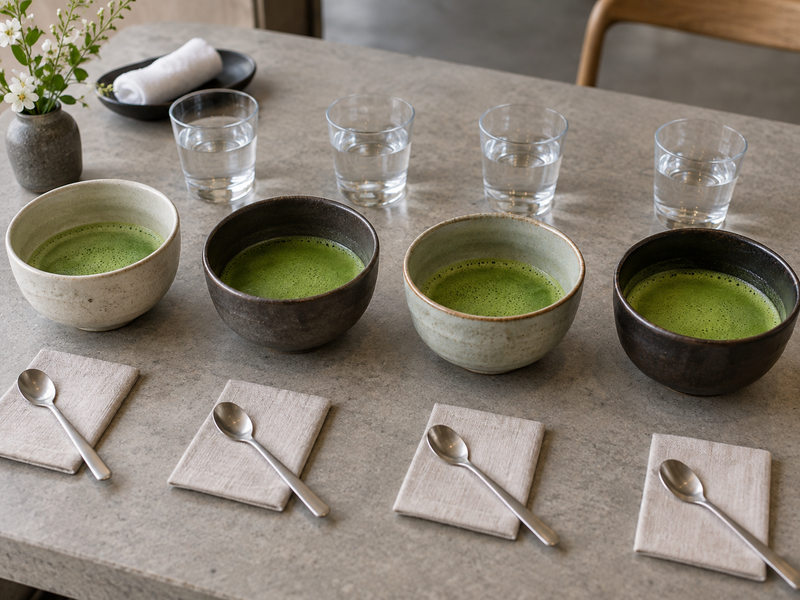
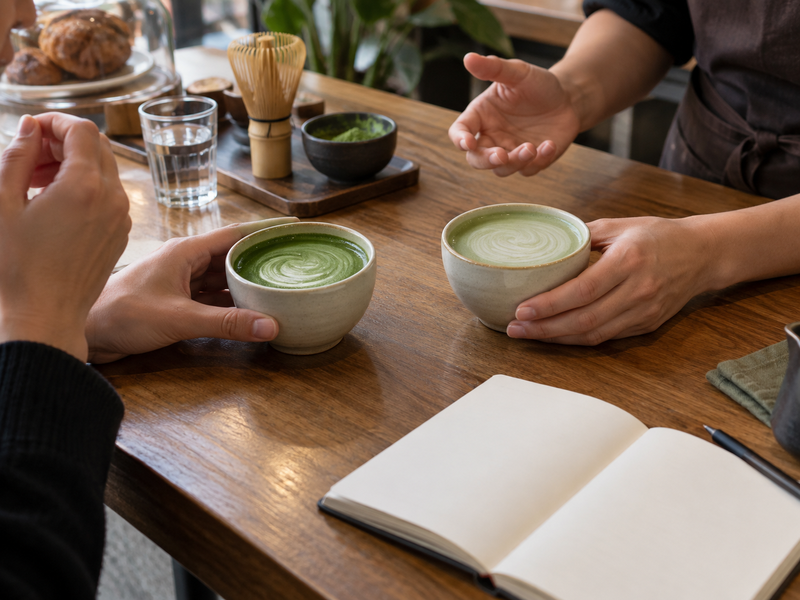
Use coded containers and the same preparation for every powder. Put the lot identity on a separate sheet so tasters are not guided by price, origin story or packaging color. Weigh the powder and water, use the same bowl type and serve within the same temperature range. Give each taster plain water and a short scorecard. Ask for individual notes before discussion; a confident first speaker can pull an entire group toward the same adjectives.
Taste at least two samples and, if possible, repeat one hidden sample. If a taster scores the same tea very differently twice, the panel needs a more consistent preparation or clearer questions before making a large purchase. Include someone who will prepare the product, someone who will sell it and someone who will cost it. A blind tasting is a practical procurement tool, not a laboratory sensory panel. Its value is that the decision can be revisited when a new lot arrives.
| Tasting control | What to fix | Why |
|---|---|---|
| Sample identity | Random code | Reduces brand bias |
| Powder dose | Gram weight | Fair strength comparison |
| Water | Same source and volume | Limits preparation noise |
| Serving timing | Same interval | Temperature and settling |
| Notes | Written before discussion | Independent observations |
3. Which preparation variables must stay fixed?
Standardize the cup before judging the leaf
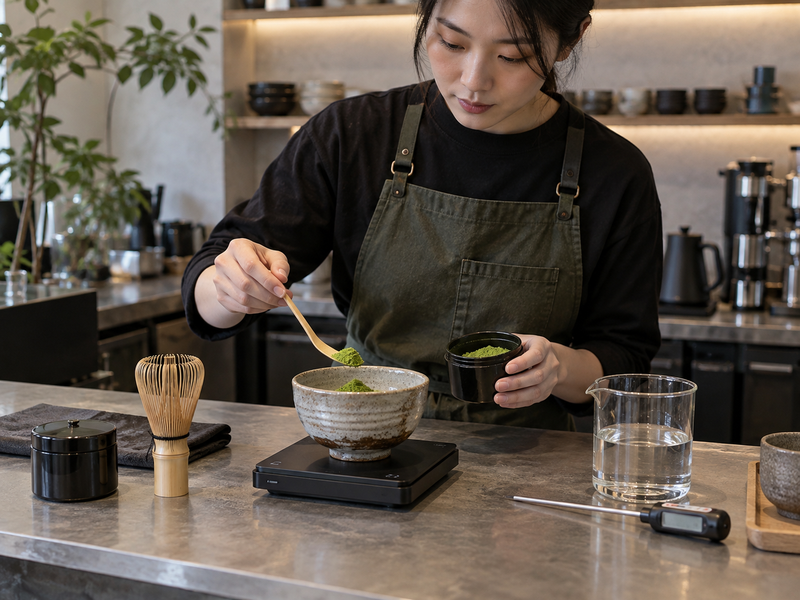
The powder dose, water volume, water source, temperature and whisking method can all change the cup. Make a recipe card for the comparison. A heaped scoop is not a stable measure; use a scale. Record whether the powder was sifted, how it was wetted and how long it was whisked. If one sample sits while others are prepared, serve in a rotated order or prepare smaller groups so the first and last cups are close in age. Matcha is a suspension, and appearance and mouthfeel can change as it settles.
The tasting method should be realistic for the business. A delicate hand-prepared bowl may be useful for screening, but a café selling iced lattes also needs a trial in its own tools and milk. Do not declare a powder unsuitable because one barista used colder water or a different dose. After the control round, vary one factor deliberately, such as dose or milk type, to learn whether a flavor concern is intrinsic to the powder or caused by the recipe.
| Variable | Control record | Common false conclusion |
|---|---|---|
| Powder mass | Grams | “Too weak” from underdosing |
| Water | Source and volume | “Flat” from changed water |
| Temperature | Measured range | “Bitter” from unlike preparation |
| Whisking | Tool and sequence | “Gritty” from poor dispersion |
4. What flavor notes should tasters record?
Describe a sequence, not a verdict
Ask what the taster smells before sipping, what appears on the first sip, how the middle of the cup develops and what remains after swallowing. Useful notes can include green vegetable, fresh grass, roasted grain, sweetness, savory depth, astringency and lingering bitterness. These are observations, not quality grades by themselves. A savory note may be welcome in plain tea and distracting in a berry drink. “Bitter” needs context: a mild, brief edge can balance sweetness, while a harsh finish may dominate a latte.
Keep the scorecard short enough to use. Rate aroma, tea presence, texture, astringency and aftertaste, then leave a line for one specific observation. Discourage vague words such as “premium” unless the taster can explain what they sensed. Compare written comments with scores; two powders may both earn four out of five for overall liking while one has a clearer finish in milk. Photograph color under consistent light, but do not let color stand in for flavor. The purpose is to choose for a product, not to collect adjectives.
| Attribute | Question for the taster | Record |
|---|---|---|
| Aroma | What is noticeable before sipping? | One or two descriptors |
| First sip | Is tea clear or muted? | Intensity |
| Mouthfeel | Smooth, powdery or gritty? | Fault and severity |
| Finish | What remains after swallowing? | Duration and quality |
5. How do water and milk change perception?
Run the same powder in both target formats
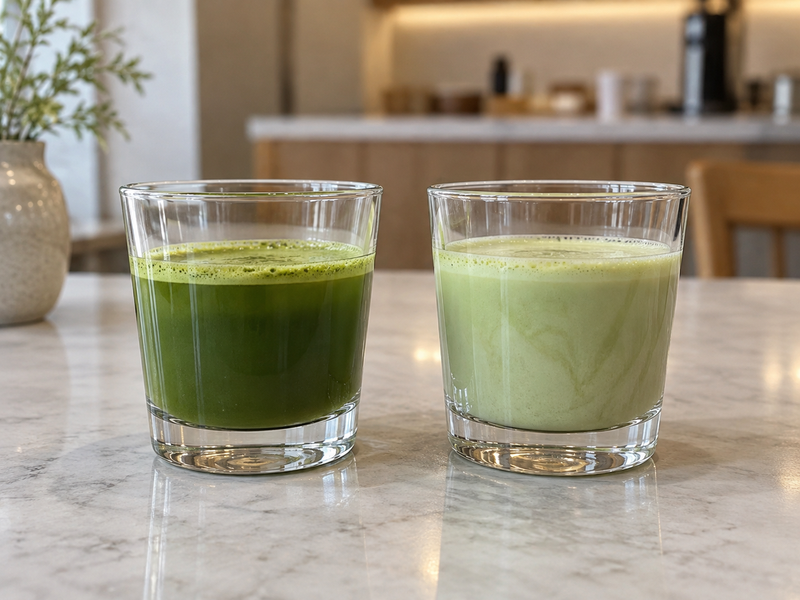
A water tasting shows tea more directly. A milk tasting shows whether it survives the recipe you intend to sell. Make the same candidate powders with the same measured dose in both formats. In a latte, fix milk volume, sweetness and serving temperature. Taste the drinks without garnish first. If the tea disappears in milk, increasing the dose is one possible response, but compare cost and bitterness before adopting it. The milk type can change the result, so approve each menu variant rather than assuming a plant drink behaves like dairy.
Water source also matters operationally. If one location uses different water treatment, test its actual water before blaming a new powder lot for a changed taste. Keep a note of the source and any filtration relevant to the business. Do not present a single tasting as proof of chemical causes; it is evidence of a sensory difference under the tested conditions. The buyer’s next step is to repeat the comparison with one variable changed at a time.
6. Which pairings deserve a small trial?
Choose a pair for the menu job
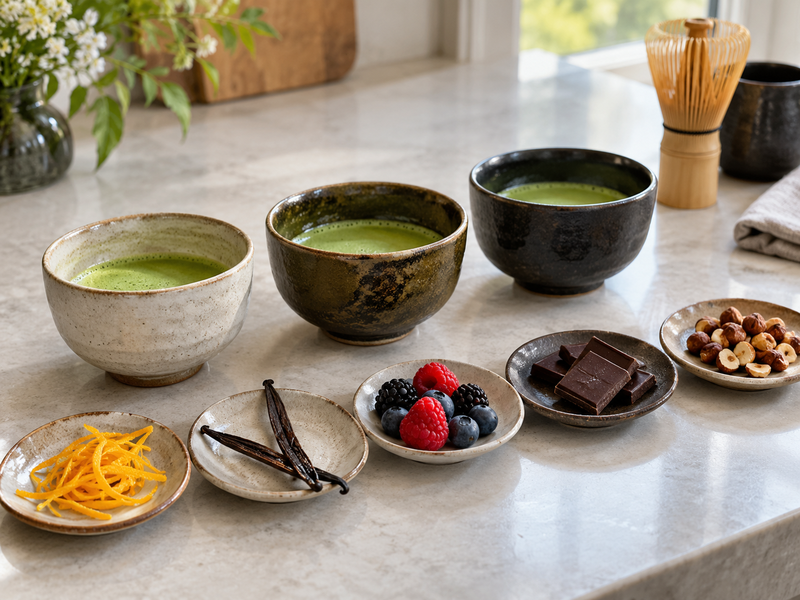
The AIYA flavor guide discusses citrus, vanilla, almond, mint, chocolate and berries. Treat that list as a set of trial candidates, not proof that every pairing improves every powder. Vanilla can be useful in a sweet latte, while citrus may suit a lighter iced drink. Chocolate or nuts may bring enough richness to compete with tea. The pairing must serve the menu brief and the actual customer, not a trend report.
Test three small versions: tea alone in the base, a low dose of the companion flavor and a higher dose. Keep the matcha, sweetness and total serving volume fixed where possible. Taste for tea presence after the added flavor. If berry puree introduces both sweetness and acidity, compare it with an unsweetened component to see what is driving the change. Count allergens and preparation steps early. A promising almond pairing is not free of tree-nut handling consequences.
| Pairing | First application to test | Watch for |
|---|---|---|
| Vanilla | Milk drink or cream | Tea hidden by sweetness |
| Citrus | Iced drink | Acidity changing milk texture |
| Berry | Dessert or iced cup | Fruit masking tea |
| Chocolate | Baked or chilled dessert | Cocoa dominance |
| Nut | Latte or cream | Allergen and heavy mouthfeel |
7. How do sweetness and acidity affect balance?
Separate the variables in the test
Sweetener can soften a sharp impression, but it can also make a poor powder seem acceptable until the last sip. Measure syrup or sugar by weight or volume and compare at two levels. Ask whether the tea still tastes like tea, whether the added sweetness makes the drink cloying and whether the finish changes. If the best trial needs a very high syrup dose, a different tea sample may be the more useful fix. The customer buys the complete drink, including sugar, not just a pleasant first taste.
Acidic fruit can brighten a menu concept, but the whole formula matters. Citrus juice, berry puree and fruit syrup bring different water, sugar and acidity. In milk-based drinks, test the actual combination for visible separation and taste; do not assume a pleasing tea-and-lemon water sample will transfer into dairy. Change one ingredient at a time and record what happens after the normal service interval. The goal is a stable, appealing recipe under your conditions, not a universal claim that one flavor “brings out” matcha.
8. How should a café compare powder lots?
Make an incoming sample earn approval
Keep a retained reference from the approved lot if storage conditions permit and the quality team has a suitable method. When a new lot arrives, prepare it beside the current standard at the same dose. Compare dry powder aroma, color, dispersion and finished flavor in water and in the main menu recipe. A change in crop, milling, storage or blending may show up differently in each application. Do not rely on a supplier name alone as evidence that the product is identical.
Request the lot identification, ingredient statement and relevant specifications. Record pack condition and opening date. If the new lot tastes different, ask whether the recipe can be adjusted within an approved range without compromising cost or menu description. If it cannot, hold the lot for another application or discuss replacement with the supplier. Our matcha grades guide provides a separate framework for reading grade labels; this incoming check is about performance in your defined cup.
| Incoming check | Approved lot | New lot |
|---|---|---|
| Aroma | Retained observation | Side-by-side note |
| Water taste | Standard recipe | Same recipe |
| Menu recipe | Accepted flavor | Compare at same dose |
| Cost | Current serving | New serving cost |
9. What should the menu description say?
Describe what the guest can actually taste
A menu line should name the product, its major companion flavors and whether it is sweetened. “Bright, grassy matcha with vanilla” may be useful if the approved drink genuinely tastes that way; a string of superlatives does not help the customer choose. Avoid health claims based on matcha’s presence. If the drink is mostly syrup with a faint tea note, either reformulate or describe it honestly. If the tea itself is the attraction, keep the description short enough that staff can repeat it at the counter.
Check the wording after the service trial. Ask a person who did not see the recipe to taste the drink and compare their description with the menu line. If they do not detect the promised citrus, nut or matcha, the problem may be the formula or the copy. List allergens and ingredients according to the rules of the selling market. A flavor pairing is not just a marketing theme; it is a purchased ingredient and a preparation step that needs to be executed consistently.
10. When is a flavor decision ready to scale?
Verify a second person can reproduce it
Give the accepted formula to a barista or baker who did not develop it. They should be able to identify the correct powder lot, measure ingredients and produce the target flavor without coaching. Taste samples from the start and end of a shift. Look for differences in powder dose, milk, water, sweetener and mixing. A recipe that depends on one person’s interpretation of “a little more matcha” is not ready for multiple locations.
Keep the final tasting sheet with the purchasing record: accepted sample code, dose, recipe, sensory target, optional pairing, cost per serving and rejection signs. Recheck when a lot or major ingredient changes. Do not let the initial panel become a permanent verdict on every future crop. The useful output is a process that can be repeated and a menu description that matches the result customers actually buy. A modest, well-controlled cup can be more valuable than a dramatic tasting note no one can reproduce.
FAQ
Q1. What does matcha flavor usually include? Tasters may notice green, sweet, savory or astringent notes. Record the specific sample and preparation rather than assuming one fixed profile.
Q2. Why does a matcha taste different in a latte? Milk, sweetness, temperature and dose change the finished cup. Compare at fixed measurements.
Q3. Which flavor pairs best with matcha? Test candidates such as vanilla, citrus or berry against the intended menu item. No pairing wins every recipe.
Q4. How do buyers avoid a biased tasting? Use coded samples, fixed preparation and individual notes before group discussion.
Q5. Should a new lot be retested? Yes. Compare it with the approved reference in both water and the main finished product.