
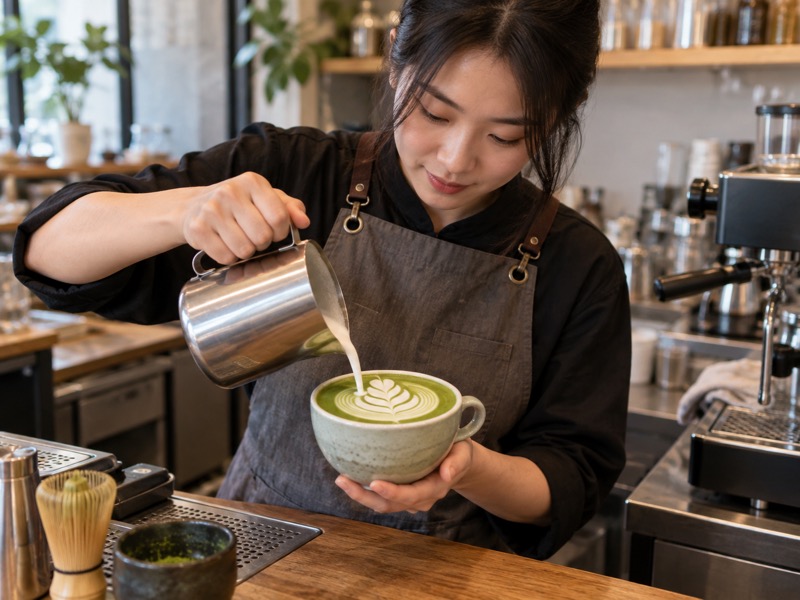
Matcha latte art is a pattern made by pouring textured milk into a prepared matcha base. A clear leaf or heart can help a drink look carefully made, but the pattern depends on the drink beneath it. If the matcha is clumpy, the milk is too foamy, or the cup is delayed at the pass, a skilled pour cannot rescue the service. Whisk Matcha’s home barista guide introduces the technique. A café needs a method that ordinary staff can repeat while orders are waiting, with taste and temperature carrying as much weight as the picture on top.
For: café owners, barista trainers, beverage developers and ingredient buyers. Decision: whether the shop can add attractive art without slowing service or compromising the matcha latte itself.
1. What should count as a successful pour?
Define more than a shape
Choose a simple first pattern, such as a heart, that can be judged consistently. The goal is not an elaborate competition pour; it is a good café drink. Set standards for tea flavor, serving temperature, fill level, surface texture, contrast and time from preparation to handoff. A readable shape on a lukewarm, sweet, weak cup is not a success. Photograph an approved drink in the shop’s normal light and use it in training, but taste the complete cup too.
Make the standard attainable. Observe the normal cup size and bar layout. If the barista has to walk across the room for matcha powder or spend a minute removing clumps, the art standard may be built on a poor workflow. Record the preparation time for an experienced employee and a trained newcomer. A clear, repeatable design can be a better guest experience than an ambitious pattern that appears on one cup in ten.
| Quality point | Pass question | Evidence |
|---|---|---|
| Tea | Is matcha recognizable? | Finished-cup tasting |
| Surface | Is the foam fine and even? | Fixed-light photo |
| Service | Can staff repeat the result? | Timed shift trial |
2. How should the matcha base be prepared?
Remove lumps first
Matcha is suspended powder. A clump at the bottom of the cup can make the last sip bitter and can disturb the milk as it enters. Weigh the powder, sift if needed, and make a smooth pre-mix with a measured amount of suitable liquid. The exact water amount and temperature should be set by cup trials, the powder supplier’s guidance, and the shop’s service needs. Keep the base consistent from one barista to the next; “a scoop and some water” is difficult to train or cost.
Check the base before milk. Look for a uniform surface and taste a small amount during development. If it is overly concentrated, the finished drink can taste harsh even when the milk pattern looks good. If it is too thin, the tea may disappear. Trial the same powder and base recipe in every cup size sold. A large latte may require its own dose. Keep a record of powder lot and preparation method so a change in color or texture can be traced.
3. Which milk texture gives useful contrast?
Aim for integrated microfoam
The milk needs enough air to leave a pale design and enough fluidity to move across the green surface. Large bubbles sit awkwardly and break the pattern. Very thin milk sinks into the drink before a shape forms. Train staff to judge texture by the look and flow of the milk, not only by a memorized steaming time. Use the café’s actual milk and pitcher. A plant drink may need a different steaming approach and may give a different color or contrast.
Taste the whole cup. A dense layer of foam can make the first sip mostly milk and the last sip mostly tea. The goal is a balanced drink from top to bottom. Compare the standard dairy milk and the leading alternative on the same matcha base. Check allergens and cross-contact controls if equipment is shared. Do not promise identical art with every milk until the team has tested the actual products. A supplier may change a plant drink formulation, so retest after a noticeable change in foam behavior.
| Milk behavior | What it looks like | Trial action |
|---|---|---|
| Too much air | Large, stiff bubbles | Adjust steaming practice |
| Too little air | White line disappears | Build more fine foam |
| Separation | Foam and liquid divide | Shorten delay before pour |
4. How do cup size and shape affect the design?
Practice in the selling cup
A wide, shallow cup gives a different pouring surface from a tall takeaway cup. Cup material and temperature also affect how quickly the drink cools. Use the actual vessels in training, including lids if takeaway is common. A pattern that looks excellent in ceramic may be hidden or distorted under a lid. Decide whether every format needs visible art. For some takeaway orders, a smooth, well-mixed drink and fast service may be the better standard.
Weigh the served drink. A pattern should not require overfilling or a large milk excess. Set a fill target and measure several cups made by different staff. If one barista uses much more milk to get the art, cost and flavor shift. Check the sip line and the cup rim; spilled matcha or milk undermines a neat design. Keep the shop’s cleaning routine practical, since a more complex cup and pitcher sequence adds work during a rush.
5. Which pouring sequence should staff learn first?
Train the base and the finish separately
Teach baristas to integrate milk and matcha before trying to draw. Begin with a measured matcha base and textured milk. Pour from higher up to mix the drink, then lower the pitcher near the surface for the visible shape. The exact movement is easier to demonstrate than to describe in words, but the stages can still be written on a training card. Practice one pattern repeatedly before adding rosettas or layered designs. Staff need to know what a failed cup reveals: poor milk texture, weak tea base, wrong pitcher position, or a delay.
Use a controlled practice set. Give each learner the same powder, cup, milk and fill target. Review five consecutive drinks rather than the best single photo. Taste at least the first and last. This exposes a method that works only after a long warm-up. Film a short demonstration if the team finds it helpful, but keep the written recipe and quality standard available when the trainer is away.
| Pour stage | Purpose | Common error |
|---|---|---|
| Base mixing | Even tea and milk | White cap over unmixed tea |
| Surface drawing | Visible contrast | Pitcher too high |
| Finish | Clean shape and rim | Overfilled cup |
6. What should be measured during training?
Track repeatability
Measure powder grams, base liquid, milk volume, serving temperature under the shop’s method, cup fill, preparation time, and the share of cups meeting the visual standard. The point is not to turn art into paperwork; it is to find which step causes inconsistent drinks. If milk texture is the problem, changing matcha suppliers is unlikely to help. If the green base varies, the team may need better powder dosing or dispersion. Use short observations rather than a complicated score that nobody fills out.
Include taste. Invite a small panel of staff to taste coded cups from different baristas. Look for a consistent tea profile as well as an attractive top. A photograph can hide a powdery last sip. Where a shop offers sweet and unsweetened drinks, verify that the art method works with both. If a syrup is added after the pattern, it may disturb the surface; set the ingredient order during development instead of letting each person improvise.
7. How can the bar keep art during a rush?
Fix the workflow before demanding speed
Place powder, scale, whisk, water, milk and cups where the sequence can flow without unnecessary travel. If a pre-mixed tea base is used, test its appearance and safety through the permitted hold and remix routine. Do not assume it will stay uniform because it looked smooth at opening. Set the maximum wait between steaming and pouring; milk texture can change while the barista handles another order. Time the full drink during a normal busy period, including cup cleaning and handoff.
Choose a service standard. A simple heart may be realistic at peak volume; elaborate art may belong to a slower service format. Let baristas know when to prioritize a clean, balanced drink over a complex pattern. A menu photograph should represent the standard the shop can usually serve. If the art vanishes under a takeaway lid, use an honest product image for that channel. The guest notices temperature, flavor and wait time before judging the exact number of leaves in a rosetta.
8. How should powder and milk suppliers be compared?
Test both in the finished drink
Matcha influences the color and taste of the canvas. Milk determines the white contrast and mouthfeel. Trial identified tea samples at equal dose with the same milk, then trial milks with the chosen tea. Changing both together makes it hard to identify a cause. Keep reference samples, product codes, lot records and opening dates. Request storage guidance and change notice from suppliers, especially when the shop promotes a visually consistent signature drink.
Cost the accepted cup. A more expensive tea can be justified if it gives the right flavor and color at a lower dose. A milk that steams reliably may reduce remakes. Calculate actual grams and milliliters, preparation time, and rejected cups rather than comparing raw invoice prices. A new supplier should be approved through a short bar trial, not by a single sample made for the buyer.
| Supplier change | First check | Retest |
|---|---|---|
| New tea lot | Color and dispersion | Same milk, same dose |
| New milk | Foam and taste | Same tea base |
| New cup | Surface and fill | Same recipe, normal service |
9. How should photographs and menu copy be handled?
Keep the promise realistic
Take product photographs under the light and in the vessels guests see. Heavy editing can make green brighter and contrast sharper than the actual drink. State the ingredients and sweetness clearly. If art is part of the premium offer, show the standard design rather than the most elaborate cup a trainer ever made. Ask ordinary staff to reproduce the pictured drink in a normal shift. If they cannot, change the photo or the process.
Use visual feedback carefully. A guest may enjoy a cup with a simple pattern and excellent flavor more than a complicated image on weak tea. Collect comments about taste, temperature and wait time alongside appearance. Train staff to fix the cause of repeated defects, not to hide them under cocoa, extra foam or a larger garnish. A consistent visual cue helps the brand only when the cup underneath supports it.
10. What pilot proves the method is ready?
Serve a full shift, not one demonstration
Run the recipe with multiple trained baristas and normal order flow. Record five consecutive cups from each person at opening and during a rush. Compare powder dose, milk volume, time, temperature, image and taste. Include hot and iced formats only if both are intended to carry art. Ask the shift lead to use the training card without the developer standing nearby. A standard that requires constant correction is still a development draft.
Sign off the whole drink. Keep the approved tea and milk, cup, recipe, reference photo, simple pattern, service time target, and retest triggers together. The next step is a controlled café pilot followed by coaching on the one stage causing most misses. Matcha latte art becomes useful to a business when it is a repeatable sign of a carefully made drink, not an isolated social-media image.
| Pilot point | Pass question | Evidence |
|---|---|---|
| Quiet period | Can new staff make it? | Consecutive cup review |
| Rush | Does service stay timely? | Order timing |
| Final cup | Is tea balanced? | Full-cup tasting |
| New lot | Does the standard hold? | Reference comparison |
Milk choice changes pouring behavior; compare options in the milk for matcha latte guide.
Reference: Be Your Home Barista: How to Make Matcha Latte Art at Home introduces the pour. The café training checks above are independent.
FAQ
Q1: Does matcha latte art require a special grade of tea? It needs a tea that tastes right and makes a consistent base in the shop’s recipe; a grade name alone is not enough.
Q2: Why does the white pattern disappear? Check milk texture, pitcher height, the matcha base and the delay before pouring.
Q3: Can plant milk make matcha latte art? Some can; test the actual product and steaming method used in the café.
Q4: Should takeaway drinks have art? Only if the format lets guests see it and the process does not harm service or drink quality.
Q5: What is the first training pattern? A simple heart gives staff a clear, repeatable standard before more complex designs.