
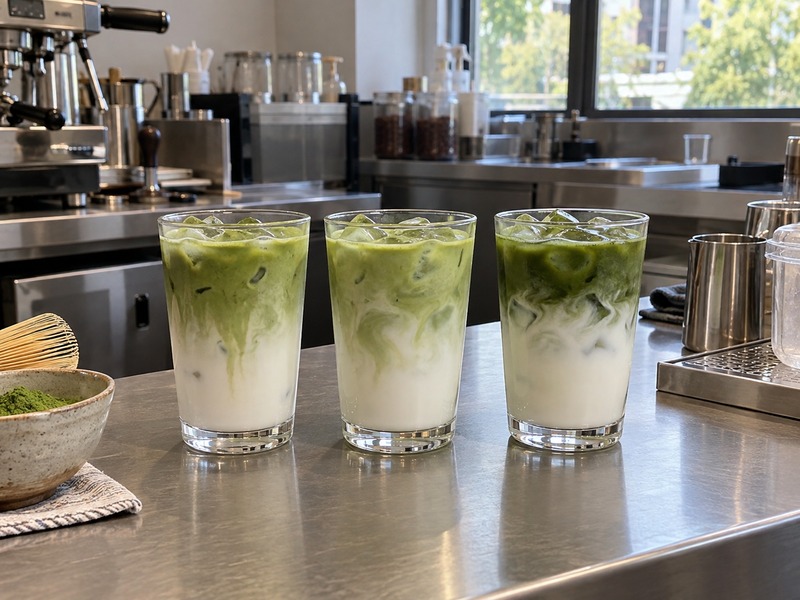
A matcha latte aesthetic is the set of visible traits a customer recognizes in a served matcha drink: green tone, milk contrast, foam, layers, vessel, and finish. A campaign image can set an expectation that a busy store cannot repeat. For café groups and beverage brands, the answer is a drink specification that connects tea choice, recipe, service method, and honest photography. The evidence comes from matched cups prepared across shifts and sites, not from a mood board alone.
For: café operators, beverage R&D teams, and marketing managers. Decision: which visual traits customers should see in an ordinary paid serving, and how staff will reproduce them.
Contents: 1 · 2 · 3 · 4 · 5 · 6 · 7 · 8 · 9 · 10
1. What is a matcha latte aesthetic for a beverage brand?
Define the served result
A pale green drink with soft layers may look attractive in a photograph, yet a customer receives a cup after ordering, waiting, and walking away. The commercial question is whether the finished drink still resembles the promised image at that point. State the target in observable terms: a green band visible through the cup, a creamy body without large dry clumps, and a surface appropriate for the menu format. Make the cup the unit: the specification applies to a prepared serving, not only the powder or a carefully staged pour.
The brief should identify channel, vessel, serving size, milk base, ice plan, and time between preparation and customer handoff. If a brand wants distinct layers, it should accept that they may merge during transport; the resulting mixed color also deserves review. Marketing can describe mood, but R&D should translate that mood into attributes an operator can check. Use photographs as references, then put physical cups beside them under ordinary light. A visually pleasing prototype that tastes thin or requires a three-minute pour may not be a viable menu item.
| Visual promise | Physical check | Typical owner |
|---|---|---|
| Recognizable green | Finished-cup color in normal light | Beverage R&D |
| Clean layer line | Appearance after handoff delay | Operations |
| Consistent foam | Height and texture in target vessel | Training lead |
| Honest menu image | Comparison with served cup | Marketing approval |
2. Which visual attributes belong in a specification?
Replace adjectives with references
“Vibrant” means little to a new store manager. A reference cup, photographed under a fixed light setup, gives a more useful target. Record green tone, brightness, opacity, visible flecks, foam coverage, layer boundary, fill level, and garnish placement if garnish is part of the sold drink. The acceptance range should allow normal tea and operator variation without turning every shift into a photo studio. Write down the viewing condition: a clear cup against a white wall can look different from the same cup under a warm counter lamp.
Keep one standard image for a freshly served drink and another for the expected handoff point. Hot milk can conceal green tone and change foam, while ice changes light transmission and makes layers appear sharper. Reject samples for defined reasons such as gray cast, large floating clumps, or excessive streaking. Avoid rejecting them because someone says the drink feels “less aesthetic” without pointing to an observable difference.
3. How can matcha powder selection affect cup color?
Compare powder in the recipe
Dry powder photographs tell only part of the story. Milk, sugar, temperature, and dilution alter how the green appears in a cup. Matcha lots can vary in shade and particle behavior; a deep green powder can still look muted when its dose is too low for an opaque base. Make matched cups with the intended recipe and compare at the same age. Test the product, not the scoop: a buyer should judge color alongside flavor, dispersion, and dose cost per accepted serving.
Ask suppliers for lot identity, storage guidance, and a way to compare future deliveries with an approved reference. Prepare samples blind where possible so price and grade names do not bias the panel. Record powder mass, water volume, milk, temperature, ice, cup, and lighting. If a new lot requires more tea for the same visual target, taste may become too bitter or cost may change. The pure matcha supply page is useful for discussing food-grade powder options, but the actual brand standard has to be demonstrated in the brand’s latte.
| Powder comparison | Fixed condition | Record |
|---|---|---|
| Baseline slurry | Same dose and water | Clumps and initial green |
| Milk latte | Same base and cup | Finished color and taste |
| Held iced cup | Same ice and delay | Dilution and visible flecks |
| Second lot | Same method | Repeatability range |
4. How do milk and ice alter visible layers?
Expect movement after pouring
The boundary between green tea and white milk depends on density, temperature, cup geometry, and how one phase is poured into another. Syrup in one layer can change the way liquids meet. Ice can slow mixing for a moment, yet the drink continues to change as cubes melt or a customer stirs. A photograph taken at the instant of pouring may show a boundary that disappears before handoff. Time the view: judge a fresh cup and the same cup after the normal wait, using a documented interval rather than a vague “later.”
Milk bases also differ in opacity, foam stability, flavor, and color. The same tea dose can look sharper in one base and muddy in another. Test every approved dairy or plant option separately. Large clear ice cubes, crushed ice, and irregular service ice expose different surfaces to the liquid and can produce different streaks. If a clear cup is the marketing vessel, check the actual cup wall for condensation and scratches during service. The layer target should be realistic enough that a trained operator can hit it without weighing every cube in front of a queue.
5. Which service steps make photography reproducible?
Build a station sequence
A repeatable visual cup begins with repeatable preparation. Write the order for powder wetting, slurry mixing, ice addition, milk volume, pour angle, and finishing. Give operators a range they can execute with their equipment. The photo team should use the same recipe and vessel as the store, including realistic fill level. Observe the handoff: a process that works only when a stylist adjusts ice with tweezers cannot be the operating method for a chain.
Train staff with side-by-side physical examples rather than a single polished image. One cup can illustrate accepted variation, another a defect such as dry specks or a collapsed foam cap. Consider how a new employee measures powder under a rush and how tools are rinsed between drinks. If an iced latte requires a pre-mixed tea concentrate, specify its preparation and allowable holding conditions through the food-safety team. If every cup is whisked individually, check cycle time. Photography should be scheduled after operations accepts the recipe. A campaign shoot can then document the standard without quietly adding extra matcha, coloring, or a different milk for the camera.
| Station step | Visual effect | Practical control |
|---|---|---|
| Powder wetting | Reduces dry specks | Defined water and mixing method |
| Ice loading | Shapes visible layers | Cup-specific fill guide |
| Milk addition | Changes opacity | Marked measure or calibrated pour |
| Tea pour | Forms green band | Trained angle and pace |
6. How should visual samples be tested across sites?
Make the comparison fair
Select sites with different equipment, lighting, and staff experience, then ask each to prepare the same recipe. Photograph cups at the same viewing angle and after the same handoff delay. Log recipe deviations and environmental differences. Compare coded cups: reviewers should know the acceptance criteria before they know which site made which drink. This prevents one attractive flagship store from hiding a weak training method.
The trial should include ordinary shifts, not only expert baristas. Count cups that meet the visual range and note why others fail. A percentage is meaningful only when the denominator and conditions are recorded: “accepted cups out of cups assessed at the specified delay,” not an unexplained success rate. No hypothetical figure belongs in a launch claim. Ask whether the visual result depends on a tool, supplier lot, or milk brand that some sites cannot obtain. If failures cluster around clumps, revise the mixing step; if color differs by base, set separate approved formulations. The aim is a workable range, not a perfect photograph at every location.
7. Which packaging surfaces influence appearance?
See the drink through its actual pack
A clear cup displays layers and sediment. An opaque cup hides both, leaving the lid opening and surface foam as the main visual cues. A transparent bottle shows color over a longer period and may reveal settling that a fresh café cup never displays. The pack therefore changes what “aesthetic” means. Use the sale pack: test photographs and physical samples in the vessel customers will receive, with the real lid, sleeve, label, and expected condensation.
Label placement can obscure a green band or improve contrast when placed against the right background. A sleeve may cover the most distinctive part of a layered drink. Printed color around a cup can also make tea appear brighter in marketing than it looks on a bare table. Check artwork proofs with filled cups before ordering a large run. For retail products, assess appearance through the stated shelf life and storage route rather than a launch-day sample. Those are different purchasing decisions and should not be merged into one universal visual standard.
| Vessel | Visible feature | Review point |
|---|---|---|
| Clear café cup | Layers and sediment | Handoff delay |
| Opaque hot cup | Foam and fill | Lid opening |
| Clear retail bottle | Color over time | Storage trial |
8. How can images stay honest to served product?
Approve against a real cup
Marketing images are useful only when they represent a product a customer can reasonably receive. Styling can control lighting and background, but changing the drink recipe for a more vivid green creates an expectation the store cannot fulfill. Give the photo team the signed-off recipe, portion, vessel, garnish, and allowed preparation window. Keep the proof cup: an operations representative should approve an actual serving beside the selected image before campaign files are released.
The FTC advertising guidance says advertising claims should be truthful and evidence-based. A product photograph can communicate an implicit claim about color, size, and included toppings. Record material changes made during the shoot and decide whether the image still represents ordinary service. If the beverage is shown with a garnish that customers will not receive, either change the menu procedure or change the image. A short image approval checklist saves argument later between marketing and the store team because everyone can point to the same cup standard.
| Image element | Check before approval | Evidence to retain |
|---|---|---|
| Cup fill | Matches served portion | Recipe and photo |
| Green tone | Within accepted range | Reference cup image |
| Layering | Achievable at handoff | Service trial |
| Garnish | Included in normal order | Menu specification |
9. What should supplier and café teams record?
Keep the change history usable
A visual specification loses value when the ingredient or procedure changes without a record. Keep approved matcha lots, milk brands or formulations, dose, ice format, vessel, mixing tool, and photo reference together. Identify who may substitute an ingredient and which change requires a new cup review. Follow the variables: if green tone shifts, the team should know whether tea, milk, water, ice, or lighting changed before blaming the latest powder delivery.
Supplier files should include lot code, specification, storage guidance, and a notification path for material changes. Café training should include a short visual defect guide and a way for staff to report recurring problems with a photo and recipe details. Avoid storing only a dramatic hero image. Include a normal service photo that shows acceptable variation. For private-label latte powder or blends, discuss the target cup with the matcha latte powder team and ask for sample testing in the actual milk, equipment, and pack. The purchasing conversation becomes clearer when both parties can see the same reference cup and failure descriptions.
10. When is a visual concept ready for rollout?
Require a cup and an operating method
A launch decision needs more than social approval of a photograph. The recipe should pass sensory review, visual review at a defined handoff time, ingredient supply review, staff cycle-time review, and marketing-image approval. If those disagree, write down the trade-off: a brighter cup may cost more tea, while a sharper layer may require extra labor. Choose the acceptable range: it should protect the brand image while allowing a real store to work.
Run one controlled pilot with ordinary operators and approved materials. Keep rejected cups in the record with reasons, then fix the largest repeatable cause before expansion. Set a fallback for a matcha lot change or milk shortage, and decide who can authorize a replacement image if the served product changes. The Ujicha reference below explains consumer visual appeal; this B2B standard asks whether that appeal can be reproduced at sale. The next step is a signed cup specification with a linked ingredient sample and a service photograph. That gives procurement, operations, and marketing the same object to approve.
Reference: The Matcha Aesthetic: Why It’s Everywhere on Social Media. Used only to identify consumer search intent; wording and imagery were not adopted.
FAQ
Q1: Can a café specify one exact green shade?
A range under defined light and recipe conditions is more practical than one shade for every serving.
Q2: Does a clear cup always improve matcha presentation?
No. It also exposes sediment, streaking, and separation, so test the real drink in the real pack.
Q3: How should teams compare photos from different sites?
Fix angle, light, vessel, recipe, and handoff delay, then record deviations alongside each image.
Q4: What should change when a new matcha lot arrives?
Compare coded cups with the approved reference before changing dose, artwork, or menu claims.
Q5: Can a marketing image use a different recipe?
The image should represent ordinary service; material recipe differences need review before publication.