
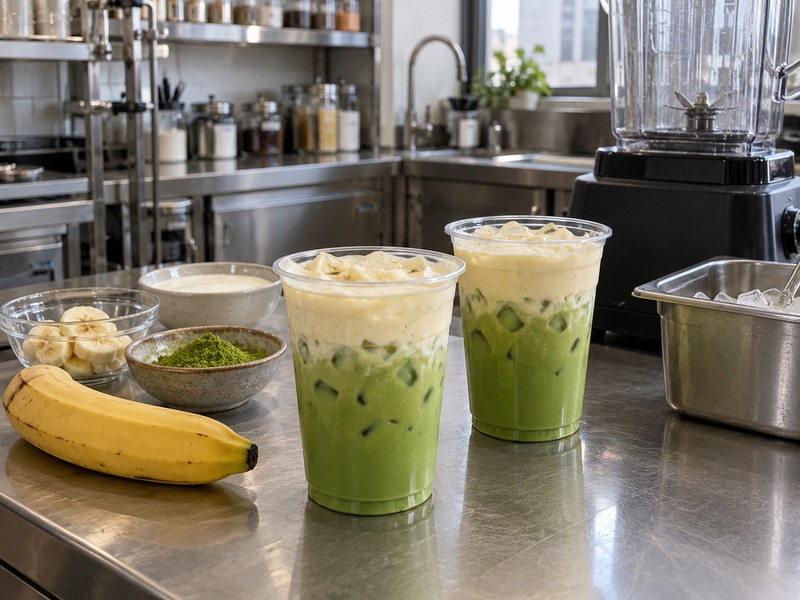
Iced banana cream protein matcha is a layered drink concept with a cold matcha base and a banana-flavored cream containing a protein ingredient. The hard part for a café group is making that cream taste, pour, and hold the same way across shifts while keeping nutrition language accurate. A development brief should connect recipe, ingredient files, cold handling, allergen review, and an actual service trial. A consumer recipe can inspire the flavor pairing; it cannot validate a commercial protein claim or operating method.
For: café groups, beverage developers, and ingredient buyers. Decision: whether the proposed drink meets sensory, service, labeling, and cost targets at the intended serving size.
Contents: 1 · 2 · 3 · 4 · 5 · 6 · 7 · 8 · 9 · 10
1. What is an iced banana cream protein matcha?
Define the cup before sourcing
The drink has at least two components: matcha prepared for ice and a banana cream layer. Some concepts put milk in the matcha base; others use water plus milk below the cream. The brief should specify which version customers are buying, the intended cup size, and whether layers must remain visible at handoff. Name the serving point: a cup can look good after assembly and look muddled after a short walk to pickup. Taste the mixed cup too, because most customers will stir or sip through both layers.
Avoid using “protein” as shorthand for a benefit. It may describe an ingredient in a development document, while a public nutrient claim depends on the finished serving and destination-market rules. Record the planned protein source, amount added, total recipe, and who will calculate the declared nutrition. The matcha should be chosen for flavor after banana and cream are present, not just for its performance in water. A first sample can answer whether banana and tea work together at the intended sweetness; later tests answer whether staff can repeat it.
| Brief item | Question for the pilot | Record |
|---|---|---|
| Matcha base | Is tea perceptible after mixing? | Lot, dose, liquid |
| Banana cream | Does it pour and hold? | Formula and method |
| Serving cup | Are layers visible at pickup? | Vessel and timing |
| Protein language | Is any claim supported? | Nutrition review |
2. How should the drink brief define protein?
Keep recipe and claim separate
A scoop of protein powder changes a formula, but it does not automatically justify “high protein” on a menu or packaged label. Nutrient claims depend on the final portion, validated composition, and rules in the sale market. A café should decide whether protein is central to the product or merely part of the cream’s formulation before designing the packaging. Write two columns: one for technical function, such as body or foam, and one for proposed consumer wording. Regulatory staff can evaluate the second column after R&D confirms the first.
Ask for ingredient specifications, protein content basis, flavor system, sweeteners, allergens, storage instructions, and batch identification. Calculate the contribution from all recipe components, including milk, banana, and the cream base, then confirm with an appropriate nutrition method for the business. The FDA nutrient-content claims page provides a U.S. starting point, while local rules may differ. Do not transfer numbers from a supplier scoop label directly onto a café serving. Scoops can vary, finished yield can change, and a topping that slides down the cup may not be portioned consistently.
3. Which banana formats work in a commercial base?
Compare more than flavor
Fresh banana, frozen banana, purée, and banana flavoring each produce a different operation. Fresh fruit brings preparation labor and variable ripeness. Frozen pieces can smooth a blended base but may not suit a quick whipped topping. Purée can simplify dosing yet changes water and viscosity. Flavoring can provide a banana cue with less fruit handling, though the label and sensory outcome differ. Start with the station: choose candidates the intended kitchen can portion and store safely, not only those that taste good in one R&D cup.
Record color change, aroma, thickness, and the way each format behaves after mixing with protein and cream. Banana can dominate a delicate tea or turn the drink dessert-sweet before syrup is added. Compare options at the same perceived sweetness in the finished cup, then assess waste and supply variability. If “made with real banana” is proposed, verify the actual recipe and wording with regulatory staff. The buyer needs a specification for acceptable incoming material and a plan for alternate supply when the selected format changes.
| Banana option | Operational question | Sensory question |
|---|---|---|
| Fresh fruit | Who portions and stores it? | How variable is ripeness? |
| Frozen pieces | Can equipment handle them? | Does texture become too thick? |
| Purée | Is dosing repeatable? | Does color drift during hold? |
| Flavoring | Is the label accurate? | Does aroma seem natural in tea? |
4. How should matcha be prepared for a layered iced cup?
Prevent clumps before the pour
Dry matcha placed directly into cold milk can leave visible specks. A controlled wetting step often makes dispersion easier, but the proper liquid volume and mixing method depend on the chosen powder and recipe. Test the planned tools: whisk, shaker, small mixer, or pre-dispersed base. Watch the cup wall: clumps that look minor in an opaque bowl can stand out against a clear iced cup and undermine the layered appearance.
Specify matcha mass per serving, liquid temperature and volume for dispersion, ice load, and pour order. Make several cups with the same tea lot and compare green tone, sediment, and flavor after the normal pickup delay. Tea added as a hot slurry may melt ice and blur the cream boundary; a cold concentrate may need different handling and a validated hold procedure. Do not assume more powder improves the result. It may raise bitterness, cost, and visible residue. The pure matcha page gives a starting point for ingredient discussion; the decision belongs to a trial in this specific banana-cream formula.
5. Which protein sources change flavor and texture?
Screen ingredients in the whole drink
Whey, casein, soy, pea, and other protein ingredients can differ in flavor, solubility, foam behavior, and allergen implications. Their supplier specifications also vary. A protein that works in a shake may produce grit or a persistent aftertaste in a light banana cream. Taste beyond the topping: evaluate the first sip, the mixed drink, and the residue left near the bottom of the cup. The matcha should remain recognizable after the cream disperses.
Build a small screening set with fixed banana, sweetness, and tea dose. Change one protein source at a time, using a defined mass rather than an uncalibrated scoop. Record viscosity, foam volume, drainage, and appearance at the intended service temperature. A dairy cream and a plant-based alternative may need different formulas rather than a simple substitution. Check whether the protein ingredient contains flavors, sweeteners, gums, or other components that affect declared ingredients. Procurement should retain lot-linked specifications and change notices; a switch in supplier can alter performance even when the protein name on a quote stays the same.
| Screen | Observe in cream | Observe after mixing |
|---|---|---|
| Dairy protein | Body and foam | Milk flavor, allergen status |
| Soy protein | Viscosity | Beany notes, allergen status |
| Pea protein | Grit and color | Earthy finish |
| Other blend | Added sweeteners or gums | Tea masking and texture |
6. How can a team test foam and layer hold?
Use a timed cup trial
A cream layer may look stable while it sits in a mixing bowl yet collapse when spooned over cold matcha. Test the serving method with the selected cup, ice, and operator. Take a photo at assembly, at handoff, and at the longest realistic pickup delay. Measure layer height or coverage using the same simple reference mark each time. Record the failure mode: sinking, watery drainage, curdling, large bubbles, and a sticky rim call for different formula changes.
Run the trial with more than one batch and at least two operators. A topping that succeeds only when whipped by a specialist is not ready for a busy chain. Compare the first and last portions from a prepared cream batch, including what happens after the container is opened repeatedly. If the topping requires a holding period, the food-safety lead should define conditions and limits for that process. Do not publish a shelf-life or holding claim from a short bench observation. The pilot can set an internal acceptance criterion, such as a visible layer at a named handoff point, without inventing a universal number for every café.
| Checkpoint | Look for | Record with photo |
|---|---|---|
| Assembly | Full cream coverage | Operator and batch |
| Handoff | Visible layer | Elapsed time |
| Pickup delay | Drainage or sinking | Cup and ice format |
7. What service and cold-chain controls matter?
Map the handoffs
The station workflow may include thawing banana material, mixing cream, preparing matcha, filling cups, and topping to order. Each handoff adds opportunities for temperature drift, inconsistent portions, or cross-contact. Draw the workflow from receiving through cleanup and have the food-safety team set the correct controls for the market and operation. Check the queue: the drink should still meet its quality target when orders arrive in a cluster, not only when one barista has an empty counter.
Pre-portioned ingredients can reduce variation but add packaging and storage needs. A shared blender can create flavor and allergen carryover if cleaning is not verified. A cream dispenser may improve portion consistency yet need a maintenance plan. Record ready-to-ready time, rejected cups, leftover cream, and wash steps during a realistic service trial. Those figures should be reported with denominators and conditions rather than turned into an unsupported efficiency claim. Buyers should ask suppliers for storage and handling instructions that match the exact delivered format. The site should then validate its own procedures instead of assuming a household recipe’s instructions cover commercial food handling.
8. How should allergen and nutrition claims be handled?
Review the complete serving
The cream may contain milk, soy, nuts, or another major allergen depending on the protein and base. Matcha powder, banana flavoring, stabilizers, and garnish can add ingredients that staff overlook when reading a short menu description. Assemble a full ingredient and cross-contact file for each approved recipe and alternate. Treat substitutions as new checks: changing protein powder or milk can change both allergens and nutrition values. Staff need an approved answer for customer questions rather than an improvised “it should be fine.”
For U.S. packaged food, the FDA food-allergies page explains major allergen labeling and cross-contact concerns. Café menu and packaged drink requirements can differ; market-specific review remains necessary. A public “high protein” statement should be assessed against the finished serving and applicable nutrient-claim rules, not inferred from an ingredient name. Keep the signed recipe, portion control, nutrition calculation, and label proof linked to one version. If the team cannot reliably dose the cream, it cannot reliably promise a nutrient amount to every customer.
| Change | Recheck before sale | Owner |
|---|---|---|
| New protein powder | Allergens, flavor, nutrition | R&D and regulatory |
| New milk base | Allergens and texture | R&D and operations |
| New banana input | Ingredients and holding | Food safety |
| New serving size | Nutrition statement | Regulatory |
9. What procurement tests compare ingredients?
Buy for accepted cups
Ingredient price per kilogram does not show how much a drink costs at the target flavor and texture. Two matcha lots may require different doses; two protein blends may yield different waste or topping stability. Request samples with specifications, lot codes, minimum order quantities, lead times, storage needs, and change-control contacts. Count usable servings: compare cost against cups that meet the sensory and service standard, including rejected trials and routine topping waste.
Use a fixed recipe and coded samples for the first screen. Record tea flavor after banana, green color through the cup, cream spoonability, and mixed-drink finish. Then repeat with a second lot where feasible. A supplier that can provide a beautiful demonstration sample but cannot trace the next shipment is a risk for a chain rollout. Decide which variables may be adjusted locally and which require central approval. For blended or private-label components, the matcha blends page can frame a supplier inquiry, but the brand still needs product-specific testing and documentation before committing to volume.
10. What should a pilot prove before rollout?
Sign off on the whole cup
The launch gate should include taste, visible layers at pickup, topping hold, operator cycle time, ingredient sourcing, food-safety method, allergen communication, and any nutrition language. Evaluate ordinary staff on normal equipment. Keep recipe version and sample lot codes on every score sheet. Use clear stop criteria: if the cream separates, portion varies enough to undermine a claim, or allergen controls are unresolved, pause expansion until the cause is fixed.
A final pilot can compare approved and backup suppliers, then set a reference cup and a method for checking future lots. The product photograph should show a normal serving with the actual topping amount and cup. Price should be calculated from ingredient use and rejected servings, not only a raw-material quote. The consumer recipe linked below establishes why people search for this flavor combination; this commercial version succeeds only if a café can make it repeatedly and describe it accurately. The next action is a signed recipe and trial plan covering one full shift, with a named owner for each open issue.
Reference: Iced Banana Cream Protein Matcha | Starbucks Copycat Recipe. Used only for search-intent context; its formula and health language were not adopted.
FAQ
Q1: Does adding protein powder justify a high-protein claim?
No. Review the finished serving and applicable nutrient-content rules before using that wording.
Q2: Can fresh banana be replaced by banana flavor?
Possibly, but sensory profile, ingredient statement, appearance, and operating method need new approval.
Q3: How long should the cream layer hold?
Set a target based on the actual pickup and consumption pattern, then test the complete cup.
Q4: Which allergens need review?
Check every ingredient, alternate, garnish, and shared-equipment path in the intended market.
Q5: What should a supplier sample include?
Request a traceable lot, current specification, ingredient details, storage guidance, and change-contact information.