
An at home matcha kit should make the drink you actually want in the kitchen you actually have. Many starter boxes are styled for a photograph rather than a weekday counter: an oversized bowl, a fragile whisk, no clear dose, and nowhere dry to keep the powder. A better choice starts with your usual cup, available space, and willingness to wash each piece. Forest Cloud’s home starter-kit guide introduces the familiar tools. This at home matcha kit guide starts with the drink and storage space you actually have, then tests whether each included tool earns its place.
Here are ten practical checks that help home drinkers choose a set and help retailers design one that customers will keep using after the first week. If the whisk is the weak piece, use our bamboo matcha whisk buying checks before ordering a full kit.
Contents
- 1. Which drink will you make most often?
- 2. How much counter and storage space do you have?
- 3. Is the bowl easy to use at home?
- 4. Which whisk fits your preparation style?
- 5. How will you measure and add water?
- 6. Does the included matcha suit your taste?
- 7. Can you make a latte without extra clutter?
- 8. How easy is each piece to clean and dry?
- 9. What should the instruction card explain?
- 10. Will the kit still work after the tea runs out?
1. Which drink will you make most often?
Pick the cup before the equipment
Straight whisked matcha, hot latte, and iced latte ask different things of a set. A wide bowl and bamboo whisk suit a small matcha preparation that you drink directly or pour into a larger cup. A frequent iced-latte maker may value a vessel with an easy-pour rim, because the concentrated matcha needs to move into a glass without running down the side. If you only want an occasional sweetened drink, the most expensive tea in a gift set may not improve your experience.
Write down your usual drink, serving size, and whether you add milk before shopping. Then read the included recipe. Does it teach that drink with the pieces in the box? For retailers, use this same question to name the product honestly: a latte kit, straight-tea kit, or mixed-use kit. One package need not pretend to be ideal for every household.
| Home habit | Useful feature | Check before buying |
|---|---|---|
| Straight matcha | Comfortable drinking bowl | Taste the included tea with water |
| Hot latte | Pourable mixing vessel | Check recipe with warm milk |
| Iced latte | Quick, smooth concentrate | Check pour and clump control |
| Occasional gift use | Clear, complete instructions | Confirm tea is included if promised |
2. How much counter and storage space do you have?
Measure where the set will live
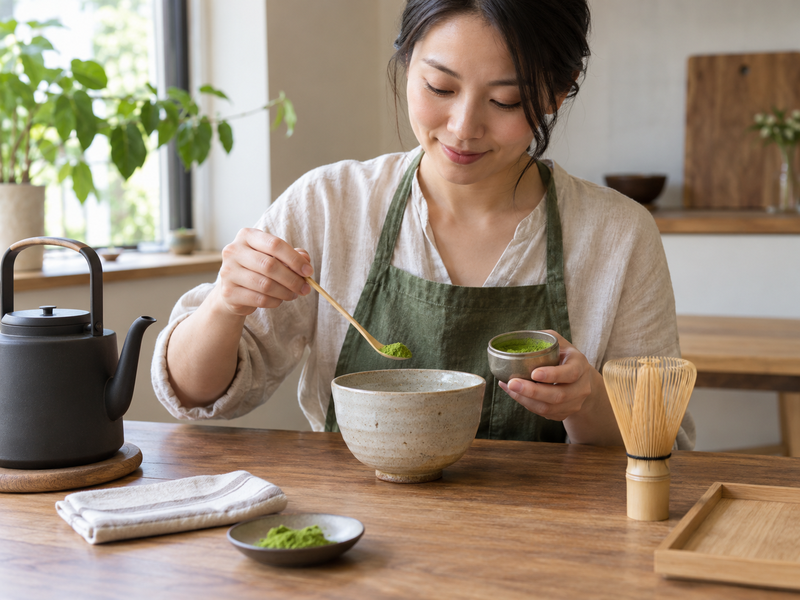
A kit that needs a permanent display shelf may be a poor choice for a shared kitchen. Check the bowl’s outside diameter and height against your cupboard or drawer. A whisk needs space to dry without its delicate tines being crushed. A holder can help if it fits the whisk and stays stable, but it also takes room; test both pieces together. Decide where the tea pouch or tin will be kept away from heat, light, and moisture according to its label.
Do not store an open tea pack beside a damp tool just because both arrived in one box. Packaging can be useful storage if its insert lets clean, dry parts go back safely. If it cannot, plan a separate dry place. Retailers should show dimensions for the assembled set and the open storage footprint, since a photograph on a large table hides how much space the tools occupy.
3. Is the bowl easy to use at home?
Try the actual mixing motion
An attractive bowl can be frustrating if its inner curve crowds the whisk or its outside is slippery when wet. Place the supplied whisk inside and imagine the printed recipe’s water level. There should be enough room to move without striking the walls. A stable foot matters on a kitchen counter, particularly when one hand is busy holding a recipe card. Check whether the bowl is comfortable to lift and pour if your drink finishes in a mug or glass.
Look for a smooth, cleanable interior and read the maker’s care instructions rather than assuming every ceramic piece can go in a dishwasher. If a seller offers several colors of the same bowl, verify the inner dimensions and finish are the same. For a first kit, a sensible working shape beats a dramatic profile that forces a beginner to change technique.
| Bowl detail | Why a home user notices it | Simple check |
|---|---|---|
| Interior width | Whisk needs room | Make the listed recipe |
| Foot stability | Mixing should feel secure | Set it on the intended surface |
| Rim shape | Pouring or drinking comfort | Test with water before tea |
| Care instructions | Daily cleaning time | Read maker’s directions |
4. Which whisk fits your preparation style?
Match the tool to the routine
A bamboo chasen gives the familiar hand-whisking experience and needs gentle handling. A small electric frother may suit someone who wants a fast latte concentrate, though it can splash in a shallow bowl and has its own cleaning or power needs. Neither choice should be a status symbol. Ask whether you enjoy a few quiet minutes of preparation or want a repeatable morning step before work. Test the tool with the supplied powder and vessel. Bamboo tines should arrive intact; a frother should reach the liquid without scraping the container.
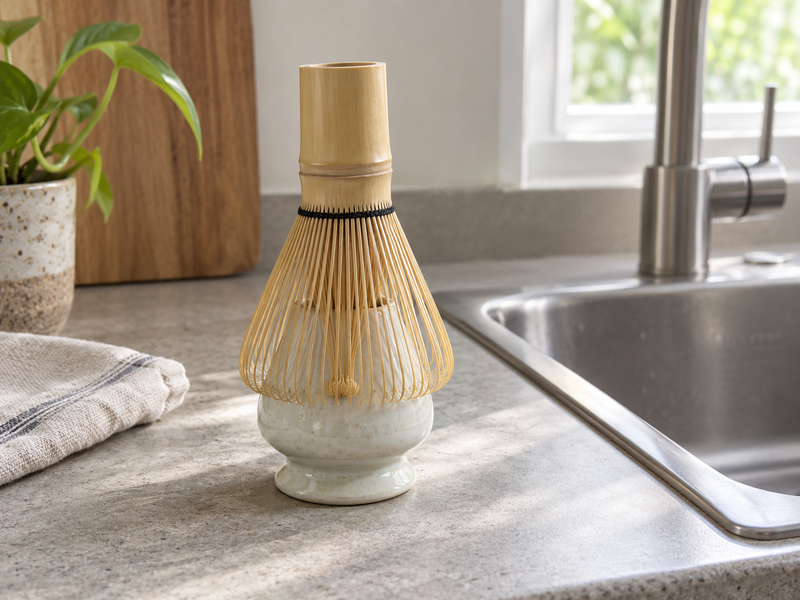
If the whisk is bamboo, ask how to rinse, dry, and store it according to the seller’s care note. Check whether replacements are available. A set that cannot replace its most vulnerable working part can become a cupboard ornament after one accident.
5. How will you measure and add water?
Remove guesswork from the first cup
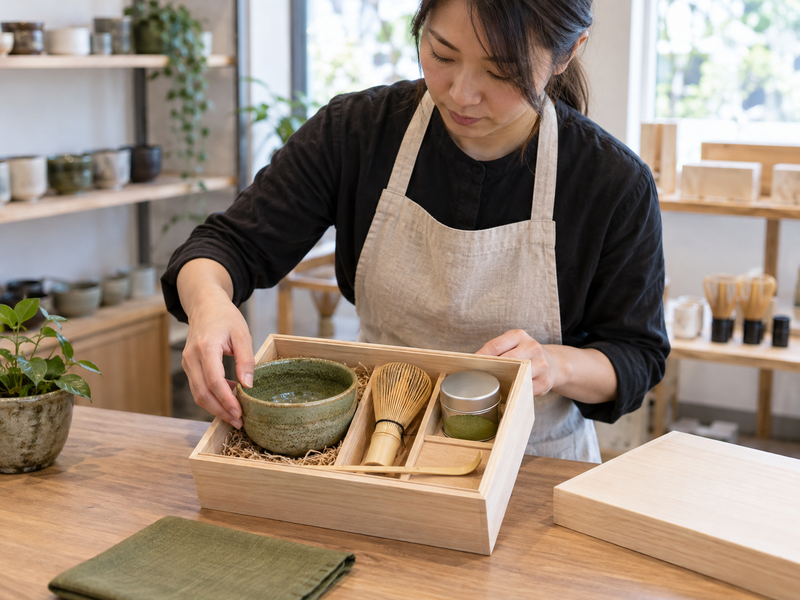
Powder quantity changes the cup quickly. A bamboo scoop transfers tea but does not guarantee the same mass each time; powder may pack differently from scoop to scoop. If you own a small kitchen scale, measure the amount stated on the tested recipe. If you do not, use the kit’s scoop approximation and adjust by taste after a few cups. Water volume should be given in a unit you can measure with a kitchen cup or marked kettle.
Water temperature should follow the tea and recipe tested by the seller, with sensible care around hot water. A vague line such as “add some water and whisk” leaves a beginner guessing at three variables at once. Choose a kit whose card separates the base mixture from later milk or ice steps, so you can see what changed if the drink tastes too thin or too strong.
| Recipe variable | Clear instruction | User adjustment |
|---|---|---|
| Tea | Weight or tested scoop guide | Change in small steps |
| Water | Measured volume | Keep steady while testing tea dose |
| Temperature | Tested range | Follow safe handling advice |
| Milk | Amount for the specific latte | Change after base tastes right |
6. Does the included matcha suit your taste?
Judge the tea in your preferred drink
If the kit includes powder, read its origin and product claims as you would for any food purchase. Check pack size, shelf-life information, lot identification, storage instructions, and whether the seal can protect the remaining tea after opening. Then taste it using the recipe and tools provided. A powder intended for a sweet iced latte may taste different when whisked with water alone; the reverse can happen as well. Labels such as “ceremonial” do not tell you whether you personally like the tea in your kitchen.
A retailer should test the exact powder chosen for a kit rather than borrowing a tasting note from another grade. If different markets receive different tea lots or labels, each version deserves its own review. Ask the seller whether replacement tea is available in a compatible pack once the small starter pouch is empty.
7. Can you make a latte without extra clutter?
Follow the pour from bowl to glass
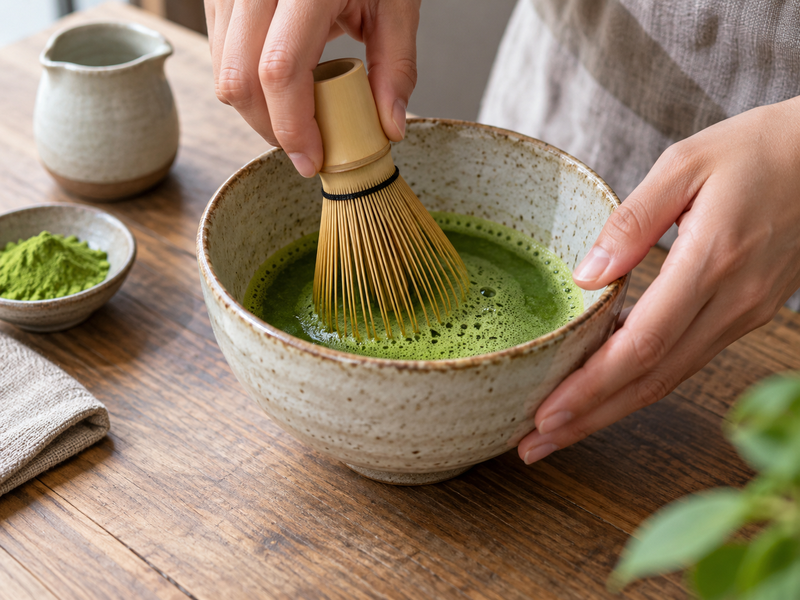
A latte recipe often begins by making a small smooth matcha mixture before adding milk or ice. A home kit should tell you whether the included bowl is also meant for pouring. If it has no workable rim, you may need a small jug or cup you already own. That is fine when the listing says so. It is frustrating when a product page promises a complete latte experience and hides the extra step. Test the full recipe, including any sweetener, milk, and glass size shown in promotional photography.
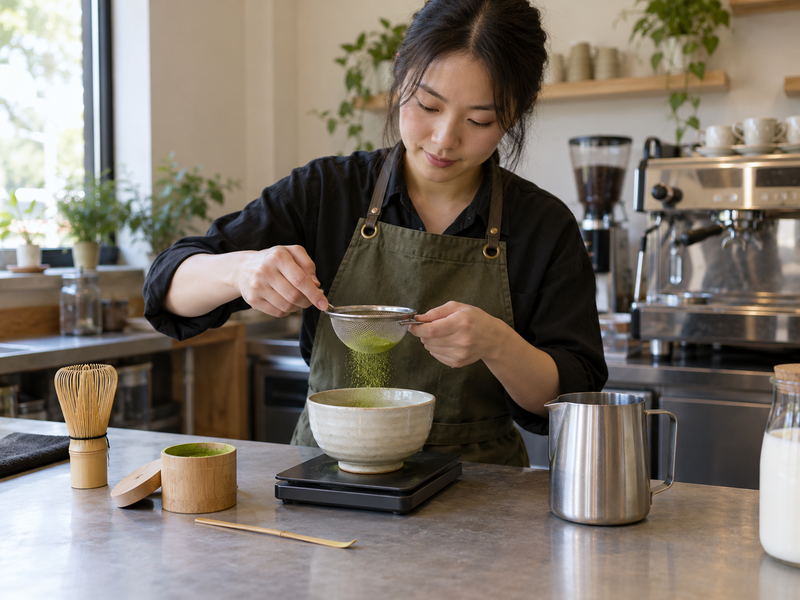
Does the mixture disperse through the drink, or sit in green clumps? Does the process make a mess on the counter? A small sifter might help if the powder clumps; it should not be included by default without a reason. The easiest routine is one that fits your real washing-up tolerance.
| Latte step | Potential friction | Kit fix |
|---|---|---|
| Mix powder | Dry lumps | Tested sifting step if needed |
| Add water | Unclear quantity | Measured recipe |
| Pour concentrate | Drips on bowl | Pourable vessel or stated extra cup |
| Finish drink | Weak or too sweet | Adjustment notes based on trials |
8. How easy is each piece to clean and dry?
Plan the end of the routine
An at home matcha kit is only convenient if cleanup is realistic. Read separate care guidance for ceramic, bamboo, metal mesh, and powered tools. A bamboo whisk may need a gentle rinse and enough open-air drying time before storage; do not crush wet tines back into a tight sleeve. A sifter can retain fine powder around its rim and mesh, so inspect it after washing. A bowl with deep interior texture may require more care than a smooth one. None of these points means every component must be dishwasher safe.
They mean instructions should reflect its material and maker. If the tea pouch is opened daily, keep dry hands and tools away from the powder. For shared households, a simple place for cleaned parts prevents someone else from unknowingly placing a damp whisk in a closed box.
9. What should the instruction card explain?
Give a novice the whole sequence
The card should say what is in the box, what the user must supply, the quantities for at least one tested drink, and how to clean each piece. A small diagram of powder, water, whisking, and serving may work better than a long origin story on the opening panel. Use familiar units for the destination market and name the same objects consistently across card and product page. If a kit supports both straight matcha and a latte, give separate recipes rather than one muddled compromise. Show where optional adjustments begin.
The manufacturer should test the card with someone who has never used the kit; watch whether they can open the tea, portion it, mix without splashing, and put tools away safely. Instructions should help users recover from a bitter or weak cup through measured changes, without promising that every powder behaves identically.
10. Will the kit still work after the tea runs out?
Look beyond the initial gift moment
The best sign of a good home kit is that its owner keeps using it. Check whether the retailer sells compatible refill tea, replacement bamboo whisks, and any frequently lost small items. Ask whether future powder packs carry the same preparation guidance or require a changed recipe. A quality set can outlive its original matcha if the bowl remains pleasant to hold and easy to clean. A gift set with an impressive box but weak components may do the opposite.
For a brand, keep approved physical samples and compare reorders against them. Monitor returns and customer questions: broken bowls point toward packaging, while confusion about scoops points toward recipe wording. Matcha Village can discuss tea options for starter programs, but each brand should approve the actual tea and kit configuration used in its market.
| After-opening need | Useful support | Buyer check |
|---|---|---|
| More tea | Compatible refill format | Test recipe with refill powder |
| Worn whisk | Correct replacement size | Confirm bowl pairing |
| Missing scoop | Replacement item | Confirm portion instructions |
| Care question | Material-specific guidance | Keep card and page aligned |
Final thoughts
Choose an at home matcha kit for the drink you make, the space you have, and the cleanup you will tolerate. Check bowl–whisk fit, powder and recipe together, then inspect how the pieces dry and store. If you sell sets, let a real beginner test the complete box before ordering volume. A small kit that works every morning offers more value than a larger one that only looks good on opening day.
FAQ
Q1. Do I need a traditional bowl to make matcha at home? A wide, stable vessel that suits the mixing tool works for everyday preparation; a chawan offers a familiar tea-bowl experience.
Q2. Can I use an electric frother instead of a bamboo whisk? Yes, for many home drinks. Test it with a vessel deep enough to avoid splashing and follow its care instructions.
Q3. Should an at home kit include matcha powder? It depends on the listing. If the seller promises a ready-to-make cup, powder should be included and clearly labeled.
Q4. Is a scoop a reliable measure? Treat it as an approximation. Use a small scale when you want more repeatable doses.
Q5. What is the easiest way to compare two kits? Prepare the same drink with each complete kit, then compare usability, taste, cleaning time, storage, and replacement options.