
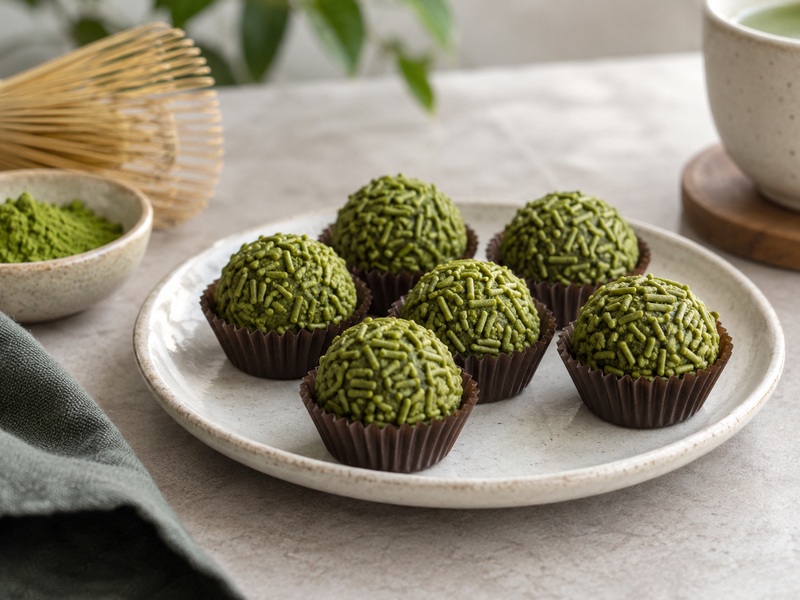
Matcha brigadeiros can look uniform in a tray and still disappoint a café buyer. Set a finished bite standard before adjusting powder: tea flavor, a soft center that holds its shape, a clean coating, and a stated piece weight. The Globo brigadeiro recipe uses condensed milk, cream, matcha, butter and a white-chocolate coating. Its 17 g rolling example gives a useful starting point for a portion trial, not a universal commercial specification.
Contents
- 1. What should a finished matcha brigadeiro deliver?
- 2. Which base formula is worth testing?
- 3. How should matcha enter the mixture?
- 4. Where is the right cook endpoint?
- 5. How can pieces reach a consistent weight?
- 6. Which coating protects the eating texture?
- 7. What packaging works at a café counter?
- 8. How should operators assess holding quality?
- 9. What does a buyer need from a matcha supplier?
- 10. What belongs on the approved batch card?
1. What should a finished matcha brigadeiro deliver?
Specify the bite before the kettle
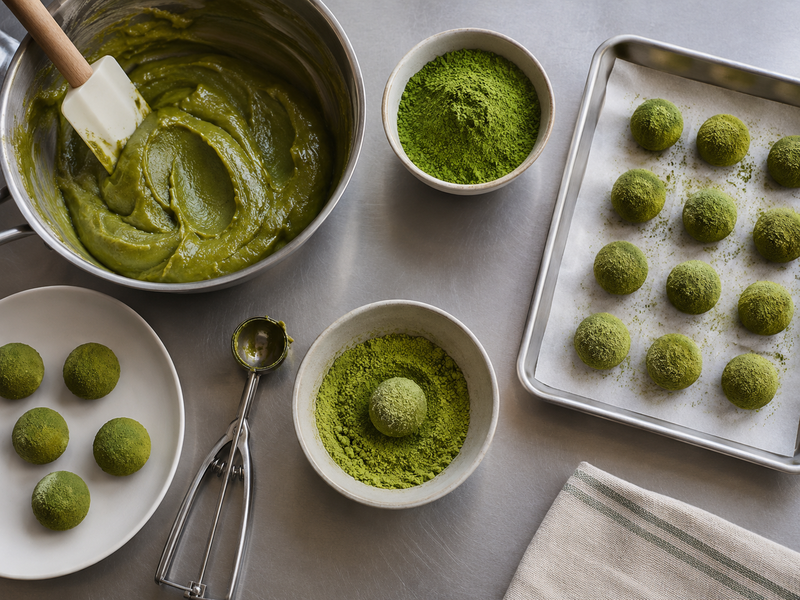
A brigadeiro is a small cooked milk confection, commonly rolled and coated. A green center alone does not prove tea flavor. Taste a plain piece at service temperature, then one in its coating. The coating can add enough sweetness to hide the powder that looked strong in the hot pan. Ask tasters to record tea clarity, sweetness, mouthfeel and any rough aftertaste separately.
Define how the piece should behave in its paper cup. It should lift without leaving half the center behind, keep its shape while a guest chooses from the case, and yield without a gummy pull. Test these targets on site. Inspect boxed pieces after carrying; lids can mark soft surfaces. Agree on the finished weight and diameter before choosing scoops or wrappers. Photograph one reference piece in counter light.
| Finished check | Record at tasting | Reject or review when |
|---|---|---|
| Tea character | Plain and coated piece | Coating erases matcha |
| Shape | Height and spread in cup | Piece slumps or sticks |
| Surface | Coating coverage | Bare or wet patches appear |
| Portion | Weight and diameter | Pieces visibly vary |
2. Which base formula is worth testing?
Change one variable at a time
Use the reference method to identify the format, then build a pilot formula in grams. Record the brand and ingredient declaration of condensed milk and cream; products with different solids or fat may cook to different textures. Keep those ingredients fixed while screening matcha. If the team also changes white chocolate, cream and pan size, it will not know which change produced a firmer ball. A sensible pilot starts with two or three tea doses in the same base, marked as trial values rather than recommended levels.
Weigh every ingredient before heating. Note starting batch mass, kettle shape, burner setting and operator. After cooking, weigh the finished mass and calculate cook loss. This loss is a process measure, not proof of food safety or final moisture. If one test finishes heavier and softer, compare cook endpoint before raising the matcha dose. Taste the plain center again after cooling. Sweet condensed milk can mute tea; a very high dose may introduce powdery texture without fixing the sweetness balance. Retain powder and finished-piece samples for later lot comparisons.
3. How should matcha enter the mixture?
Prevent dry pockets at the start
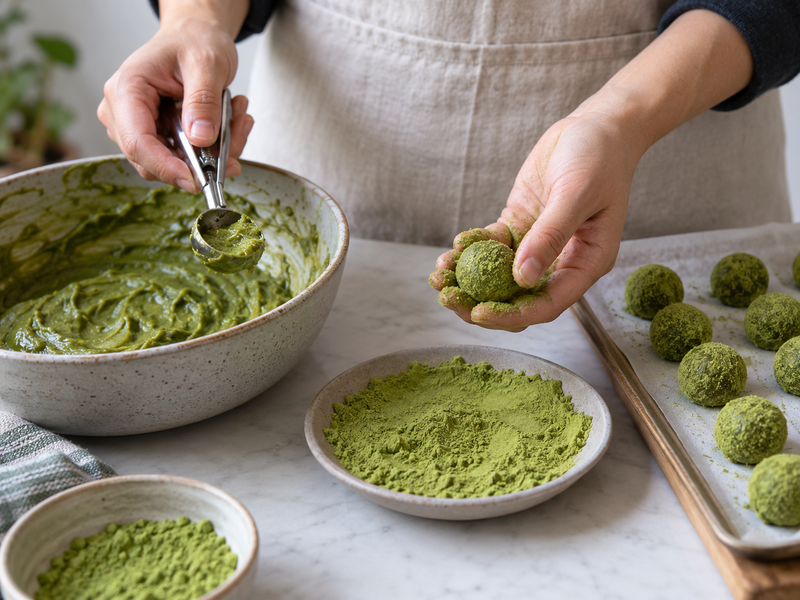
Matcha does not dissolve like sugar. It disperses as fine tea particles, so a dry scoop added to a thickening milk base can leave dark flecks that rolling will not hide. Weigh the powder on a scale suited to the small dose. Then make a smooth paste with a measured part of the recipe’s cream or condensed milk before it enters the kettle. Scrape the cup so the recorded dose actually reaches the batch.
Compare two tea entry points in equal pilot cooks. Early mixing gives the powder more mixing time but more heat exposure. Later mixing may protect some fresh tea character, yet thick candy is harder to blend evenly and requires the cook to revisit food-safety and process controls. Taste them after cooling and in the planned coating. If one has bright color but dusty texture, the problem may be dispersion rather than powder quality. Matcha Village’s pure matcha page advises testing powder in its final application; a cooked confection deserves that test more than a plain-water tasting alone.
| Mixing test | Keep fixed | Compare after cooling |
|---|---|---|
| Early paste | Formula and cook vessel | Color, tea aroma, flecks |
| Later paste | Formula and target mass | Color, tea aroma, mixing effort |
| Sifted versus unsifted | Same powder lot | Visible dry pockets |
| Two powder lots | Same accepted process | Flavor and center texture |
4. Where is the right cook endpoint?
Pair a physical cue with a measurement
The Globo recipe cooks until the mass pulls away from the pan and then cools it before rolling. That visual cue is useful, but the size and shape of a commercial vessel can change how it appears. During a pilot, record the product temperature, finished mass and time when the mix starts to release from the base. Scrape corners and the center consistently. Stop separate small batches at slightly different points, cool them the same way, then test whether each can be rolled cleanly. Label endpoints A, B and C for blind tasting.
Do not treat a rolling cue as a microbial kill step. A site needs its own approved heating, cooling and handling controls for a dairy confection. The FDA Food Code is a US retail model that can inform the local food-safety review; it does not replace the rules governing the actual café. Record how quickly the mass leaves the hot pan and whether carryover heat creates a crust at the edges. A batch that rolls while warm may firm too much after a refrigerated display interval. Approve the endpoint on the finished piece at the planned sale condition.
5. How can pieces reach a consistent weight?
Control the center before coating
Choose a target mass for the uncoated center and a separate target for the saleable piece. The 17 g portions in the cited Globo recipe show how precise a home method can be, but the café must choose a size that fits its pack and price. Weigh ten centers from each pilot batch. Record minimum, maximum and average; calculate the spread rather than accepting a tray because it looks even. A small scoop can speed portioning, yet sticky candy often leaves variable residue in the scoop. Check the scale every few pieces.
Cool the mass in a covered, labeled vessel under the site’s approved process before handling. Divide it into workable slabs or strips if a full tray softens during a long rolling session. A gloved operator can roll a smooth surface, but a technique that requires repeated water or oil on hands may change coating pickup. Test the same method across two staff members. If another operator produces larger pieces, fix the portion tool or card rather than asking staff to estimate by eye. Count accepted pieces and leftover mass. Yield must be based on saleable units, not the theoretical number from the starting formula.
| Portion trial | Measurement | Why it matters |
|---|---|---|
| Ten uncoated centers | Minimum, maximum, average grams | Tests scaling consistency |
| Ten coated pieces | Finished grams | Sets pack and price |
| Finished diameter | Millimeters after rest | Checks cup and lid clearance |
| Accepted yield | Saleable units per cook | Exposes trim and rejects |
6. Which coating protects the eating texture?
Judge coverage and sweetness together
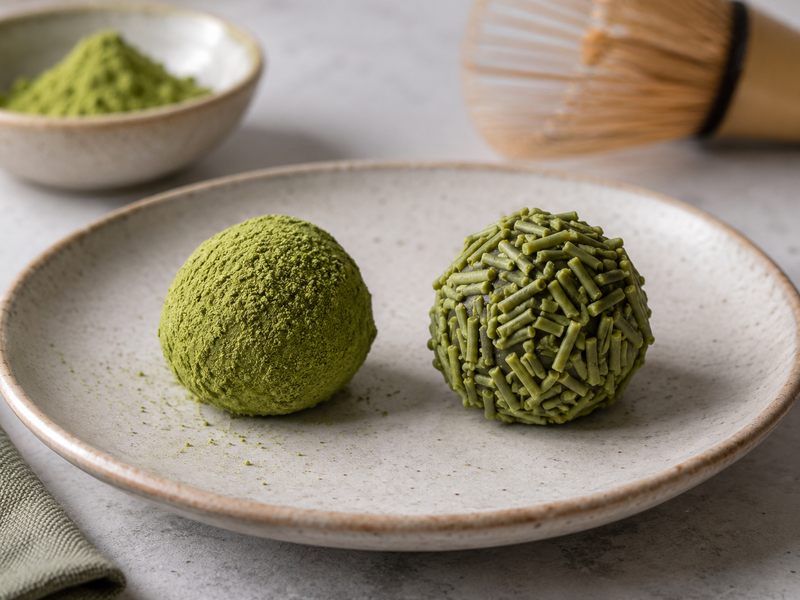
The reference uses white-chocolate pieces as a coating. A café can compare those with fine sugar, finely chopped nuts or another approved finish, but every option changes bite and allergens. Coat equal centers from one batch. Let them rest in their actual cups, then inspect bare patches, shedding and moisture pickup. A coarse coating may fall off in a takeaway box. A fine powder may turn damp against a soft center. A coating can obscure the tea once eaten.
Measure coating pickup by weighing centers before and after rolling. The difference can alter unit cost more than expected across a tray. It also explains why a 17 g center may not fit the pack designed for a 17 g finished candy. If white chocolate is chosen, compare its sweetness and texture with the center rather than assuming its pale color makes it a neutral partner. Matcha Village’s white-chocolate guide discusses coating and inclusion choices for commercial products. Keep any nut, dairy or soy change on the ingredient and allergen review before adding it to an assortment.
7. What packaging works at a café counter?
Use the actual cup, lid and route
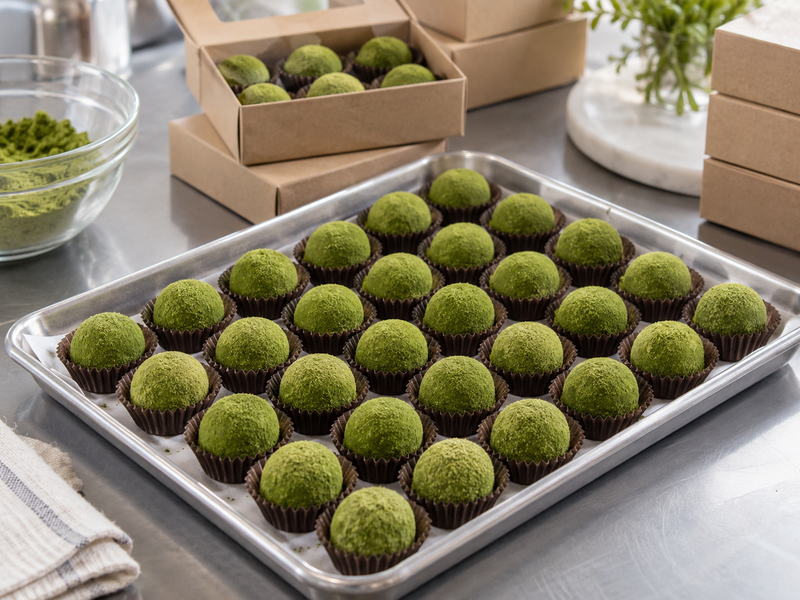
Set finished pieces in the paper cups or trays the café intends to purchase. Check whether the base sticks after a normal display interval and whether the paper hides an unattractive coating edge. Place cups in a retail box and carry it along the route a guest would take from counter to door. A package that lets centers roll into one another may waste careful portioning; a tight lid can press coating into the top surface. Test single-piece and multipack formats separately if both will be sold.
Pack design also affects information. Identify ingredients and allergens under the rules for the market and sale format. Milk in the base, possible soy in chocolate, and nuts in some coatings need review. The FDA allergen overview lists US major food allergens; a food business must check its own destination and retail setting. Do not print an untested storage duration because a wrapping trial looked tidy. Quality and safe-sale decisions require the finished recipe, process and pack to be assessed together.
| Pack option | Useful trial | Watch for |
|---|---|---|
| Open paper cup | Display and lift test | Sticking at the base |
| Lidded single | Lid clearance and carry test | Flattened coating |
| Boxed assortment | Shake and route test | Color transfer or collisions |
| Sealed retail pack | Full validation plan | Condensation and label fit |
8. How should operators assess holding quality?
Observe the piece at the planned sale condition
Create a timed quality trial using the final recipe, cup and display equipment. At each chosen observation point, record surface appearance, cup release, center texture and tea taste. Use the time points that match the proposed service, such as opening, a middle check and the planned last sale point. Those checkpoints are an internal experiment, not a shelf-life statement. If the coating becomes wet while the center remains pleasant, a different finish or pack may solve the quality issue. If the entire piece loses shape, revisit the cook point and portion temperature.
Separate sensory failure from food-safety decisions. Dairy handling, cooling, display and date marking must be approved in the site’s food-safety plan under applicable rules. Keep product temperatures and batch identity where the plan calls for them. If an operator proposes a room-temperature counter because brigadeiros are often seen there, test and approve that exact formulation and environment instead of borrowing another shop’s practice. Train staff to remove a damaged piece rather than recoat it in the case. Keep accepted and rejected examples for staff.
9. What does a buyer need from a matcha supplier?
Compare lots in the cooked center
Send a supplier the application brief: condensed-milk confection, proposed matcha dose range, heat exposure, planned coating, target tea strength and market. Request ingredient identity, lot information, pack size, storage guidance and documents required by the buyer’s quality team. Compare powder samples at equal doses in one approved base. Score dry-powder color separately from the cooked and coated piece. The latter pays the bills. A low-priced powder that needs more grams per accepted piece may cost more per sale than a stronger sample.
Cost the tea per finished unit: powder price per gram multiplied by actual grams used, divided by accepted yield. Add base, coating, cup, box, labor and rejects to the same worksheet. Ask whether a later bulk lot can be supplied to the same specification and decide what change would trigger a new line trial. Do not claim an origin, grade or certification on a menu without matching evidence for the purchased lot. A supplier can help narrow samples, but the café decides acceptance after cooking them in its own vessel and tasting them under its own sales conditions.
| Buying question | Evidence to request | In-house check |
|---|---|---|
| Will tea taste clear? | Lot-linked sample | Blind cooked-center tasting |
| Will color suit the case? | Sample and specification | Fixed-light finished photo |
| Can supply repeat? | Pack and lot details | Confirmation cook from another lot |
| What does tea cost? | Delivered unit price | Cost per accepted piece |
10. What belongs on the approved batch card?
Write what another cook can repeat
Keep the approved card short enough for a cook to use beside the kettle. Include ingredient brands or specifications, gram weights, batch size, pan or kettle, mixing sequence, matcha paste method, cook endpoint and cooling route. Add center weight, coating weight range, rolling method, cup type and the photograph of an accepted piece. Put food-safety records and allergen controls in the operating system used by the site, with references on the card where staff can find them. Date and version the sheet so an old tea dose cannot quietly return after a new powder lot is approved.
Run the card with an operator who did not develop it. Have that person produce one batch and record every instruction that needed verbal explanation. Compare ten finished pieces with the reference weight and tasting target. If the powder speckles, inspect paste mixing; if portions drift, inspect the scoop and scale; if the case sample softens, inspect cook endpoint and display conditions. Make one correction at a time and repeat the relevant check. A buyer can then request tea samples against a defined application rather than asking a supplier for a generic “best matcha.”
FAQ
Q1. Can a café use latte-grade matcha in brigadeiros? Yes, as a trial candidate. Approve it only after a cooked, coated tasting and a cost-per-piece comparison.
Q2. Is 17 g the required brigadeiro size? No. It is the portion shown in the reference recipe. Set a center and finished weight that fit your pack, menu and price.
Q3. Why do dark matcha specks appear? Dry powder may not disperse through thickening milk. Test a measured paste and compare cut centers before changing tea lots.
Q4. How long will boxed pieces last? A recipe alone cannot establish that. Validate the exact formula, process, packaging and sale conditions through the site’s quality and food-safety program.
Q5. What should a supplier sample include? Ask for lot identity, product specification, storage guidance, relevant quality documents and enough powder for repeat cooks.