
Matcha frosting can turn a plain cake into a tea-forward product, but green color alone will not carry a full slice. The frosting must pipe cleanly, stay pleasant at serving temperature and avoid overwhelming the cake with sugar. A bakery also has to handle the base safely and predict how it behaves in a display case or delivery box. Use these ten checks to compare powder, base and process in the finished cake rather than approving a spoonful from the mixer.
Contents: Use · Base · Powder · Dose · Mix · Temperature · Cake · Display · Claims · Launch
1. What Will the Matcha Frosting Cover?
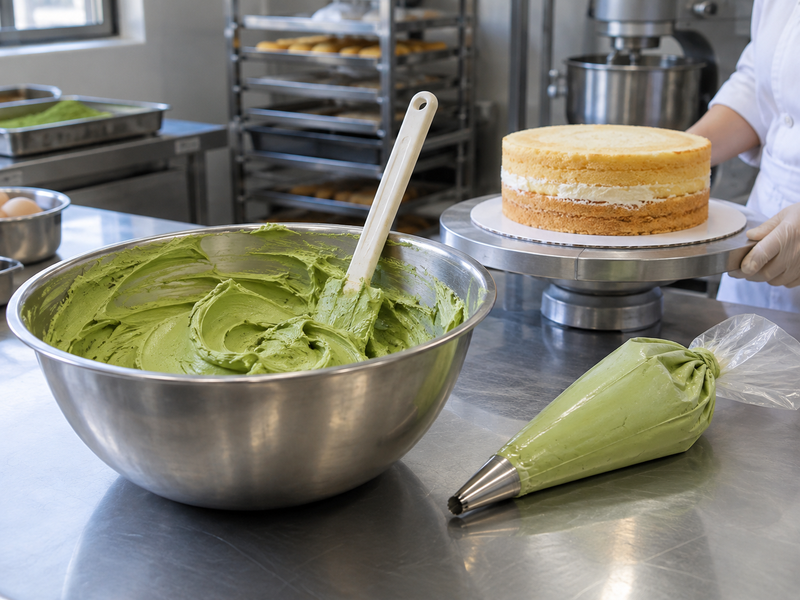
Match the finish to the product
A thin layer between cake sheets has a different job from a tall cupcake swirl. A sheet cake for catering must cut and travel; a cafe slice can be plated at the counter. Decide the frosting weight per serving and the intended eating temperature. Use the actual cake recipe in trials. Chocolate, citrus and vanilla bases each change how much matcha a customer can taste. A frosting that feels balanced alone may disappear on a rich cake or dominate a delicate sponge.
Cut a full slice. Look at layer thickness, edge stability and how the fork passes through cake and frosting together. If frosting smears across the crumb or squeezes out, texture needs work. If the slice tastes mostly of sugar, lowering matcha is unlikely to help; the base or portion may need adjustment. Photograph the product at ordinary service size, not a specially thick slice arranged for development. The customer will judge the actual ratio on the plate.
2. Which Frosting Base Fits the Product?
Compare structure and flavor, not only convenience
Buttercream, cream cheese frosting and whipped toppings bring different texture, acidity and storage needs. A buttercream may hold a piped shape; a cream cheese base can bring tang that sharpens tea flavor; a whipped base may feel lighter but need a tighter temperature plan. Choose a base the bakery can make reliably, then test matcha in it. Do not switch bases halfway through a powder trial. Each base deserves its own process and handling review.
Plan for the sales route. A room-temperature display, chilled case and delivered cake place different demands on frosting. Qualified food-safety staff should set the storage procedure for the exact ingredients and process. The bakery should also examine visual quality: does the frosting crust, weep, slump or darken? A formula that pipes beautifully straight from a cool mixer may become too stiff after refrigeration or too soft under display lights.
| Base | Useful trial question | Check in the final product |
|---|---|---|
| Buttercream | Does tea cut through richness? | Piping and eating temperature |
| Cream cheese | Does tang support or sharpen tea? | Chilled holding and stability |
| Whipped base | Is flavor clear at lower density? | Shape and service life |
3. Which Matcha Powder Stays Pleasant in Fat?
Trial samples in one fixed base
Request lot-linked powders and blend each into the same frosting at the same dose. Judge color, aroma, graininess and bitterness after the frosting reaches serving temperature. Fat and sugar can mute delicate tea notes. A powder that tastes smooth in water may not offer enough flavor in buttercream. A more assertive powder may give a good tea finish but need careful dosing. Choose by the complete cake and count cost per serving, not by grade name or price per kilogram alone.
Save the reference. Keep a sealed sample of the approved powder and record the lot on the bakery sheet. A new lot should be mixed into a small frosting batch before wholesale purchasing changes. A small color shift becomes obvious on a pale cake. The supplier should provide a specification and quality records appropriate for the food market. If the finished cake makes an origin or organic statement, verify that the claim is supported for the finished product and sales market.
4. How Much Matcha Belongs in the Frosting?
Set a dose with the whole slice
Make a low, middle and higher matcha version without changing sugar or fat. Pipe the same frosting weight onto identical cakes. Taste full servings blind, then compare color and cost. A high dose may look appealing but leave a powdery finish. A low dose may taste fine on a spoon and vanish against cake. Record powder per kilogram of frosting and per serving. That makes it easier to scale the batch and to check whether a store is applying twice as much frosting as planned.
Do not chase a photograph. Food lighting can make a muted natural green look dull beside a digitally brightened mockup. Choose an honest color range from real samples. If tea flavor is clear at a gentler green, that may be the better product. A frosting has to be eaten, not merely viewed. If a strong flavor requires a dose that harms texture, reconsider the base or the cake pairing before adding more powder.
| Trial | Keep fixed | Compare |
|---|---|---|
| Powder dose | Base and cake | Tea finish, color, graininess |
| Frosting portion | Approved formula | Balance and serving cost |
| Cake pairing | Approved frosting | Whether matcha remains distinct |
5. How Do You Prevent Grainy Green Streaks?
Distribute powder before final whipping
Packed matcha can form dry pockets in a fat-rich base. Sift the powder and use an addition method suited to the frosting formula. A small preblend may help, but any added liquid must be included in the recipe and tested for stability. Scrape the mixer bowl and inspect a thin spread of frosting on a pale plate. Dark flecks in that smear often become obvious on a cake surface. Record mixer speed and endpoint in terms staff can recognize.
Look at the first and last cupcake. A large bowl may show different color if powder was not mixed evenly or if frosting warms during piping. Weigh sample portions and compare appearance. Excessive mixing can change texture or trap air, so more mixer time is not automatically the answer. If the frosting looks smooth but feels gritty, compare a finer powder sample at the same dose. Solve the observed fault instead of adding coloring to conceal it.
6. How Does Temperature Change Piping?
Test in the conditions bakers face
Piping behavior changes as frosting warms or cools. A decorator may have a neat first row and a slumped final row from the same bag. Test the full working period, the actual tip and the intended swirl or layer thickness. Record the acceptable condition of the frosting when it enters the bag and the point at which it should be replaced or returned to controlled storage under the bakery’s approved procedure. Avoid leaving a perishable base on the bench solely to make it easier to pipe.
Check the customer’s temperature. A cake may be sold chilled and eaten later. Taste and inspect both states. A very cold buttercream can feel firm and mute tea aroma; a warm whipped frosting may lose shape. The ideal formula and serving guidance should fit the product’s real path. If the package tells customers to bring a cake to a certain serving condition, the quality and safety teams need to approve the instruction.
| Moment | Inspect |
|---|---|
| Start of piping | Definition and portion weight |
| End of bag | Slump, bubbles and color |
| After chilling | Shape and eating texture |
| At service | Tea aroma and cake balance |
7. Does the Cake and Frosting Balance?
Stop tasting components in isolation
A plain sponge can let matcha lead; a very sweet cake may need a different frosting portion. Fruit filling adds acid and moisture. Chocolate can dominate tea or create a useful contrast, depending on its intensity. Build one finished cake with the approved frosting and taste it from edge to center. Ask whether every bite has a sensible cake-to-frosting ratio. A cupcake peak that looks generous can make the first bite all frosting and the last bite all cake.
Watch moisture transfer. Frosting can soften the cake surface or pick up crumbs during spreading. If fruit sits next to a matcha layer, check whether color bleeds after storage. Trial the final assembly, not a simplified tasting cup. If a bakery wants both a cake and a cupcake version, approve them separately. The same frosting weight relative to cake may not suit both formats.
8. What Happens in Display and Delivery?
Pack a cake as a customer receives it
Place finished cakes in the proposed box or tray and move them through the normal route. Look for frosting contacting the lid, collapsed piping, condensation, color change and crumbs stuck to the surface. A beautiful cake on the decorating turntable can arrive at a store looking tired. Test a representative product at the beginning and end of the proposed sale window. Shelf-life and handling decisions must be supported for the complete cake and frosting, not borrowed from a plain sponge.
Count defects. Track smudged boxes and pieces that must be reworked. A slightly firmer formula may reduce waste, but it should still taste good at service. If the bakery uses clear display packaging, view samples under real retail light. Product photographs should show the same natural green that a customer sees. A strong matcha flavor cannot compensate for packaging that damages every third swirl.
| Route | Likely stress | Test |
|---|---|---|
| Cafe case | Light and repeated opening | Shape and color |
| Chilled delivery | Movement and condensation | Box contact and smear |
| Retail pack | Longer holding | Flavor and surface quality |
9. What Ingredients and Claims Need Review?
Make the label match the approved formula
Frosting may add dairy, egg, soy or other allergens depending on the base. A plant-based version requires its own full ingredient and processing review. Nutrition data should reflect the actual frosting portion, not a tasting spoon. If the product is promoted as organic matcha cake, confirm certification scope and the rules of the sale market. Do not imply a specific caffeine level unless the business has reliable data for the finished serving.
Describe what is there. A menu line such as “matcha buttercream on vanilla sponge” tells customers what they are buying. Health language adds risk and often says less about flavor. If a glaze, fruit filling or decoration changes after launch, update the product file and review the label. The bakery’s commercial promise should come from the cake it repeatedly makes, not a draft photo from early development.
10. What Must Be in the Production Sheet?
Make another baker’s batch comparable
Record powder supplier and lot standard, base formula by weight, matcha dose, mixing method, target frosting condition, piping tip, portion weight, cake assembly, pack and handling plan. Include pictures of acceptable color and shape at service time. Track saleable yield and the cost of frosting per cake. Purchasing needs a way to qualify future powder lots. Quality staff need the exact process version supporting storage decisions.
Hand the sheet to a second shift. Compare its cake with the approved one after the same holding time. If one frosting batch is grainier or slumps sooner, trace the preparation step and fix the instruction. Matcha frosting earns its place when tea flavor, texture and appearance survive normal bakery work and reach a customer in the form promised.
| Launch item | Evidence |
|---|---|
| Powder | Approved lot and specification |
| Formula | Weighed batch sheet |
| Piping | Full-bag trial |
| Finished cake | Sensory and transport test |
| Label | Ingredient and claim review |
FAQ
Q1: Can matcha be mixed into buttercream? Yes. Sift and disperse it well, then test flavor and texture in the finished cake.
Q2: Why is matcha frosting grainy? Packed powder, uneven mixing or a coarse sample may be involved. Inspect a thin smear and run controlled trials.
Q3: Is cream cheese frosting better than buttercream? Each has a different taste and handling profile. Choose with the product and sales route in mind.
Q4: Can a bakery make the frosting ahead? Use a validated handling plan for the exact base and process, then check piping and eating quality after storage.
Q5: What should a supplier provide? Request lot-linked matcha samples, a specification, relevant quality records and repeatable supply terms.
For a thinner bakery finish, compare matcha donuts and the SERP reference frosting recipe. A commercial cake also needs full-product storage and delivery trials.